1 free read left. Create a free account for unlimited reading + AI research.
Create free accountWhitepaper DiGRA
1 free read left. Create a free account for unlimited reading + AI research.
Create free accountWhitepaperDiGRA
This paper introduces the concept of "para-ludic space," an intermediary zone between a game's rule-bound interior and the wider player experience, and examines how distribution platforms, end-user license agreements, and character creation systems shape access, identity, and power for players. Drawing on theories of paratext and legibility, the author argues that these mechanisms function like customs checkpoints, making players visible and classifiable before they enter play. The work is conceptual and exploratory in character, offering a framework for analyzing how developers, publishers, and platform operators allocate authority in the spaces surrounding games.
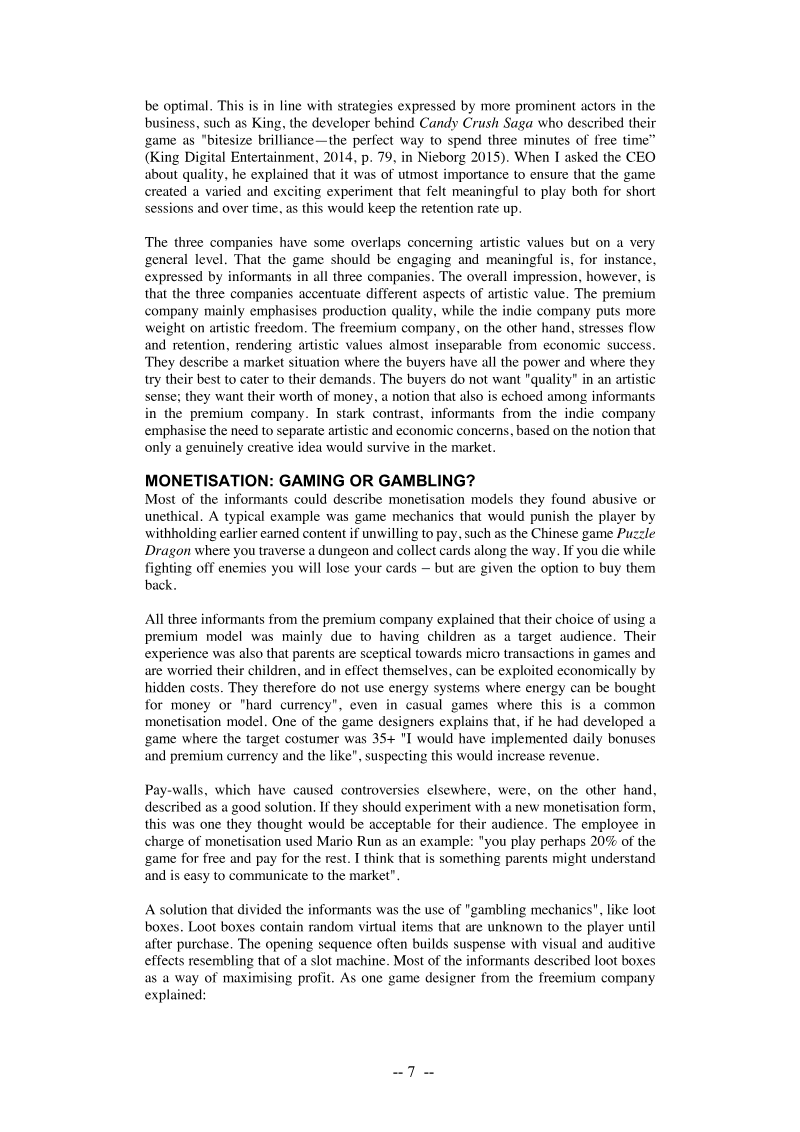
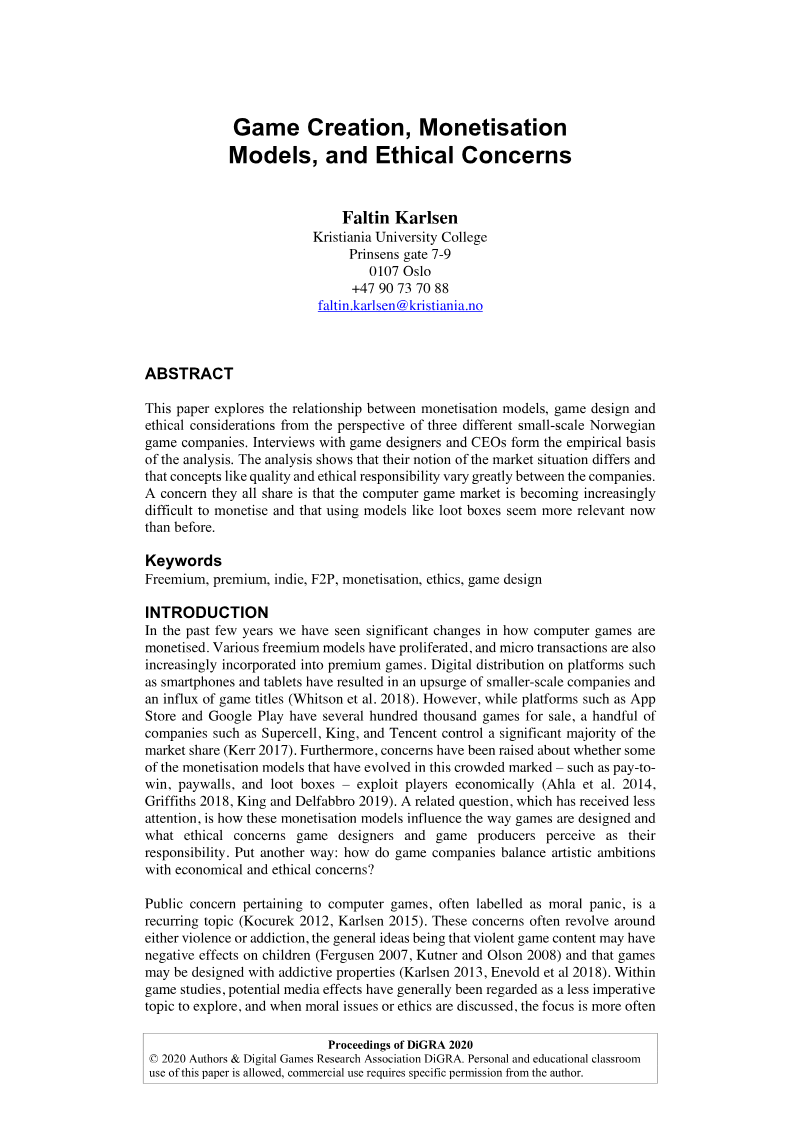
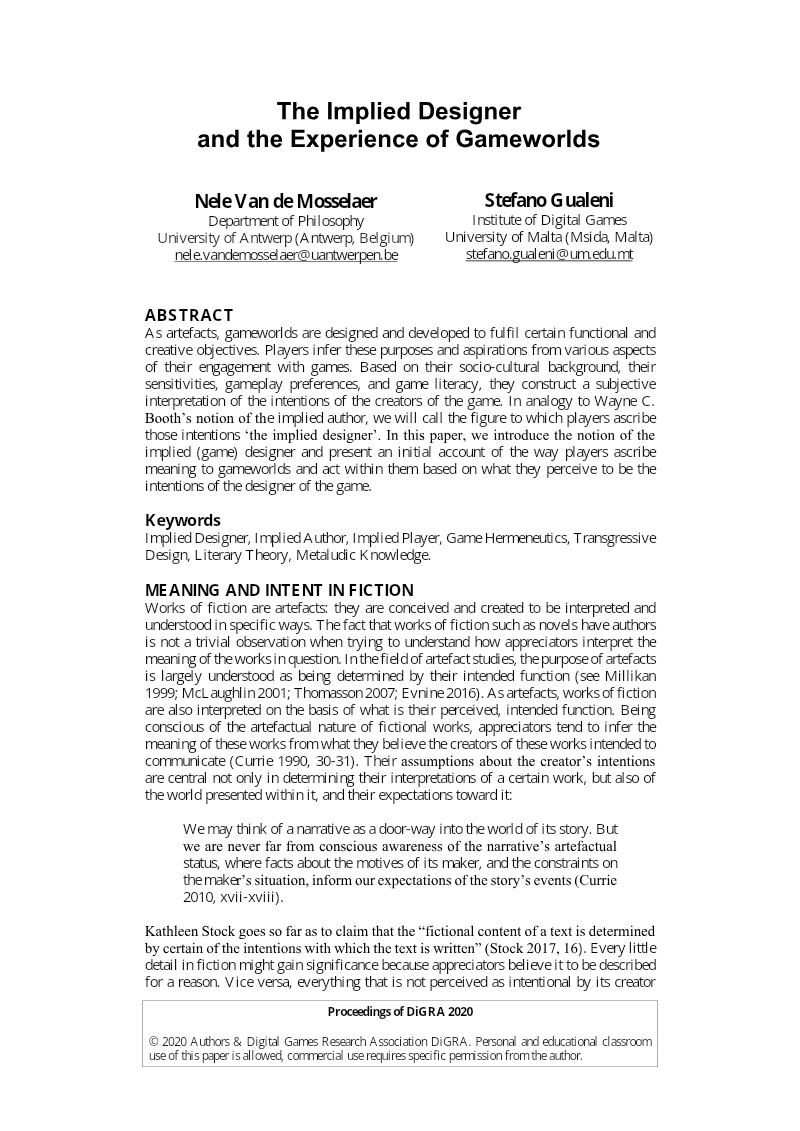
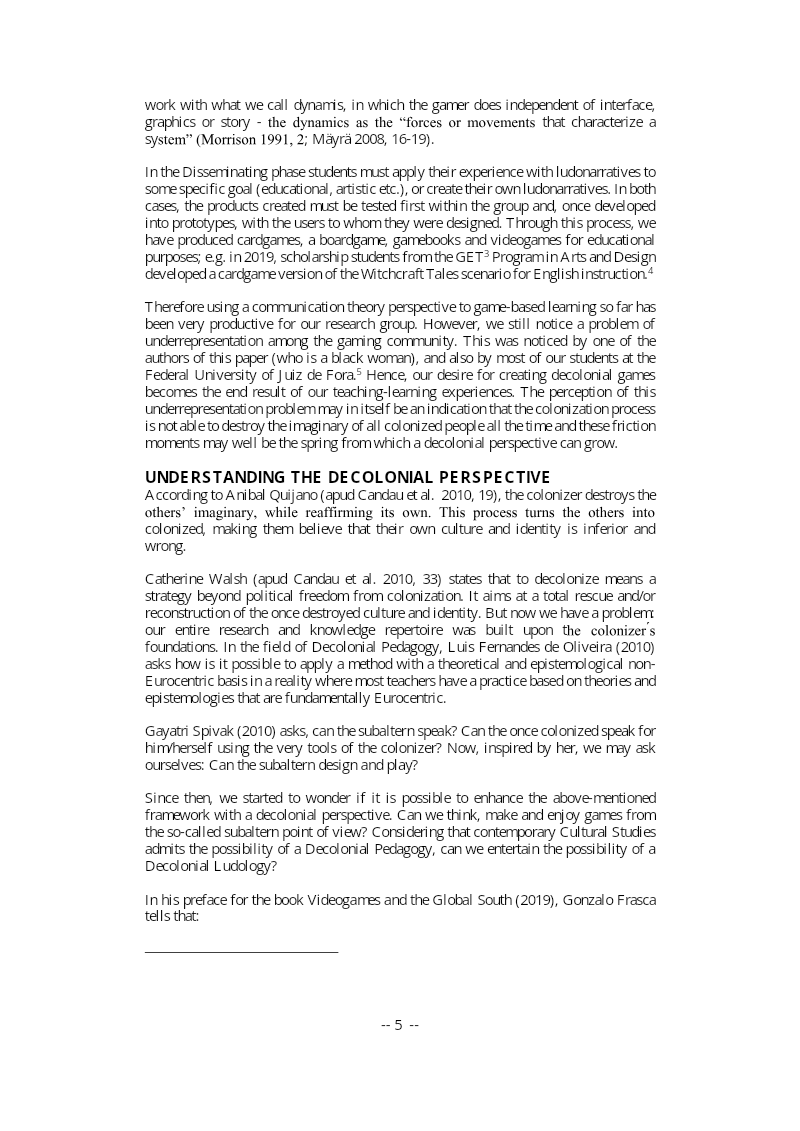
The central case study concerns Steam, which the author treats as the most prominent PC platform. Account names are presented as administrative identifiers analogous to the surnames that James Scott describes in early modern state record-keeping. Steam's continuous tracking of play time, store browsing, and wishlisted titles is shown to serve personalized recommendation and purchase shaping rather than taxation, while still linking a player's data across otherwise unconnected games. The paper contends that digital storefronts act as "passports" that enable indirect connection between proprietary titles built by competing companies.
A second line of analysis addresses character creation and selection. In a survey of 129 games requiring a default playable character, the author reports that 73% required a male protagonist and 13% a female one, and that 83% of the male characters were white, with Latino characters the next most represented group at 3.2%. The author acknowledges that technical and narrative justifications exist for limiting embodiment but argues that these constraints nonetheless shape who players are permitted to become upon entering ludic space.
The paper's methodology is primarily qualitative and theoretical, supplemented by the descriptive survey of character defaults. Its findings are suggestive rather than comprehensive: the sample is limited, the geographic and temporal scope is not specified, and the analysis focuses on a single platform. The work nonetheless proposes para-ludic space as a productive lens for studying the interplay of platforms and games as they evolve together.
Each row is a game or company this document names, each column a document, oldest first. A mark means that document names it. Select a row to see those documents.
DiGRA · 2020
DiGRA · 2020
DiGRA · 2020
DiGRA · 2020
DiGRA · 2020
DiGRA · 2020
DiGRA · 2020
DiGRA · 2020
DiGRA · 2020
DiGRA · 2020
DiGRA · 2020
DiGRA · 2020