VideoNaavik
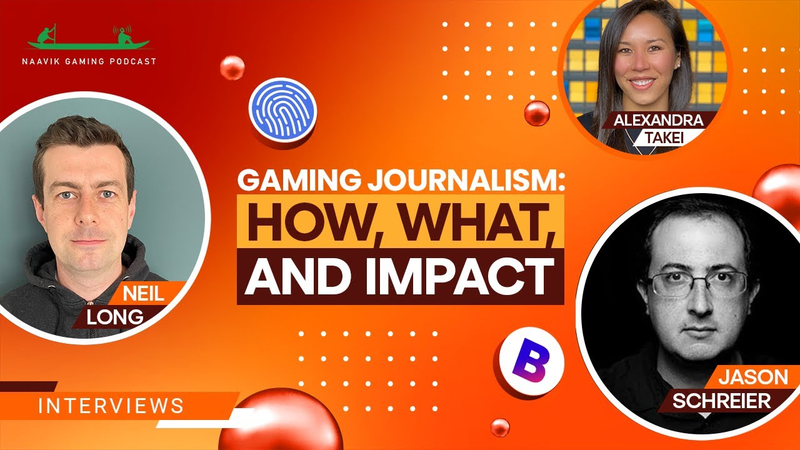
Gaming Journalism: How, What, and Impact with Jason Schreier and Neil Long
19 Nov 202366 min video
Transcript
[Music] welcome to the navic gaming podcast where it is our mission to explore the business and future of video games we bring together the industry's brightest Builders investors and thinkers to keep a pulse on current events dissect emerging Trends and games share Lessons Learned and have a great time this podcast is also part of novic growing ecosystem which ranges from free and premium research to Consulting and advice services for more information visit [Music] www.nic.edu platform that enables game studios and Publishers to create personalized player experiences it's the only solution that provides a realtime understanding of player actions and integrates life cycle marketing live Ops and remote config configuration into a holistic experience
in other words you can maximize engagement retention and monetization through realtime segmentation and targeted offers and you can run liveops campaigns with AB testing push notifications inapp messaging and much more to discover how clevertap gaming can best serve your games team simply visit clevertap tocom gaming or check out the details in the show notes and with that let's jump into the episode what's up everybody and welcome to the novic gaming podcast I'm your host Alex te and this is the interview and insight segment and today we're talking about an extremely important adjacent segment to games games journalism and media uh what its purpose is how it's meant to be done who's doing it and where are the lines between unbiased reporting opinion-based hunches and maybe what also responsibility journalists have towards our industry The Gamers the developers and the business folks alike we'll talk about processes and structure structures
across mobile PC and console where information comes from and a lot more in order to have this discussion I have on air two different gaming journalists both approaching different platforms and types of content in the industry Mobile versus AAA and in different economic structures of Journalism for example for writing for a historical journalistic entity and running your own entrepreneurial blog turned website so the first is Neil long the founder of mobile gamer. Biz a mobile dedicated only newsletter and site that covers news and insights for the global gaming Market prior to founding mobile gamer DPP is Neil has spent 20 years in gaming journalism beginning his career at Nintendo magazine and as the App Store games editor at Apple aka the person who decided to some capacity whether your mobile game was at the top of the charts in the IOS app store ranking I am sure that for some you've played a tremendous role in the success of their game either through mobile gamer dppbz or at any point throughout your career uh welcome to the Pod Neil
thank you thank you um awesome and next I've got one of those guests that you probably know um you either love to hate or hate to love as I like to say whether you've read his Infamous Kotaku articles his recent reporting at Bloomberg News his Litany of Twitter post or one of his two novels Blood Sweat and pixels or press reset if you work in triaa you've definitely read something by Jason shrier whether or not you were aware of it he's leaked a lot of content famously getting himself into a bit of a cruffle with Bethesda on the timing and Studio development of pre 2 and I have to admit sometimes in the office at blizzard during my era uh there was some anger when blizzard content was released and leaked online however he's written on behalf of the developer written stories exposing the gaming crunch culture across Rockstar EA and a Litany of others exposing harassment and more recently advocating that work from home can be an environment where great games are built um and though as with anything this also sparked debate welcome to the Pod Jason hello thank you for having me Alex that was quite the
intro I just had to you know had to round it out um uh before we get started I think it's also important for us to recognize that regardless of style it's undeniable that in games journalism plays a really important role in the orchestration of our industry uh and today we'll be talking about how journalism impacts successive games and Studios and what are some of the problems that are facing the written medium today so I'm super excited to have you both on uh you both built your care in very different ways uh and I'd love for you to start sharing your Journeys um tell me a bit maybe about your career and why you chose journalism as your career and also something really hard about your job that we wouldn't think of uh maybe uh Neil you can you can start us off oh thank you um yeah I um I started out um yeah almost 20 years ago on um an industry magazine called MCV um back then
uh it was a Weekly Magazine weekly print magazine um for the uh UK games industry um I was editor there for um four years three or four years and then I moved into consumer journalism so I ran the official Nintendo magazine um from London for future publishing uh then I did a couple of different things um I I um launched a interactive iPad magazine called igamer which no one really downloaded uh but it was seemed like a good idea at the time uh then I moved into um I ran the uh website of uh Edge magazine uh which is a very long running um print publication here in the UK uh and then I uh yeah I got a job at Apple as the App Store games editor where uh yeah as you said earlier I was responsible for some of the featuring decisions across Europe and international re yeah yeah so there was some um I was also involved in um sort of debating the
apple game of the year and um some of the apple design award um Awards um working with the guys in capino um and then uh yes I they I left in left Apple in 2021 to set up mobile gamer. beers uh mobile games industry website um and that's been running since March 2022 uh so 18 months oldish uh and I think the the final bit of your question was what's the hardest thing about the job right now the hardest thing um well I'm I'm an an indie publisher effectively so um the hardest thing right now I know what I'm doing in terms of Journalism I've I've done journalism for a long time um it's monetization that is the biggest challenge and sort of the newest challenge for me I've not run a business before um I've not sold ads before um so I'm doing kind of everything myself um and that's a A new challenge but um one that I'm uh I'm
relishing actually and really enjoying so um and yeah that's actually great context because we'll be talking exactly about that and the differences between running a journalism business or uh a career depending on where you sit in in the journalism journalism stack I guess um and so uh Jason how about you uh you tell us a little bit about yourself and your career as well and also the hardest thing about your job yeah sure thing I'll give you the bridge version of my career which is that I knew knew I wanted to be a writer of some sort uh my whole life I knew I wanted to be a writer wound up in doing a bunch of freelance journalism and then just kind of fell into video games almost by accident thinking I would do it for like a couple of months for fun and then wound up Landing a career um started off at wired was at Kotaku for a very long time part of Crocker media rest in peace and now have been at Bloomberg for the last three and a half years or so uh where uh I do a lot of Industry reporting on the video game uh business
and space and culture and um yeah I mean I'm very fortunate I I've been very sheltered in that I haven't had to think much about monetization over the years and I could just focus on reporting and writing um so the challenges that I've faced are a little bit different uh there are a bunch of them but one that immediately comes to mind is Gamers I think gamers are the hardest hardest part of the job just dealing with them um because they can be so awful in so many ways uh whether you're you're reporting something they don't like or critiquing something in a way that uh they don't like um and sometimes their kind of ey is is fueled by other sources including people who work in the games industry and it can be a lot to deal with you have to worry about um when you kind of as you develop a public profile in this space you really have to worry about your own security and um making sure that uh uh certain certain types of people people don't uh I don't know find
out where you live so that I think is something that like people people look at uh journalism uh and especially uh uh the jobs of like reviewing games and writing my games is kind of this this dream job and uh in many ways it's a fantastic thing to do um but you do have to deal with this presence of video game uh uh hardcore video game fans capital G Gamers who can really malicious in in ways that I don't know how many people realize yeah I mean we can I think uh I don't know Neil if you've had any experiences but uh obviously from the blizzard seat you also you love we love our community and we wow the community is the worst sometimes um you just can't win no matter what you do and so I've definitely empathized with that um you can't say something that doesn't make somebody upset and you're right to some extent especially when you are running a you know you're you have a public profile you're a public company with an
address listed online uh people can find you and then you have to deal with that um but thank you guys for both sharing your your intros and you know it's obviously very clear and hopefully clear to our audience that you guys grew up in journalism in a very different way um Jason you work for two you've worked for two or three relatively large journalistic conglomerates and cover PC and tripa and Neil you founded your own startup and you mostly cover and write about what you what you wish so I'd love to talk talk about some of the differences between being under these two structures um maybe Jason we'll start with you can you share a process for what you choose to cover and are there any difficulties now especially that you're in Bloomberg covering games at a non-gaming dedicated journalism like pipeline yeah so um well the my job has changed drastically from Kaku to Bloomberg I was a Kaku for about eight years a little bit over eight years and um that was its own kind of interesting challenge we were publishing um every half hour during work hours so we just
had to be constantly coming up with new story ideas and working on things and and it was a lot of fun and you could be aot you could be very creative with what you did some of my most memorable I I think people know me most for some of the investigations that I've uh worked on but uh some of my most memorable posts are just complete nonsense like um funny little ridiculous things that I wrote like one time I I uh I did a post that was um uh ranking revie scores and I think number one was seven out of 10 and then number two was maybe three out of 10 and I just put them in order uh in in an unexplained unexplained lists that's what you used to call them so that was one the challenges oh good okay that's that was one of my favorites um yeah and then when I came to Bloomberg obviously you can't do the same sort of like silly blog stuff at Bloomberg that you can at Kaku and it's very different it's a very different um kind of set of challenges and one of the reasons that I came here is because I wanted to try that what what you just said writing for
a non-gaming audience I actually when I decided to leave Kaku um for reasons that I made pretty public um I was debating whether to go to I I got two offers one was at another gaming site and the other was at Bloomberg and I want up going with Bloomberg not because I didn't think the other gam site would be fun I I thought it sounded awesome and I wanted and there were great people there and stuff but um the Bloomberg opportunity was like Hey you get to do something totally different Flex muscles in a very different Flex new mus um just like approach us in a very different way which I found very rewarding at Bloomberg I'm part of this massive Newsroom of 2,000 plus people who are just like the most talented experienced journalists and I'm always like ODed at at the amount of talent that's surrounding me and I get to write about our silly little gaming industry in a way that is hopefully approachable to people who just read Bloomberg who are whether they're Finance people or just like um uh business-minded folks out there who just enjoy reading
Bloomberg News and all the great journalism that my colleagues produce and so that has also been really interesting you kind of you have to look at the gaming industry in a very different way and whereas at Kaku um or at any gaming site you might kind of uh uh see people within your spheres talking about something and assume okay this is a story this is all I'm seeing on my Twitter feed is like people talking about this one controversy dour or whatever it is that a story for us whereas at Bloomberg it's a little bit more of like when I'm talking to my editors they have no idea what's going on in the gaming social media world so I have to like explain something and sometimes when you explain a piece of drama that is happening on Twitter to a normal person they're like what the heck are you talking about so that is actually really interesting and I think really good because it kind of has forced me over the last few years to kind of sort through sort sort the wheat from the chaff to like kind of distill what a story is and why it matters and
what it really means and um only focus on stuff that really matters which has been a really interesting and cool thing to do um not that that stuff doesn't matter by the way it's just a very different audience and when you're talking to a gaming Centric audience you can focus a lot more on granular stuff in a way that you can't when you're at Bloomberg yeah I think that's really I think that's really poignant and also I think people have spoken to the uh quality of kotaku's publishing um and journalism and I think that obviously is you know not at the same uh level as something like Bloomberg or Forbes or the times Etc and so it's different because you're obviously covering games now you used to be a big fish in a big pond and now you're maybe a lower priority topic maybe at at Bloomberg but it also probably levels up the the journalism the the quality of the journalism or maybe the content like you were saying um because you're forced underneath Bloomberg to basically say like hey is
this a story or hey is this not a story um yeah I don't know if I would agree with the quality I think the quality of the stuff that we were putting at Kaku I was very proud of of of a lot of what we were putting out at Kaku the the quantity was a little bit different we were a small staff writing a lot of stuff a day every day and that alone just kind of um um makes it so not everything is going to be A+ work but I was incredibly proud of the work we were doing in Kaku and I thought we had a fantastic team and and I worked along some amazing writers and editors and um I definitely would not say that uh it's some big quality hit uh or some big quality leap going from Kaka to Bloomberg it's just different it's a different audience it's a different kind of set of expectations and it's a different level of formality when you're writing for a times um well it's more I mean kataka was designed as a Blog and a Blog is voicy and has first person and personality and snark and um maybe some criticism and writing about people in a way that you wouldn't necessarily see in
a more traditional newspaper and I I don't think that one is better than the other I think they're just different and and serve different needs that are both really important and and I'll give you a good example of this I mean I think that the time style the Bloomberg style can be super super valuable if you're using it for really good strong reporting that kind of stands on its own and I remember a few years ago I was working on a an investigative piece at Kaku the writer I was the editor on the piece and um uh we were talking a lot about like how much voice to put in and I was making the case that like if you actually take a lot of voice out of this it makes for a stronger case because it allows the reporting to stand on its own without you as a writer without the reader feeling like you as a writer are putting your thumb on the scale and telling the reader how to think so sometimes that approach has a lot of Merit but on the flip side there was a lot of voicy stuff at Kotaku that we were able to do and inform people and entertain people in a way that you wouldn't necessarily be
able to do at a formal Outlet so there are pros and cons each each I wouldn't say there's a quality difference I would say there's a kind of a style difference interesting and Neil um you know you are not at the you definitely you're kind of I think as I understand a oneman show so you have no team um you're a onean show you have no team the team is you um and so and you're also covering a space where aity of reporting um I heard you say on another podcast the other day that the um you said that they basically the pr muscle the marketing muscle of mobile is very developed in terms of UA right but the pr muscle is not as Flex as it is in triaa um is it your ambition that the mobile industry get there and then also for yourself similar to the question that we asked Jason like how do you choose to decide what to cover and how to cover it in terms of maybe a voer style or to be more matter of fact um how do you think about um this what what
to cover yeah um yeah I I think um yes the mobile side of the business even though it's um you know 50% of the games market in terms of media sort of share and media voice it's almost non-existent you know if you look on IGN um on the consumer side uh you know PC console games have this kind of inherent uh sort of passionate fan base that follows every single thing that um PC and console game makers do uh mobile is such a different Market um you know these players are hyper casual um players who don't you know they they're not scouring Reddit for the latest about Candy Crush or Royal match um they just want to kind of chill out and and play a game on the bus or or on the sofa in the evening um and and maybe as a result um
people who want to write about games for a living um don't really choose to write about mobile it doesn't Inspire the same passions and that's kind of fair enough it's a different Market um but yeah when I was working at Apple um all that time um I felt like there was yeah like a a huge gap where uh authoritative um mobile games industry reporting should be and um uh you know there are several sort of trade facing sites out there already of course um but none of them I felt were doing like the job I wanted them to do which is to kind of wrap up exactly what's happening in the market tell the story of what people are really talking about in the in the in the industry and um so yeah that's why I kind of set up the site um in terms of voice um it's an industry site so you know I know who my audience is so I have to I I play it sort of Fairly straight um I'm talking to a business audience um so
it's not it's it's not exactly full of jokes and gags but it is my you know it's it's my baby so I can kind of do what I like with it I I I add in some voice where I feel it's necessary and when it when it reflects the feelings of what I see to what when I when it reflects the feelings of the market so you know earlier this year I ran a series of reports about um developers problems with app review Apple app review um and that that you know I I I took a stance because that's what I was hearing that this is a problem over and over and over again so you know as a as an outlet I guess I took the stance that apple is not doing enough um to help game developers and game developers are angry um and um you know more recently with the unity um uh ups and downs and drama again you know the people I speak to are game developers Publishers um so I'm I'm kind of not taking their side
but reflecting their voice um in in a in a media landscape when mobile game developers voice is often not heard at all um so yeah that's that's the goal with the site and um yeah so so far so good I think yeah and a very um exciting title um basically your Unity we're not paying uh so I mean I I clicked on that too um but you know you talked a little bit about understanding your audience right you're like oh I'm writing towards a business audience people who are in the mobile gaming Market rather than the Consumer side of Mobile um as you said like the Rabid fan base of the hardcore capital G Gamers is probably not as present um and so I think that's also a great segue to another question from me to you guys is you know I get my information from you guys but where do you guys get your information from and how do you make sure that the information that you're getting is verified and true and and balanced right um my partner is uh super into sports
and soccer and there's apparently some NBA reporter named Shams something something or other who basically just makes like three to5 million do a year for just tweeting first um he's built up like this elaborate network of NBA informance and he like is literally on his phone for 18 hours a day um so how do you guys build up your network of confidence and um how do you make sure that you're collecting both sides of the stories right like the consumer perspective the business person perspective the publisher perspective um Jason May will start with you yeah freaking Shams the thing about chams I could go on and on about NBA journalism but uh what I don't like about that whole style is that all they're doing is is tweeting things that everyone would find out anyway five minutes later and that I think is the lowest form reporting right but first which is a merit in reporting for sure getting Scoops is important but the you're not offering of value to the world if you're just echoing what agents are texting you
right like I think that um it's and in fact I mean someone like w who is Shams main rival used to used to do a lot of different kind of reporting anyway I won't I won't get into NBA journalism here because I could ramble on and on about that but but I actually I think that um the value of a reporter is not necessarily to be able to tell people things that are going to happen a few minutes later anyway or a few days later anyway but to shed on things that they wouldn't find out about otherwise that has always been the kind of the the North Star for me is are people going to know about this without me and if not then it's it's the most important thing that's not to say I'm not going to break news um that people will find out anyway because I do all the time it's just that that's less of a priority to me anyway to answer your question I mean I've been doing this for many years have been have been have kind of um met a lot of people over the years some of whom have been generous with their time and and and fortun I've been fortunate to uh
maintain relationships and and um conversations with people there are a lot of people who I'm just in constant communication with um I think that uh uh the question of where information comes from is an interesting one because there are a lot of different sources a lot of it comes from companies themselves sending out press releases or doing official interviews um that are backed by their PR people um sometimes you might get anonymous tips I mean yesterday is a good example of of kind of how all this works because there was a big news uh coming out of Bungie the maker of Destiny they laid off a bunch of people um and uh a lot of that kind of real time information was coming from a bunch of different sources um I wind up getting a couple of tips from people who were affected or who knew that were going to be affected who reached out to me um and I spoke to them in various encrypted ways I also saw some people tweeting that they were affected by it on Twitter um saying hey I was was I was laid off today at Bungie um which makes
it clear that something is going on um in a case like that when I start getting tips I would work to corroborate them um part of how um to ensure accuracy is to uh never run a story unless you have multiple people all telling you the same thing um I also always reach out to the company for comment we wound up getting I don't think we got a statement I think they put a statement on Twitter from Pete Parson the CEO of Bungie so that became part of the story as well um we found out that uh they had delayed some of their projects which uh I heard from one person and then was able to collaborate with the second person and so it's kind of this like layered thing where when you're working on a story you're trying to you're getting information from a variety of sources and you just have to make sure it's all true um the main thing that I do is like whenever I'm going to publish anything um I'm always going to ensure that I have two at least two people ideally more but at least two people telling me that that thing is accurate um especially if I'm agreeing to keep
people anonymous because when you're keeping people Anonymous uh you have to ensure that you can trust that they're not going to burn you you have to ensure that um they got things straight there are a lot of times when the game of telephone can can skew information um you also have to make sure something that I believe pretty strongly in is um not letting uh not not quoting Anonymous people or letting Anonymous people use anonymity for kind of subjective to say subjective things to be opinionated because uh I think if you're going to Grant someone anonymity it really needs to be in order to express facts in order to get information out there that is that is uh certain um I would not give an anonymous quote I would not Grant someone anonymity to say something like oh man like this this exe this this guy our boss is a real piece of piece of garbage like we hate him here like that does not strike me as something that is fair um yeah I mean that's the short of
it obviously this is this is a huge subject that has been a large part of my life for a very long time so there's a lot of kind of nuances and details to get into but the short of it is information comes from a lot of places you as a reporter have to verify and corroborate as much as possible and make sure that you're being as Fair as possible which means reaching out to all the people involved for comment making sure they have a chance to give their own perspectives on whatever is happening yeah and we'll definitely come back back to some of the you started touching actually on some of the next questions which just be kind of like standards and guard rails for yourself while conducting investigations um but Neil I want to pass it to you uh because you obviously have you know you spent a long time in the gaming uh industry as well so do you have a different process or similar process um how do you set yourself up at mobile gamer dupp is for reporting yeah it's um yeah similar similar deal really um I wouldn't um when I'm doing sort of anonymize um quotes and and information sourcing
yeah it's really important to double check triple check with multiple people involved or with the same kind of information just to check your work and um make sure that what you're putting out there is correct because you know the moment uh you put something out that isn't correct you're especially as a onean band your your reputation is is done so you know um I'm very very careful to um to corroborate sources and so on um uh and then yeah um I guess in terms of process it's actually never been easier to speak to people um you know LinkedIn when I started out in sort of Industry journalism in sort of the mid 2000s um LinkedIn wasn't a thing slack wasn't the thing Discord wasn't the thing Twitter didn't exist um Facebook barely existed um so you know there are tons of ways to actually speak to game
developers now and game Publishers and game people like game platforms and engines and so on um it's just um sort of managing all of that information and knowing where to look is part of the sort of skill and um yeah I think you you build that muscle up over time um you know you know where to look and you know who to ask over time and you know um when someone is you know I'm sure Jason is the same but there are there are a ton of uh half-written uh stories in my sort of drafts folder that didn't quite have enough information to or didn't have quite enough credible information to to publish um which would have been Sensational and would have made it impact but you know you don't want to gamble away your uh credit credibility or your trustworthiness to get a sort of cheap
headline so yeah you need to be 100% sure that what you're putting out there is is well sourced and well researched and and is accurate so you talked a little bit about um you know your Hold Back stories because it's not fulfilled doesn't meet your standards of of credibility and you've set those guardrails for yourself I would love to rewind the clock a little bit because you're talking right now about your current career as a journalist at mobile gamer. Biz but you used to be the App Store editor and you played a big role in choosing which games deserve discover or not um and actually back in the day that used to be a huge priority for mobile games um I would love to hear a little bit about some of the conflicts you faced in this job if any um either between yourself and apple or even between yourself and the relationships that you built with a game Studio specifically um you know I'm wondering has anybody lobbied you uh or you know because this is kind of like I think where a lot of this stuff comes you have relationships in journalism then you get favorable reviews so tell me a little bit about the guard rails and sandals
that you set yourself back at Apple um rewinding the clock a couple years yeah well I joined um I joined in 2014 so the App Store was quite a different place um and it was once a week uh it would change once a week and we would choose the editor's choice game and and um like you say that that game would basically be a hit where you would make uh a different hit every week because of that because of how important that um editor's Choice uh placement was um over time that did change a little bit um as the store changed so um we started updating the store more often um and then when the today the redesign came and the today have happened you know the that previously sort of quite focused editorial curation um became sort of scattered into a million pieces so that you know there are a whole bunch of games being surfaced to all different people and the
and the tab is the App Store is actually personalized as well to your taste so that kind of Discovery and curation is became much less important over time yeah I think today I mean on the outside uh I haven't worked there for a couple years but the App Store seems to be kind of a bit of a jumble bit of a mess I don't really know what I'm looking for um well some folks got fired because they were like taking I don't know like influence from developers something like that do not quote me on that that is not that's the opposite saw the factual verification that you guys are talking about I just was yeah I saw that report it was it was on the the information which is a very um very credible uh uh Outlet actually yeah I I saw that um Apple has very very strict rules about that stuff and clearly they um they stepped over the line but yeah when I was there contact with developers was very well actually
fairly minimal um in in some cases I wasn't allowed to say I was in the editorial team when I was in meetings with them in case they sort of influenced my thinking somehow but over time that kind of loosened up and you became more of a partner with developers and Publishers um as the App Store changed and became more actually more Central to Apple's services division um so yeah that did change um quite a lot um there were yeah I they have a very strict gifting policy so even when people came in with like you know a hoodie or something you couldn't accept it otherwise you'd get fired so um you know yeah there were there were definitely uh very clear guard rails there and um yeah I you saw what happened to the China team for uh overstepping those those guidelines but did you ever feel yourself conflicted by what you had to do right it sounds like you weren't
allowed to accept bribes right that's just Spade um but uh you know you hold the Fate but you hold the fate of some of these games in your hands um and so how do you decide you know which game deserves the top spot um um to begin with it was just Personal Taste you're there as a just like the music editors and the TV and film editors um it was you're there as a taste maker um that over like I say over time that changed in terms of you know there was a bit more analysis on like who is clicking where what gets downloaded um you know and it became slightly more numbers driven um but to begin with yeah it was just pure pure your personal taste like there was a uh when candy crushed Soda Saga it came out um I I um I didn't really
feature it that prominently even though it was obviously a very significant game I think I put some some indie game ahead of it in in terms of the um App Store um curation process that week so yeah it was purely purely taste um to begin with and then the sort of influence of numbers and engagement uh came in over time yeah um it sounds like it's much it's a little bit more data informed um and obviously sitting at where you sat you have accessibility to those retention numbers the modation the rpu and stuff like that even maybe even Ras and whatnot um not quite to that level not quite to that level of uh analysis but yeah the the editors are they're definitely aware of what what is popular and what is not I see got it um and Jason I guess I would love to flip to you to talk about some of the standards and bylaws that you set for yourself um I think it might
be a this might be accurate in your opinion or not um a lot of I would say the perception on your stance of reporting is you know relatively anti-corporate um or definitely rather anti-big big developers at times um and we have talked about this slightly before but I would love for you to share a bit more about what your rationale for taking and motiv you to Lobby on behalf of the developer is um sort of like I think also you know you said that you're inspired to be a writer sort of what motivates you to write from this specific lens um and is this something that you had initially when you moved into games at wired or is this something that you've developed over time um moving throughout your career yeah I don't know I don't really see my role as to be lobbying on behalf of anybody or an advocate on developers behalf or or anyone's behalf really I think my role as a reporter is to tell truth stories and cover the video game industry um in
all of its uh uh cover cover its warts and ugliness and all and those warts and ugliness happen to be a lot of mistreatment of game developers over the years and uh things have gotten better that's for sure but traditionally this has been an industry that really grinds people into dust I mean my my last book press reset was a lot of uh was was mostly about the volatility in the video game industry and how it just drives people out like the average career in the games industry is something like five years it's pretty pretty pathetic um and I think that when you wind up uh when you're a journalist and you see your role as to kind of uh tell true stories um you almost by definition have to be like like uh uh ad like not advocating but certainly telling stories that uh uh don't make corporations look that good because what they're doing isn't fair very good um so yeah I mean if you're getting at the truth and
you're approaching that in as Fair way as possible that's just kind of inevitable right like it's you can't just be like oh yes um uh these workers are all have stable careers and are very happy working nine to5 and they love their their lives like that's just not reality and and Truth happens to have an anti-corporate bias uh because that's just the nature of of reality um to answer your question I mean what what drives me what's always driven me is just the desire to tell stories I just love telling stories and um that is something that I'll probably always always want to do with my career in some form or another and I think true stories non-fiction stories are really really interesting and so that's what I have wound up spending my career focusing on and I think that like um what I think makes me a little bit different from a lot of people working in this field is that I would be perfectly happy doing this same job covering just about any beat in in in
journalism as long as it's like writing and telling stories and I can find interesting stories in it um it's not games that drives me even though I think games are really cool and I play games constantly and I love reporting in this industry and writing about this industry and that's not at all what motivates me to do this what motivates me to do this is this kind of I don't know burning desire that I've always had since I was like five years old like writing and in writing stories in in like those black and white school note books um has just been a desire to to tell stories so that's ultimately what drives me and I think those two answers are kind of those one in the same in that I think if you are a reporter who's motivated to tell stories and want to tell true stories they're G to wind up reflecting reality and reality I think it's fair to say in the video game industry is that um for decades traditionally in this industry a lot of people have been mistreated by Executives above them I I I don't really think that's an unfair Fair statement or an untrue statement and I think that that reporting reflects
reality yeah yeah I mean I don't necessarily disagree but it was more like I was wondering if there was like an impetus for why you were writing specifically with that stance and actually I kind of want to push back a little bit and maybe ask a bit of a harder question from the soci side of the developer narrative you know Neil just talked about how he held a position where you know very much the Reigns um determining really the success of some of these mobile games back in the early 201s um where being in the editor's choice was a big deal um and you've talked about how you know over the course of history a lot of times the the bad guy at times can be the anti- can be the corporation who's grinding developers too hard from the developer side you've often released information early on games that might you know might not have been ready um and from the developers I think their perspective is that their art and their work was judged before they were truly prepared um and so I'm wondering how you think about that as news um and doing that service
to developers um because think you've definitely written a ton about um exposing mismanagement harassment sexual harassment all sorts of other good things but also in terms of like leaking content right um I know again from the blizzard side you know it was it seemingly to us wasn't fair because we weren't prepared to share that story and you're talking about writing that story but that story wasn't ready for for from us so Neil maybe also you can in involved in this discussion I would love to talk about here the role of how journalism impacts game launches and the celebration and the quality in the reviews of those games well okay so first of all what you're specifically referring to I believe correct me if I'm wrong is a story that I ran in kak you I believe in the summer of 2019 that it was about it was the story was about the cancellation of Aries and it mentioned that one of the reasons Aries was cancelled at blizzard this is a blizzard project that was in development that one of the reasons it was canceled was so people could be moved to diaa 4 and OverWatch 2 which were being prepared to announce at BlizzCon later that year um
that story didn't leak content and there's a big difference between showing to your point art before it's ready and talking about the existence of a video game um but to zoom out a second to speak more broadly my position on game leaks and Reporting and stuff is generally that um I think that they needs to be some sort of public value attached to something and sometimes that public value is certain is is is as simple as people want to know what's going on in the video game industry and it's my job as a reporter to talk about what's going on in the video game industry um I think that it serves a public uh it does a public service to give them information even if the developers aren't pleased with that information getting out um that fundamentally is kind of the Baseline for how I do reporting and how I think most journalists in in any field do
their work is is is this a public service that said I mean there are plenty of times when I hear about some project in the works or some piece of info or someone sends me a trailer or whatever it is and I'm not necessarily going to report on that because I don't really see it as doing much of a public good there isn't a ton of value in it for some reason or another usually if I'm going to talk about something that isn't announced and I'm going to be the first person to reveal the existence of a game or whatever it is usually it's part of some bigger story in the case you're referring to we're talking about a cancellation which is very much newsworthy um especially a cancellation like Aries which actually led to um was the first domino in a lot of dominoes uh that led to some people some key people at blizzard leaving and and a lot of other issues down the road but um I think that to talk about that story you kind of have to mention oh well they were all told these other projects are higher priority and we're moving to that
and that I think is an important uh uh you can't just as a reporter I'm not just gonna hide the names of games and be like they're going to other projects hint htin wink wink um because that would be failing to do my job as a reporter so sometimes you have to make that judgment call ultimately it's it's you kind of decide these things on a case-by Case basis um but again there's a big difference between saying hey these games are in the works they're going to announced later this year look out for them and here's what's here are all the granular details about what's coming in OverWatch 2 or like here is some art that someone sent me from OverWatch 2 those are very different levels of of leaks so to speak and I think that there could potentially be value in in any of them if there's a good reason behind it again Case by case basis but that is not what happened here in the case you're talking about and I that wasn't that actually wasn't one of the specific stories but it is it was that oh so what are you talking about so be specific and and I can address it no
it was more just in general the The Stance not well there's never been a case the reason I asked is because there's never been a case when as far as I can remember where I've posted art or or content about a Blizzard game in advance except for that one yeah yeah and I understand that that there's a that's an important distinction to draw between it's more like strategic planning and corporate restructuring verus the actual content of the games themselves it's also the names of the games I mean at that point I think most people knew that there was a new Diablo coming and a new OverWatch coming uh I don't think it was much of a big secret talking about the names of the games and them being announced to BlizzCon is not exactly a humongous leak as much as people over there might have felt like it was at the time we felt like it was a leak but that's okay that's just us being there um fenis is a very important name to me um we felt like it was a leak but I think that that is um from looking from the objective point of view you're probably right there's a lot of
obviously when you work at a game Studio on content and games you deeply care about there's a lot of emotions there and it's obviously sometimes hard to decouple that yeah and I mean sometimes you have to talk about this stuff in bigger context I mean fenis you mentioned fenis there was a whole huge Diablo Scandal the previous year that led to me doing some reporting on like what the past and present of diao looked like and there's important context like that isn't coming out of nowhere it's coming surrounding this huge cont y of BlizzCon involving the future of Diablo so a lot of this stuff is when taken in context um it's got a lot more news value than just being like hey look B blizzard is is doing this this this random little thing like that or or sharing like uh unfinished work which I think is a is a very different kind of level than saying hey this game is in the works yeah um I want to Pivot in our last um 15 minutes here talk about gaming journalism and some of the struggling economics that they might
face and Neil you mentioned going going 180 back to the beginning of the episode you said one of your biggest challenges right now is building a business around mobile gamer. Biz which is your newsletter and website um and so just some facts here um over the number of years there's been a decline in the number of outlets that have covered games mostly because it's hard to be profitable uh a few months ago I did an episode on gaming and business podcasting groups such as ourselves and novic and deconstructor of fun and others and mentioned that fight shut down their games division there were layoffs at IGN and Kotaku there's cancellation of channels like G4 TV um Dean Takahashi shout out another fantastic journalist that I'm proud to have had at school a couple times wrote about layoffs they conducted at games beat and Venture beat uh he pointed out that this was on top of cutback since December of 2022 mostly because the industry is hit by a hard slowdown in advertising um so there's a couple things going on the written Publications have had a hard time finding ways to monetize in the digital area um maybe the times has seemingly done okay with this and the other hypothesis I have
that's specific more to games is that obviously the need for reporting and written journalism given every streamer and YouTube content creator and games just a feeling that Niche for players and consumers has gone down so if I need to get a review of a game I don't need to go to you I go to YouTube not IGN you guys have both been in journalism for a super long time and so maybe Neil I'd love to start with you like how do you plan to survive um and sort of how do you plan to build a business around mobile news yeah um yeah I think there's um the easy way is to um do a load of sponsored content and um like trash The credibility of the site overnight um that's not what I'm doing uh I um editorial and Commercial um matters are completely separate on my site you cannot buy it you cannot buy a story even though I get emails every week saying how much for a story which is extraordinary to me
um yeah I I I sell sponsorships um you could sponsor the site you can sponsor certain pillars of the site so jobs data new releases the sort of more fact-based um sort of uh editorial uh pillars of the site Monday Wednesday Friday you can sponsor those columns that does not change the editorial content of them it just gets your brand in front of the people reading those columns um you can sponsor the newsletter Etc um the way I'm the way I'm running the business is um you know keeping it lean um I do consultancy and freelance on the side as well as running the site um so all all of that together is is uh uh that is uh what you might call survival um it's early days as well um you know the site is 18 months old um I think there's a long way to go for sort of Google to really notice my website I'm I'm there but I'm not on sort of Google news so once that once
that sort of traffic uh tap gets turned on um that will increase sort of discoverability for my site but yeah um I'm I'm kind of doing it the hard way a lot of um industry sites um do sponsored posts and and sort of um that kind of stuff I I don't I don't do that um but um yeah I think everyone's different and that's kind of the reason why I wanted to start my own uh site and my own company is because I felt like there was another way of doing it and I wanted to do it do it my way um so yeah uh that is that is how I'm kind of monetizing the site right now is sponsorship have you ever felt compelled to write about a story for the sake of driving traffic um well I mean you obviously want people to read your work um that's that's sort of part of the part of the job but yeah I I cover stuff all the
time that um maybe is less sort of sexy or or clicky you know the um I ran a story a couple of months ago about the forthcoming uh Law changes the digital markets act which means app stores will be able to sideload and Apple and Google will be be sort of forced to open up their Stores um a little bit more which hopefully should benefit the market that is not a ratings winner um people kind of uh as important as it is people kind of don't really want to read about it but I felt it was important um so I wrote about it um and that's again that's kind of why I wanted to run my own site um I I I alone choose what goes on the site and um if I think it's important it goes on there um I mean I I I have I have zero SEO skills so you won't be saying seeing any SEO bait on my site either um so yeah that's that
that's really there there are no commercial um pressures on me to do anything um and that's kind of that's kind of how I like it interesting and Jason to your experiences at kotaco and Bloomberg um which still remain and report on games um maybe can you talk about the ways that those teams did monetize content and if so how effective it was and maybe I think also in your opinion you've been in this business for a long time do you think that there's something special about the gaming journalistic orgs that remain um you know today the ones that you know are still alive and kicking things like games beat and pocketgamer.biz and Kotaku Etc how have they managed to stay in place versus others like Vice that shut down their games division um okay so to answer your first question I don't really have an answer for you um I've been lucky enough for the years I've been doing this work to be sheltered from the business side which is uh the kind of Ideal uh the the idilic journalism situation is for there to be a very strict firewall between the
business end and the editorial end um and so that was the case of Kotaku that is the case of Bloomberg um also Bloomberg is kind of its own unique entity because our business is is mostly selling terminals um selling software for for folkson Wall Street uh so very different world than the ad-based business model although we do also have ads and and think about traffic for sure but like I am it's very rare that it even comes up in conversation on my day-to-day life um to answer your second question and to speak a little bit more broadly about the state of Journalism I think that it's become obvious that the ad model does not work there isn't enough money Google and Facebook have stripped all the ad money and ads are kind of a flawed model in the first place if you try to read most websites on your phone these days it's just a disastrous experience because they're just these banner ads and popup ads everywhere and it's just a kind of a disaster of a world I think that uh kind
of fundamentally what a journalism site needs to offer to be appealing to people is um stuff that people can't get anywhere else and that needs to be what drives the business and if you are consistent enough that you're offering stuff that people can't get anywhere else then you could potentially find a way to get those people to pay you for that stuff that fundamental is really the only business model that is going to work long time long term because the ADB model is just not cutting it um with the rare exceptions of Institutions that are so huge that they're just like ingrained and people will pay their them to do stuff like IGN um but even even those uh businesses are like taking span conon and and selling selling their souls so to speak by by really kind of cracking that wall between editorial and advertisement and and making it so like sometimes you can't even tell as a reader if you're if you're watching something that is sponsored other than
if you if you happen to see the tiny like hashtag ad in the corner or something like that so that that's a little tricky and that gets into really tough financials but fundamentally I think if you as a journalist or as a a an outlet are offering news or um Insight or um whatever else it is that people can't get anywhere else then you might have a viable business and you might be able to charge people for that and sometimes that's like personality driven stuff sometimes it's stuff that is um that like is just a useful service like maybe the best aggregator of some specific niche of news or something like that um sometimes it's just exclusive reporting and Scoops whatever it is I think that fundamentally is is really going to to be the future of business models and and you look at something like substack which has been able to support a lot of journalists in recent years because people are willing to pay for like to support someone that they like and to get their content and to get
their their unique stuff that can't be found anywhere else I think that is really what the future looks like um some of the other business models by the way I mean I you mentioned games beat um I'm pretty sure that their business model revolves around events so again we're talking about something that is like an entirely different world from like you they're not writing stuff and and getting enough like the the written content on their site is not a viable business it's just they have other supplement that can supplementary stuff that can that can support the business so um I'm talking specifically about I am going to write things or make videos or make podcasts and make that a viable business which is just a different a different world that is going to require just totally rethinking of of everything because it's just not like if I were to start a gaming site tomorrow and it just had the same like news headlines as every other gaming site it's just not going to be a viable business because even if I get in some traffic through
Google or Reddit or whatever it's not gonna gonna be enough and the ad rates are not going to be high enough so yeah you really need to rethink this stuff moving forward and I think my advice to any pro like um uh aspiring journalists these days other than don't do it like go get an MBA or something like that um my advice is my advice is to find what you can do that nobody else can do or that few other people can do and then make that like your selling point because if you're gonna succeed in this business you really need to be able to offer something unique and bring something unique to the table yeah that's I think thank you for sharing that I think it makes a lot of a lot of sense I think that's exactly the problem it's like the same news comes out on nine different sites and it's like pick your poison which one do you where do you want to read it um and I guess like you know maybe there's been a very big shift in the way way that we trust Brands versus trust individual voices um it takes a long time to build brand
trust and it might be shorter time to trust if you're an individual actor posting on substack Etc um so and and the brand Cache can Decay very quickly um after just a couple like you said a series of bad reporting and actually I think one of the cool things um Jason to point out you know your shift from kotaka to Bloomberg um I personally think that has also like helped like level up The credibility of games in the indust um to have games be reported through a big financial institution in a way is a passive signaling that hey this is a really big market and this is a big business and honestly I get frustrated with anybody who says otherwise because it engulfs TV and film but that stuff gets covered by Outlets way more often than games does um so I think that it it you know the business matters because now you are you know for the the times or for Bloomberg or for any of the big institutions they're looking to expand in the news segments that they cover you know the times um arguably expanding into sports with the acquisition of I
think the athletic and stuff like that they're looking for ways to build out their business model pillars and sometimes that is horizontal expion H horizontal expansion of content yeah it's so interesting games is so impenetrable as an industry and as a culture that I think if you don't grow up playing games or if you didn't if you don't play games you just have no idea how to even enter this world and I think you mentioned the times or even Bloomberg or a lot of kind of the old institutional media a lot of them these days are run by people in their 40s and their 50s gen xers essentially which is really the last generation to not grow up on games or maybe some of them did but like not quite as games weren't quite as ubiquitous as um people of the millennial generation and now even more so the Gen Z and and whatever the new one is Gen Alpha my kids Generation Um and I think as more as that group ages out and you get more people people into those kind of controlling Mass head roles who grew up playing games and know
games well then I think you're going to see a SE change there um but then the the kind of the conflicting Point here is the Washington Post which had a game section that was pretty robust and then shuttered it entirely earlier this year so that fraking sucked and was just a real blow to mainstream media covering games and so uh I think we're we're kind of every two steps forward you're taking taking another step backwards but but yes we're getting there we're getting there in the mainstream media world yeah well it's an ongoing question um and so uh it's it's been cool to discuss the topic and thank you guys for for sharing your thoughts as a final final question um I want both of you guys to just tell me what this the title of one of your favorite articles or Publications that you've written um as our as our closing concluding question uh and Neil maybe we can start with you um yes um well idfa is broken or maybe it's
your recent article on Unity um yeah the um a couple spring to mind so uh I did a well I did a story about John Rell calling a lot of his customers um I'm not going to swear but it's an F-word idiots um that that the Tweet about that story got I think got about 4 million impressions over time I also wrote for the guardian not long ago about um about my time as an app store editor um I can't remember the exact headline but it was something like uh I was an app store editor that's how I know Apple doesn't care about games um and that made quite an impact um in in in mobile games industry circles so yeah I pleased with those and some of the reporting I've been doing about at review and and unity lately um also I I mean this is slightly self-indulgent but back in 2013 I did a story about the uh Power
difference between PS4 and Xbox One um which uh using some Anonymous development sources which uh I think informed a lot of the discussion around the those two consoles um as Xbox slowly kind of messed up its position in the market back then so yeah um that kind of a a bag of highlights from me though nice I love the I love the App Store one I used to be an app store editor that's a great title too um awesome uh Jason so my favorite headline that I've written it came in June of 2015 I was just looking this up so in June 23d 2015 uh it came out that the new Fire Emblem game from Nintendo would have same- seex marriages it would allow you to like make your pair up and and and uh no matter what their gender was it was really cool people are like oh oh my God
that's this is really big victory especially a company like Nintendo and then on June 26 2015 three days later the US uh Supreme Court declared that gay marriage would be legal the uh over overfell versus Hodes case so uh I ran a kitaku headline that said us copies Fire Emblem and it was just the tweet that was my favorite favorite headline that that's awesome wait which Fire alom game is that because in three houses you can't Fates so before three houses it it regressed yeah they regressed they went backwards because I love fire three houses I've played that thing twice both yellow house and blue house blue Lions twice have dumped an enormous amount and I think it is definitely one of my biggest like gripes with the game I'm like how is this not allowed I didn't even realize that they went backwards I thought that this was just Nintendo being Nintendo but now I'm even more depressed yeah okay awesome guys it has been so good chatting with you both um thank you guys for coming on air um this is also
reporting in a way um but in a more biographical sense I guess um if anyone in the audience is interested in uh reaching out to you guys or being your being a an informant or whatever you guys want to call them or just uh generally reaching out to you for for news um how can they connect uh for me um it's on mobile gamer. Biz uh I on Neil Mobil gamer. is my email I'm on Twitter or SLX as Neil longcore um and and Linkedin is also um a good uh way to reach me as well I should be easily findable there yeah I mean I'm pretty easy to find just Google my name find me somewhere or another nice awesome yeah you can Twitter whatever um okay on that note uh we'll be concluding big thank you Jason and Neil for coming on uh thank you to our listeners and I'll be back in two weeks uh feel free to hit me up if
there's any questions at Alexander nov. Co um would love to hear your thoughts comments or concerns um thanks guys for coming on thanks for having me Alex thank you if you enjoyed today's episode whether on YouTube or your favorite podcast app make sure to like subscribe comment or give a fstar review and if you want to reach out or provide Fe back shoot us a note at podcast nov. or find us on Twitter and Linkedin plus if you want to learn more about what novic has to offer make sure to check out our website www.nic.edu and advisory Services again that is www.nic.edu [Music]
Auto-generated captions from YouTube — names and numbers may be misheard.





















Comments