1 free read left. Create a free account for unlimited reading + AI research.
Create free account
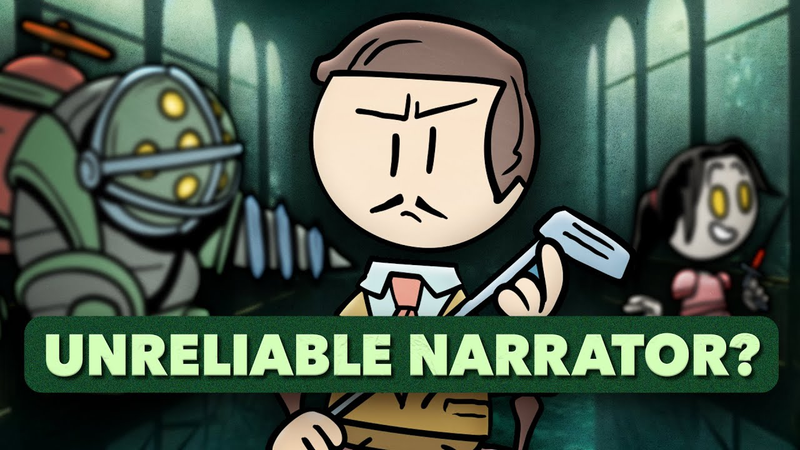
The Unreliable Narrator: When a Game Plays You
Key insights
6 takeaways- 01Implementing traditional unreliable narration is difficult in games because direct player agency makes it challenging to subvert perspectives without undermining the player's sense of accomplishment.
- 02Game designers effectively simulate unreliable narration by recontextualizing player actions rather than relying on a traditional unreliable narrator.
- 03Titles such as Braid, BioShock, and Gone Home successfully utilize this method to challenge player perceptions through environmental storytelling and narrative shifts.
- 04The strategy is uniquely potent in interactive media because it makes players feel personally responsible for the subverted events, deepening their engagement with themes of free will and consequence.
- 05This technique forces players to reinterpret their past choices and behaviors after a late-game revelation, despite consistent game mechanics.
- 06While the industry lacks a standardized term for this design principle, it remains a powerful tool for encouraging critical reflection on the consequences of gameplay.
Ask AI about this video
Transcript
the unreliable narrator is one of the most interesting mysterious thought-provoking and Powerful tools we have at our disposal it allows writers to tell stories in ways otherwise they never could and gets readers to rethink everything that they've read however as a narrator myself I can quite reliably say that the unreliable narrator is rarely used in games why [Music] thanks so much to nebula for reliably being the best way to watch a ton of great content including ours early and ad-free so before we dive into games themselves let's just nail down exactly what the unreliable narrator is in most novels there's a lot of narrating going on you know all those parts that don't have quotation marks around them that let you know what's happening or how the world looks well we don't always think of it this way but that narration does have to be coming from somewhere it can be an omniscient narrator who basically knows everything and is totally removed from the book or it could be a character in
the novel who's telling you the story and when it's the latter there's a real interesting opportunity for fallibility you see because by default we just sort of trust the narrator it's the only perspective we get it's kind of like getting your news from only one source right so we just go along trusting what we're reading is what's actually happening but what if it's not what if we find out or piece together that our narrator hasn't been telling us the truth well then it puts a whole new spin on everything we read in the book all of a sudden meanings emerge from seemingly meaningless things incongruities snap into place and now shed new light on the core of the story we sit and Ponder we try to suss out the truth and in the end we do end up thinking more about the book and this is great this is interactive this is what we want in our games but on the other hand we rarely use the unreliable narrator in the gaming space and I think that's because it's actually very hard to do in a medium that's already interactive first we don't need a narrator as much since we're seeing the world as it's laid out
we're experiencing what's going on rather than being told about it and second people usually think of the main character that they're playing in a game as themselves now this may sound weird on the surface to you but think about it this way how many times have you been talking to someone about a video game and they've said to you oh man I can't believe I did blank maybe not those exact words but people describe it in that way now think about how many times someone has described their gameplay experience by saying oh Mario or link did blank or oh man when Commander Shepard did blank that just blew my mind not as much right because even and character-driven choice driven games by putting you in the driver's seat of those characters we as players tend to think of those characters actions as our actions and their choices as our choices which inherently makes it much harder to get us the player on board or feeling satisfied when we're told the actions that we took as a character aren't what they seemed because we just experienced them from a first-hand perspective this is compounded by the fact that most of the reasons that a narrator can be
unreliable they're too young to fully understand what's going on or they have an ulterior motive or they're in denial or they're insane or whatever those are all very hard to communicate in an interactive medium when that person is you for example in a game it would be hard to make it so I don't see a romantic tension between two adult characters just because the character I'm playing in the game is a child though that's not to say it can never be done I mean look at Silent Hill 2 right it does a brilliant job of something like this they get away with what they're doing because they deliver the experience almost entirely through metaphor in World building so that way when the reveal that I will not be spoiling here happens it does exactly what the reveal of an unreliable narrator is supposed to do and makes you think about everything else in the game and how it fits with what you now know and I'm sorry if I'm getting a little into the head weeds here but I've been thinking about this a lot more often though games opt for a different technique one that's similar to the unreliable narrator but uniquely suited
to the interactive medium of games recontextualizing your actions a perfect example of this is braid while the narrative in book form would most likely have utilized an unreliable narrator in the game they give you a narrator the text bits who set up your understanding of the actions you're performing in game and then at the end completely recontextualize what all of the actions you've performed in the game mean this is subtly different from the unreliable narrator as all your actions are still real and true they just don't mean what you thought they meant and you cannot pull that off in a non-interactive medium another great example of this that I love is BioShock but you could honestly say that rides the Line Andrew Ryan serves as a sort of unreliable narrator for the piece but his big reveal also completely Alters the context for all of your previous actions it forces you to think about what you've done and thereby engage further with the game's core themes of Free Will and personal power versus responsibility again this can't be done or at least
nowhere near as effectively in any other medium because the player is doing the actions of the game because they identify themselves as the ones perpetrating them subverting the meaning of those actions just hits harder there was actually an old indie game commenting on the war on terror where you played a drone pilot that had to go send drones to blow up a terrorist in a town square but when you do it more terrorists appear in the town square and eventually through playing you realize that whenever you blow up a terrorist you can't help but hit a few civilians with the blast and every civilian you you kill makes other civilians turn into terrorists now is that on the nose sure but it is another example of an effective subversion in the medium of games and it's just super interesting to think about it like that gone home is another good example it's a game where the play is all in the searching of the house that you're in and sussing out what's going on through environmental Clues at first you might think it's a horror experience you're looking for whatever strange or Supernatural event left you coming home to find your family
missing but when you find out what's really going on all those environmental Clues you saw even the very Act of you searching takes on a very different meaning this type of recontextualization is our unreliable narrator in the game design space and it does make the player think more about the game they're experiencing like an unreliable narrator would do in other mediums and you know I keep trying to come up with a name for this specific concept because it's not exactly an unreliable narrator anymore right but it's also not something like unreliable mechanics after all the whole idea is that the mechanics play the same way throughout the game it's just that a revelation within the game makes us rethink what they mean or the meanings of what we've done with them yeah my brain is already kind of melting talking about this but actually if any of you have a term other than recontextualized action or action recontextualization please let us know in the comments or tweet them at us if you are watching on nebula thank you very much because I would love to hear them and I know James
really wants to have some fun shorthand to throw around to his team that encompasses the design principle of hey let's pull the rug out from under the player now and with that your very reliable narrator bids you a do until next time I'm really three Zoe's in a trench coat I knew narrator Matt wasn't real David you owe me five bucks wait what are y'all doing oh you're looking for more like gaming content and stuff actually I was just about to watch the new Rasputin video over on nebula if you're down for that sort of thing wait hold on casual man how is that even possible that's not out yet come on man you know I like to stay on top of what folks are talking about in video games and I watch a ton of gaming content earlier than I could anywhere else over on nebula oh you're talking about nebula first where us and a bunch of our creator friends post our content earlier on nebula then you can see it on YouTube nailed it but yeah actually thanks to nebula's help we can post all of our main extra history series episodes at least a week early over there but you already knew that right man oh yeah uh totally you didn't know that actually what I love about nebula is watching a ton of my favorite creators like game
makers toolkit Patrick Willems and real science all without ads I know right ads are the worst not to mention all of the original can't see anywhere else content over on nebula yeah the originals are kind of the best I just started watching real-time history's new series red Adams it's all about how Stalin pushed Russia to the breaking point to develop his own Atomic weapons after the end of World War II just a super interesting look at the race for nuclear power and its long-term consequences seriously chef's kiss no notes well dang casual Matt with all that great content nebula sure must cost an arm and a leg stop talking like a used car salesman you monster you know that folks get a discount when they sign up for an annual plan using our link below works out to something like 2.50 a month which is actually kind of Bonkers so that's maybe where the pitch voice came in I don't even know dang I pay more for a coffee than that hey man no judgment whatsoever we all got our Kinks look I could keep talking forever to myself about all of the things that I love about nebula but at the end of the day I think you're gonna have to experience it for yourself all I can tell you is I really believe in what we're doing over there and don't forget that when you sign up again using our
Link in the description you'll also be directly supporting our channel in the process you know what I'm not even gonna ding you for that Paris because straight up that's super true and how it works again everybody thank you so much for helping to make our content possible and yeah come at me on Twitter say hi let me know what you think of nebula I would really like to hear your thoughts and I'm looking forward to all y'all just experiencing a better way to watch your videos on the internet foreign big old thanks to Skyler Holmes kuya koi Joseph blame Dominic valenciana Casey muscha archolite games Angela valenciana and Ahmed Zia Turk for being fantastic legendary patrons [Music]
Summary
The unreliable narrator is a foundational literary and cinematic device used to challenge audience perceptions and encourage critical engagement with a story. However, this technique is difficult to implement in video games because the medium is inherently interactive. While literature relies on a narrator to filter information, games place the player in the driver’s seat, fostering a sense of agency where players identify their own actions as the character’s actions. This direct participation makes it challenging to subvert the player’s perspective without undermining their sense of personal accomplishment or agency.
Rather than utilizing traditional unreliable narration, game designers often employ a technique of recontextualizing player actions. In this model, the game mechanics remain consistent, but a late-game revelation forces the player to reinterpret the meaning of their previous choices and behaviors. Titles such as Braid, BioShock, and Gone Home exemplify this approach by using environmental storytelling or narrative shifts to transform the player’s understanding of their past actions. This method effectively mirrors the intellectual impact of an unreliable narrator, compelling players to reflect on core themes like free will, responsibility, and the consequences of their gameplay.
This design strategy is particularly potent in interactive media because the player feels personally responsible for the events that are being subverted. By pulling the rug out from under the player, developers can create profound moments of realization that are unique to the gaming experience. While the industry lacks a standardized term for this specific design principle, it remains a powerful tool for deepening player engagement and challenging the assumptions made throughout the course of a game.












Comments