GameStop’s financial performance for the second quarter ending July 30, 2022, reflects a period of significant strategic transition as the company attempts to pivot from a traditional brick-and-mortar retailer toward a technology-led digital ecosystem. This transformation is underscored by the launch of a digital asset wallet and an NFT marketplace. Despite these efforts, the company faced financial headwinds, reporting a net loss of $108.7 million for the quarter, an increase from the $61.6 million loss recorded during the same period in 2021. This decline was driven by a 4% reduction in net sales, rising operating expenses associated with corporate restructuring, and supply chain constraints.
The company maintains a stable liquidity position, holding $908.9 million in cash and cash equivalents alongside $399.1 million in available borrowing capacity as of the end of July 2022. Total assets are valued at approximately $2.8 billion against $1.46 billion in liabilities. However, cash flow dynamics have shifted notably; the first half of 2022 saw a $407.3 million outflow from operating activities, contrasting sharply with the prior year’s financing inflows. Furthermore, the firm recorded a $33.7 million impairment charge related to digital assets and continues to manage a $168.6 million federal income tax receivable under the CARES Act.
Operational risks remain a central concern, particularly regarding the company’s expansion into digital assets. Management acknowledges that the nascent NFT marketplace and wallet initiatives are subject to extreme market volatility, cybersecurity threats, and potential smart contract failures. Furthermore, the evolving regulatory landscape surrounding digital assets poses a risk of increased scrutiny or litigation if these assets are classified as securities. While the company continues to cooperate with an ongoing SEC investigation into historical trading activity, it maintains that this inquiry is unlikely to have a material adverse impact on its operations or financial standing.
GameStop · 2026
GameStop · 2026
GameStop · 2025
GameStop · 2025
GameStop · 2025
GameStop · 2025
GameStop · 2024
GameStop · 2024
GameStop · 2023
GameStop · 2022
GameStop · 2021
GameStop · 2021
UnitedHealth Group
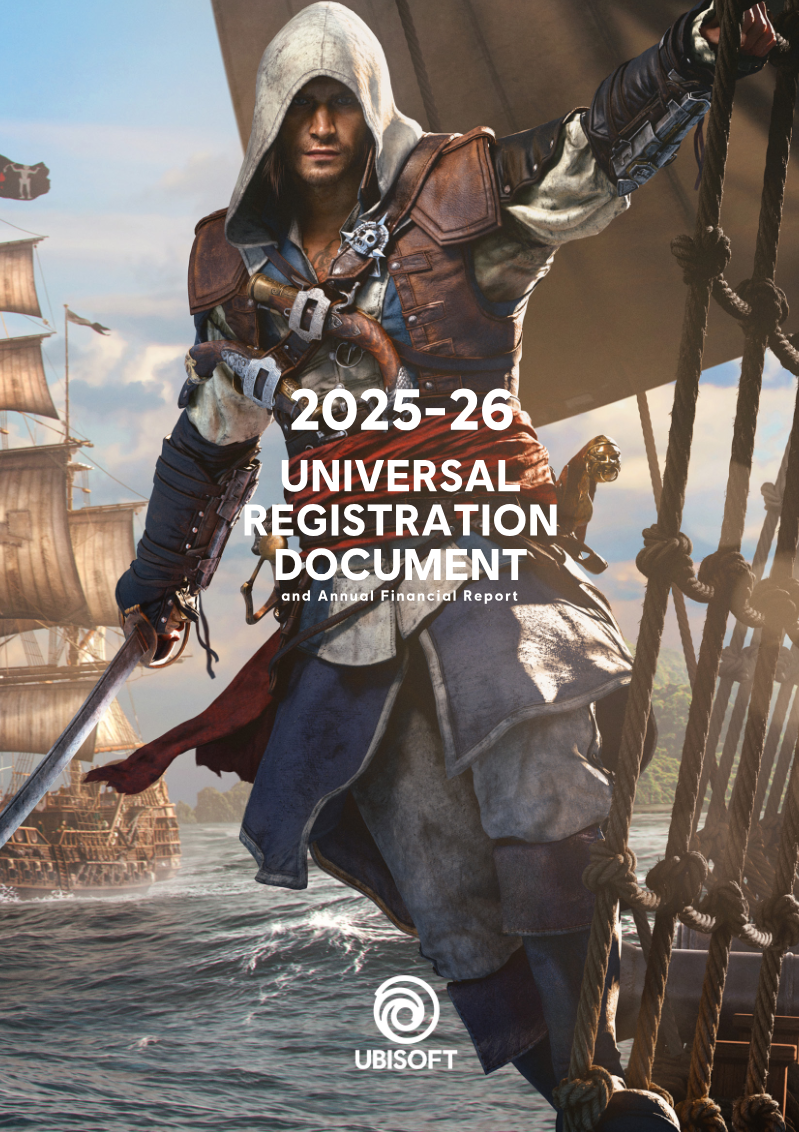
Ubisoft · 2026
Sony Group Corporation · 2026
Enthusiast Gaming Holdings · 2026
Drake Star Partners · 2026
Aream & Co · 2026
Capcom · 2026
Modern Times Group · 2026
Bandai Namco · 2026
Aream & Co · 2026
Take-Two Interactive · 2026
Take-Two Interactive · 2026