1 free read left. Create a free account for unlimited reading + AI research.
Create free accountArticle European Conference on Games Based Learning (ECGBL)
1 free read left. Create a free account for unlimited reading + AI research.
Create free accountArticleEuropean Conference on Games Based Learning (ECGBL)
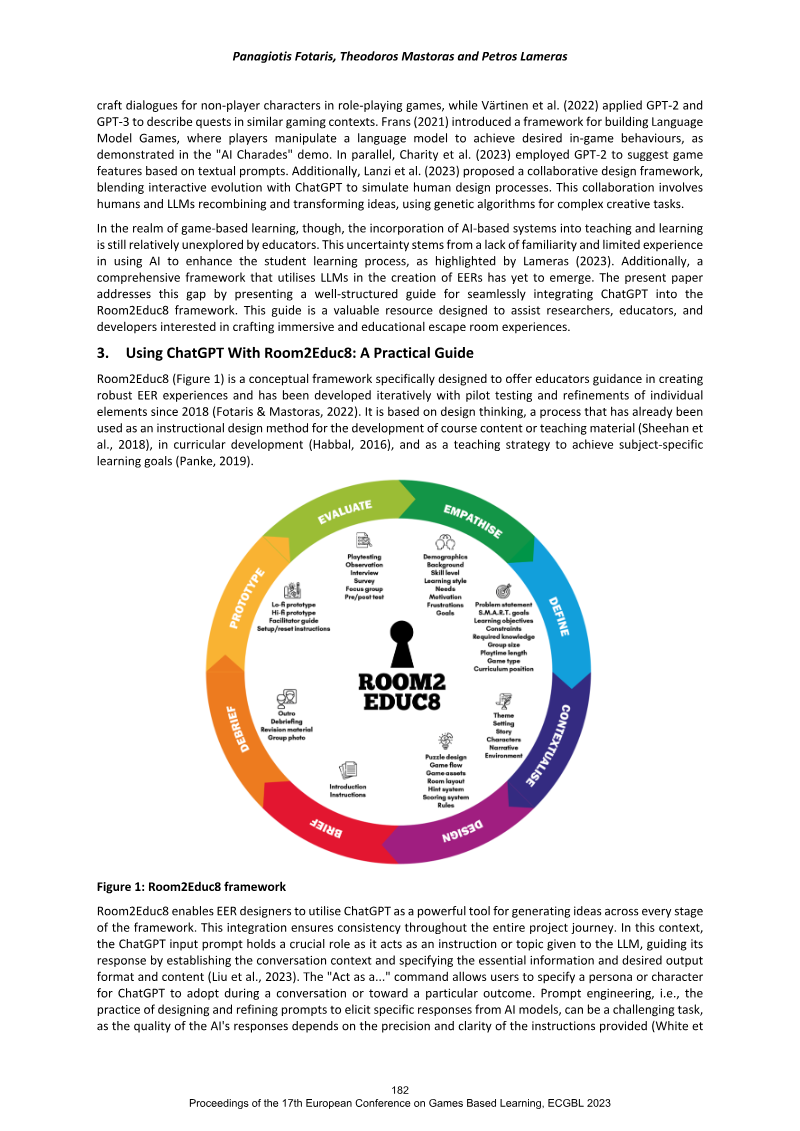
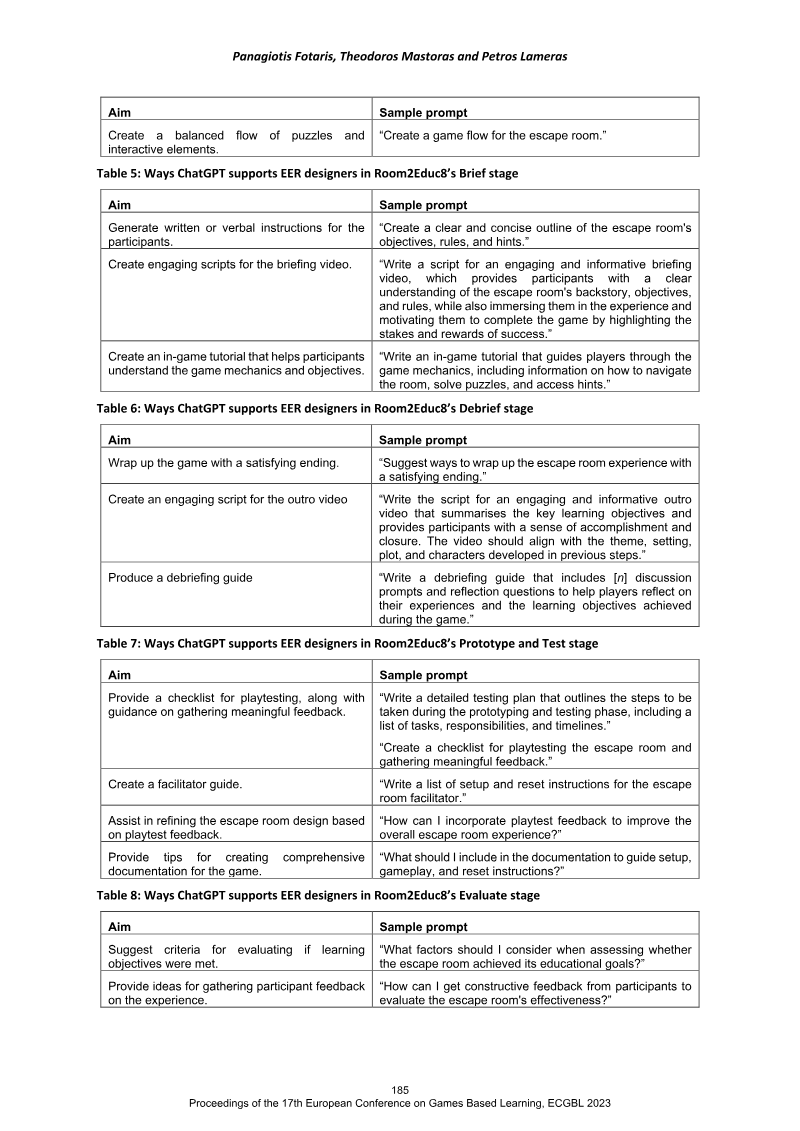
This study examines how 23 postgraduate UX students used vibe coding, a natural-language-led form of AI-assisted programming, to implement educational escape rooms based on the Room2Educ8 framework. Working across four group cases, students adopted the approach on their own initiative rather than through formal instruction. The central thesis is that AI-assisted coding can convert design plans into playable, testable prototypes, but that it introduces difficulties around specifying behaviour, controlling generated output, aligning with pedagogical goals, and documenting decisions.
Across the four prototypes, testing exposed ambiguous rules, weak feedback mechanisms, and progression problems that led groups to revise their designs. AI-generated interfaces frequently appeared complete while still requiring correction, and prompt logs did not consistently capture the reasoning behind accepted or rejected outputs. Based on these patterns, the authors propose Room2Educ8-AIP, a preliminary seven-action iterative loop for the Prototype stage: specify, generate, inspect, revise, playtest, align, and document.
The authors are explicit about the limits of their evidence. Development time, learning effectiveness, and comparative outcomes against non-AI approaches were not measured, so the proposed extension remains provisional and its benefits for learning are unverified. The study's scope is a small, context-specific set of student projects within UX education.
The accompanying reference base, comprising 17 works, reflects an emerging and largely recent research literature from 2020 to 2026. It spans educational escape rooms, gamification, digital escape room design using generative AI and large language models, and vibe coding, indicating that AI-assisted escape room prototyping is still at an early stage of scholarly development.



European Conference on Games Based Learning (ECGBL) · 2026



European Conference on Games Based Learning (ECGBL) · 2026



European Conference on Games Based Learning (ECGBL) · 2026



European Conference on Games Based Learning (ECGBL) · 2026



European Conference on Games Based Learning (ECGBL) · 2026



European Conference on Games Based Learning (ECGBL) · 2026



European Conference on Games Based Learning (ECGBL) · 2026



European Conference on Games Based Learning (ECGBL) · 2026



European Conference on Games Based Learning (ECGBL) · 2026



European Conference on Games Based Learning (ECGBL) · 2026



European Conference on Games Based Learning (ECGBL) · 2026



European Conference on Games Based Learning (ECGBL) · 2026



European Conference on Games Based Learning (ECGBL) · 2026



European Conference on Games Based Learning (ECGBL) · 2026
DiGRA · 2026