1 free read left. Create a free account for unlimited reading + AI research.
Create free account
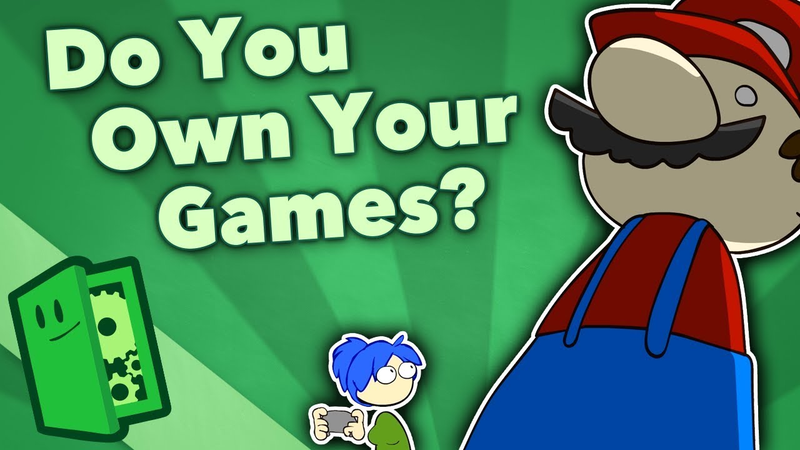
Do You Own Your Games? - Retrogaming Responsibly - Extra Credits
Key insights
6 takeaways- 01While legal action is primarily focused on large-scale distributors of pirated content, individual users who download or rip ROMs remain technically vulnerable to copyright infringement claims.
- 02Intellectual property rights for video games persist even after a development company becomes defunct, as these rights are typically sold or retained by other entities.
- 03Purchasing a video game does not grant ownership of the software but rather a limited license to play the specific copy, leaving the rights holder with exclusive control over reproduction and distribution.
- 04The archival exception in U.S. law, which allows for backup copies of computer programs, is interpreted by rights holders like Nintendo as strictly for archival purposes rather than for active use on emulators.
- 05There is a growing industry call for legislative updates to copyright law to expand fair use or archival provisions, specifically to ensure the accessibility of gaming history for future generations.
- 06Video games lack a comprehensive, legally protected framework for long-term preservation, creating a significant risk that rare or abandoned titles may be permanently lost.
Ask AI about this video
Transcript
Remember that game you love? That old PC or console title that's long since gone off the market and been abandoned by its creators? That game from a company that went defunct 15 years ago and won't be brought back to life anytime soon? Well, if I was a gambling man, and I am, I'd be willing to wager that you could go find a ROM of that very game online right now and play it for free. As a consumer, this seems great. It helps preserve our history and gives people access to games that might be impossible to get any other way. But, is it actually legal? To answer that question, we've brought in Ryan Meyer, an intellectual property attorney at the law firm of Dorsey and Whitney LLP. Ryan has experience in helping clients protect their intellectual property, or IP, such as copyrights, trademark rights, and patent rights, as well as defending clients who've been accused of infringing on others' IPs. And of course, this being an animated show on YouTube, all of the
information presented here is for educational purposes only. And in no way does it constitute legal advice. If you have a legal issue relating to the subject matter, or if you think you should be getting legal advice from cartoons, we recommend that you consult an attorney. To keep things simple, we'll be referencing ROMs throughout this episode, but these concepts can also apply to any form of abandonware. Now, to figure out what a person can legally do with the ROM, we first have to think about who owns the IP rights for it. And in cases like this, we're mostly talking about the copyright. So, we'll focus on them. Though, to be clear, if you were, say, planning to lift just a game's engine, things like patent law could come into play. Now, copyrights are owned by the author of the work, such as a development company that hires employees to make a game, unless the author assigns the rights to someone else or dedicates them to the public domain. And the owner of said copyright of a ROM actually has a bundle of separate rights, such as making copies of the game and distributing it, whether digitally or physically, or making derivatives of the game, such as expansions, mash-ups, mods, and enhanced versions. So, what happens if the owner,
typically the company that developed or published the game, is long since defunct? This is where it gets complicated. Yeah, right here, like it wasn't before. Because even if the original creators went out of business, it's fairly likely that they sold their IP to someone else when they closed up shop. And sometimes companies that have otherwise gone out of business can exist for years doing nothing other than holding on to IP. So, any unauthorized use, reproduction, distribution, etc. of a company's seemingly abandoned game often still constitutes infringement. Plus, it can be difficult to know if and when an IP owner will decide to begin actively monitoring infringement and enforcing its rights. Of course, the more egregious the infringement, let's say setting up a website to allow unlimited public downloads of the game versus just downloading a copy for personal use, the more likely it is that the IP owner will notice and try to do something about it. This is a hard pill to swallow for retro gaming fans like myself interested in games that are no longer on the market, especially if the IP owner still exists and tends to protect its IP. For example, suppose
you're interested in a rare game from the original Nintendo Entertainment System. Nintendo still very much exists and has spent several years now successfully shutting down websites for unlawfully providing NES ROMs for download. Now, IP owners like Nintendo tend to only sue illegal distributors and not those people who downloaded the games, but technically, since downloading a ROM you don't own is still infringement, there's always a chance, no matter how slight, that Nintendo could identify you through download logs and decide to make an example of you. But now you may be asking, what rights do you as a user have if you've already legally purchased a copy of the game? Did that purchase give you the right to download the game's ROM? Uh no. Because what you're really buying when you buy a game is the express or implied license to install and play that specific copy of the game. And that's whether you bought a physical or a digital copy. Really, the only difference is if you bought a physical copy of a game, you also generally have the right to resell your disc or cartridge, but you don't have the right
to make copies or derivatives without the copyright owner's permission. In the US, however, there is one important exception that applies only to lawfully obtained computer programs, the right to make an archival copy. If you own the original, you own the archival copy. But if you transfer ownership of the original to someone else, you must either destroy your archival copy or simply give it to the new owner. And some people have interpreted the archival right to mean that it's okay to download or rip one copy of a ROM for a game that you already own. For example, under this interpretation, if you own a Super Mario Bros. 3 NES cartridge, you could download the ROM for Super Mario Bros. 3 or rip it from your own cartridge and then play the copy on your PC or handheld device with an emulator. Seems reasonable, but of course, Nintendo completely disagrees with this interpretation. According to them, the archival exception is for archiving purposes only. It doesn't let you make a second copy for any other use. And while this hasn't been explicitly tested in court, legally, Nintendo may be correct.
Classifying a ROM that you're playing actively on an emulator as an archival copy probably does stretch the meaning beyond what's intended by the copyright statute. This, of course, presents a challenge to all of us. If up-and-coming designers, artists, composers, and even critics don't have access to the games that made the medium what it is today, and if they can't look at the stepping stones that led us to modern gaming to get a perspective on how it grew and why it evolved the way it did. These are legitimate concerns. As in any field, people working in or studying the video game industry really need to understand its history and roots and not just its current state. Luckily, retro gaming has become bigger and bigger business and you can find almost anything online one way or another. Plus, at the same time, more and more games are seeing re-releases. But there are still roadblocks. What if you can't access a game because it's too rare or expensive to legally obtain? Or what if legal copies simply no longer exist and an unauthorized download is the only way to obtain it? If we were talking about something other than software, say a book, film, or piece of music, you could
probably use a public library or other archive to track it down and examine that piece at a relatively low or even no cost. Few such options exist for video games, though the Internet Archive is one, but none are as comprehensive and some are on shaky legal ground. So, what can we do? Well, one solution that gamers can pursue is to call their US legislators and ask for the copyright laws to be updated to better cover video games, particularly abandonware. Because even some slight changes of the fair use or archival provisions could give users access they want to games while still protecting the rights of IP owners. Because if we don't find a reasonable legal way to archive and access video games like we do with other media and their copyright owners don't keep them available, we run the risk of losing some games and parts of our history forever.
Summary
The legal landscape surrounding video game ownership and the use of ROMs is complex, often leaving consumers with misconceptions regarding their rights. While many players believe that purchasing a game grants them ownership of the software, they are actually acquiring a limited license to play that specific copy. Copyright law grants the original creators or current rights holders exclusive control over reproduction, distribution, and the creation of derivative works. Even when a development company becomes defunct, the intellectual property is frequently sold or retained by other entities, meaning that unauthorized distribution of these games remains a form of copyright infringement.
A common point of contention involves the archival exception in United States law, which permits owners of computer programs to create a backup copy. Some users interpret this as a legal justification for downloading or ripping ROMs of games they already own. However, rights holders, such as Nintendo, maintain that this exception is strictly for archival purposes and does not authorize the active use of these copies on emulators. While legal action is more commonly directed at large-scale distributors of pirated content, individual users remain technically vulnerable to claims of infringement.
The current situation creates significant challenges for the preservation of gaming history. Unlike literature or film, which benefit from established library and archival systems, video games lack a comprehensive, legally protected framework for long-term access. This creates a risk that rare or abandoned titles may be lost permanently. To address this, there is a call for legislative updates to copyright law that would better accommodate the unique nature of software, potentially expanding fair use or archival provisions to ensure that the medium’s history remains accessible to future generations of designers, critics, and players.



















Comments