1 free read left. Create a free account for unlimited reading + AI research.
Create free accountArticle DiGRA
1 free read left. Create a free account for unlimited reading + AI research.
Create free accountArticleDiGRA
Frome and Martin examine how scholars cite videogames across Game Studies and Games and Culture from their inception through September 2018.
Frome and Martin's study examines how game studies scholars cite videogames across the field's two principal journals, Game Studies and Games and Culture, from their inception through September 2018. Its central argument is that the field lacks a recognized canon of academically significant games, and it proposes a descriptive rather than prescriptive canon built from the titles scholars most often cite. The approach extends earlier work by analyzing full article texts instead of titles and abstracts alone, adding 2018 to the sample, excluding conference proceedings, and including editorials and reviews.
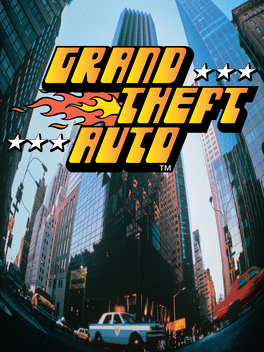
Across 582 articles published between 2001 and 2018, roughly 90 percent cite at least one game, a finding that sharply contradicts the earlier claim that nearly 40 percent do not. World of Warcraft leads with 159 citations, followed by Grand Theft Auto and Chess, and the distribution exhibits a pronounced long tail in which about 96 percent of cited games appear in fewer than ten articles. The two journals largely share a common canon, though its composition shifts considerably across six three-year periods, and only World of Warcraft, Grand Theft Auto, and Chess remain among the top five throughout.
The analysis also shows that influence is difficult to measure through citation counts alone. Highly influential titles such as Tetris frequently appear as brief touchstone examples rather than as primary objects of study, so the authors argue that influence should be assessed in several ways. Sports videogames illustrate this point: of 112 articles citing them, only five focus centrally on those games, yet the genre is widely used to develop broader, non-genre-specific concepts, which challenges the assumption that the field has neglected sports games. Over the eighteen-year span, the range of games cited broadens, and the authors contend that the resulting canon serves practical purposes, including teaching and coordinating responses to technical and legal barriers to research.
Each row is a game or company this document names, each column a document, oldest first. A mark means that document names it. Select a row to see those documents.

DiGRA · 2026

DiGRA · 2026



DiGRA · 2026
The Game Business · 2026