1 free read left. Create a free account for unlimited reading + AI research.
Create free accountArticle Eludamos: Journal for Computer Game Culture
1 free read left. Create a free account for unlimited reading + AI research.
Create free accountArticleEludamos: Journal for Computer Game Culture
It holds that renaming the field alone would not change the exclusion it sustains.
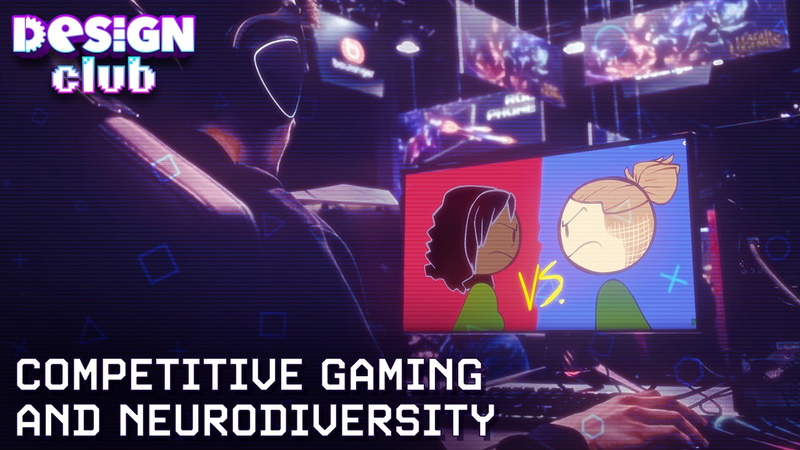
The article argues that framing competitive gaming as "esports," by borrowing the sports paradigm and its meritocratic narratives, obscures structural inequities and reproduces exclusion along lines of gender, disability, class, race, age, and geography. Its central thesis is that the problem lies less in the label itself than in the failure to critically interrogate the foundations of esports as a social and institutional construct. Renaming the field would not, on its own, alter the inequities it sustains. The authors instead call for deconstructing esports as a social practice that foregrounds bodies, identifying four ways bodies become relevant: the normative masculine athletic body, the hypervisibility of women's bodies as deviant, the invisibility of disabled bodies through design, and embodied infrastructural barriers.
The analysis draws on concrete illustrations, including women's exclusion from professional leagues, the "Ellie" controversy, the cost and design barriers faced by disabled players, and the concentration of high-end PC esports in wealthier regions, such as the late arrival of a League of Legends server in Africa. The authors conclude that inclusion efforts pursued without structural change risk legitimizing segregation and shifting responsibility onto marginalized players to adapt to an idealized norm.
The article's scope is broad in conceptual terms, spanning competitive gaming across multiple genres and regions, though its evidence is largely illustrative rather than systematic. Its reference base of roughly thirty scholarly works addresses esports, gender, masculinity, and sports history, including studies of gender dynamics in Overwatch and Hearthstone and of barriers in collegiate esports. Overall, the piece positions researchers themselves as implicated in reinforcing esports' idealized bodies and calls for a more critical, embodied approach to studying and enabling participation.
Eludamos: Journal for Computer Game Culture · 2026
DiGRA · 2025