1 free read left. Create a free account for unlimited reading + AI research.
Create free accountWhitepaperElsevier
Distilling the key insights…
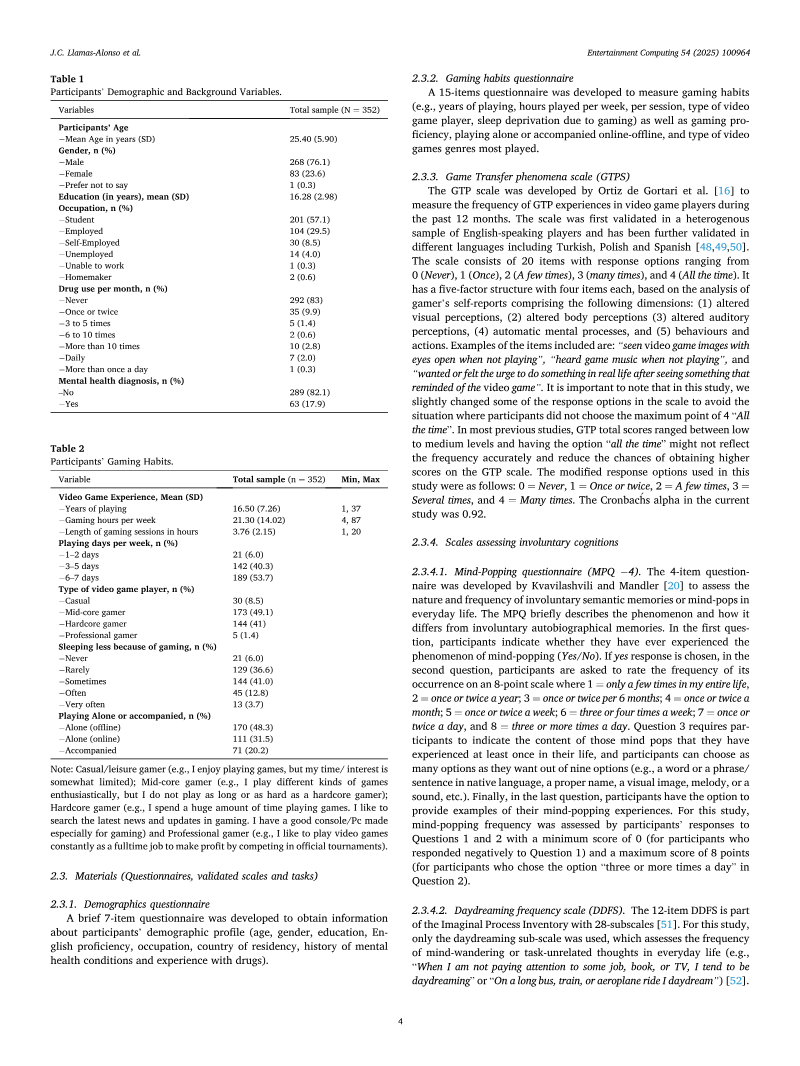
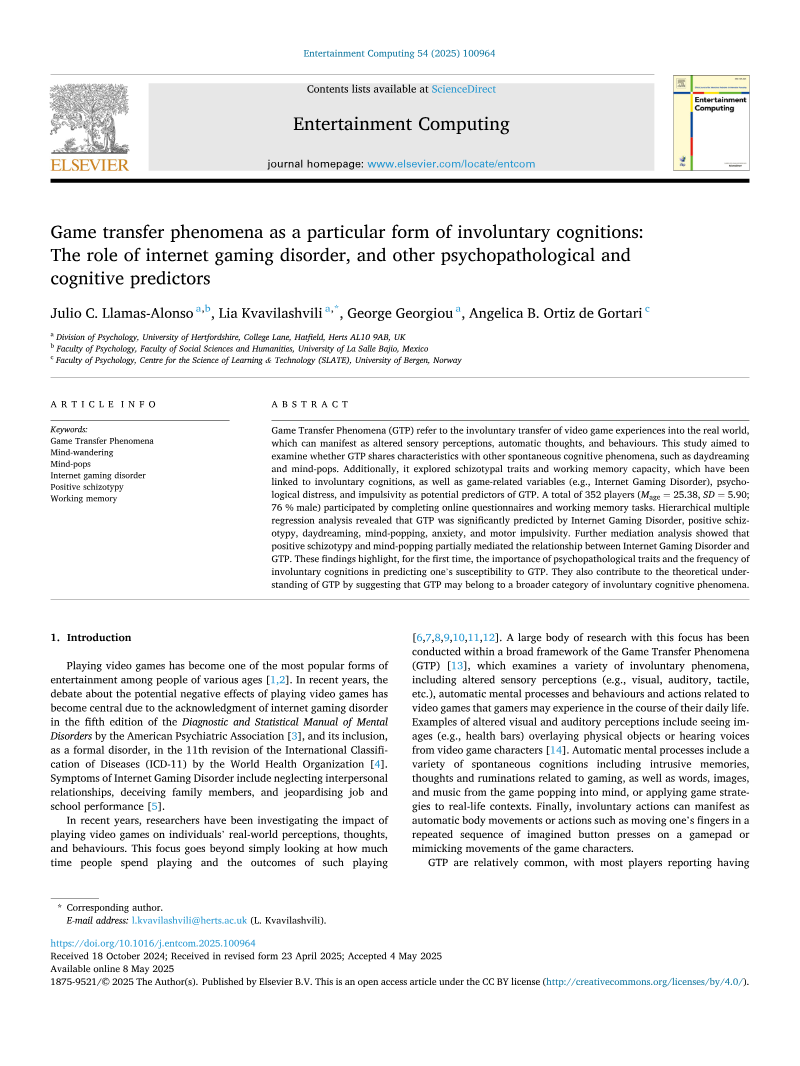
Game Transfer Phenomena represent a widespread category of involuntary cognitions where gaming experiences spontaneously intrude into real-life settings. Research involving 352 adult gamers indicates that 97 percent of participants experience these phenomena, suggesting they are a normative, albeit involuntary, cognitive process rather than an isolated anomaly. By framing these occurrences as a subset of broader spontaneous cognitive activities—akin to mind-popping and daydreaming—the study establishes that the frequency of these intrusions is primarily driven by individual psychological predispositions rather than the duration or intensity of gaming sessions.
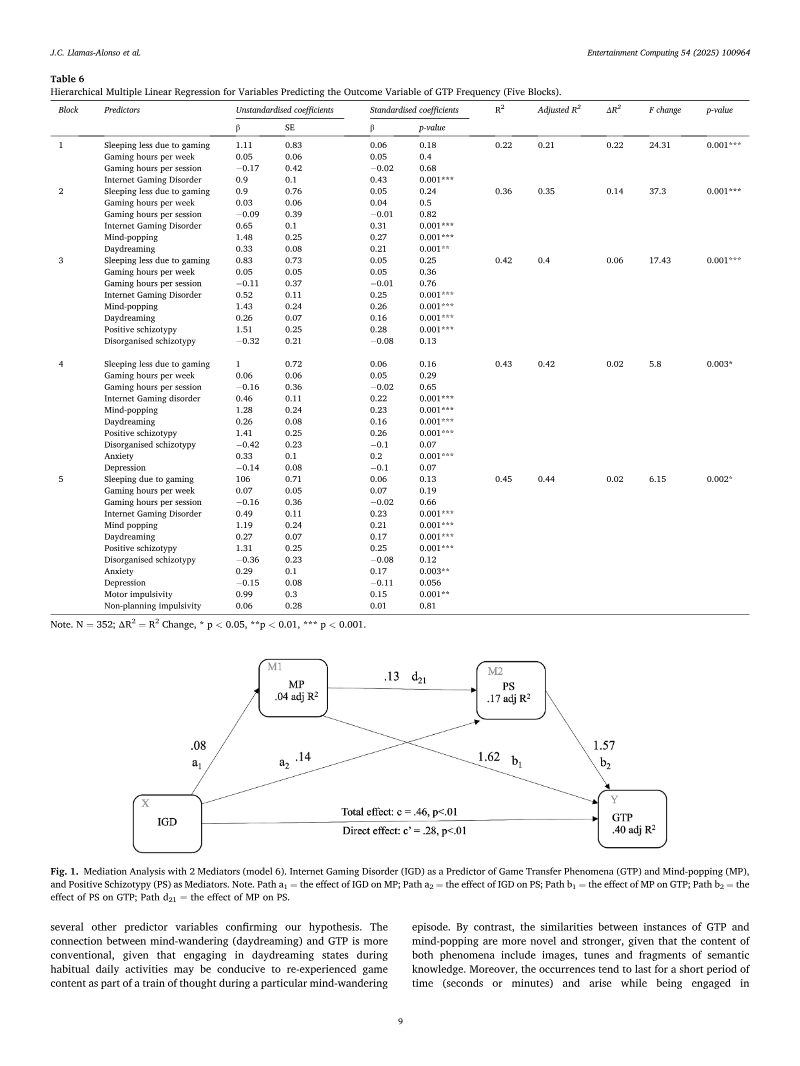
Statistical analysis reveals that Internet Gaming Disorder, anxiety, motor impulsivity, and positive schizotypal traits are the most significant predictors of these experiences, collectively accounting for 45.6 percent of the variance in frequency. Notably, the relationship between problematic gaming behaviors and the occurrence of these phenomena is partially mediated by mind-popping and positive schizotypy. While the study explored the potential role of cognitive limitations, it found no significant correlation between the frequency of these experiences and working memory capacity, reinforcing the conclusion that these intrusions are rooted in personality traits and susceptibility to spontaneous thought patterns.
These findings suggest that Game Transfer Phenomena may share underlying neural mechanisms with the brain’s Default Mode Network, which governs internal mentation and mind-wandering. Because these cognitive consequences are closely linked to psychiatric comorbidities and individual psychological profiles, future research should prioritize neuroimaging to clarify the biological basis of these intrusions. Ultimately, the evidence shifts the focus of gaming-related cognitive research away from simple usage metrics and toward a deeper understanding of how gaming interacts with the gamer’s existing psychological and neurological landscape.
Entertainment Computing · 2026
Entertainment Computing · 2026

Entertainment Computing · 2025
Elsevier · 2025
Elsevier · 2025

Entertainment Computing · 2024
Entertainment Computing · 2024
Entertainment Computing · 2024
Elsevier · 2024
Entertainment Computing · 2023
Entertainment Computing · 2023
Entertainment Computing · 2022
Kinephanos · 2026















Comments