1 free read left. Create a free account for unlimited reading + AI research.
Create free accountWhitepaper DiGRA
1 free read left. Create a free account for unlimited reading + AI research.
Create free accountWhitepaperDiGRA
The underlying ludic structure, however, has barely changed.
Pinchbeck's analysis argues that first-person shooters have grown markedly more sophisticated in their presented worlds, through improved graphics, artificial intelligence, and narrative integration, while their underlying ludic structure has barely changed since the earliest days of the genre. Drawing on James J. Gibson's concept of affordances, the study classifies in-game objects into static, environmental, state-changing, and singular or critical types, separating those that matter to play from those that are merely decorative. Its central conclusion is that a player's core actions in a game such as Quake 4, namely moving through space and acting on objects, reduce to a small, fixed set of parameterized affordances. This limited repertoire is presented as the root cause of a persistent tension between the depth of the game's reality and the simplicity of its play.
The analysis extends this diagnosis by naming the discrepancy the system/presented reality gap. Because the mechanical core remains constant while the presented world becomes richer, the gap must be managed rather than eliminated. The argument identifies homodiegetic devices, including narrative framing, radio broadcasts, and in-world characters such as Strauss in Quake 4, as the primary means of bridging it. These devices give otherwise thin player actions contextual meaning and gradually train players to accept constrained affordances as natural. The author concludes that as shooter worlds grow more sophisticated, they rely increasingly on carefully crafted content, a dependence that accounts for the renewed prominence of story-driven shooters.
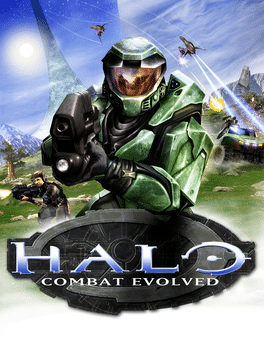
The scope of the analysis centers on the first-person shooter as a genre, with specific attention to landmark titles including Quake 4, Half-Life, Half-Life 2, Marathon, Halo: Combat Evolved, and Far Cry. Its theoretical grounding draws on ecological psychology and studies of presence in virtual environments, notably Zahorik and Jenison's 1998 work. The analysis is conceptual and affordance-based rather than empirical, offering a framework for understanding design tensions in the genre rather than quantitative findings about players or markets.
DiGRA · 2016
DiGRA · 2016

The Game Business · 2026