Key insights
5 slides
The headline number
U.S. video game spending fell 10% year-over-year in July 2026.
Total consumer spending reached $4.5 billion. The market currently tracks 2% behind 2025 levels through the first seven months of the year.
Hardware slump
Hardware spending dropped 29% year-over-year to $282 million in July.
Hardware unit sales plummeted 39% compared to July 2025.
Hardware revenue. Hardware spending dropped 29% year-over-year to $282 million, marking the worst July performance for the sector since 2020.
Content decline
Content spending decreased by 9% year-over-year to $4.1 billion.
Mobile content saw the most substantial drop, while console and PC sectors also faced declines. Content accounts for the bulk of the market.
Content total. Content spending totaled $4.1 billion in July, a 9% decrease year-over-year.
Software charts
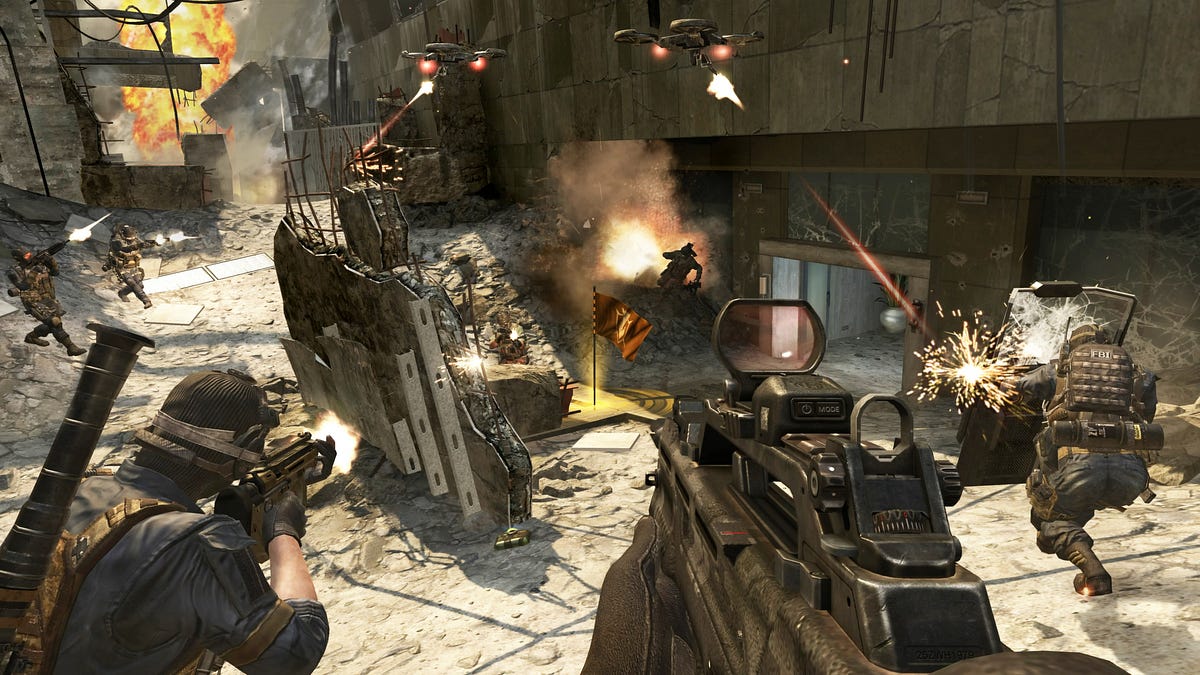
Call of Duty: Black Ops II was the best-selling game of July 2026.
The title secured top positions following its arrival on PlayStation platforms. Re-releases dominated the charts during the month.
Top seller. Call of Duty: Black Ops II was the best-selling game of July 2026, driven by its new PS4 and PS5 port.
Switch 2 pace
Nintendo Switch 2 remains 11% ahead of the original Switch’s pace.
This occurs despite a 51% year-over-year unit sales decline in July.
Switch 2 pace. The Nintendo Switch 2 remains 11% ahead of the original Switch’s sales pace after 14 months on the market.
1 / 5
Ask AI about this report