U.S. Video Game Industry: Technological Advancements and Privacy Issues
14 pages~10 min full read
Key insights
6 slides
Market size
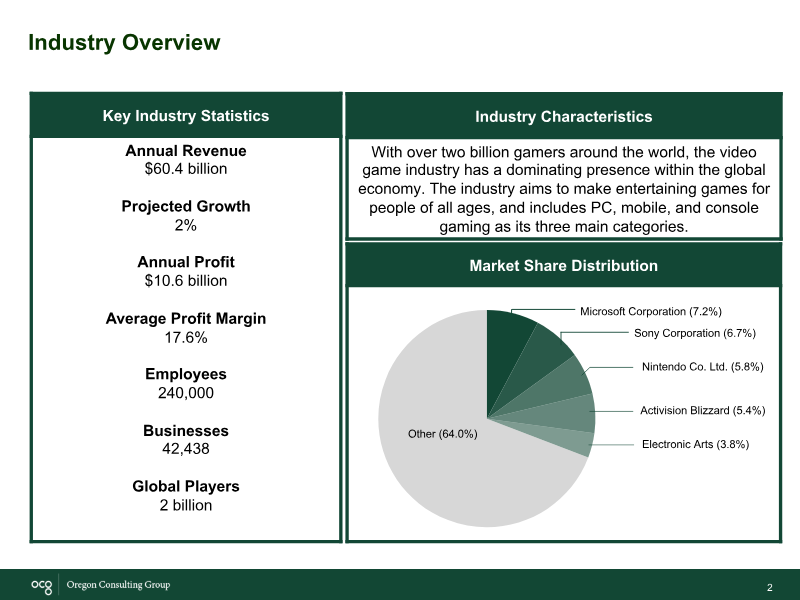
The U.S. video game industry is a significant global economic force.
The sector generates $60.4 billion in annual revenue. It supports 240,000 employees across more than 42,000 businesses.
Sector resilience
The video game sector demonstrated significant resilience during the COVID-19 pandemic.
This resilience was characterized by surging engagement metrics on platforms. These platforms include Steam and Twitch.
Security threats
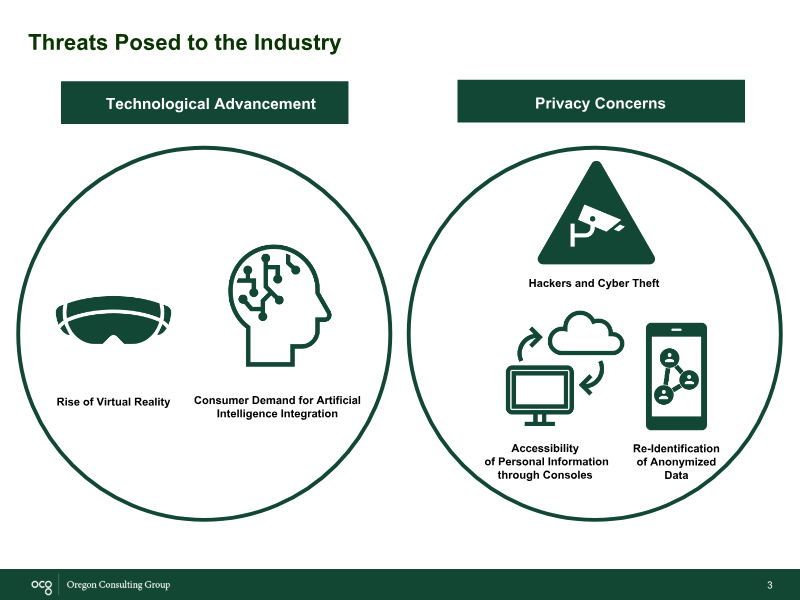
Gaming platforms face severe cybersecurity threats, with billions of attacks recorded.
Over 12 billion cyberattacks were recorded against gaming websites.
Page 12 of the report12 billion
Cyberattacks recorded against gaming websites.
- Period of attacks
- 17 months
Privacy concerns
Privacy risks are exacerbated by data re-identification and psychometric evaluations.
The re-identification of anonymized data contributes to privacy risks. The use of psychometric evaluations in games also heightens these risks.
Balancing act
The industry must balance aggressive technological integration with transparent privacy policies.
This balance is needed to maintain consumer trust. Technological integration includes AI-driven character development and text-to-speech software.
Consumer demand
Consumer demand is shifting toward immersive, community-based gaming experiences.
This shift is demonstrated by the market success of titles. An example of such a title is Pokémon Go.
1 / 6
Ask AI about this report