Updated Apr 30, 2026 by NEXON Co.
Financial
Published by NEXON Co.
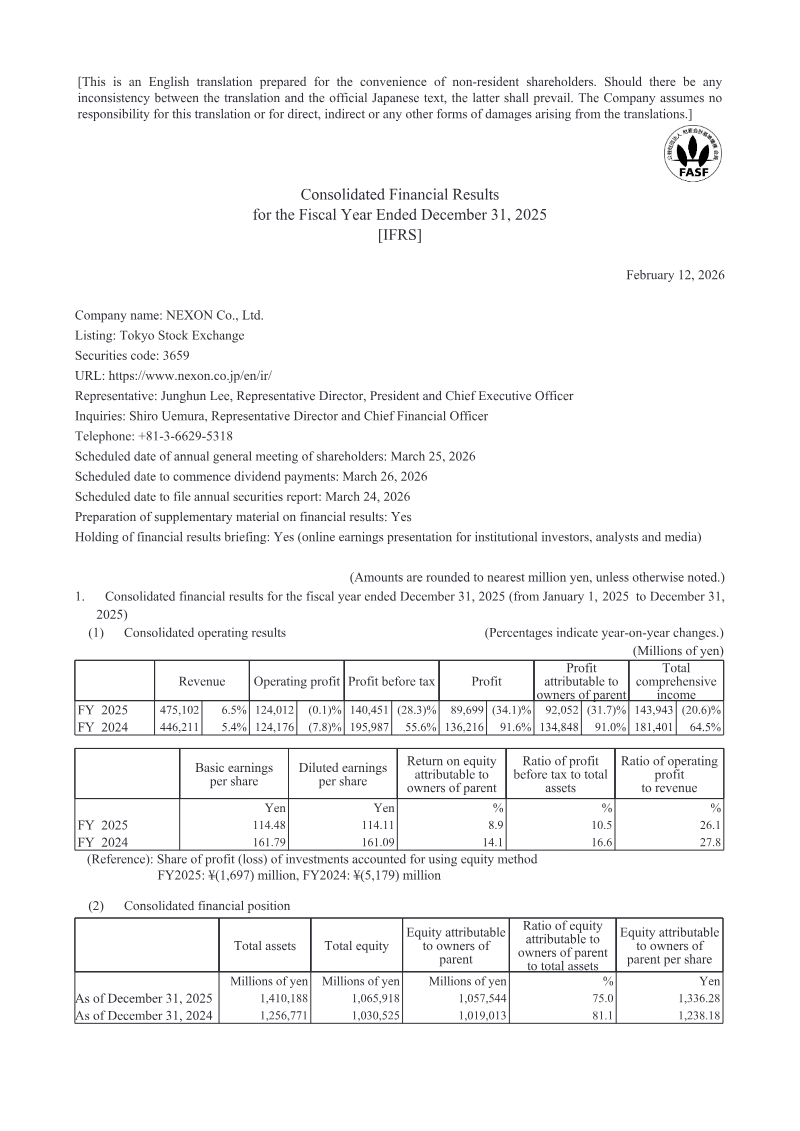
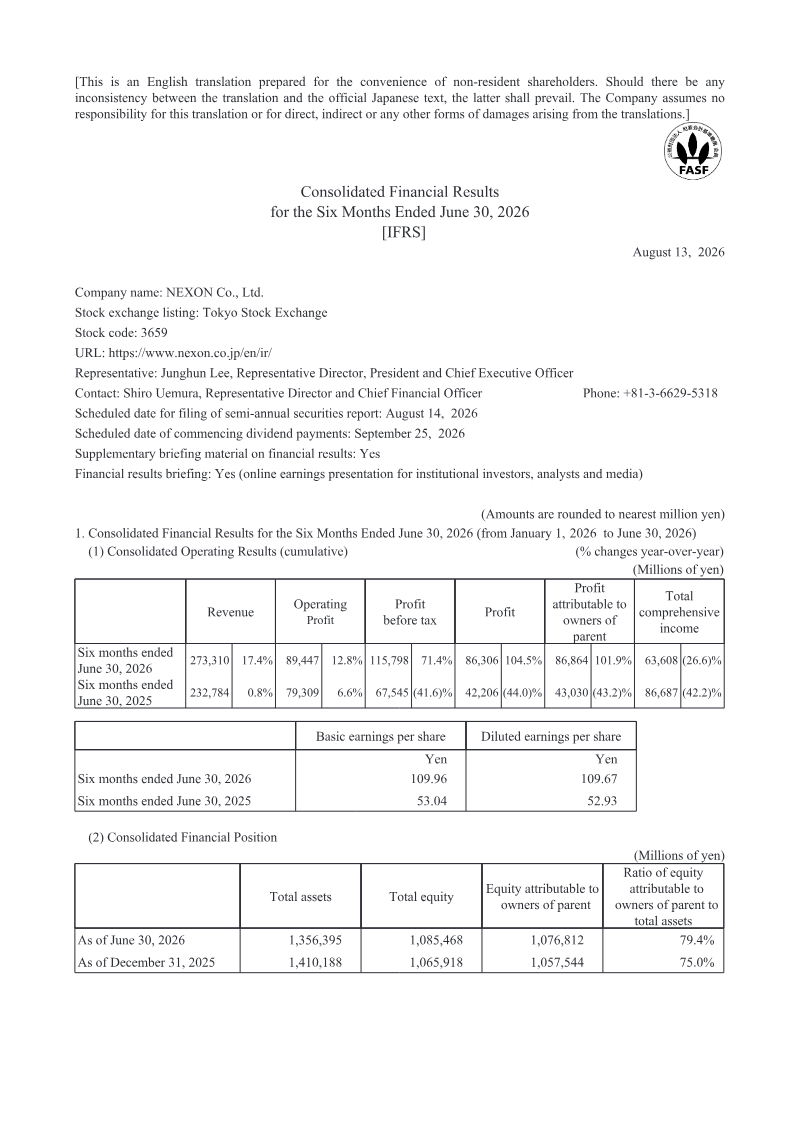
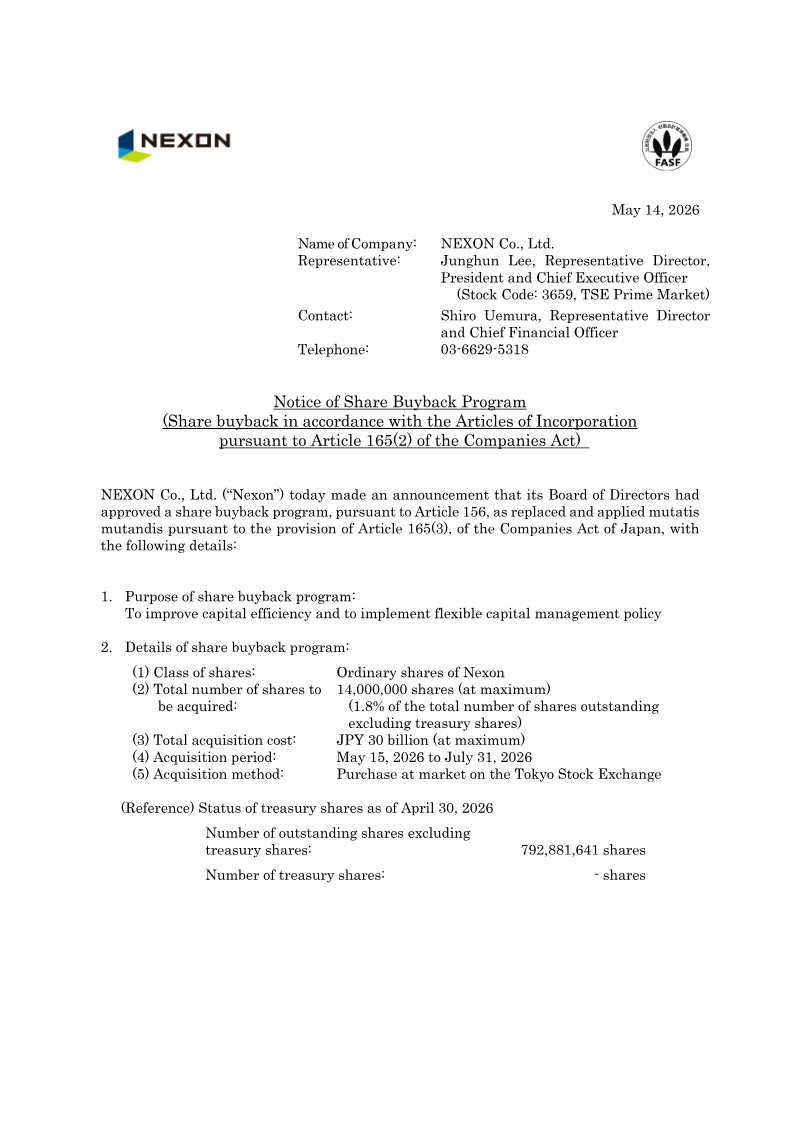
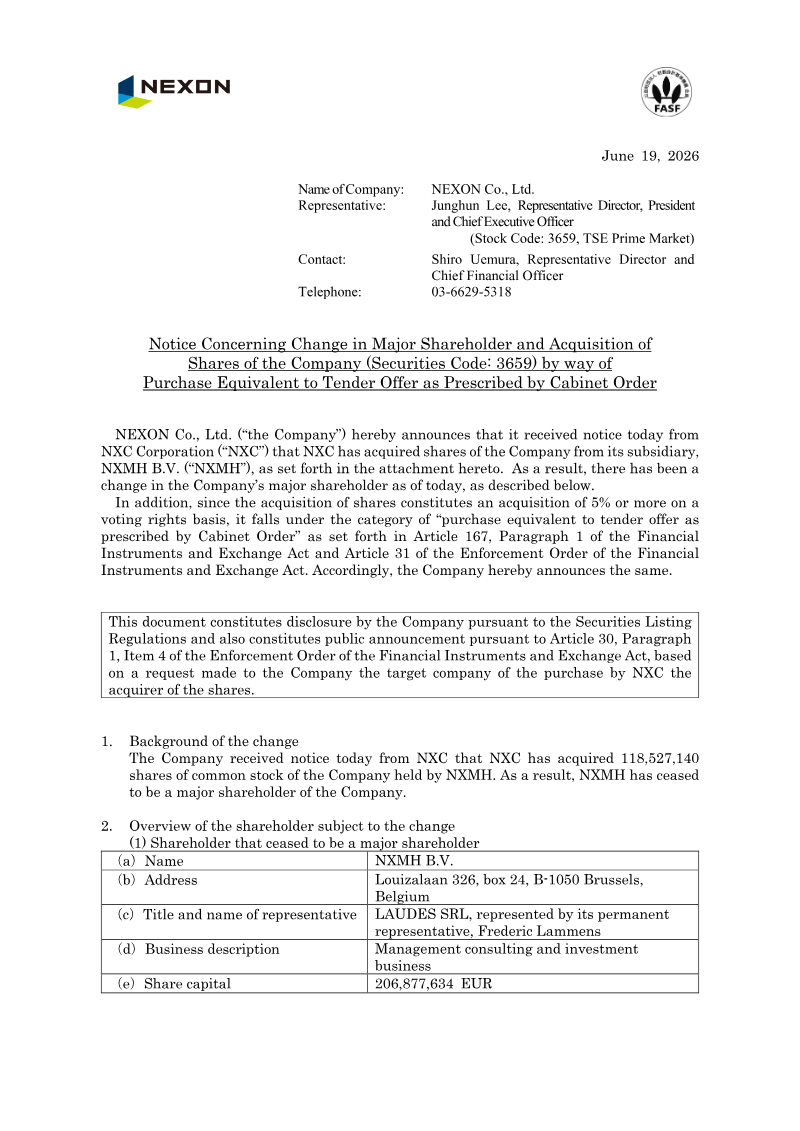
Nexon’s 2026 Capital Markets Briefing outlines a strategic transformation plan focused on optimizing game development processes, enforcing cost discipline, and expanding its global intellectual property footprint. Despite the company’s strong financial position—highlighted by 2025 record revenues of ¥475 billion, operating income of ¥124 billion, and over ¥800 billion in cash reserves—the leadership team is prioritizing long-term franchise sustainability over short-term gains. The strategy emphasizes leveraging deep player engagement data to inform creative decisions, specifically through the integration of proprietary artificial intelligence trained on decades of interaction history. The company’s growth strategy centers on a dual approach: vertical expansion of established franchises such as MapleStory, Mabinogi, and Dungeon&Fighter, alongside the development of new global titles. The Dungeon&Fighter series serves as a primary example of this model, with four new titles currently in the pipeline, including Dungeon&Fighter: Idle RPG, Dungeon&Fighter Classic, and the AAA-focused Project OVERKILL. These efforts are supported by a robust development schedule that includes the upcoming release of Vindictus: Defying Fate and the survival-themed NAKWON: LAST PARADISE, the latter of which recently demonstrated strong market potential by attracting over 37,000 concurrent players during a closed-alpha test. Operating globally across more than 190 countries, Nexon is positioning itself to capture a broader international audience by modernizing its development workflows. By utilizing AI to provide context for game design and live service support, the company aims to empower developers rather than replace them. This methodology is intended to ensure that new releases maintain the high-quality standards required to compete in the global PC, console, and mobile markets, effectively transitioning the company from a regional powerhouse into a more diversified, global leader in online entertainment.
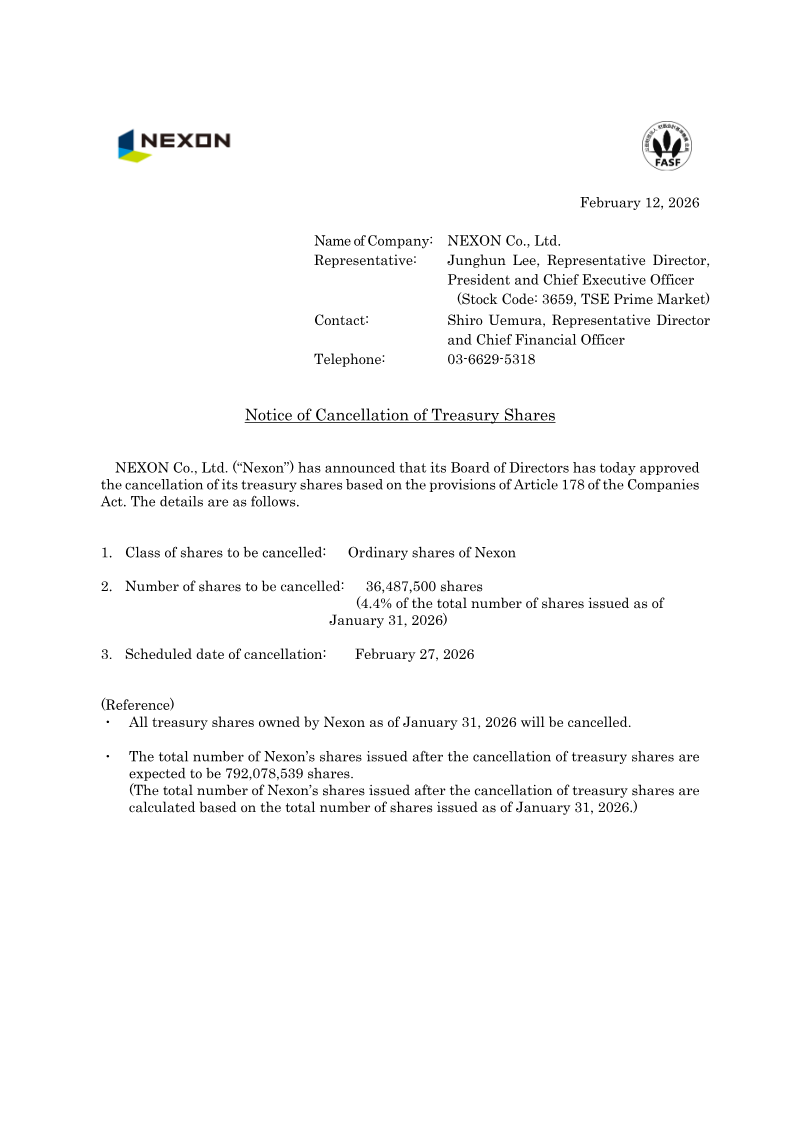
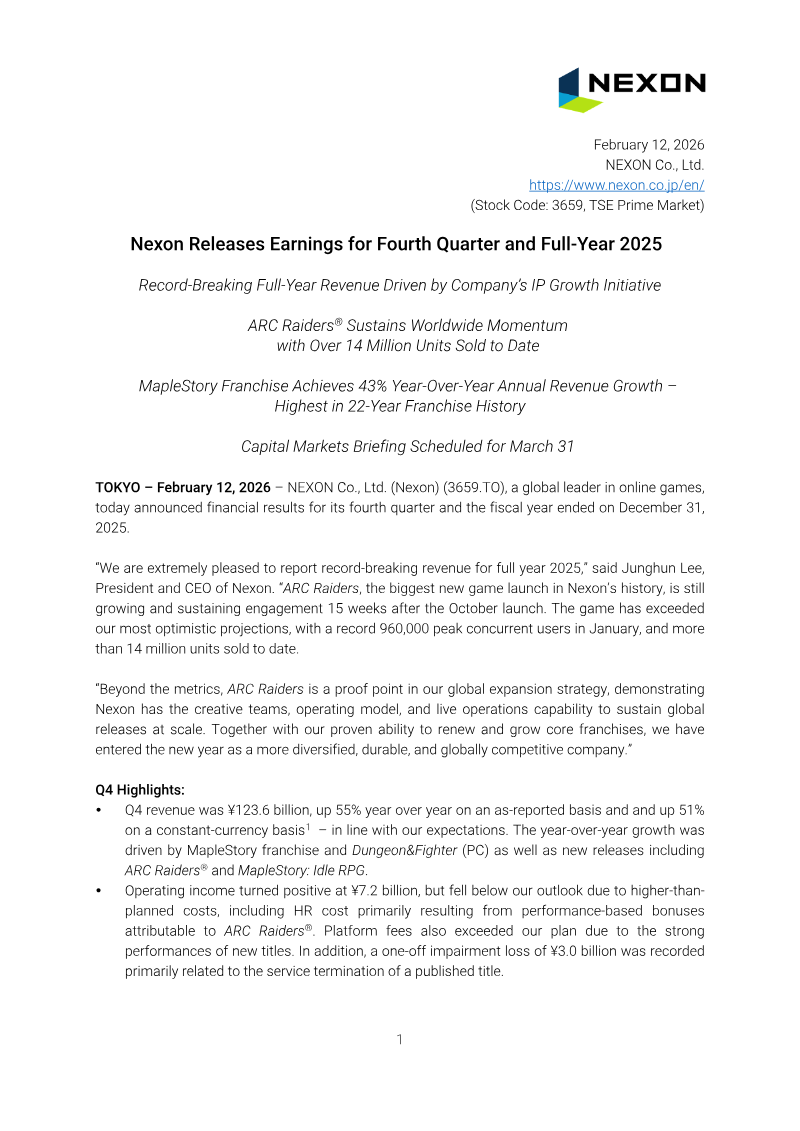
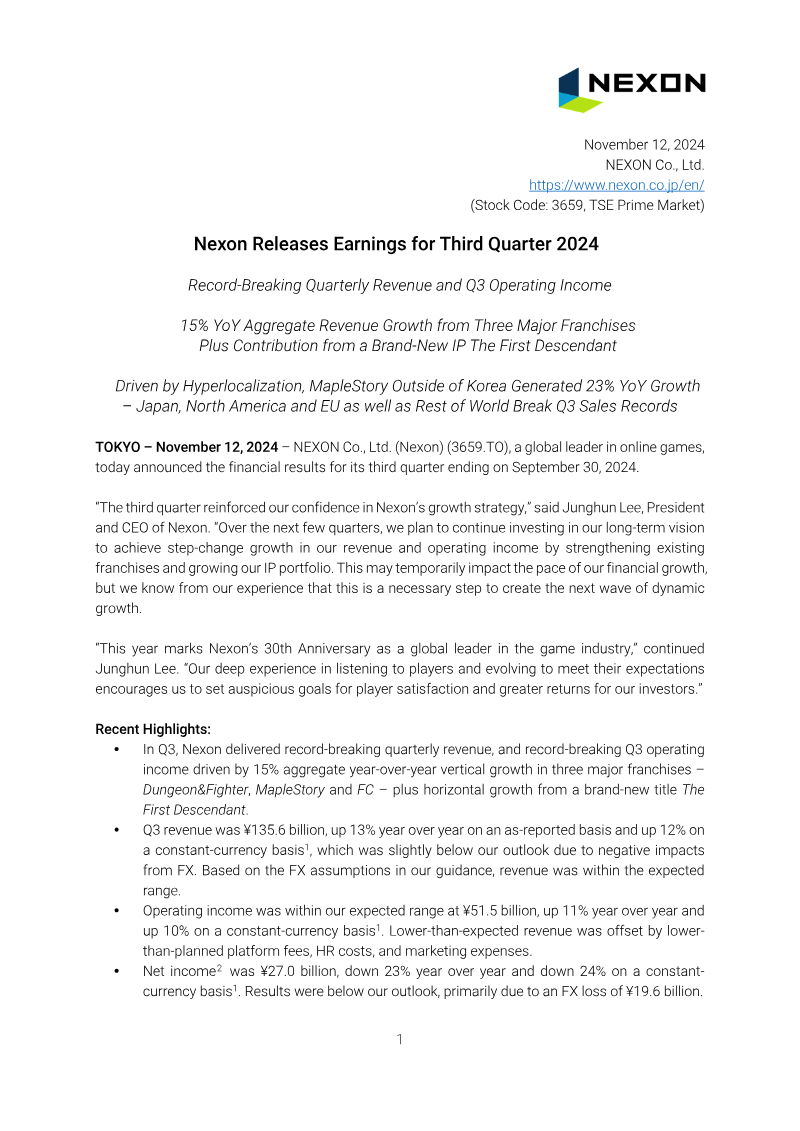
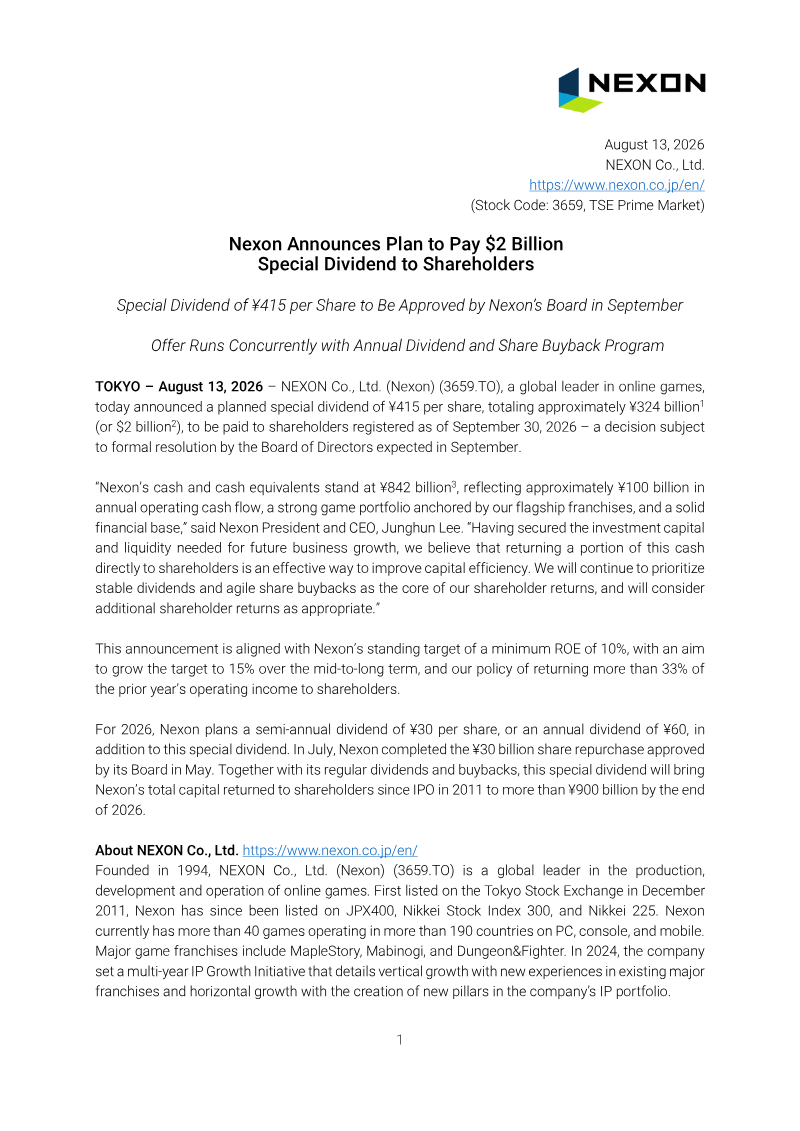
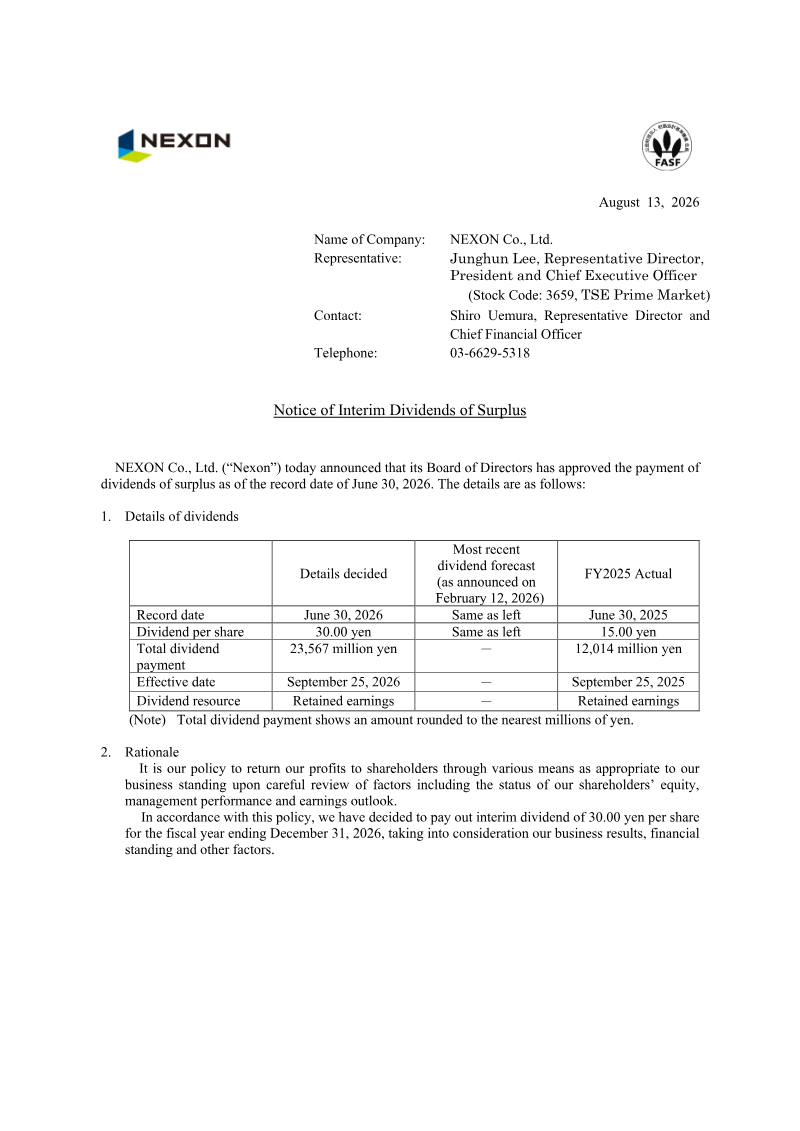
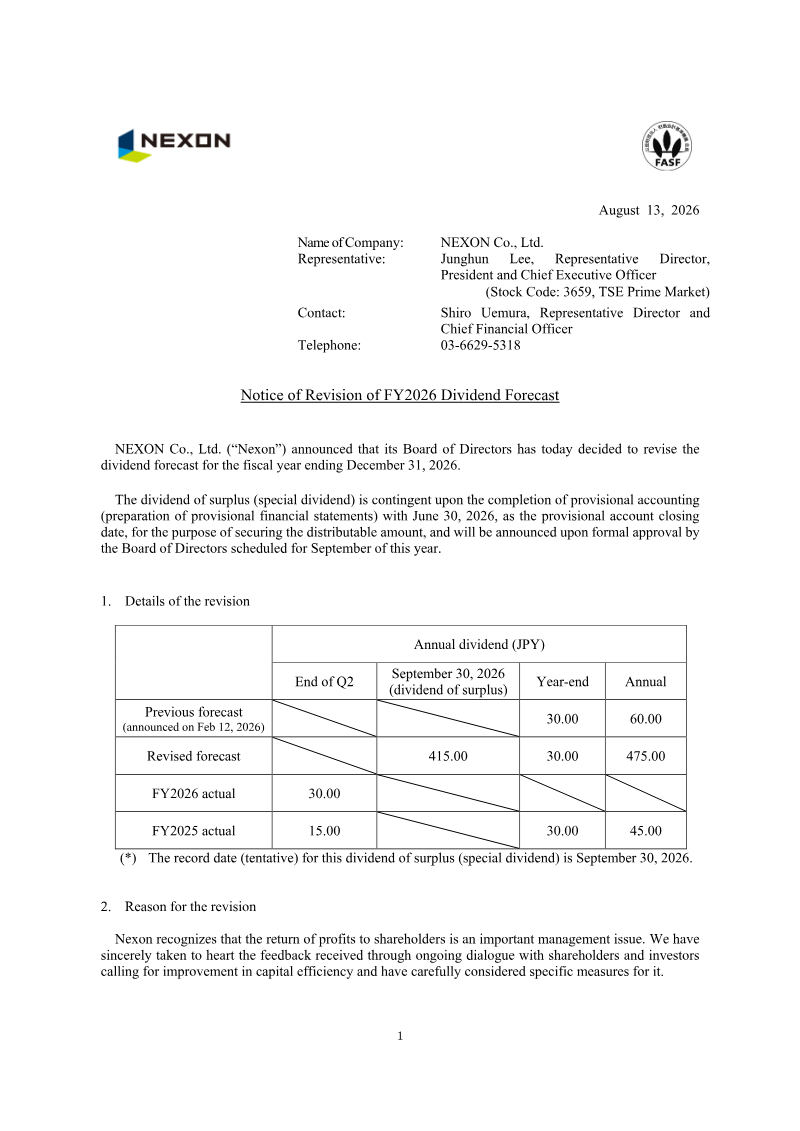
ct portfolio which included March 31, 2026 NEXON Co., Ltd. https://www.nexon.co.jp/en/ (Stock Code: 3659, TSE Prime Market) Nexon Presents Transformation Plan at Its 2026 Capital Markets Briefing Redesigning Game Development, Cost Discipline, IP Portfolio Anchored by Enduring Brands, Accelerated Expansion in Global Markets A Robust Pipeline of New Titles in Development TOKYO – March 31, 2026 – NEXON Co., Ltd (Nexon) (3659.TO), a global leader in online games, today hosted a Capital Markets Briefing to update investors on the company’s strategy. The event featured presentations by Executive Chairman Patrick Söderlund, CEO Junghun Lee, and CFO Shiro Uemura. XON NEXM Presentations focused on Nexon’s transformation plan which includes redesigning game development processes, cost discipline, IP portfolio management and franchise expansion strategy, as well as a new game pipeline targeted for a global audience. Patrick Söderlund, a veteran industry executive and member of Nexon’s Board of Directors appointed to lead strategy and creative direction told the audience of investors, “This is not a turnaround story. In 2025, Nexon posted record revenue of ¥475 billion, operating income of ¥124 billion and ended the year with more than ¥800 billion in cash and cash equivalents. Importantly, we have built relationships that go far beyond the point of sale with communities of millions of players interested in exploring new experiences in their favorite game.”
lion, operating income of ¥124 billion and ended the year with more than ¥800 billion in cash and cash equivalents. Importantly, we have built relationships that go far beyond the point of sale with communities of millions of players interested in exploring new experiences in their favorite game.” Söderlund, who continues to serve as CEO of Nexon’s Embark Studios, also outlined a strategy for accelerating expansion in new markets, telling investors, “ARC Raiders is proof that Nexon can build
ct portfolio which included something that lands with a global audience.” Nexon CEO Junghun Lee presented a detailed review of Nexon’s product portfolio, which included an update on the company’s initiative to grow established franchises – MapleStory, Dungeon&Fighter, FC, and Mabinogi – and a pipeline of new games. JA NEXON “Our recent success in extending the 22-year MapleStory franchise with new games and experiences provides a blueprint for growing large established franchises like Dungeon&Fighter,” said Lee. “Today, our Dungeon&Fighter pipeline includes four new games: Dungeon&Fighter: Idle RPG, Dungeon&Fighter Classic, and AAA titles like Dungeon&Fighter: ARAD and Project OVERKILL.” The audience also heard insights on Nexon’s integration of artificial intelligence trained on the company’s database that includes decades of player interactions. “Nexon’s massive database of player interactions offers a strategic advantage that few if any companies can match,” said Junghun Lee. “We’re training AI on billions of player interactions that give context to every decision our people make, from game design to live service support. Our methodology doesn’t replace creative people, it frees them to create with context. For developers, AI without context is just speed – an algorithmic race to a center where all games look alike.” 26% 124.0 2025 2026
ct portfolio which included Pipeline The event also featured an update on Nexon’s robust pipeline in development including: • Idle : A new and highly accessible experience scheduled for release this year. RPG Dungeon&Fighter: Classic • : A reboot of the original action-based experience on a modern UX, scheduled for release in 2027. Dungeon&Fighter ARAD • Dungeon&Fighter: : The second game in a series designed to introduce the Dungeon&Fighter franchise to a global audience. • : Third in the series, an online action RPG for PC and console that fully OVERKILL modernizes combat physics and visuals. Early testing confirmed strong interest from players. Project Fate • Vindictus: : A modern PC and console action experience based on the Mabinogi franchise. Defying • NAKWON: : A multiplayer survival game set in a post-apocalyptic city, recently LAST completed a PARADISE closed-alpha test with more than 37,000 concurrent players – a significant achievement for an all-new game with no marketing. A transcript of the briefing is available on Nexon’s Investor Relations website. A full video of the event will also be posted at a later date. This press release is prepared to offer reference information about Nexon to investors and is intended to generally provide investors and analysts with financial and operational information about Nexon, but not to solicit or recommend any sale or purchase of stock or other securities of Nexon.
e. This press release is prepared to offer reference information about Nexon to investors and is intended to generally provide investors and analysts with financial and operational information about Nexon, but not to solicit or recommend any sale or purchase of stock or other securities of Nexon. About NEXON Co., Ltd. https://www.nexon.co.jp/en/ Founded in 1994, NEXON Co., Ltd. (Nexon) (3659.TO) is a global leader in the production, development and operation of online games. First listed on the Tokyo Stock Exchange in December 2011, Nexon has since been listed on JPX400, Nikkei Stock Index 300, and Nikkei 225. Nexon currently has more than 40 games operating in more than 190 countries on PC, console, and mobile. Major game franchises include MapleStory, Mabinogi, and Dungeon&Fighter. In 2024, the company set a multi-year IP Growth Initiative that details vertical growth with new experiences in existing major franchises and horizontal growth with the creation of new pillars in the company’s IP portfolio. Contact Information NEXON Co., Ltd. Corporate Communications Email: [email protected]
Square Enix’s recent performance review exposes a persistent decline in revenue growth and profitability over the past three years, with operating income falling 32 % and ROE dropping 61 %. The downturn is driven primarily by weak margins in both high‑definition (HD) and small‑dungeon (SD) game segments, excessive portfolio fragmentation, sub‑optimal product design and promotion, and escalating development costs. While the MMO licensing arm remains the sole growth driver (+11 %), overall gaming revenue has slipped, with HD and SD titles declining 4 % and 5 % respectively. Operating margins for these segments hover around 35–40 %, noticeably higher than the industry average of 28 % but still lagging behind competitors, indicating inefficiencies that are not being adequately addressed. The company’s medium‑term “Reboots” plan offers only high‑level directions without concrete key performance indicators or quantitative targets. Critical gaps include a lack of clear business‑portfolio strategy, insufficient disclosure on non‑core business rationales, and no defined mechanisms for monitoring progress or maximizing shareholder value. Capital allocation disclosures are similarly weak: cost‑of‑capital calculations, ROE and ROIC targets, and hurdle rates are absent, while share‑buyback authorization remains unused despite a sharp price decline. SG&A costs exceed peer norms by 5–6 ppt, driven largely by an oversized sales force, further eroding profit margins. Geographically, SD game revenue is almost entirely domestic; the Japanese market has contracted 2 % annually since 2020, and overseas growth remains only 3 %. The company’s global SD strategy is inert, with a 7 % overseas expansion rate falling short of projected growth and flagship titles such as *FFVII Ever Crisis* deriving 70 % of revenue from Japan. Non‑core Amusement and Publishing businesses are undervalued, with a significant conglomerate discount relative to peers and declining sales and margins. Limited cross‑synergy between game and publishing arms further hampers value creation. In summary, Square Enix faces a multifaceted challenge: declining core game performance, weak strategic direction and KPI setting, high SG&A costs, and an underperforming non‑core portfolio. Addressing these issues through tighter cost control, clearer performance metrics, aggressive overseas expansion, and potential portfolio optimization is essential to restore corporate value and achieve sustainable growth.
Fiscal year 2026 ended with a 13 % rise in sales to ¥487.5 bn, yet operating income swung from a ¥48.1 bn profit in FY2025 to a ¥5.7 bn loss, driven by significant goodwill impairments on Rovio and Stakelogic and a widening deficit in the Gaming segment. Adjusted EBITDA fell to ¥16.6 bn, reflecting heavy upfront development costs and impairment charges, while net equity contracted by ¥48.7 bn as cash balances were depleted following the acquisitions of GAN and Stakelogic. Within Entertainment Contents, sales edged up to ¥326.6 bn from ¥321.5 bn, but operating income declined from ¥40.8 bn to ¥32.4 bn because new Full‑Game and F2P titles underperformed, despite steady growth in licensing revenue. Forecasts for FY2027 project sales of ¥357 bn and operating income of ¥42.5 bn, contingent on successful new IP launches, repeat sales, and a planned lift in licensing income. Margin erosion from title underperformance remains a key risk. Capital allocation for FY2026/3 was restructured to focus on ¥190 bn of cumulative investment over FY2025–FY2027, allocating ¥80 bn to development, ¥120 bn to strategic acquisitions, and planning ¥70 bn in share buybacks while pausing large‑scale M&A. Shareholder returns are expected to rise sharply, with FY2026/3 projected at ¥31.5 bn (≈¥11.7 bn in dividends) and FY2027/3 potentially reaching ¥16.2 bn under a 50 % total‑return ratio applied to projected net income. Pachislot sales showed modest growth, buoyed by new titles and strong first‑week performance of flagship IPs such as “Hokuto No Ken” and “Kabaneri of the Iron Fortress.” Pachinko sales declined as the temporary lift from Lucky Trigger 3.0 Plus faded and hall utilization softened. The group plans to introduce reel‑exchangeable cabinets, expected to account for roughly 20 % of pachislot revenue, and is positioning the gaming business for a J‑curve bottom in FY2027 through intensive lease sales and B2B platform upgrades. The release schedule for FY2026/3 emphasizes a concentrated push of multi‑platform titles, including the Nintendo Switch 2 launch in March 2026 and a slate of global releases across consoles, PC, and mobile from late 2025 to mid‑2026. Key animation properties such as *Detective Conan* and *Lupin the Third* are slated for April–June 2025, with several new IPs and Netflix exclusives planned for early 2026. Pachislot and pachinko product launches are detailed with projected unit sales ranging from 8,000 to 49,000 units across varying gambling‑specification tiers.
Sony Group’s FY2025 consolidated results demonstrate modest revenue growth and a mixed profitability profile across its core business units. Total sales increased 4 % to ¥12.48 trn, largely driven by higher operating income in the Imaging & Sensing Solutions (I&SS) and Music segments. Operating income rose 13 % to ¥1.45 trn, while net income attributable to shareholders fell 3 % to ¥1.03 trn because of a larger equity‑method loss in the Financial Services arm and higher impairment charges. Operating cash flow remained flat at ¥1.97 trn, and the spin‑off of Sony Financial Group was treated as a discontinued operation from Q1 FY25 onward. Within the Music division, sales climbed 15 % to ¥277.5 billion, propelled by growth in Recorded Music and Music Publishing streaming revenues (+9 % and +14 % respectively), live‑event income, and a strong contribution from the Demon Slayer franchise. Operating income in this segment surged 25 % to ¥89.7 billion, reaching a record high even after excluding one‑time items. Sony projects flat sales for FY2026, with operating income expected to decline 11 % to ¥47 billion as streaming gains are offset by the loss of Demon Slayer’s impact. The company consolidates its Pictures and Music results on a U.S. dollar basis, translating foreign‑currency sales and costs using weighted average exchange rates while accounting for hedging transactions. Foreign‑exchange fluctuations affect both sales and operating income, with I&SS hedging gains or losses incorporated into these calculations. These disclosures supplement, but do not replace, Sony’s IFRS‑compliant consolidated financial statements.
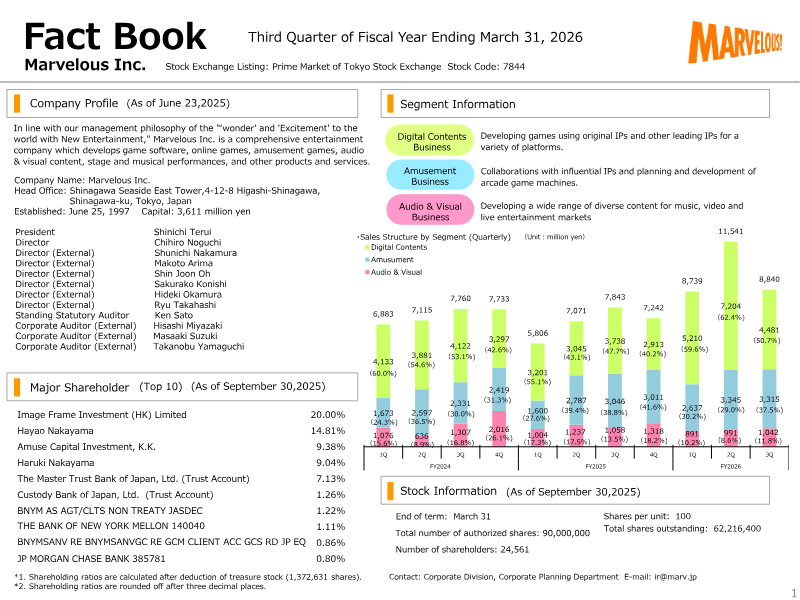
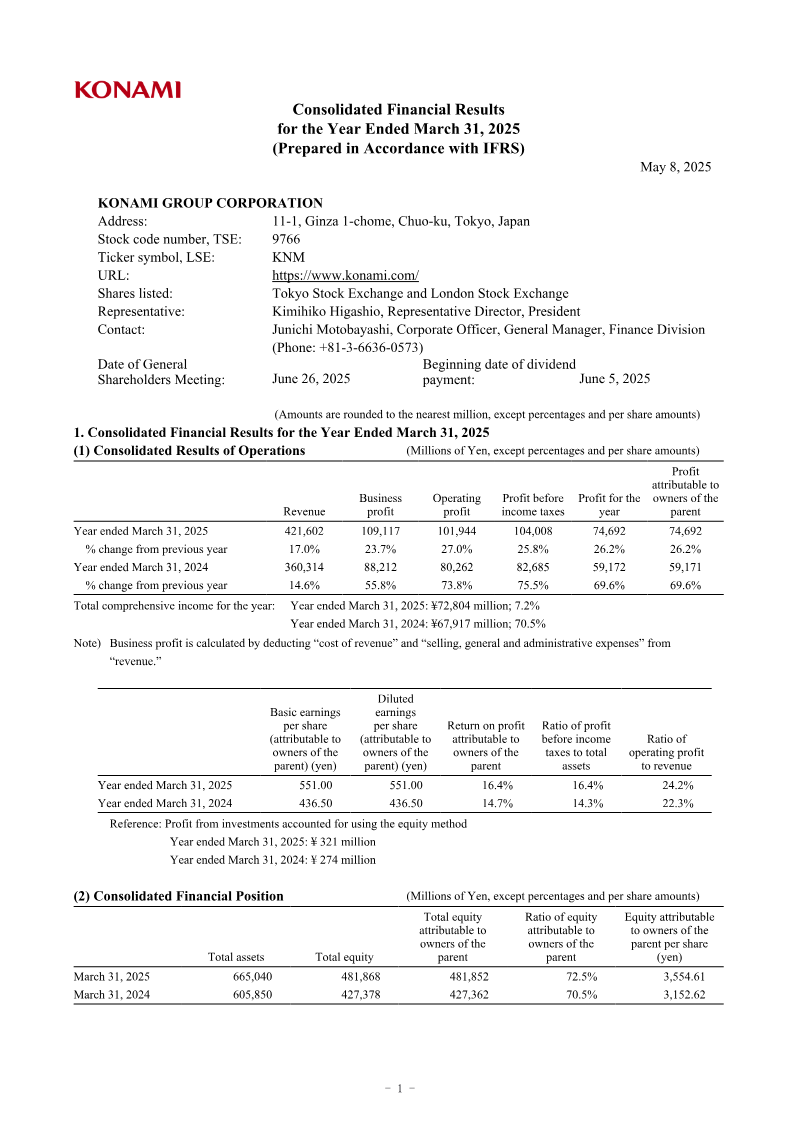
Marvelous Inc. provides a comprehensive financial overview of its performance through the third quarter of the fiscal year ending March 31, 2026. As a Tokyo-based entertainment company, its operations span three primary segments: Digital Contents, which develops games for various platforms; Amusement, focused on arcade game machines; and Audio & Visual, covering music, video, and live stage performances. The data reflects a multi-year trajectory of financial results, including consolidated balance sheets, income statements, and segment-specific sales and income. Financial results for the first nine months of the 2026 fiscal year show net sales of 29,121 million yen, surpassing the full-year totals of the previous two fiscal years. Despite this growth in top-line revenue, operating profit for the period stands at 1,776 million yen, reflecting a lower operating profit ratio of 6.1% compared to 17.9% in 2022. The Digital Contents segment remains the largest contributor to revenue, generating 16,896 million yen in the first three quarters, though it recorded a segment loss of 73 million yen. In contrast, the Amusement segment proved highly profitable, contributing 2,558 million yen in income on sales of 9,298 million yen. The company maintains a stable financial position with total assets of 35,669 million yen and an equity ratio of 76.4% as of December 2025. While net income per share has recovered to 25.56 yen from a loss in 2024, profitability metrics such as Return on Equity have fluctuated significantly over the reported periods. The shareholder structure is anchored by Image Frame Investment (HK) Limited, which holds a 20% stake, followed by founder-related holdings. These figures highlight a period of revenue expansion driven by diverse entertainment segments, tempered by rising costs of sales and shifting profitability within the core digital gaming business.