1 free read left. Create a free account for unlimited reading + AI research.
Create free account
Building a Long-term Gaming App Business: Applying Lessons of the Past to Power Your Success
Key insights
5 takeaways- 01Modern mobile gaming businesses must prioritize speed to market and technological integration to navigate a landscape defined by intense competition and rapid development cycles.
- 02Success in modern mobile gaming relies on granular, impression-level revenue data, which enables real-time optimization of user acquisition and in-game economies at the individual user level.
- 03The maturation of the gaming ecosystem, driven by robust game engines and sophisticated mediation platforms, has commoditized operational expertise and allowed smaller, leaner teams to compete for high-value acquisitions.
- 04Operational efficiency is achieved through automated infrastructure, such as standardized waterfall setups and API-driven workflows, which minimize the human capital needed for daily tasks.
- 05Hyper-casual developers maintain a competitive edge by testing hundreds of titles monthly to identify high-retention, low-cost acquisition opportunities.
Ask AI about this video
Transcript
[Music] hello testing is the micro non perfect so hello this is actually my first public presentation so as I look around the room I'm very happy to see some familiar faces but for those of you that don't know me my name is mark with a seat I head up the new business team at mo pub we're a leading mobile mediation platform and arguably the first in the space we offer tools to maximize your revenue and allow you to manage player experience when I was asked to give this talk obviously I was excited but immediately I got quite nervous I started thinking back across the last
eight years of mobile looking for trends insights and topics that others hadn't spoken about before and then it hit me I've spent my entire career in mobile coming of age in an industry that's very much been coming of age has been one hell of a roller coaster a lot has changed and we've made a lot of progress but we progress comes new challenges so today we're going to take a quick walkthrough of some of the challenges we've solved in the past and some of the new challenges that face us ahead and the opportunities and then I'll be joined on stage by a special guest to talk a little bit about what it takes to be successful in this new world and where you should be investing your time and resources so let's jump in so challenge number one making games was pretty hard when the App Store was first launched there were only native tools that were difficult to use feature light and require multiple and complicated skillsets to deploy for all platforms
when the mobile space started to show promise game engines such as unity and unreal entered the space providing leading tools to deploy for platforms allowing you to hire just one developer that maybe was familiar with Objective C or C++ or C sharp to deploy for all platforms which made it far simpler and these platforms extended the native functionality of the operating systems and also provided the ability to be everywhere at the same time unfortunately this increased competition in the marketplace and now the market is a lot more crowded than it used to be challenge number two monetization was even harder so I'm not sure many of you the room will remember but originally there were free major independent ad networks there was Quattro Wireless which was acquired by Apple and rebranded ayat there was millennial media which was acquired by AOL and is
now part of the Verizon group of companies and there was AdMob which was acquired by Google and continues to operate under the same name today because of phone capabilities and network infrastructure these companies will hyper focused on banners banner ads and only later embrace full screen units such as interstitials and rewarded videos with the advent of mediation platforms like moe pub and AdMob it became far simpler to manage your revenue in a smart way and developers saw their businesses flourish these platforms innovated in terms of ad formats machine learning models and ultimately enabled more and more networks to enter the space and now developers are struck for choice in deciding who to work with to monetize their business and the operational work has increased massively to be able to work of all these partners again in that smart way challenge number three if I'm keeping count the data just wasn't there so once
upon a time developers didn't even know how they were getting paid so whether that was on the view whether it was on the click or even on the install and they didn't know what their revenue shares were with their platform and network partners today we're seeing an increase in transparency with networks and platforms in terms of what the commercials are and also most leading platforms are able to provide data on every ad interaction with a user we often refer to this as user level revenue data among the industry there are variations of that term a mo pub were actually taking this a couple of steps further so we're providing impression level revenue data so you can actually see on every ad interaction of the user what the actual value is this solves a couple of problems you're able to buy more effectively and profitably on the user acquisition side you're able to balance your in-game economy and the reward values that you give out to users based on the actual price and ultimately you're able to take much smarter
decisions and analyze the impact opportunity cost and churn in your properties the second part we actually do as well is we provide insight into exactly which advertisers are buying your inventory and how much they're paying so you can start to analyze the per than just has a user churned but understand the context around why they've churned and we give you the controls to block all of those advertisers who you can make the best decision for your business not house challenge number four teams needed to be big again once upon a time it required multiple and differing skill sets to operate all the different parts of a successful and growing games business you need developers artists and game designers analysts and a range of other functions just to be competitive in not so crowded but limited market with the rise of service providers offering out-of-the-box analytics a be testing LiveOps inventory and I ap management it
became increasingly simpler to operate a successful game and teams got leaner than ever a great example of this is small giant games which was a finish studio of less than 30 people they exited for an acquisition to Zynga in 2018 for about five hundred and sixty million dollars in a cash and stock deal and then challenge number five expertise wasn't commoditized so originally monetization manager or a monetization manager wasn't a full-time role only part of someone's role and definitely not that of an entire team this was kind of like a self cyclical problem that it was hard to demonstrate growth and value but slowly as the market matured and developers saw the value of ad monetization they started to build teams around those functions they hired commercial people to manage the relationships with networks and platform partners like us they hired analysts to
kind of understand and predict where the business was going and make smart decisions in real time and they hired operational people they unfortunately have to do the bulk of the day-to-day optimizations and wards for management we're again trying to go one step further than this and we're already doing the first steps of this which is offering tools and api's that allow you to automate that part of the process from the creation of apps on our platform to setting up a waterfall creating network placements and effectively having a game up and running with as little human hours wasted as possible so that kind of brings us to where we are today so thanks to companies like unity it's become increasingly simple to enter the mobile gaming space thanks to companies like mo pub monetization got a hell of a lot easier and thanks to service providers like game of wows it's become increasingly simple to have a competitive and frying in-game economy with problem solved as I say there's new challenges and opportunities so in a minute I'm going
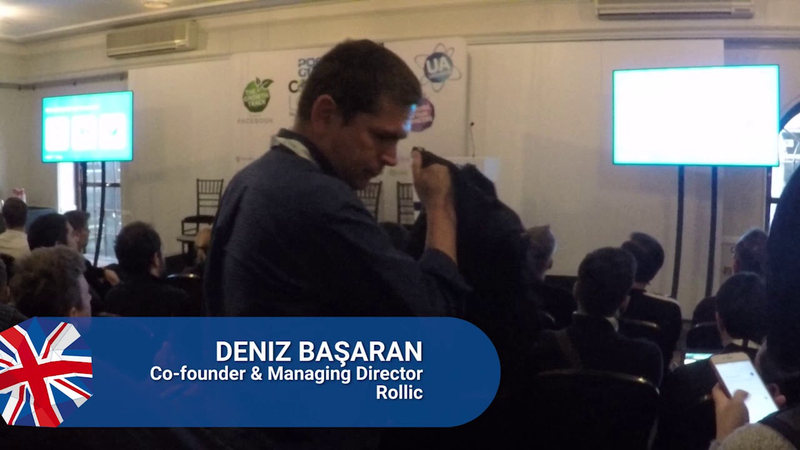
to invite Dennis on stage to talk a little bit about what it takes to be successful in this current market and where they invest their time so I'll pass over to Dennis for Maalik leading hype ok hyper casual developer and he will give himself a much better introduction thank you very much hello I'm Dennis co-founder of frolic thank you by the way thank you for inviting me I would like to start by introducing ourselves we co-founded Roddick in 2019 in January it's just been one year but we launched 13 new games and five of them are still in touch right now if you see that by the way I can see my notes yeah
okay we launched 30 new games in 2019 and five of them are still in capture right now and we are working with hunt more than 50/50 developers in Turkey Turkish market and we are testing hundred and 100 games per month right now if I would like to describe the new word I can say that there are three words one of them is one of them is competition and the other one is tat fast movement and other one is technology the competition is getting bigger every day as you can see in top track there are a lot of games a lot of matrix and a lot of mechanics in the top chart some of them are similar and you have to be fast because of that for fast movement you
have to have a technology because you have if you find the right game like lower CPI and higher retention rate you have to be fast I'm by being fast you have one or two days to develop the game and create hundreds of ads and creating a proper waterfall that's really important to be fast here for creating hundreds of ads and launching them tons of networks there that there are we are launching our games so it's important to have a good technology there Hamo pub helps us to be successful here mop up can provide us is waterfall set up and it was taking actually it was
taking 1-2 days to create a waterfall setup once we meet whop up they can help us to create waterfall in only two day in only two hours currently it's really faster because you have to be fast as I mentioned my previous slide we can we can have a we have a template for all of our titles for all of our new titles and just we just create new placements in our networks then upload it to the mop-up and it just takes two hours to create a worldwide waterfall properly the other thing is transparency transparency is another important part that we work with mop-up because you have to see that it's not enough to create a proper waterfall so you have to see the data to optimize your waterfall with the transparency we can with mobile
analytics we can see our data properly and transparent way we can see the auction's latency data and etc with the help of mop-up we can optimize our waterfall properly and the last thing the most important thing for me actually impression level revenue data this is new for us because we were optimizing our campaigns by using our tracking tool in 2019 and it takes a lot of time to get money reports from your tracking tool then optimize the campaigns they need to be a lot of people working on that stage technology impression level revenue data helps us a lot at this point because we see how much we earn from the user 1 user can see the ads how much from that user in impression level we
can for example we launched late lately woodshop maybe you see in top chart its third place right now we are using the impression level data and it's helped us to scale more because if you see your user how much you earn from a user from the day 0 then you can optimize your campaigns on the a site that's not just monetization site you can also optimize your campaigns properly because we can see the data data is there anymore that's all from me thank you thank you very much do we have any questions for mark or Dennis any questions for mark or Dennis well actually right I have one for you I've got an existing game and I can do one thing to kind of improve the
modernization of that game one thing we do recommend that I start doing that I'm probably not doing what do you mean can you put again I have a game that's out there it's been out there for a while but the monetization is kind of flattened out I can change one thing with you guys what one thing should I do to try and improve that I'm not sure about that because you need to optimize your waterfall at that point because there are a lot of networks and you need to know which networks is working well for you making sure my add waterfall yeah of course of course fantastic thank you very much thank you too any other questions we've got one over here thank you hi mark I'm using another mediation company and I was using more puppies a net network like other ad networks AdMob or Facebook and then you
change this strategy and now the gaming company is using this company they cannot use more puppies Aetna to change yes I think her name is referring to is last year we made a change in our commercial strategy so there's some differences with the different mediators and how they position themselves so ion source and AdMob and network businesses that have mediation but we're a mediation business that has an exchange for us we consider it strategic and long-term so to support developers in their growth in the mobile monetization space and our premium demand is additional and supplementary to what they get to the networks we we decided to disconnect from other mediators to align our positioning with the fact that we don't consider ourselves a network so for any developers that are interested in Twitter's proprietary demand or working with us to optimize their waterfall that can only be done directly through us not through max not
throughout most not through any other mediation platform in the market guys thank you very much for your time I really appreciate it Dennis thank you for being a huge sponsor today we really appreciate that too [Music]
Summary
The mobile gaming industry has undergone a significant evolution since the inception of app stores, transitioning from a landscape defined by technical barriers and limited monetization options to a highly competitive, data-driven ecosystem. Historically, developers faced substantial hurdles in cross-platform deployment, fragmented ad networks, and a lack of granular performance data. The maturation of the industry has been marked by the rise of robust game engines, sophisticated mediation platforms, and the commoditization of operational expertise. These advancements have enabled smaller, leaner teams to achieve significant commercial success, as evidenced by high-value acquisitions in the sector.
Current success in the mobile gaming market, particularly within the hyper-casual segment, is driven by three core pillars: intense competition, rapid development cycles, and advanced technological integration. Developers must now prioritize speed to market, often testing hundreds of titles monthly to identify high-retention, low-cost acquisition opportunities. This agility is supported by automated infrastructure, such as standardized waterfall setups and API-driven workflows, which reduce the human capital required for daily optimization.
Data transparency has emerged as a critical competitive advantage. The shift toward impression-level revenue data allows developers to move beyond aggregate metrics, enabling precise user-level analysis. By understanding the specific value of individual users, studios can optimize both their in-game economies and their user acquisition campaigns in real time. This granular visibility into ad interactions and advertiser performance empowers developers to make informed decisions regarding churn, monetization strategy, and inventory management. Ultimately, the modern gaming business requires a strategic focus on leveraging these technological tools to automate routine tasks, allowing teams to concentrate on creative iteration and data-backed growth.















Comments