ArticlePush to Talk
Book Review: Too Much Fun – The Five Lives of the Commodore 64 Computer
13 Dec 20241 page~15 min full read
Key insights
4 slides
Historical correction
Jesper Juul challenges the narrative that the NES alone filled the post-1983 crash vacuum.
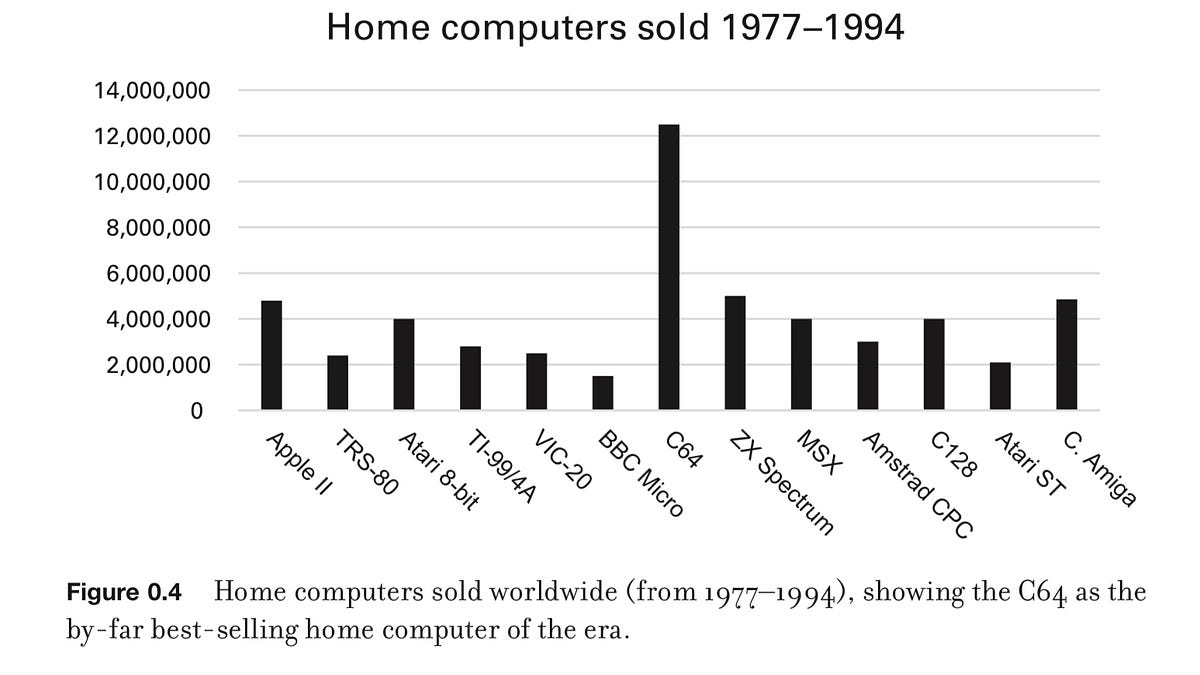
The central thesis argues the prevailing industry narrative ignores the Commodore 64's significant, ongoing influence.
Methodology
The book reconstructs popularity trends using reader surveys from the UK magazine Zzap!64.
Widespread piracy created a lack of reliable sales data for the Commodore 64.
Software scale
The Commodore 64 hosted over 5,000 published games, the largest catalog prior to MS-DOS.
The platform's massive software library included over 5,000 published games. This represented the largest software catalog of any platform prior to the MS-DOS era.
Historical framework
The book categorizes the Commodore 64's history into five distinct eras.
Using media archaeology, the work traces the platform's evolution from a functional home computer to a stylistic historical artifact.
1 / 4
Ask AI about this report