ReportInGameJob
Big Games Industry Employment Survey 2025: Salaries, Compensation Trends and State of the Games Sector in Europe
202574 pages~48 min full read
Key insights
6 slides
The rising bill
Layoffs and junior exits define the 2025 European games labor market.
The industry shifted from growth to cost optimization. Junior-level talent bore the brunt of the instability.
Contraction. 26% of professionals experienced layoffs and 39% of junior-level talent exited the sector entirely.
Page 2 of the report26%
of professionals experienced layoffs
- of junior-level talent exited the sector
- 39%
Key number
Financial stability is the primary motivator for 87% of workers.
Many workers accept inferior contract terms or pay cuts to remain employed. Employee engagement scores have plummeted.
Motivation. Financial stability has replaced company mission as the primary motivator for 87% of workers.
What changed
Over half of the workforce reports professional burnout.
67% of companies lack dedicated diversity and inclusion specialists. Nearly one-third of developers report stagnant professional growth.
Well-being. Over 50% of the workforce reports suffering from professional burnout.
Page 68 of the report50%
of the workforce reports professional burnout
- of companies lack dedicated diversity and inclusion specialists
- 67%
AI adoption
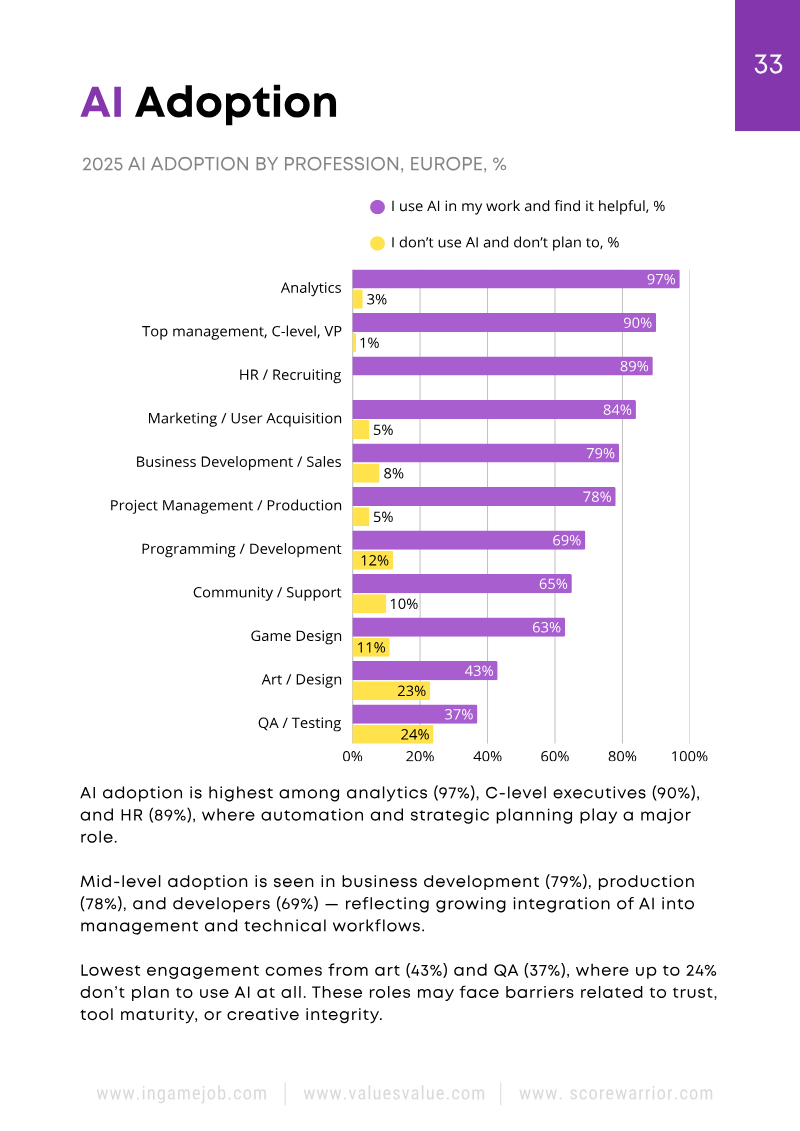
AI adoption reached 60% among professionals in 2025.
Programmers have seen a downward trend in compensation. Art and quality assurance roles face the highest risks of unemployment.
Key number
Median salaries for Fighting and MMOs reach up to €90,000.
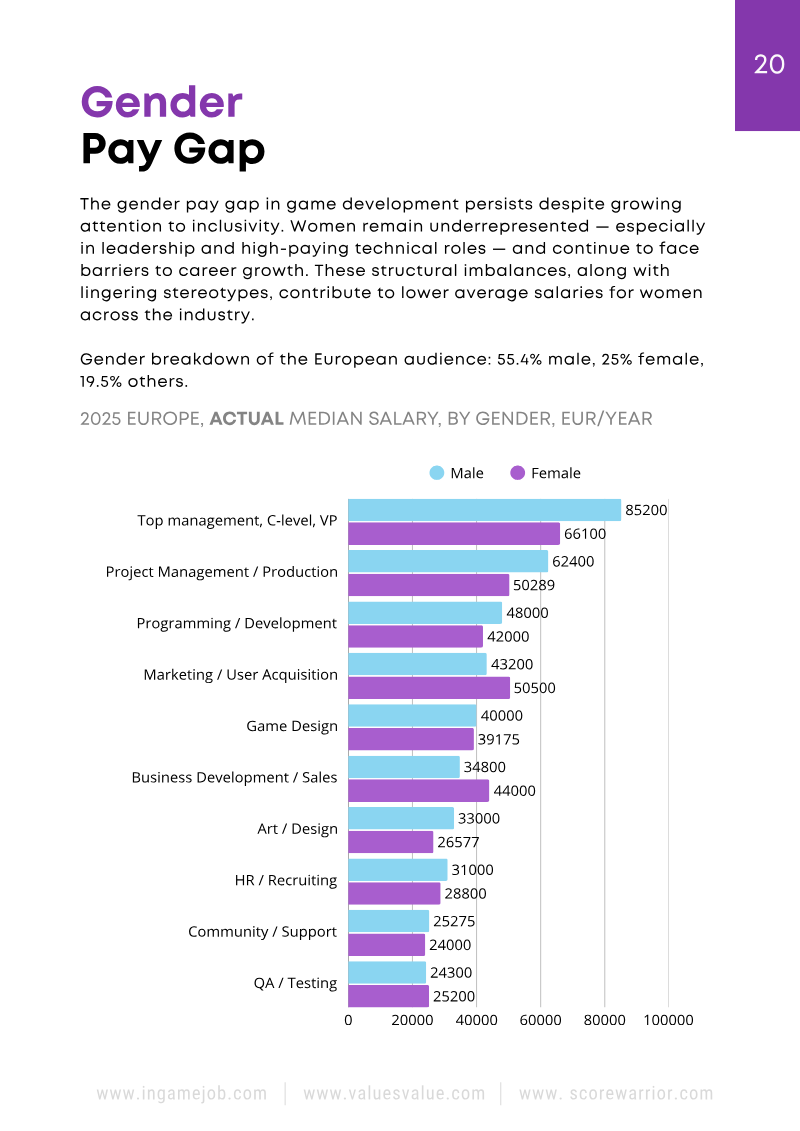
A persistent gender pay gap remains in technical and C-level positions. Median salaries remain highest in these genres in the EU and UK.
Long-term risk
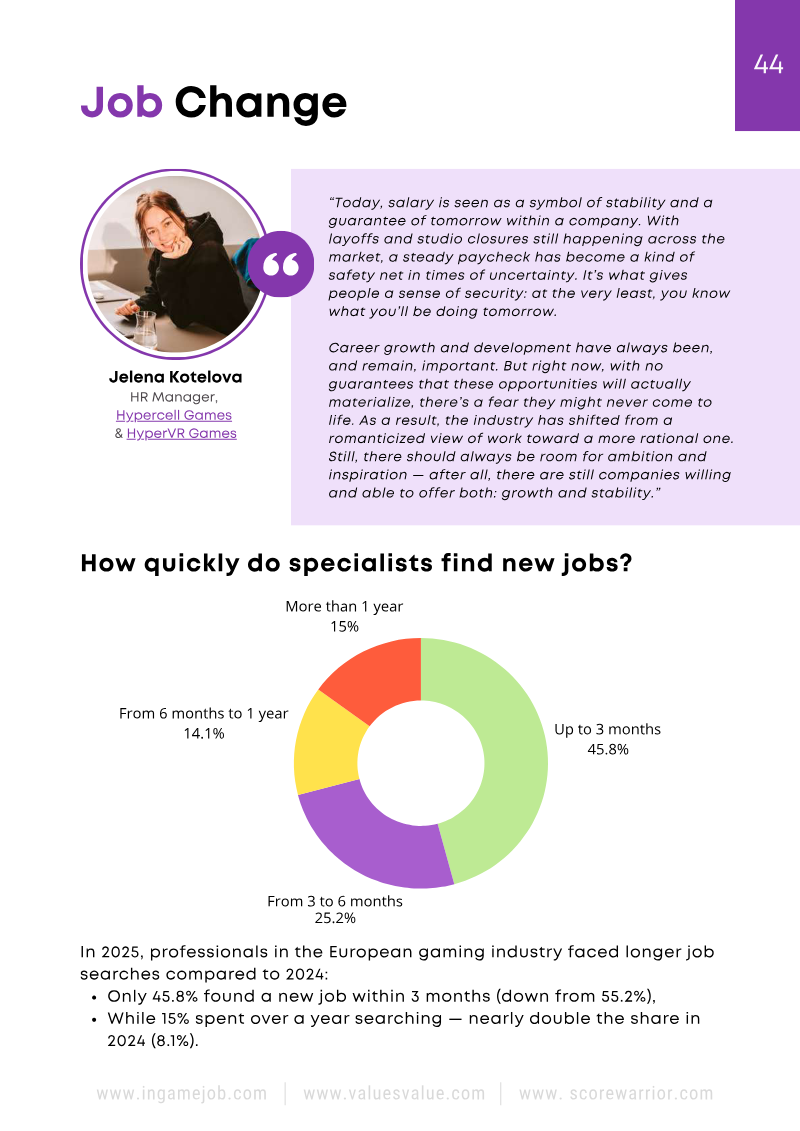
Long-term unemployment rates have doubled in the sector.
Workers increasingly prioritize cost-of-living calculations over traditional career ambition. Remote flexibility remains a high priority.
Page 49 of the reportdoubled
long-term unemployment rates in the sector
1 / 6
Ask AI about this report