The gaming investment landscape in the first quarter of 2026 presents a bifurcated reality, characterized by robust merger and acquisition activity contrasted against a significant downturn in public market performance and private venture funding. While M&A volume reached $7.7 billion across 52 transactions—matching the high-water marks of the previous two years—public market activity and private investment both experienced notable declines compared to the preceding quarter.
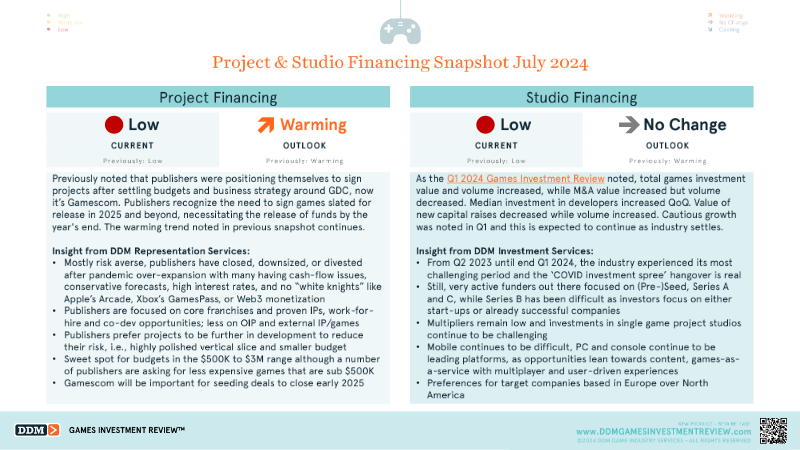
The M&A sector remains dominated by large-scale consolidations involving established intellectual property, exemplified by the $6 billion acquisition of Moonton by Savvy Games Group. Conversely, the private investment environment has become increasingly difficult for early-stage ventures. Pre-seed and seed funding have largely evaporated, with total early-stage deal counts hitting a five-year low. Investors are prioritizing companies with validated economics and proven products, leaving startups without strong metrics or established teams with limited access to capital.
Public markets reflect a broader struggle for the industry, as gaming stocks have largely underperformed relative to the wider market since 2023. Despite revenue growth at many major holding companies, this has not translated into share price appreciation. Valuation multiples remain compressed, particularly for mobile-focused companies, which trade at significantly lower premiums than diversified PC and console entities.
Industry performance metrics show mixed results: while Steam achieved record quarterly revenue of $5.6 billion and console platforms reached a record $21.7 billion in combined revenue, mobile downloads have declined. The market is increasingly defined by long-running titles, with 60% of the top 20 highest-grossing mobile games having been on the market for more than four years. These findings, synthesized from data provided by Aream & Co. and InvestGame, underscore a maturing industry where capital is increasingly concentrated in proven, high-revenue assets.