
AppLovin Corporation’s Form 10-Q for the first quarter of 2022 details a period of aggressive strategic expansion and significant financial investment, characterized by a transition toward a software-centric business model. The company reported total revenue of $625.4 million, a 4% year-over-year increase, driven primarily by a 34% surge in Software Platform revenue. Despite this top-line growth, the company recorded a net loss of $115.3 million, a substantial increase from the $10.6 million loss in the same period of 2021. This decline in profitability was largely attributed to elevated operating expenses, particularly a 107% increase in research and development costs, and the deployment of $1.05 billion in cash for strategic acquisitions, including the $1.03 billion purchase of Twitter’s MoPub business and the $379 million acquisition of Wurl, Inc.
The company’s operational strategy relies on a dual-revenue model encompassing its Software Platform—which includes AppDiscovery, Adjust, and MAX—and its portfolio of free-to-play mobile games. While the Software Platform demonstrated strong performance with a 137% net dollar-based retention rate, the consumer gaming segment experienced a 5% revenue decline and a reduction in monthly active payers to 2.7 million. To support long-term growth, management has prioritized technological innovation, specifically the AXON machine-learning engine, and has initiated a $750 million stock repurchase program to manage capital allocation.
Looking forward, the company faces a complex risk landscape, including heavy reliance on third-party distribution platforms like Apple and Google, whose evolving privacy policies and advertising frameworks pose potential threats to data utility and user acquisition. Furthermore, the company carries $3.27 billion in debt and operates within a highly competitive, fragmented global market subject to stringent and shifting regulatory requirements regarding data privacy and monetization. Success remains contingent upon the effective integration of recent acquisitions, the ability to navigate international regulatory environments, and the continued scalability of its technical infrastructure.
AppLovin · 2026
AppLovin · 2026

AppLovin · 2026

AppLovin · 2026

AppLovin · 2025

AppLovin · 2025
AppLovin · 2025

AppLovin · 2025
AppLovin · 2025

AppLovin · 2024

AppLovin · 2024

AppLovin · 2024

Modern Times Group · 2026
HPvX Partners
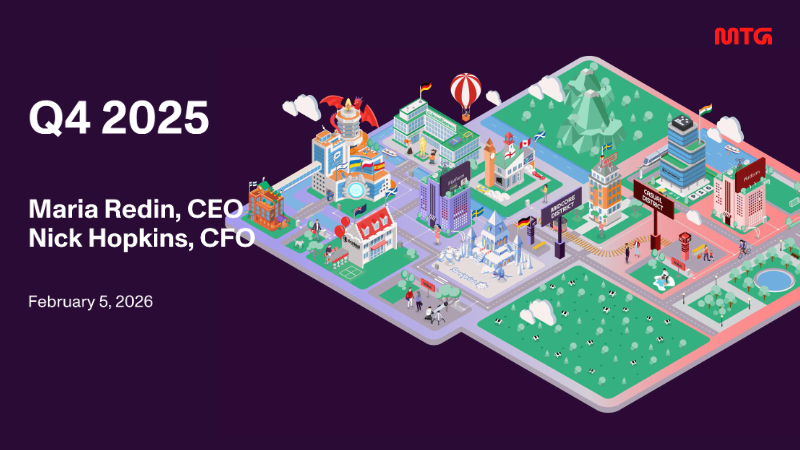
Modern Times Group

Almedia · 2026

Sensor Tower · 2026

InvestGame · 2026
InvestGame · 2026

InvestGame · 2025

King · 2025

AppsFlyer · 2025

Sensor Tower · 2025
Moloco · 2025