Loading the document
1 free read left. Create a free account for unlimited reading + AI research.
Create free accountArticle DiGRA
1 free read left. Create a free account for unlimited reading + AI research.
Create free accountArticleDiGRA
Changes such as a new warning about a peanut allergy or the option to skip the date are read as evidence of accumulated player knowledge. The report argues these changes draw attention to the act of rereading itself.
Alex Mitchell argues that the visual novel Save the Date (2013) breaks players' expectation of self-contained play sessions, and that this defamiliarizes the act of rereading, producing "poetic gameplay" and an "unnatural literary game." Drawing on close reading, Shklovsky's defamiliarization, and Richardson's unnatural narrative theory, the analysis centers on a single game from a small independent studio, Paper Dino Software, and on interactive narrative and game design more broadly.
The game presents itself as a dating sim but reframes into a puzzle in which every date ends in Felicia's death unless the player declines to go. Players engage in goal-directed partial rereading, and the game reflects accumulated knowledge by adding new dialogue options across sessions, such as a warning about peanuts in the Pad Thai. This cross-session memory dissolves the boundary between player and character, creating antimimetic, self-reflexive, and metaleptic effects. Puzzle-solving initially reduces Felicia to a game piece, but the defamiliarized relationship pushes players toward reflection, especially once Felicia herself acknowledges being in a game.
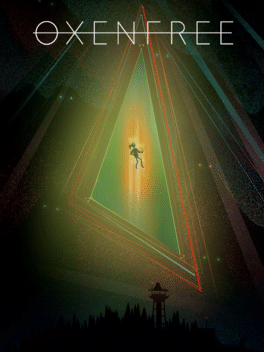
Because no winning outcome exists, the only real ending is to stop playing and imagine one's own. Rereading thus shifts from puzzle-solving to reflective interpretation, and the game acknowledges this choice with a form of second-order closure. Comparisons sharpen the claim: Oxenfree is merely nonmimetic, since its persistent timeline is justified by time-loop fiction and offered as an explicit new-game-plus choice. Undertale resists simple rereading because a true reset requires manually deleting save files, whereas Save the Date hides its reset in the options menu.
The central open question is how interactive stories might sustain reflective rereading once the "got the gist" stage invites stopping. Proposed future work includes studying works that cannot be reread and conducting empirical reader-response studies.
Each row is a game or company this document names, each column a document, oldest first. A mark means that document names it. Select a row to see those documents.

DiGRA · 2026

DiGRA · 2026



DiGRA · 2026



DiGRA · 2026



DiGRA · 2026



DiGRA · 2026



DiGRA · 2026



DiGRA · 2026



DiGRA · 2026

DiGRA · 2026



DiGRA · 2026



DiGRA · 2026
DiGRA · 2026