1 free read left. Create a free account for unlimited reading + AI research.
Create free accountArticle Board Game Studies Journal
1 free read left. Create a free account for unlimited reading + AI research.
Create free accountArticleBoard Game Studies Journal
The paper follows an ancient American board game from its Mesoamerican origins at Teotihuacán northward to the Southwest and Great Plains.
Depaulis's paper traces the history of ancient American board games from their Mesoamerican origins at Teotihuacán (c. 4th–7th century AD) northward to the Southwest and Great Plains, with particular attention to the stick-dice race game patolli and its descendants. Its central claim is that a Mesoamerican game, attested in codices, carvings, and archaeological boards, disappeared from central Mexico before the Spanish conquest but survived in the Tarascan region of Michoacán as k'uilichi, which Beals and Carrasco documented in 1944. The author argues that the game was a shared Mesoamerican tradition and that its Tarascan form may descend from it, though the direction of its spread and the Aztec name "quauhpatolli" remain unresolved.
The evidence assembled is substantial. Three board types have been recovered from Teotihuacán and Maya sites including Copán, Tikal, and Palenque, and roughly two dozen additional gameboards have been recorded in Michoacán alone. The Type I board survives in the modern Tarascan game, linking archaeological material to living practice. The distribution, dating, and Tarascan connection draw on work by Swezey and Bittman (1983), Kendall, and Mountjoy and Smith.
A key finding concerns degradation with distance. The Purépecha preserved the Type I board form and transmitted a simplified version, with one piece per player and four stick dice, northward via coastal trade routes, particularly during the Late Postclassic and the Spanish conquest. Colonial records from Jalisco, Sinaloa, Durango, Chihuahua, and the Rio Grande Pueblos attest the game under the names patol(e) and later quince, with the shifts in naming reflecting Spanish influence. The author concludes that the game's board and rules progressively simplified as it moved north, from a full cross-shaped board in the south to a plain stone circle with dice in the northern territories.
Board Game Studies Journal · 2025
Board Game Studies Journal · 2025
Board Game Studies Journal · 2025
Board Game Studies Journal · 2025
Board Game Studies Journal · 2025
Board Game Studies Journal · 2025
Board Game Studies Journal · 2024
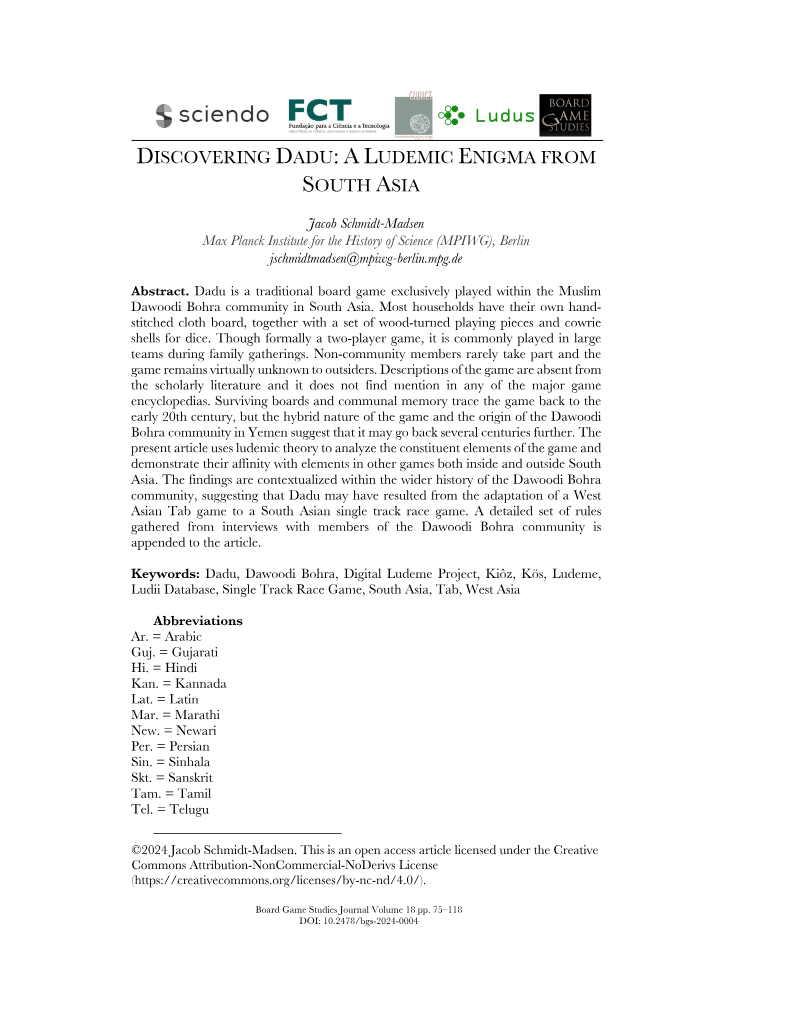
Board Game Studies Journal · 2024
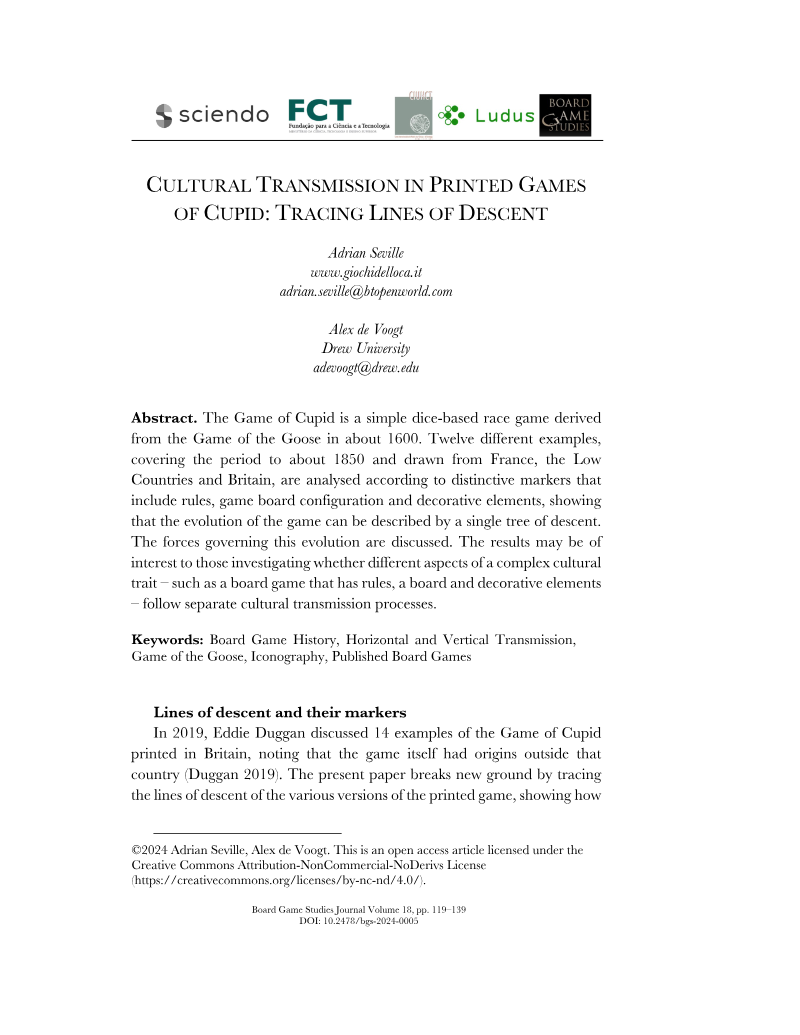
Board Game Studies Journal · 2024
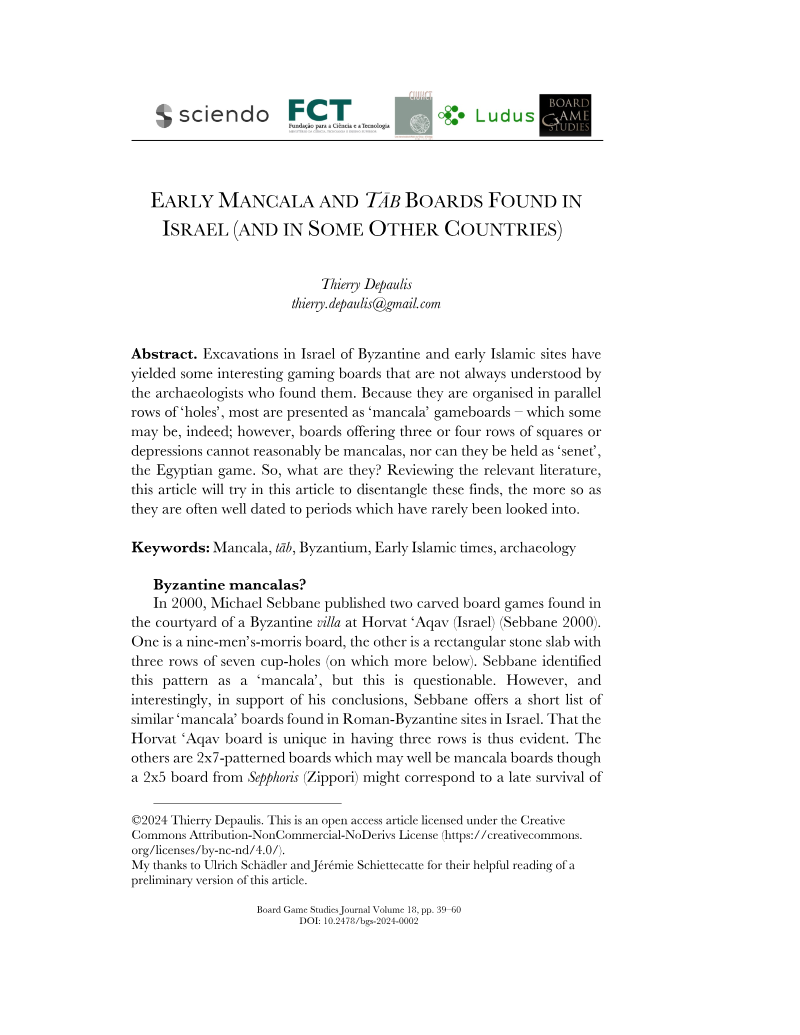
Board Game Studies Journal · 2024
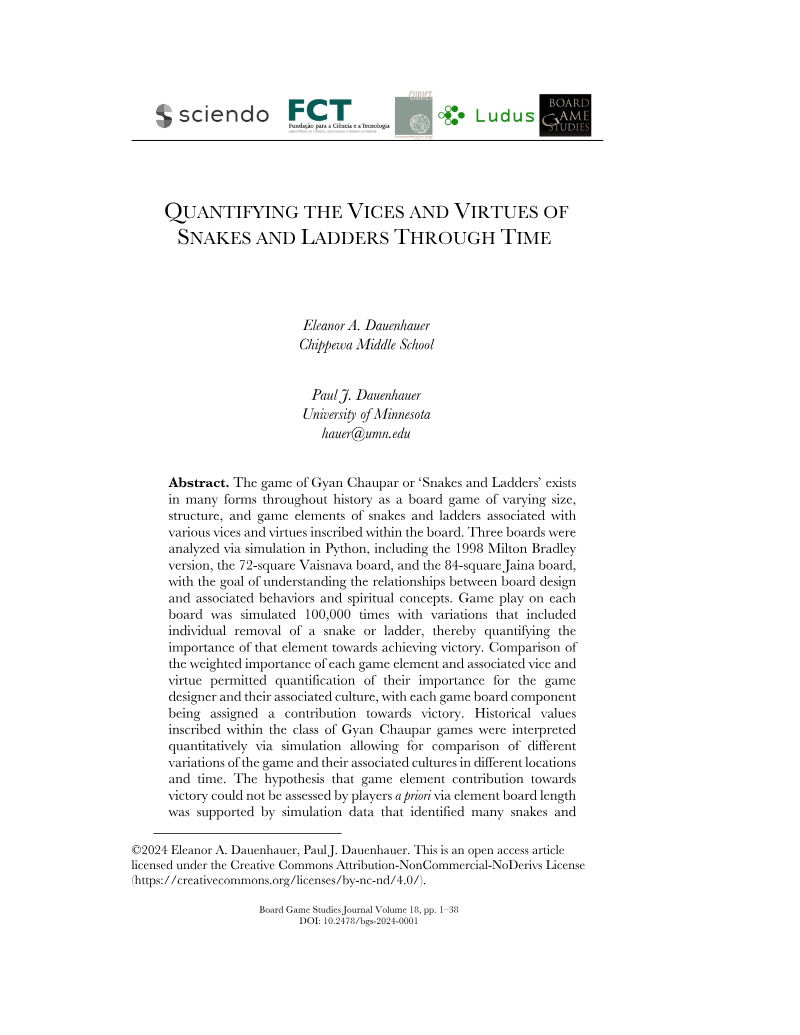
Board Game Studies Journal · 2024
Board Game Studies Journal · 2023



European Conference on Games Based Learning (ECGBL) · 2026



European Conference on Games Based Learning (ECGBL) · 2026



European Conference on Games Based Learning (ECGBL) · 2026