Games and companies in this document

Connections
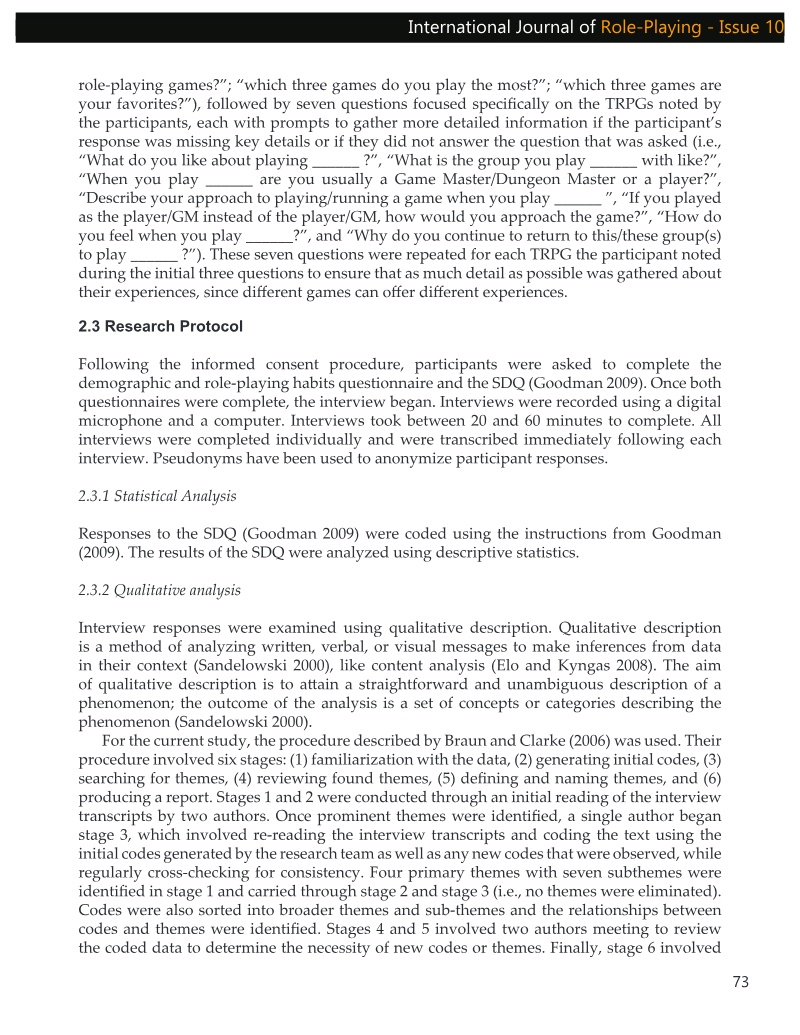
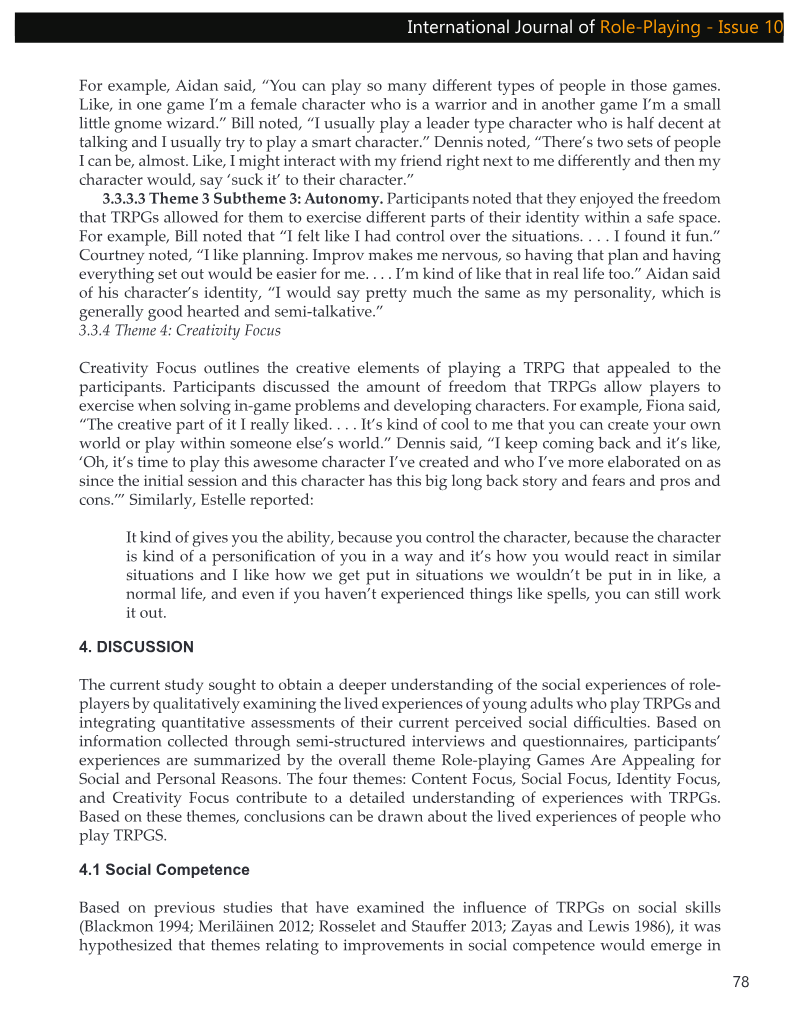
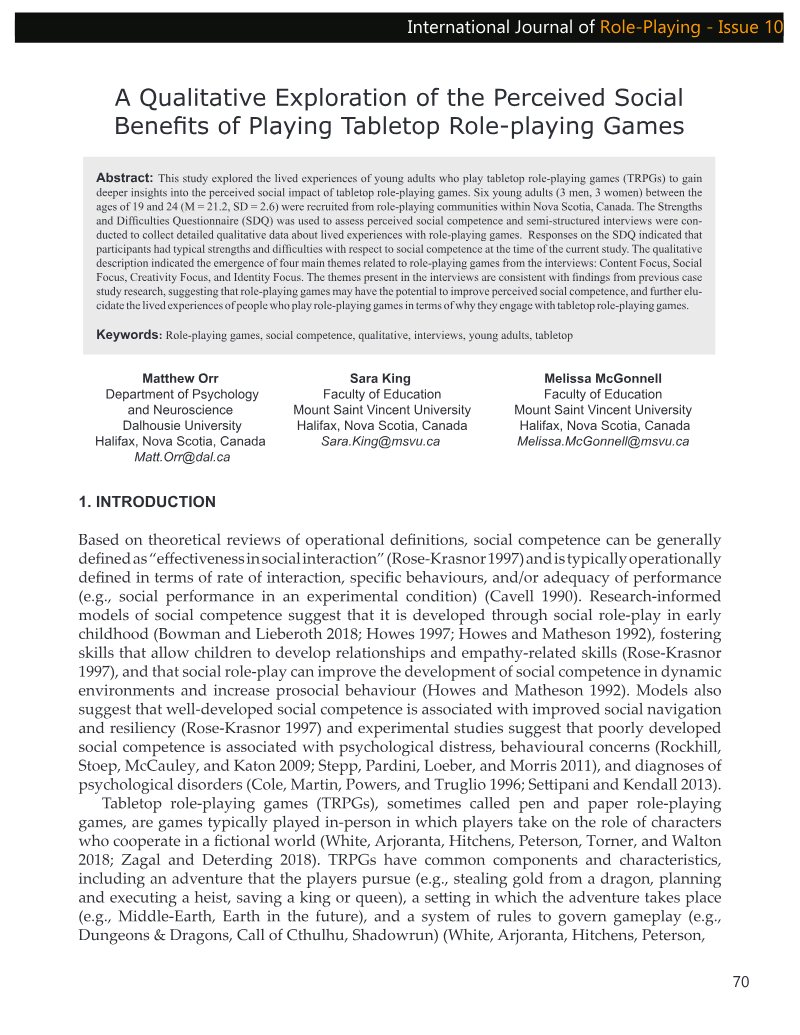
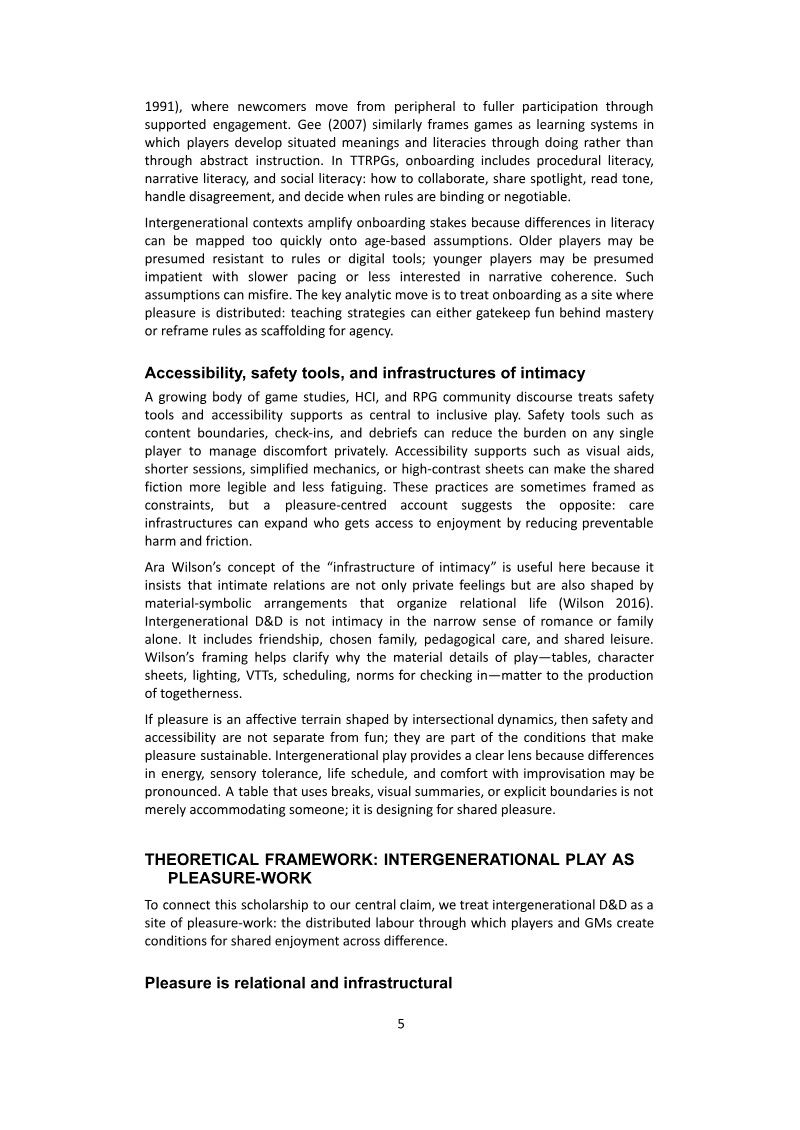
Each row is a game or company this document names, each column a document, oldest first. A mark means that document names it. Select a row to see those documents.
1 free read left. Create a free account for unlimited reading + AI research.
Create free accountArticleInternational Journal of Role-Playing
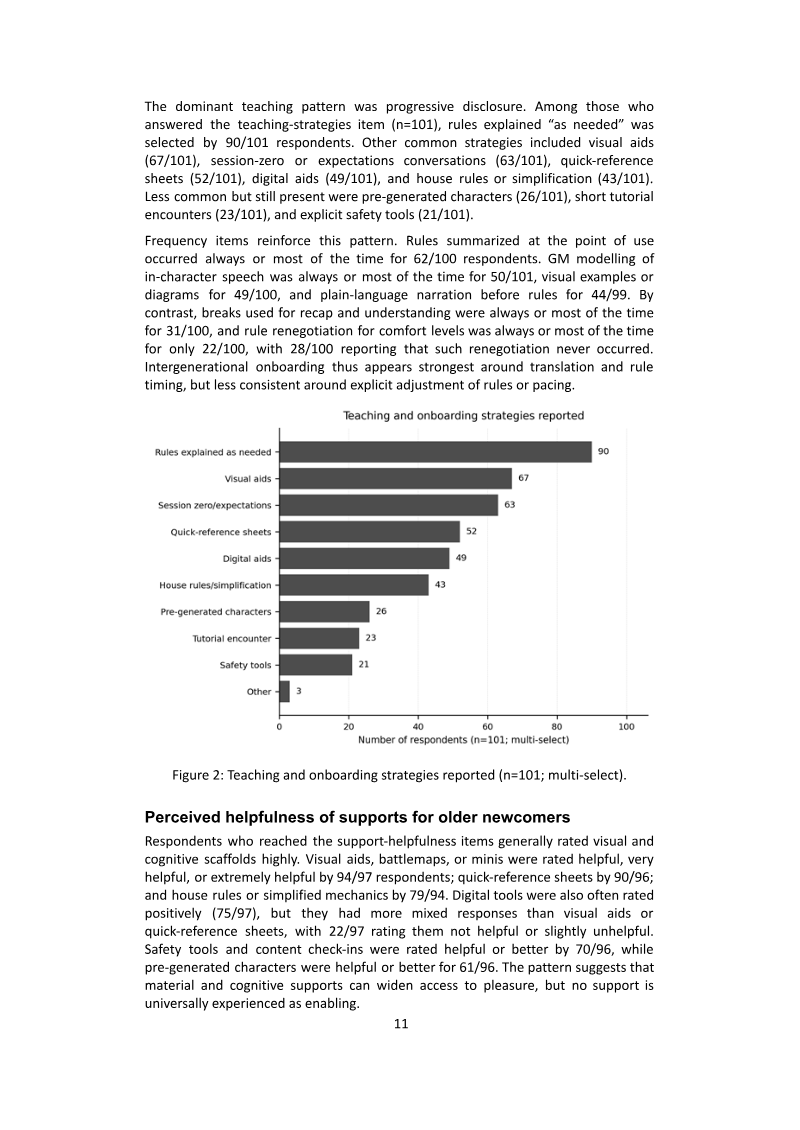
The literature argues that character design, artwork and game mechanics carry substantial rhetorical weight. These patterns are traced back to colonial and Orientalist traditions in fantasy literature.
This literature analysis examines how race and identity intersect with role-playing games, focusing principally on fantasy titles such as Dungeons & Dragons and World of Warcraft. Its central argument is that developer choices in character design, artwork, and game mechanics carry substantial rhetorical weight, shaping how players perceive race and which identities they are able to inhabit. The scholarship it surveys traces these design patterns back to colonial and Orientalist traditions in fantasy literature, suggesting that the genre's racial categories and stereotypes have deep historical roots.
The evidence base includes several notable data points. Dietrich's 2013 analysis found that none of the roughly ten million World of Warcraft players active in 2012 could create a non-white character, while Long's 2016 study of Dungeons & Dragons artwork found that first-edition illustrations effectively excluded racial minorities. Industry surveys drawn from the International Game Developers Association (2019) and the Game Developers Conference (2020) indicate predominantly white developer demographics, with 28 percent of studios reporting no inclusion effort at all. Recent editions and expansions, including Tasha's Cauldron of Everything and the Shadowlands character options, are presented as meaningful but incomplete steps, with Asian and Native American representation still described as lagging.
The scope is centered on English-language, commercially dominant tabletop and digital RPGs, with attention to Final Fantasy alongside the Dungeons & Dragons and World of Warcraft franchises. The temporal focus spans from early tabletop editions through the early 2020s, reflecting the field's shift from questions of mere presence toward the quality and cultural depth of representation.
Beyond design critique, the literature emphasizes the positive potential of role-playing as a space for identity exploration and empathy-building. Scholars including Filiciak, Bowman and Schrier, and Nielsen report that intensive role-players, many from marginalized groups, often experience increased sociability and self-expression. The analysis concludes that representation in these games has consequences in both directions, capable of fostering constructive discourse about race or reinforcing harmful stereotypes, and that the industry's progress remains ongoing and uneven.
Each row is a game or company this document names, each column a document, oldest first. A mark means that document names it. Select a row to see those documents.
International Journal of Role-Playing · 2026
DiGRA · 2026