ArticleGame Maker's Toolkit
A Puzzle Game Where Your Tools Are Completely Random
23 Oct 20231 page~7 min full read
Key insights
4 slides
Physics engine
A robust physics engine allows players to create unique, physics-based solutions.
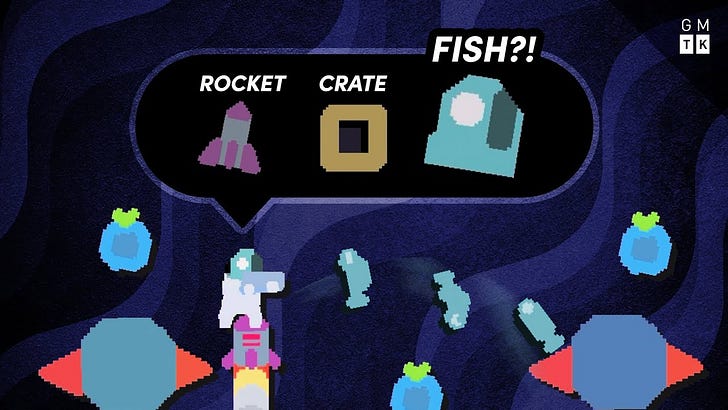
Objects like tentacles and platforms interact dynamically within the game. This allows for a vast, nearly infinite range of player actions rather than scripted interactions.
Dynamic interaction. The game utilizes a robust physics engine to facilitate emergent gameplay.
Design philosophy
The design prioritizes player agency over structured progression.
Mosa Lina functions as an experimental alternative to modern, rigid puzzle games. It contrasts its open-ended nature with titles where abilities often serve as simple keys for specific locks.
Replay value
Randomized tools encourage players to discover new synergies and strategies each run.
The mechanic encourages high levels of replayability. Players must discover new synergies and strategies based on the specific items provided in each run.
The trade-off
The lack of a traditional narrative may alienate players seeking curated experiences.
The lack of a traditional narrative or guaranteed solution serves as a deliberate trade-off. It potentially alienates players who prefer curated, linear experiences in favor of chaotic, open-ended play.
1 / 4
Ask AI about this report















Comments