Key insights
7 slides
The rising bill
Hard-coded perks become brittle as their count grows.
Brown first described a naïve approach of hard-coding each perk as a conditional in a single script. He noted its brittleness and maintenance problems.
Three categories
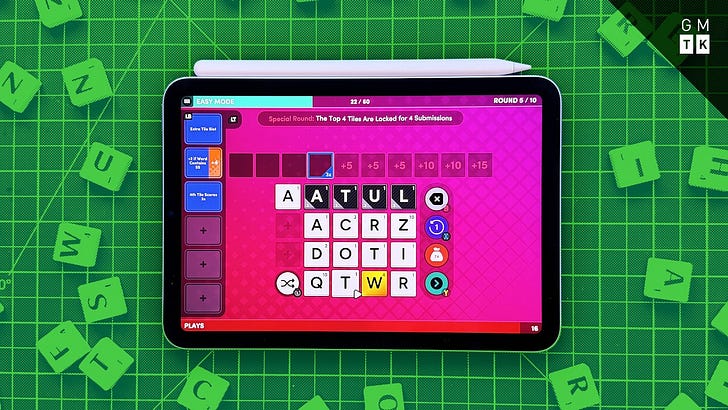
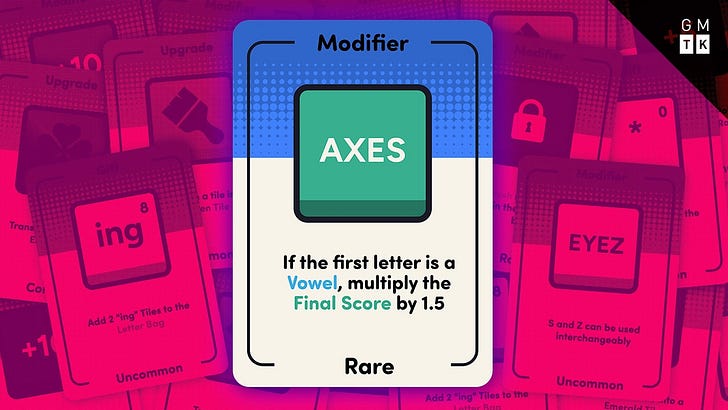
Word Play sorts perks into gifts, upgrades, and modifiers.
Gifts add letters. Upgrades change or improve tiles. Modifiers provide passive benefits under conditions, similar to Slay the Spire relics or Balatro Jokers.
Key number
The system supports 120 modifiers and 150 total perks.
Brown implemented a scalable perk system in Word Play using an inheritance-based approach in Unity. The result supports more than 150 perks while keeping code modular and testable.
What changed
Each modifier now has its own short script.
Instead of a single script with numerous if statements, each modifier inherits from a base ModifierClass. This enables easier management, testing, and debugging.
- 01Define base classCreate ModifierClass with virtual methods like OnWordScored.
- 02Inherit per perkEach specific perk inherits from the base and overrides the relevant method.
- 03Iterate owned modifiersThe main scoring script calls OnWordScored on each owned modifier.
The loop
The scoring script calls OnWordScored on each owned modifier.
Each specific perk inherits from the base and overrides the relevant method, returning a modified score or -1 to indicate no effect. The loop preserves execution order based on the modifier list.
Inspector data
Modifier details are easily adjustable from the Unity inspector.
The system stores modifier details like icon, description, rarity, and special numbers. These are easily adjustable from the Unity inspector.
Broader use
The pattern applies to enemies and weapons as well.
The inheritance model is applicable to various game elements beyond perks. Brown cites enemies with shared movement and health but unique attacks, or weapons with shared aiming and reloading but unique abilities.
1 / 7
Ask AI about this report