1 free read left. Create a free account for unlimited reading + AI research.
Create free accountArticle G|A|M|E – The Italian Journal of Game Studies
1 free read left. Create a free account for unlimited reading + AI research.
Create free accountArticleG|A|M|E – The Italian Journal of Game Studies
The paper proposes classifying terms by their underlying principles rather than as convenient labels for particular technologies.
This article argues that the video game field has under-developed its vocabulary for graphical projection, relying on loose terms such as "top-down view" and "isometric graphics" where a more precise, art-historical terminology would serve analysis better. The author contends that concepts from the visual arts, particularly the distinction between perspective and parallel projection, provide a sturdier analytical framework. Drawing on the history of Albertian perspective, cubist fracturing of the single viewpoint, and the taxonomy of pictorial and axonometric projection, the paper proposes that terms should be applied according to their underlying principles rather than as convenient labels for particular technologies.
The argument proceeds by tracing perspective to its mathematical and optical origins in Alberti's treatise and contrasting it with parallel projection, which preserves the relationships between axes rather than simulating human vision through foreshortening. The paper sorts pictorial projection into oblique forms, such as cavalier and cabinet projection, and axonometric forms, namely isometric, dimetric, and trimetric. It also addresses depth cues including parallax and stereoscopy, and it notes how digital screens and multi-window displays challenge the single-viewpoint paradigm of Renaissance perspective.
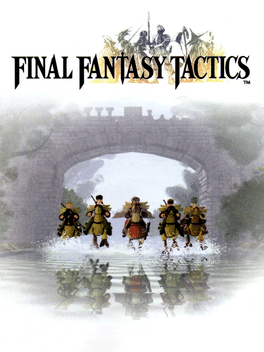
Applied to games, the taxonomy is illustrated with examples: Sim City and Paperboy for oblique projection, Final Fantasy Tactics for isometric, Diablo for dimetric, and Fallout for trimetric. The author observes that many games blend projection types within a single frame, producing incoherent depth, as in Friday the 13th and The Legend of Zelda, and that dimetric rendering, with its 2:1 pixel ratio, is far more common in practice than true isometric projection. The study is historically scoped from early 2D titles through the shift to polygonal 3D in the late 1990s, and it is a conceptual essay rather than an empirical study, drawing on secondary literature in art history and film theory instead of survey or sample data.
G|A|M|E – The Italian Journal of Game Studies · 2026

Jason Schreier · 2026