1 free read left. Create a free account for unlimited reading + AI research.
Create free accountWhitepaper DiGRA
1 free read left. Create a free account for unlimited reading + AI research.
Create free accountWhitepaperDiGRA
Media mixes spread content across platforms with a character at the centre. Games are increasingly the anchor of these mixes.
This paper examines how dynamic game characters create tension within media mixes and ludo mixes, the commercial strategies that spread content across multiple platforms with a character at the center. Its central argument is that games, which increasingly anchor these mixes, often receive peripheral treatment in transmedia storytelling, and that dynamic characters, whose identities branch according to player choices, intensify this friction. The author contends that a single work can generate multiple, player-influenced identities that are difficult to reconcile with the canonization processes authors, publishers, and fans use to maintain a character's continuous identity across a body of works. As a result, the player's sense of creative agency is often only an illusion, since the dominant character identity is presented through non-ludic media such as manga and anime.
The paper grounds its analysis in Persona 5, a media mix comprising a central game, a manga serialization, an anime television series, a drama CD, and several spin-off titles including a rhythm game, a dungeon crawler, and a crossover fighting game appearance. The approach draws on reader-response theory to show how players construct a character's identity within the game and how that construction is set against the characterizations in other media. The scope is therefore a qualitative, theoretical case study focused on one Japanese franchise rather than a broad empirical survey, and the work situates itself within scholarship on Japanese media mix (geemu) and transmedia storytelling, which has historically prioritized anime and manga over digital games.
Each row is a game or company this document names, each column a document, oldest first. A mark means that document names it. Select a row to see those documents.
DiGRA · 2023
DiGRA · 2023
DiGRA · 2023
DiGRA · 2023
DiGRA · 2023
DiGRA · 2023
DiGRA · 2023
DiGRA · 2023
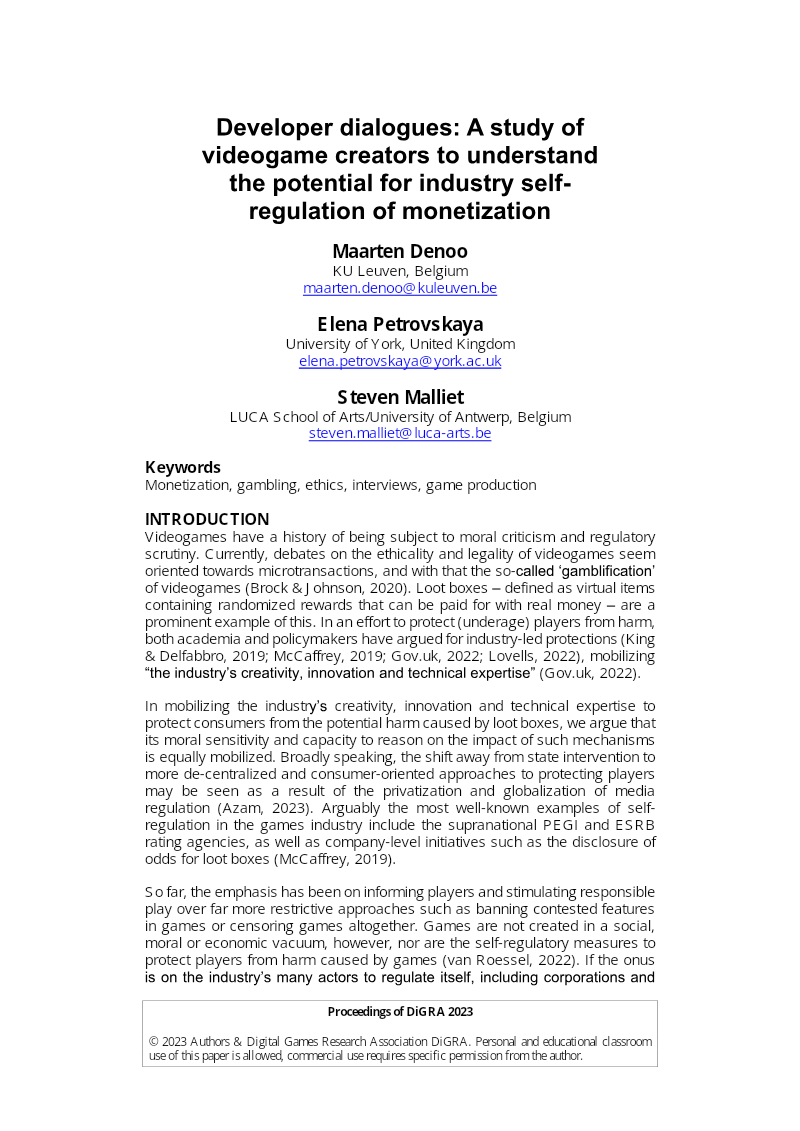
DiGRA · 2023
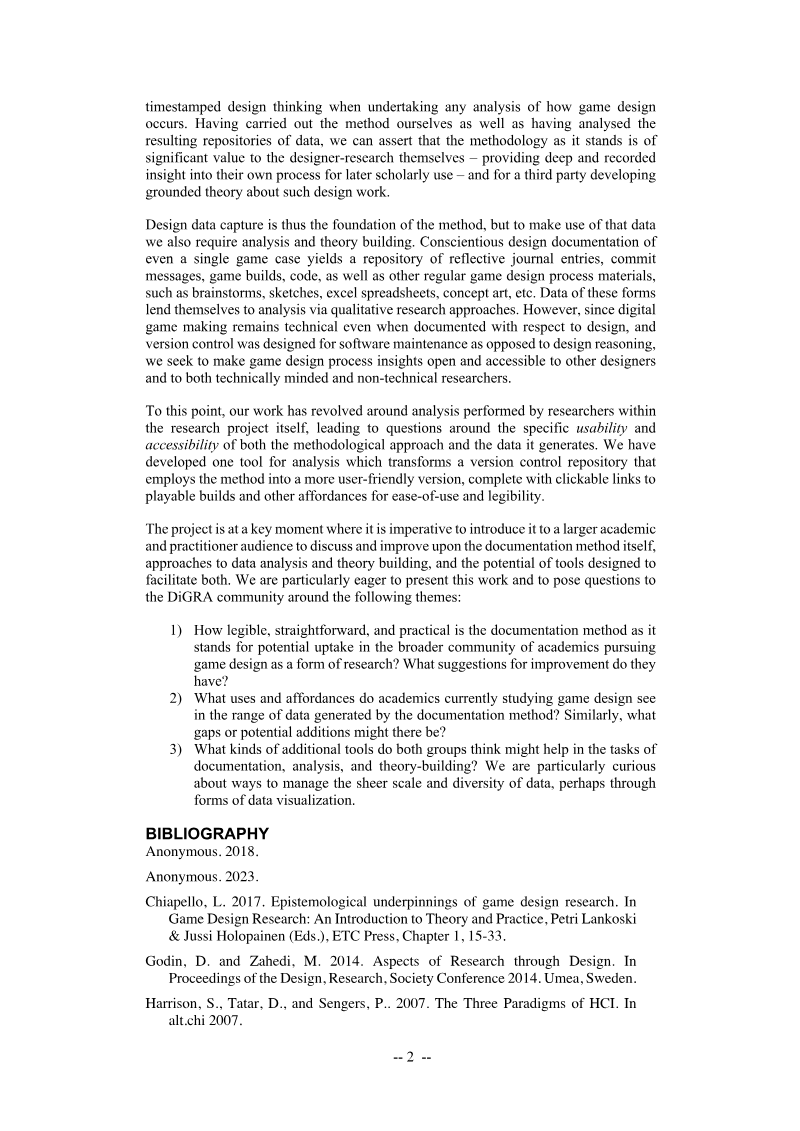

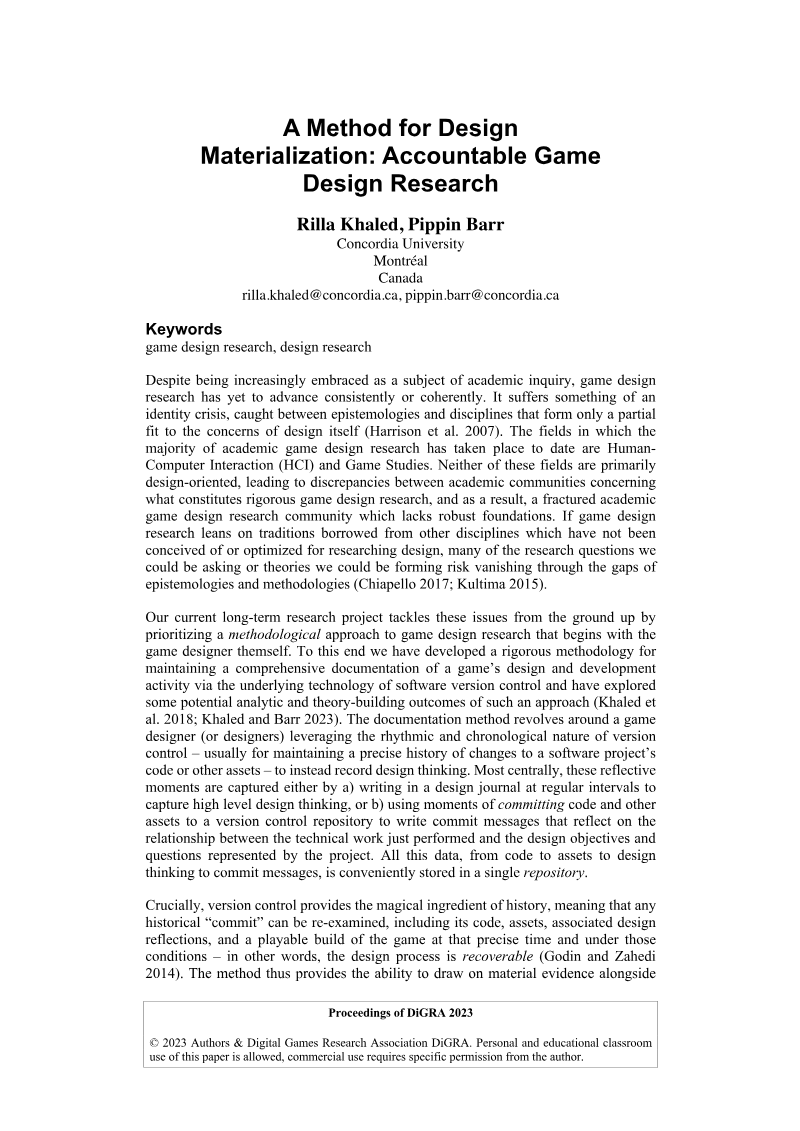
DiGRA · 2023
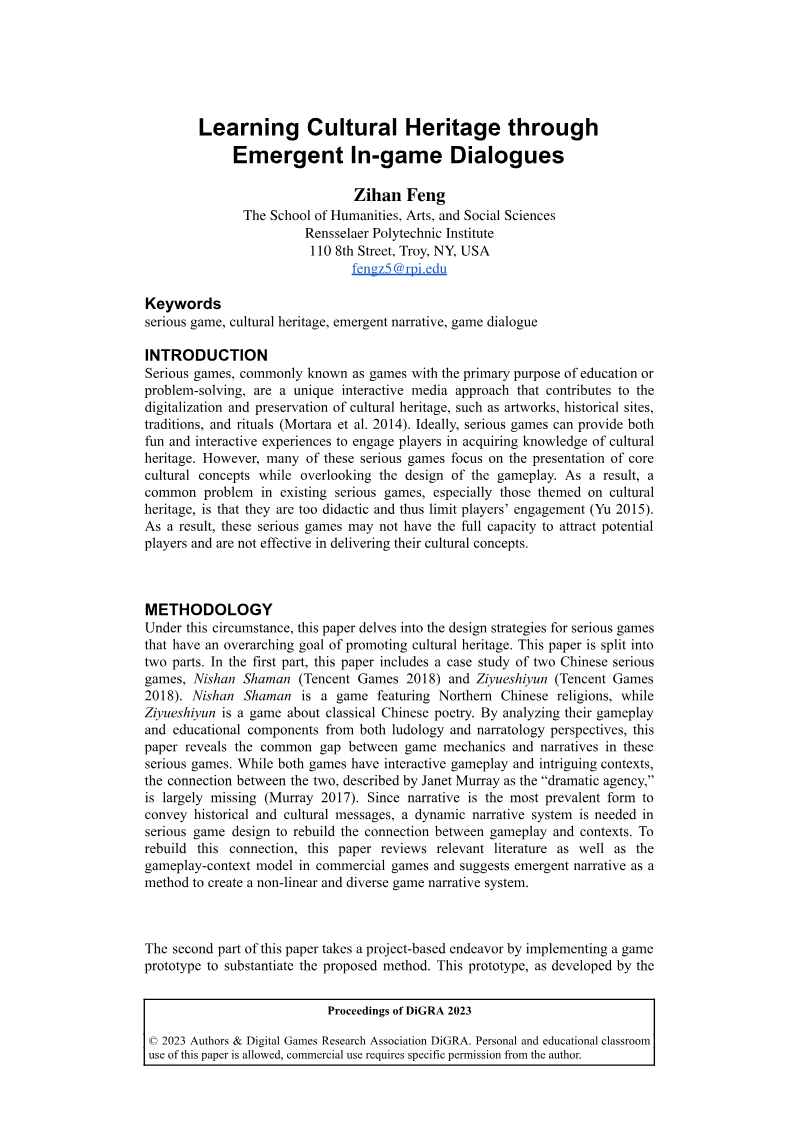
DiGRA · 2023
DiGRA · 2023
Game Developers Conference · 2019