1 free read left. Create a free account for unlimited reading + AI research.
Create free accountArticle Eludamos: Journal for Computer Game Culture
1 free read left. Create a free account for unlimited reading + AI research.
Create free accountArticleEludamos: Journal for Computer Game Culture
Ludo-narrative dissonance (LND) is the perceived clash between a game's rules and gameplay on one hand and its narrative on the other.
Grabarczyk and Kampmann Walther's "A Game of Twisted Shouting: Ludo-Narrative Dissonance Revisited" (Eludamos, 2022) reconsiders ludo-narrative dissonance (LND), the perceived clash between a game's rules and gameplay on one hand and its narrative on the other, which is typically treated as a design flaw. The authors argue instead that LND can be a productive resource, prompting meta-ludic reflection and ethical engagement. They ground this claim in a conceptual framework that draws on three senses of "dissonance" (musical, spatial, and conceptual) and on a Carnapian, cognitive-dissonance model in which LND arises from conflict between player-action sentences and narrative sentences. The analysis is deliberately analytical rather than intent-based, tracing LND's origins to both mechanical-narrative conflict and transgressive play, from 1980s text adventures to The Stanley Parable.
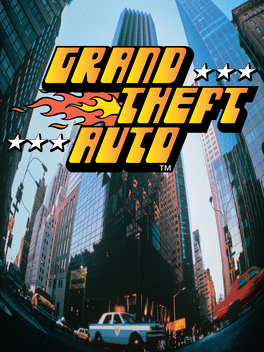
The paper's central argument concerns open-world and simulation-heavy titles such as Grand Theft Auto IV, where rigid narrative structures combine with open systems. Developers commonly mitigate this incongruity through phone-delivered missions, in-world narrator proxies, and environmental cues. The authors find that these strategies often yield interesting design but leave the underlying problem of player-avatar identification unresolved. To describe the figures that mediate this tension, they introduce "Shouters," voiced proxies that steer players toward LND's fragile points and that fall into three roles: Teacher, Director, and Developer.
The most detailed case study is Manhunt, analyzed as a game in which the Shouter's dual function as Teacher and Director generates dissonance between gameplay that rewards escalating brutality and a narrative that offers no justification for violence. The authors conclude that such dissonance can function as a poetic device rather than a mere defect, and they describe Manhunt as "an allegory of its own failure" in its attempt to resolve that tension. The work draws on Jenkins, Sicart, and Walther, and on Zagal's account of how control mechanics translate into violence levels.

Eludamos: Journal for Computer Game Culture · 2026
DiGRA · 2026