1 free read left. Create a free account for unlimited reading + AI research.
Create free account
5 years and counting - Keeping our pet alive
Key insights
6 takeaways- 01A small team of approximately 17 people in Malmö, Sweden, manages the game using an agile framework with two-week sprints that deliver 15 new levels per cycle.
- 02King maintains a consistent player base of over 4 million users for Pet Rescue Saga, a title nearly six years old, by operating it as a live-service game.
- 03Difficulty curves are balanced for veteran players through a pipeline that incorporates external playtesting in Canada to gather both quantitative and qualitative feedback.
- 04The game's design philosophy prioritizes accessibility and rapid engagement, utilizing data-driven level design focused on quick pattern recognition.
- 05The development team utilizes proprietary in-house tools that use groups and conditions to manage level complexity, blockers, and boosters through specific probability weights.
- 06The introduction of the 'Buff Buddies' feature, which rewards players for collecting specific pets, resulted in a measurable increase in both user engagement and gross bookings.
Ask AI about this video
Transcript
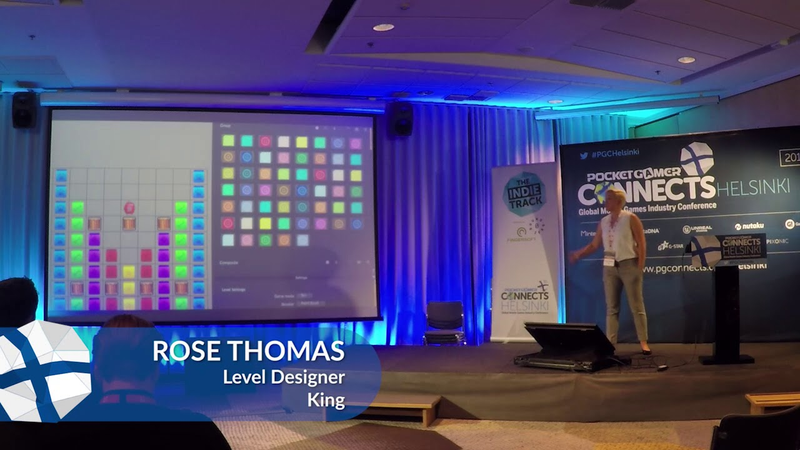
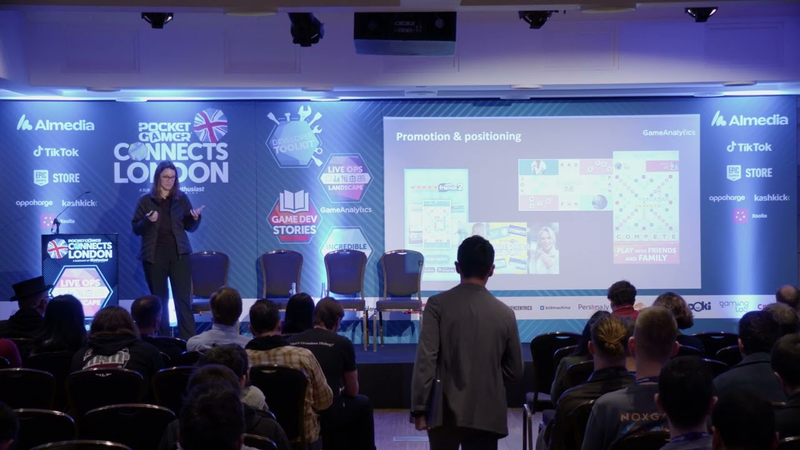
[Music] hello this is five years and Counting keeping pet alive and I am Rose Thomas so I want you to think back to the year 2012 there were a few games that came out Borderlands 2 Mass Effect 3 this small game known as candy crush but there was actually there was actually another game named Pat Rescue saga and that is the game I work on this October it'll be six years old we have over 2000 levels and a steady player base of over 4 million people so to give you some perspective the population of Croatia is actually lower than the number of players we have I work on a small team of about 17 people I forgot Who am I I'm Rose Thomas I'm a level designer at King malmö in the south of Sweden spoiler alert this talk is going to be about levels primarily cuz that's what I know I enjoy
long walks on the beach which I don't know why I wrote that because the Swedish beach is not that tropical and photoshopping co-workers into movie scenes it would be scary if you saw how many photos of co-workers I have so I work on a small team of around 17 people responsible for maintaining the game and I work closely with two other designers seen here in our journey through middle-earth and if you look there's actually an elf behind my shoulder and that could be one of you because we are trying to double the team size so that Jamie no longer has to play all four hobbits [Music] so real quick I'm gonna go over what is Pet Rescue saga in case you've never played it then I'll go over a typical sprint and the bulk of this talk will be about actually the levels and the level design process how we try and keep it fast how we keep it innovative using groups and conditions and then in level features so this is a typical level in Pet Rescue this is what it looks like
when you see it on Facebook as you can see there's colored blocks players just click the blocks they find a pattern they clear a match so gameplay it's a clicker you have a rechargeable booster that helps you clear the level a saga style progression that is typical from king games we have four modes rescue score high rating classic they all revolve around rescuing pets imagine that for a game named pet rescue or clearing all the blocks on screen we have around 11 boosters and eight blockers so it's a typical sprint for us so for the design team at least we work in two-week sprints King is an agile company and so for the first week it's all done in the design team so we deliver around 15 levels every two weeks in each episode so each designer designs five themselves and then we get together we play through them we provide feedback and then in the second week after we've tweaked these levels based on the feedback we send them to a company in Canada called play
tests and they have players play through them they give us some quantitative or qualitative feedback they'll say things like what made it frustrating what can they do to improve it we take that feedback we then apply it and then we send it one more time to play tests to have them do past testing so a lot of our end of content players have been playing for over 2000 levels they are quite good at this game and so we want to make sure that the levels are difficult enough that they don't burn through an episode in around 10 minutes but we also don't want them to be impossible to pass so we really try and iterate and get them at just the right difficulty level all right so now the bulk of it the level design process so King is a really data-driven company we do track what motivates our players what do they want and so we know on average that King players can up to five different motivations each for why they play our games they could be things such as competition achievements but two that stand out for Pet Rescue saga is actually to relax and
for entertainment our players are not trying to get into some for our game what they're gonna be deeply immersed in they just want to play quickly so we try and keep things fast we have we have to make sure the players know their objective early on they should know what they're supposed to do quickly but then when they get in the level we know they should take two to ten seconds to identify a couple of moves and then within that a few seconds to find one two three and finally they should only take about two to three seconds to execute them we don't have cascades so a lot of the time this is very quick just to clarify these are all estimations we don't actually have tracking but the point is that players should be able to quickly figure out what they're supposed to do and find patterns and also we know that it should be easy at the beginning and then ramp up in difficulty in the end if the players are to fail it should be within the last part of the level so we last added a new blocker almost two years ago it was this pixelated vine
flower here not my best Photoshop work and that was added in level 1498 and to clarify when I wrote this we were at level 2247 that was live so it's been a little while so how do we keep things complex how do we up difficulty because a lot of the times you can use both boosters to add complexity and difficulty and we used what we call groups and conditions I'm gonna try and explain these simply and quickly so groups here it says a collection of blockers blocks and boosters I don't know who wrote this it's not quite accurate they can actually only be one item inside a group in our editor it shows as one unit and then we can place it on the board anywhere and basically what it does is we can put anywhere from one to ten different items inside of it and when it displays to the player the code picks one of those items and shows it to the player and so this allows us
to add some controlled randomness can say I want a 25% chance of a blocker appearing in this corner and the code has a chance of doing that so to give you an idea this is what the inside of a group might look like we have eight different blocks four of them are covered in mesh which is one that you need two matches to clear and you can see they're weighted at 15% for the mesh a probability of that showing and 100% for those four blocks so the code would go through and pick one of those display it to the player and we can use these in a lot of interesting ways so I'm gonna show you an example this level here looks pretty simple we have five colors and the pet box no real obstacles on the screen but if you looked at it in our editor you would see there's actually 53 different groups so all of those colored blocks are in a group and the designer made it in such a way that when you clear say those three yellows when it refills you'll only have two yellows and there's always the same ratio of all the
colors so if you clear the blue you'd get back five blues instead of six so this is what it looks like in our editor all of those on the right-hand side is all the different groups that this designer created and those are all placed on the board and set to refill in different rows so now to recap groups are a collection of blocks and boosters we can set the probability as designers and they're good for adding controlled randomness to the board so now I'm going to talk about conditions these aren't quite the same but they are an element within the individual groups and these say when those items will spawn and what conditions need to be met for them to spawn so this is an example of the conditions we have you can see there's things like among columns this means we say okay this blocker can only spawn and columns one or five we have things like targets reached we have scroll progress so if a player is 75% of the level of 75% of the way through the
level we can say okay we want to ramp up the difficulty here make it so that some sort of blocker will spawn so we can kind of create these paths where it definitely starts out easy and then gets harder the end based on spawning in these conditions so this is another level within the editor that we're gonna look at the conditions on so you can see this is a lock this is one of the groups that I mentioned can have just one item in it and then the designer said okay it can be used for refill only refill one at a time and it says okay there can be zero other locks on the board it can only spawn and column two there can only be one pet on board and there can only be one bring down any which I'll explain what that is in the next picture so we've set up all these things that are very strict about where this lock ends up so this is what it looks like in the level you can see the lock is there and column two there's one pet there's one bring down any there in the bottom left corner which is used to clear a row and
then we've got all these blocks here so actually in this level we have two conditions on the red and blue blocks that dictate how and where they spawn we have two conditions on the line blaster that dictates where and how it spawns for on the block or on the lock and two on the pet itself so we have this very controlled idea of what spawns where and we use this to create strategies so like I said we can make these maps of how difficult the level is starting from the beginning to the end so that is conditions there what spawns when why kind of situation finally I'm going to talk about in level features so one thing that's nice about malmö is we often get to test out new features and try them out so with this one buff buddies around a year ago we had this idea that was does players do players get more engaged when they have moments of opportunity and this was what was proposed to us so we can as designers interpret that however we want
so we kind of said okay well players already have to collect pets so what if we made those the moments of opportunity and we created this idea called buff buddies and originally we only had this for a few percentage of our players just to see if they liked it buff buddies essentially are special pets they spawn the same way as other pets but it's random when they appear can you have three you have the bronze dog the silver cat and the gold Panda so buff buddies when you collect the silver or you have to collect the bronze dog then the silver cat then the Panda and if you don't do it within a certain time your meter runs out you have to start over the bronze dog adds each one adds a special booster so the bronze dog is a score multiplier the silver cat on top of that score multiplication charges up your booster faster and then the gold Panda gives you a special bomb called the buff buddy bomb that clears the entire board so it's very powerful they're useful so we gave this to just a few percentage of players to see how they felt about it if they liked it if
this was a good feature and we actually saw a great increase in engagement and gross bookings and it is now a regular feature in the game you can see these pets you can collect them save them whatever you want you could leave them on the board if you just don't care so those are buff buddies and basically you're all now level designers you know all my secrets about pet rescue so if you're interested like I said we are hiring you can check out the jobs there or I said taffy is also here in the front row in the King t-shirt you can speak to her if you're interested thank you any questions I love the fact you got structure around how you're gonna build level design add new kind of monetization kind of block in some it I know the block is an interesting one isn't it because it kind of is the obvious go-to thing isn't it oh okay so we know how these things work we're gonna just check the scene and
you've just said hang on no let's actually use the tools we've got because once you start with a variety you can expand gun you there's a question right there so hopefully microwave will get to you hi nice talk thank you how quick is there or turn around trying on the level testing with the externals and everything around a week all right absence short week any other questions because I know I mean you kind of find this fascinating cuz it's big thing for me about creating operational processes pipelines and it sounds like that I often find the add your method can be problematic in that kind of circumstance because it's great for saying okay we're gonna do some iterative work it's gonna have an outcome but doing that within a tight framework doesn't not always allow you to have a long-term strategic view at the same time how do you deal with that I mean it's it's definitely
something we've talked about a lot we have regular meetings where we talk about okay is this working should we improve our sprint processes should we change you know released H week what do we do and so it's I think the way we deal with it is just very good communication always keeping the lines of communication open and discussing and making sure it still works for everybody that no one's getting tired or not feeling creative and so that's what we do it's all one of the things I have problem is when I'm trying to communicate the difference between you know running games the service rather than just raising a game is that mindset change and it's often a big challenge to get people to think about what are their long-term objectives as well as their short-term ones there's a question is Anton iroh's great talk thank you the question was about your tool to create the levels is that the framework that you use for all of the King games or is that just in the Malmo studio that's just an amount studio it was a developed in-house so fantastic no wonder you can iterate and you've got up to 2,200 levels so far yes
so I think we actually released another lab episode so it's like 2263 something like that is it is there an end game is my final question like not anytime soon [Music]
Summary
Pet Rescue Saga, a long-running mobile title from King, maintains a consistent player base of over 4 million users despite being nearly six years old. With over 2,000 levels, the game operates on a live-service model managed by a small team of approximately 17 people based in Malmö, Sweden. The development process relies on an agile framework, utilizing two-week sprints to deliver 15 new levels per cycle. This pipeline incorporates external playtesting in Canada to gather quantitative and qualitative feedback, ensuring that difficulty curves remain balanced for veteran players without becoming insurmountable.
The design philosophy prioritizes accessibility and rapid engagement, acknowledging that players often seek relaxation and entertainment. Level design is highly data-driven, focusing on quick pattern recognition and execution. To manage complexity and introduce controlled randomness, the team employs a proprietary in-house toolset featuring groups and conditions. Groups allow designers to bundle various blockers and boosters with specific probability weights, while conditions dictate the precise timing and placement of these elements based on player progress, such as column constraints or scroll depth.
Innovation is integrated through periodic feature testing, such as the introduction of Buff Buddies. This feature, which rewards players with tiered bonuses for collecting specific pets, demonstrated a measurable increase in both user engagement and gross bookings. By maintaining a rigorous, iterative pipeline and leveraging flexible, in-house technical tools, the team successfully balances short-term sprint objectives with the long-term strategic goal of keeping a mature game relevant and challenging for its dedicated audience.















Comments