Loading the document
1 free read left. Create a free account for unlimited reading + AI research.
Create free accountArticle GameMakers
1 free read left. Create a free account for unlimited reading + AI research.
Create free accountArticleGameMakers
Effective monetization is a deliberate design discipline, not an afterthought. It needs integration into a game’s core mechanics from the outset.
Joseph Kim's 2013 GameMakers post opens a three-part series on mobile game monetization, arguing that Western developers lag Japanese publishers in the science of monetization design. The motivating evidence is a 2011 profile of DeNA, which cited roughly $12 ARPU, a "stress and release" model of user psychology, and differentiated treatment of player clusters. DeNA's Kenji Kobayashi criticized Zynga for not researching when monetization is most enjoyable for users. Kim points to Gungho's Puzzle & Dragons, reportedly earning $4.9M per day, as proof of Japan's lead, and notes that GREE's Modern War allegedly more than doubled its ARPDAU after localization changes. He contends that Japanese techniques can transfer to the U.S. with proper customization, and that non-Japanese developers have yet to master the nuance of card battle design.
The series organizes twelve concepts into three mastery levels, one per post. This first installment covers four. Mechanics design holds that monetization mechanics must be planned from the outset, with a clear hypothesis that they can compete against top-100 grossing titles, ideally assessed with an ARPDAU contribution table. Engagement over monetization argues that retention must be established before monetizing, though Kim criticizes the idea as an overused conference talking point and an excuse for weak monetization planning. He frames monetization and retention as the yin and yang of lifetime value.
Shop volume and monetization capacity measures a shop by breadth of product types and depth of soft and hard currency items at every progression stage. Monetization capacity, akin to the "unlimited monetization potential" of gacha-fusion card battlers, means continually selling hard currency items without breaking game balance. Power gaps are managed through logarithmic growth, multiple upgrade paths, and PvP matching, with acceptable levels tied to disengagement KPIs. User flow stresses embedding purchase prompts into player activity rather than relying on shop visits, illustrated by Candy Crush Saga's pre-level boosts, Mino Monsters' character upgrade offers, and Final Fantasy Air Brigade's paid guaranteed loot drops.
 ZyngaCompany · United States · founded 2007 · 404 documents
 Candy Crush SagaGame · King · 2012 · 306 documents
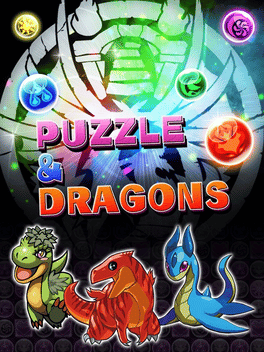 Puzzle & DragonsGame · GungHo Online Entertainment · 2012 · 149 documents
 DeNACompany · Japan · founded 1999 · 45 documents
 GREECompany · Game company · 23 documents
Each row is a game or company this document names, each column a document, oldest first. A mark means that document names it. Select a row to see those documents.
GameMakers · 2026

Technische Universität Darmstadt · 2026

Two & a Half Gamers · 2026

Two & a Half Gamers · 2026

Two & a Half Gamers · 2026

Digital Dragons · 2026

Two & a Half Gamers · 2026
Two & a Half Gamers · 2026
Two & a Half Gamers · 2026

Two & a Half Gamers · 2026
Gamota · 2026
PocketGamer.biz · 2026
DiGRA · 2026