PC & Console
Steam, consoles, cross-platform play and cloud gaming.
147 documents

Niko Partners · 2020
ReportAsia Spotlight Report: The Impact of COVID-19 on China’s Video Game Market in Q1 2020
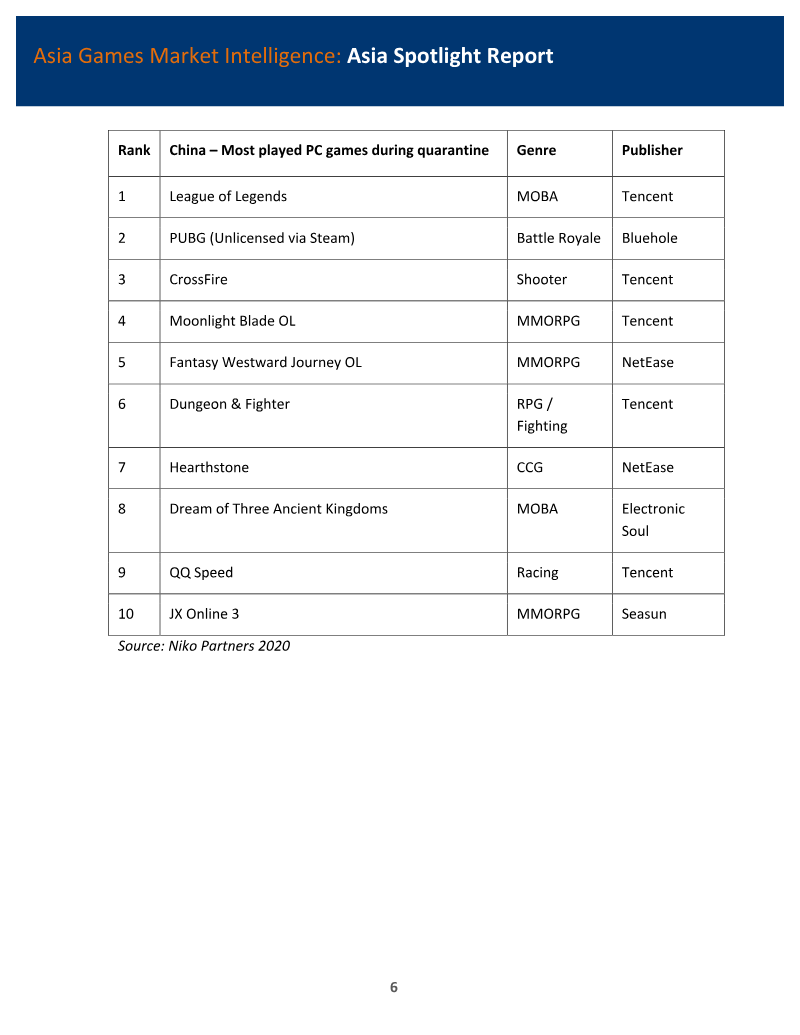
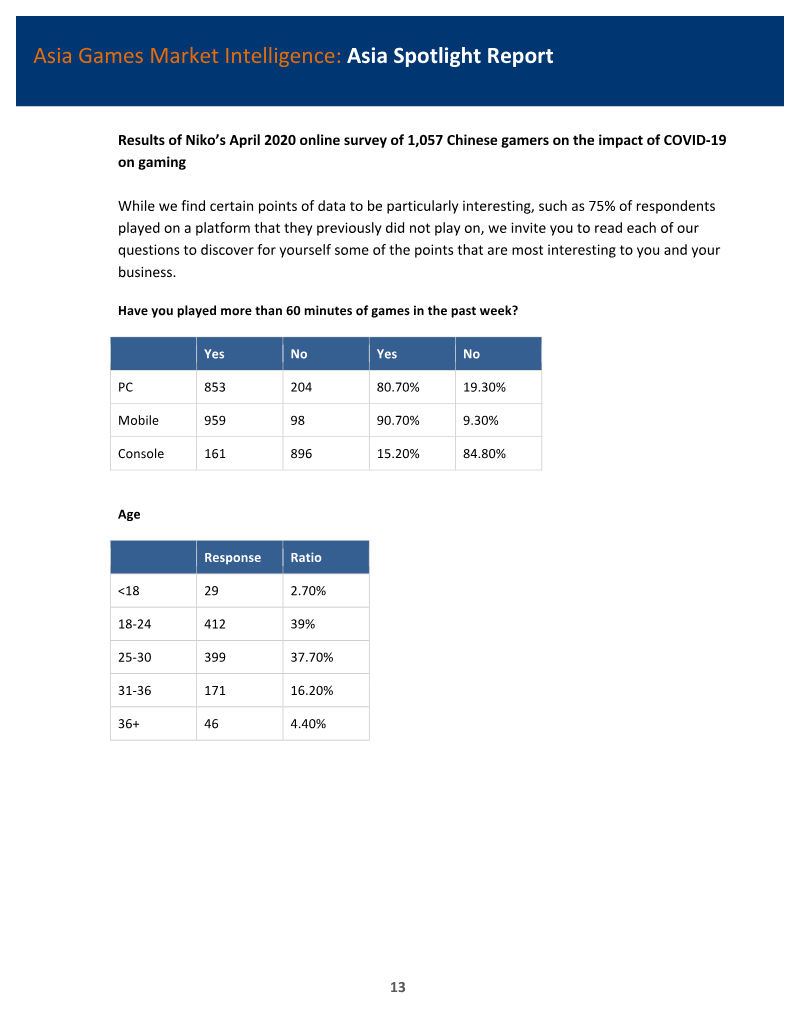
The video game market in China experienced a significant surge in engagement and revenue during the first quarter of 2020, driven by widespread stay-at-home mandates during the COVID-19 pandemic. Total industry revenue for the quarter is estimated to have been approximately 30% higher than in the same period of 2019. This growth was characterized by increased mobile, PC, and console usage, as gamers sought entertainment and social connection during prolonged quarantine periods. Key findings from an April 2020 survey of 1,057 Chinese gamers highlight the depth of this shift: 97.2% of respondents reported spending more time on mobile games, while 94.6% increased their time on PC titles. Spending also rose, with 81.6% of mobile gamers and 76.3% of PC gamers reporting higher expenditures during the lockdown. While major titles from publishers like Tencent and NetEase dominated the market, the period also saw a notable decline in the internet cafe sector, which was forced to close entirely. Survey data suggests a lasting impact on consumer behavior, as 57% of former internet cafe users indicated they do not intend to return to those venues once reopened. The pandemic also forced a rapid evolution in industry operations, particularly within the esports and development sectors. Esports tournaments successfully migrated to online formats, supported by municipal government initiatives to reduce regulatory barriers. Conversely, game development and outsourcing studios faced productivity challenges, leading to project delays for some global titles. While the surge in home-based gaming provided a substantial revenue boost, the industry faced headwinds regarding hardware manufacturing, component scarcity, and a decline in advertising revenue for smaller, ad-supported titles. Overall, the period solidified gaming as a primary social and entertainment outlet for Chinese consumers, with many users reporting a newfound acceptance of gaming within their households.


SuperData · 2020
Report2020 Year in Review: Digital Games and Interactive Media
The global digital games and interactive media industry experienced significant growth in 2020, with total revenue rising 12% year-over-year to $126.6 billion. This expansion was primarily driven by the COVID-19 pandemic, which forced consumers to remain at home and seek alternative forms of entertainment. As traditional leisure activities like professional sports and cinema were suspended, video games became a primary outlet for social interaction and entertainment, with 55% of U.S. residents reporting increased gaming activity as a direct result of the lockdowns. Market performance was characterized by the dominance of free-to-play titles, which accounted for 78% of total digital revenue, largely fueled by mobile gaming in Asian markets. However, the premium games segment saw the most rapid growth, increasing by 28% as blockbuster releases like Animal Crossing: New Horizons and Call of Duty: Modern Warfare captured consumer spending. Gaming video content also emerged as a major pillar of the industry, reaching 1.2 billion viewers and generating $9.3 billion in revenue. Additionally, the virtual reality sector saw a 25% increase in game earnings, bolstered by the release of high-profile titles and the adoption of standalone headsets like the Oculus Quest 2. The analysis relies on digital point-of-sale data from publishers, developers, and payment service providers, tracking the monthly spending of 195 million paying digital gamers worldwide. Findings indicate that while the initial surge in spending was tied to pandemic-related lockdowns, the long-term behavioral shifts in gaming habits are expected to persist. Looking ahead, the industry is projected to maintain its momentum, with ongoing trends including the consolidation of major publishers, the rise of subscription-based models, and the continued integration of mainstream brands and public figures into interactive digital spaces.

GDACZ – Czech Game Developers Association · 2020
ReportCzech Video Game PC, Console and Mobile Game Developers in Czech Republic 2020
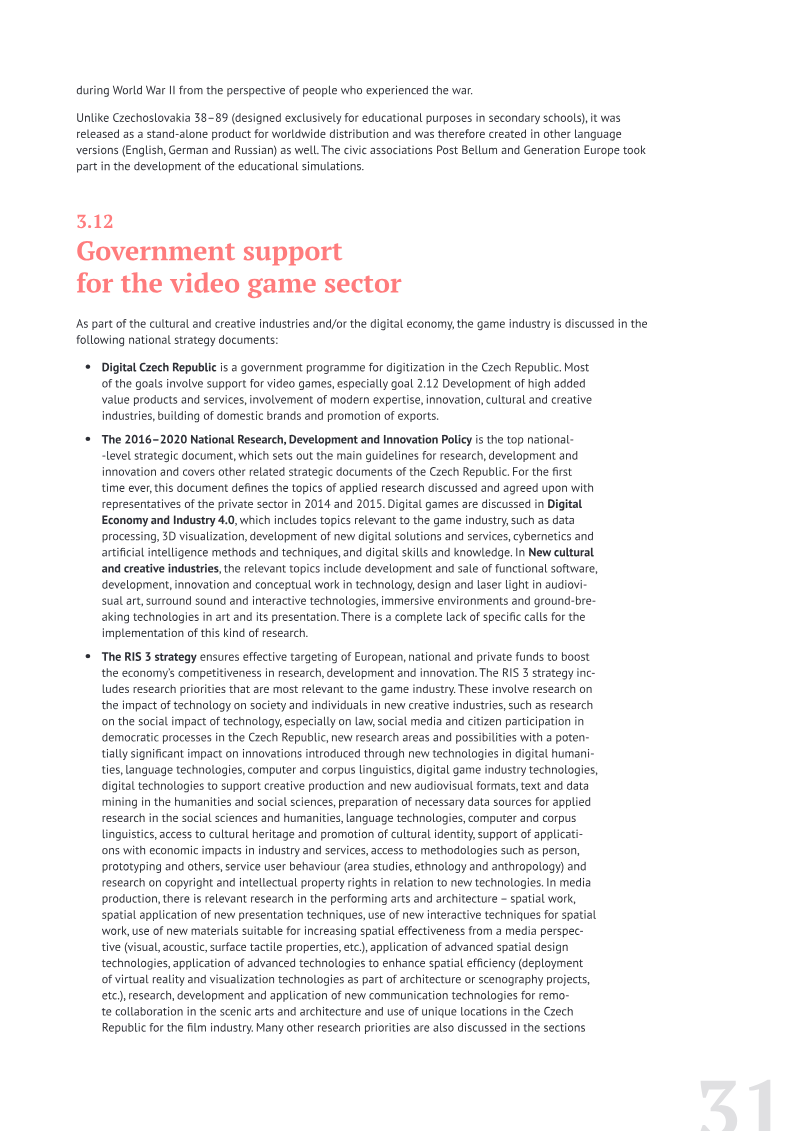
The study maps the structure and dynamics of the Czech video‑game industry as of 2020, highlighting its rapid export‑driven expansion and the strategic challenges it faces in talent development and public support. The sector comprises roughly 110 domestic development studios, of which only a small fraction are foreign branches, employing about 1,750 specialists. Turnover rose from CZK 2.26 billion in 2017 to over CZK 5 billion in 2020, equivalent to more than €190 million, reflecting an average annual growth rate of 29 % over the previous five years and an export share near 95 % to markets such as the United States, Germany and the United Kingdom. Revenue in 2019 already surpassed €169 million, outpacing the national film industry by a factor of three, and the market is projected to exceed €190 million in 2020. The analysis of the publishing and distribution landscape shows a shift away from traditional full‑development financing toward a model where publishers act mainly as marketing and launch partners, while online platforms now dominate the transaction chain, reducing costs and marginalising physical distributors, of which only ten remain active in the country. Consumer data reveal an average gamer age of 33, a gender split of one‑third women, and annual spending of roughly CZK 4 billion, with a strong preference for story‑driven titles. Human‑capital constraints emerge as a critical bottleneck: the industry confronts intense competition for skilled staff, a fragmented education pipeline, and limited visibility of creative industries within public policy. Unlike neighboring Poland and Germany, which allocate substantial public funds to game‑industry support, the Czech Republic offers virtually no dedicated subsidies for research, development or innovation, despite the sector’s outsized contribution to national exports. The findings suggest that sustained growth will depend on coordinated investment in education, clearer industry‑government linkages, and targeted public financing to bolster the sector’s competitive edge.


AEVI · 2019
ReportImpact of Cloud Gaming and Other Trends in the Indie Ecosystem: Spain
The analysis evaluates how cloud‑gaming and emerging distribution models are reshaping the Spanish indie game ecosystem, arguing that while the broader gaming audience is expanding across new platforms and financing structures, cloud‑gaming remains experimental and will not achieve mass‑market penetration for several years due to bandwidth constraints and uneven consumer readiness. Console users, especially those who are price‑sensitive and less tied to a single PC ecosystem, are identified as the most promising segment for indie titles delivered via cloud, with subscription‑or‑free‑to‑play (GaaS) approaches offering the strongest revenue potential. Current platform data show PlayStation Now operating in 19 high‑speed‑Internet markets and reaching more than 79 million PS4 owners—approximately 0.6 % of the console base—yet its relatively high subscription fee and overlap with PS Plus dilute its attractiveness. Google Stadia leverages extensive data‑center and AI resources, providing a free tier alongside a €9.99‑per‑month option, illustrating divergent pricing strategies within the nascent market. Strategic recommendations for indie studios emphasize hybrid monetisation that combines subscriptions with direct sales, targeting latency‑tolerant mid‑core audiences, including a growing female demographic. Development pipelines should prioritise engines with broad cross‑platform support, notably Unreal for versatility and Unity for seamless Stadia integration, while adopting low‑cost, high‑quality marketing to compensate for the reduced role of traditional publishers. Cloud‑gaming’s principal advantage lies in creating a more level playing field, granting indie developers visibility and access to users lacking high‑end hardware, thereby expanding market reach in Spain and comparable European territories over the coming three to five years.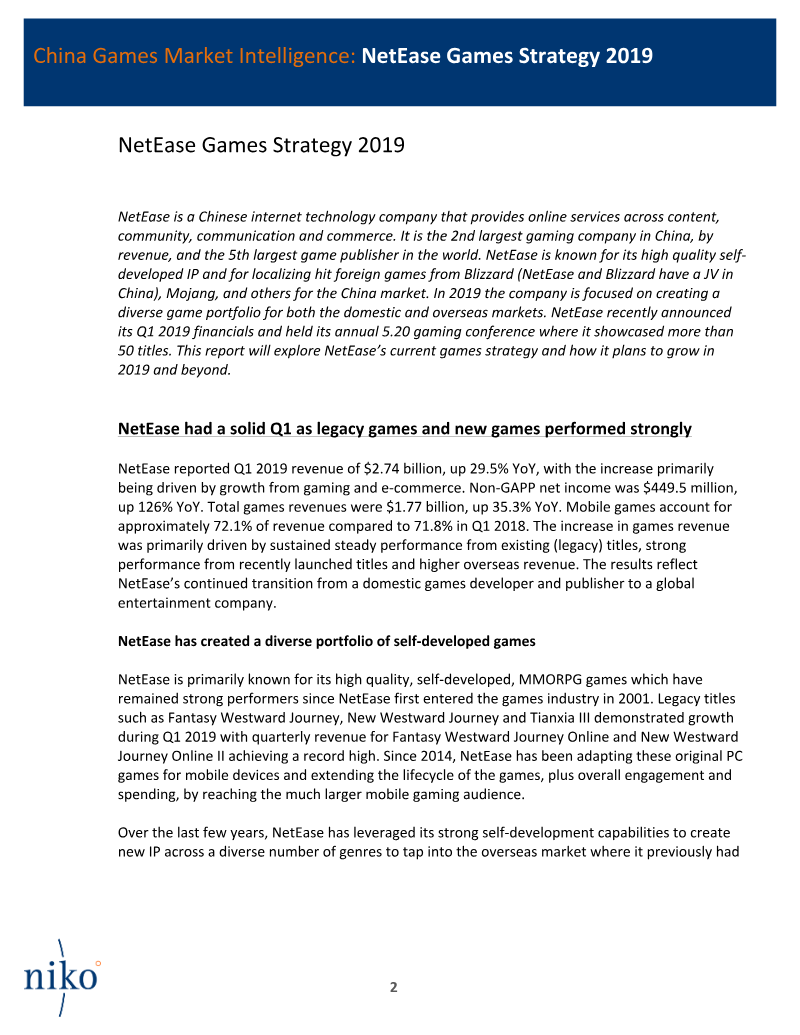

Niko Partners · 2019
ReportNetEase Games Strategy: 2019
NetEase is executing a strategic transition from a domestic-focused MMORPG developer to a global entertainment powerhouse. By diversifying its portfolio across multiple genres and expanding into international markets, the company aims to mitigate the risks associated with slowing growth in China. This strategy centers on leveraging high-quality self-developed intellectual property, fostering international partnerships, and building a comprehensive gaming ecosystem that integrates esports, live streaming, and pan-entertainment content. Financial performance in early 2019 underscored the company’s stability, with total revenue reaching $2.74 billion, a 29.5% year-over-year increase. Gaming revenue accounted for $1.77 billion of this total, driven by the sustained performance of legacy titles and the success of newer mobile games. Mobile platforms remain the primary revenue driver, representing 72.1% of total gaming income. Despite a regulatory freeze on game licenses in China during 2018, NetEase maintained growth by capitalizing on its existing library and expanding its footprint in key overseas markets, particularly Japan and the United States. To sustain this momentum, the company is aggressively pursuing global expansion through simultaneous worldwide launches, porting mobile titles to PC and console, and investing over $200 million in overseas studios. Furthermore, NetEase is building a robust gaming ecosystem that encompasses developer support, social platforms like the Da Shen app, and significant investments in esports, including the NeXT tournament brand. By evolving its top-tier intellectual properties into multi-media franchises—spanning film, comics, and merchandise—and securing strategic collaborations with global brands, NetEase is positioning itself as a formidable, long-term competitor in the global interactive entertainment industry.
Game Developers Conference · 2019
ReportState of the Game Industry 2019
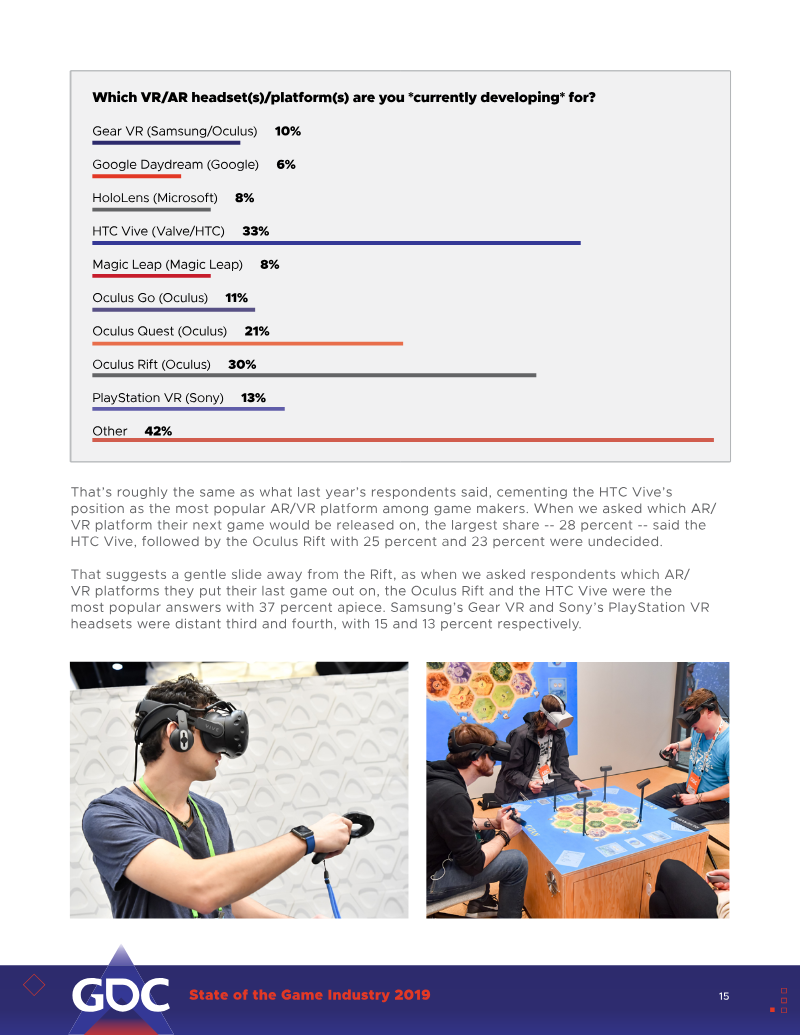
The global game development landscape in 2019 reflects a period of significant structural and cultural transition. While PC remains the primary platform for development, the Nintendo Switch has emerged as a major point of interest, signaling a shift in hardware priorities. Despite these technical advancements, the industry faces persistent labor challenges, including widespread overtime and a workforce demographic that remains heavily skewed toward male professionals with less than ten years of experience. Growing support for unionization among developers highlights a collective desire to address these systemic working conditions and professional sustainability. Economic strategies are also evolving as developers move away from traditional monetization models. Interest in loot boxes and crowdfunding has cooled, with a majority of creators favoring self-funding and self-publishing. This financial independence is coupled with growing friction regarding digital storefronts, specifically the 30 percent revenue share model on Steam, which many developers now view as unjustifiable. Meanwhile, the industry remains divided on the future of immersive technology, though a notable minority anticipates that augmented reality will achieve dominance within a five-year window. Marketing and accessibility represent critical areas for improvement in the current development cycle. Developers increasingly rely on social media and word-of-mouth for game discovery, while live events are frequently cited as ineffective promotional channels. Furthermore, while the adoption of accessibility features remains low, with only about a quarter of projects incorporating such elements, there is a clear trend toward prioritizing inclusive design. Features such as customizable controls and colorblind support are becoming central to the development conversation, marking a gradual shift toward more equitable and accessible gaming experiences.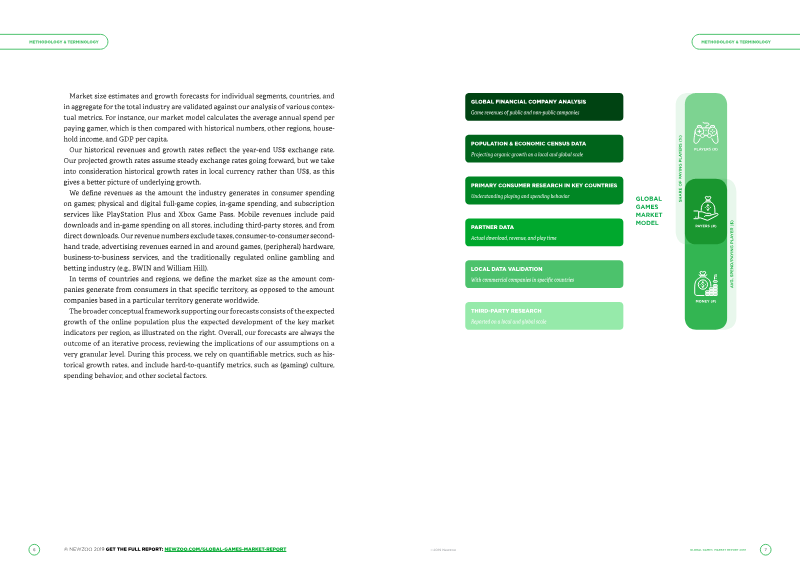

Newzoo · 2019
Report2019 Global Games Market Report
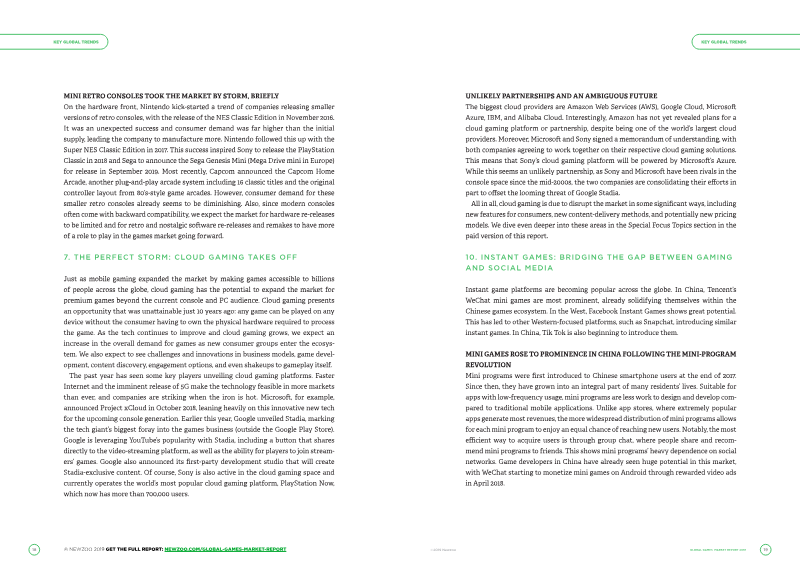
The global games market is experiencing robust expansion, with total revenues projected to reach $152.1 billion in 2019, representing a 9.6% year-on-year increase. This growth trajectory suggests a long-term valuation of $196 billion by 2022. Mobile gaming serves as the primary engine of this industry, consistently accounting for nearly half of all global revenue. While the Asia-Pacific region maintains its status as the largest geographic market, the United States is poised to overtake China as the leading individual country for gaming revenue, bolstered by significant strength in the console sector. Meanwhile, Latin America is emerging as the fastest-growing region, signaling a broader diversification of the global player base. Industry evolution is increasingly defined by the games-as-a-service model and a transition toward social-centric experiences. Platforms facilitating instant, social-integrated gameplay are driving higher retention rates, while the rise of cloud gaming and high-quality remakes of classic titles are reshaping consumer engagement strategies. The financial health of the sector remains concentrated among major players, as the top 35 public game companies generated $114 billion in 2018. Despite regulatory headwinds in specific territories, the industry continues to prioritize deep consumer insights to navigate these shifts. To better capture the nuances of this changing landscape, a new gamer segmentation framework categorizes consumers into eight distinct personas based on their hardware ownership, viewing habits, and playing behaviors. This analytical approach reflects a broader industry shift toward understanding the multifaceted nature of modern players. By synthesizing macroeconomic data with primary consumer research, these findings underscore a market that is not only growing in total value but is also becoming more sophisticated in how it monetizes and retains its global audience.

Institute for Digital Economy · 2019
ReportCzech Video Game Industry: PC, Console and Mobile Game Developers in Czech Republic 2019
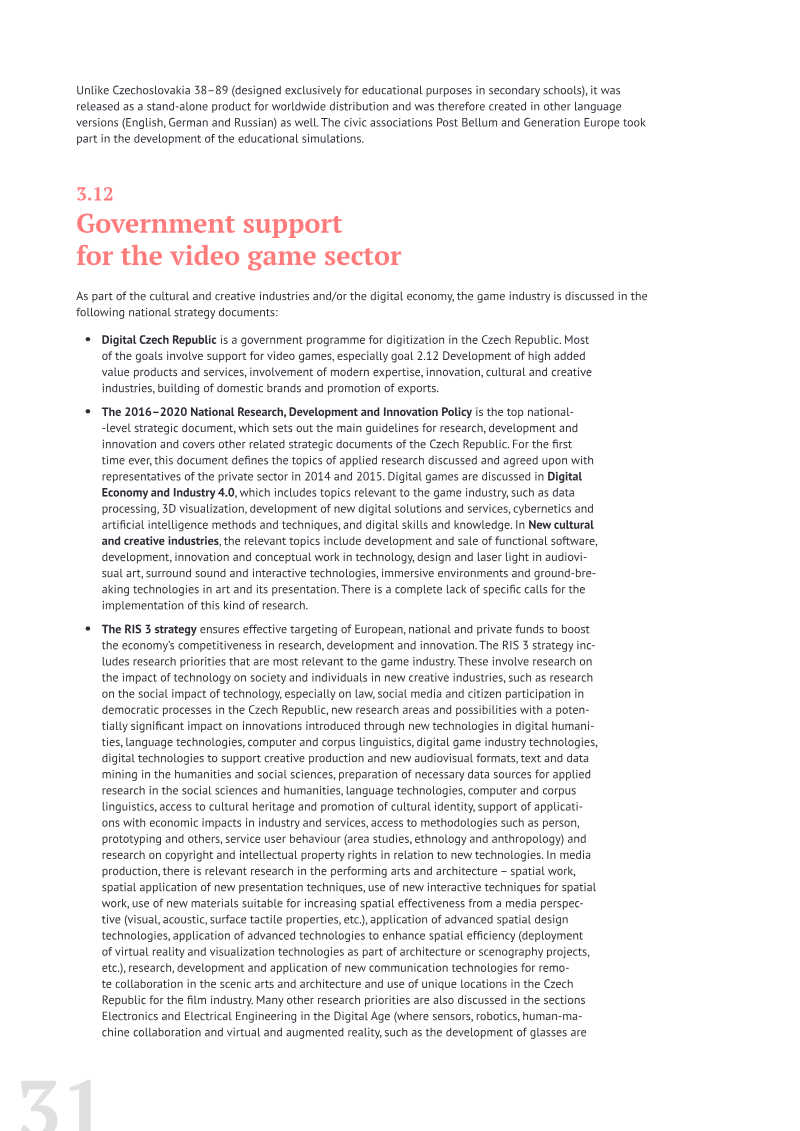
The Czech video game industry has established itself as a high-growth, export-oriented pillar of the national digital economy. By 2018, the sector reached annual revenues exceeding CZK 3 billion, consistently outperforming the domestic film industry despite operating without formal state subsidies. Comprising approximately 76 primarily domestic companies, the industry maintains an export rate between 90 and 99 percent. These studios are characterized by a focus on PC and console development, with a strong emphasis on innovation in simulation, virtual reality, and artificial intelligence. The transition to digital distribution platforms like Steam and mobile marketplaces has lowered entry barriers, allowing independent studios to bypass traditional publishing models in favor of community-driven development and crowdfunding. Despite this commercial success, the industry faces structural impediments that threaten its long-term global competitiveness. The sector is dominated by micro and small enterprises that struggle with limited access to private capital and a lack of specialized domestic investment vehicles. Furthermore, the industry is hindered by a severe shortage of skilled labor, exacerbated by the absence of dedicated academic programs and restrictive visa regulations for non-EU talent. These challenges are compounded by administrative hurdles and a lack of legislative frameworks to support student internships or industry-specific research and development. To sustain its trajectory, the industry requires a shift toward systematic government support comparable to that provided to other creative sectors. Strategic recommendations include the establishment of a dedicated game industry fund, the implementation of targeted R&D incentives, and the modernization of educational curricula to align with technical and artistic market demands. By addressing these systemic gaps in financing, labor policy, and export promotion, the Czech video game sector can better compete with neighboring markets and solidify its role as a leader in high-value digital innovation.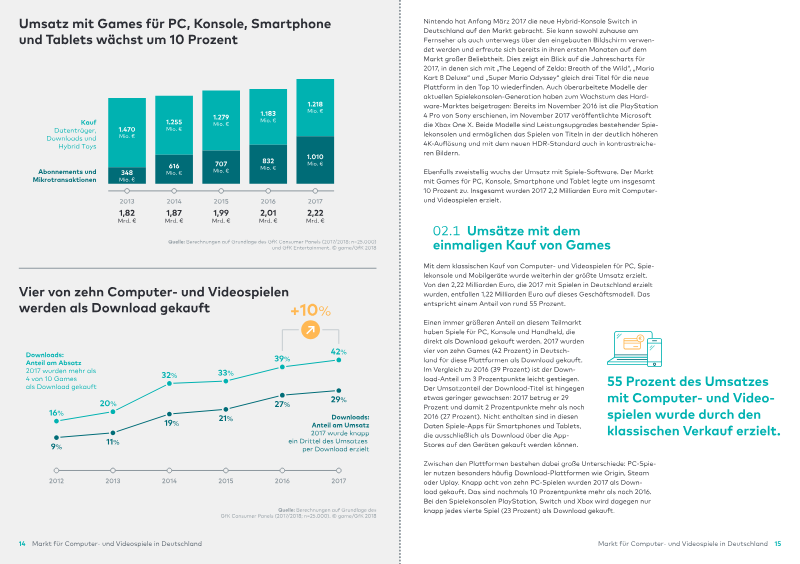

game – Verband der deutschen Games-Branche e. V. · 2018
ReportJahresbericht der Deutschen Games-Branche 2018
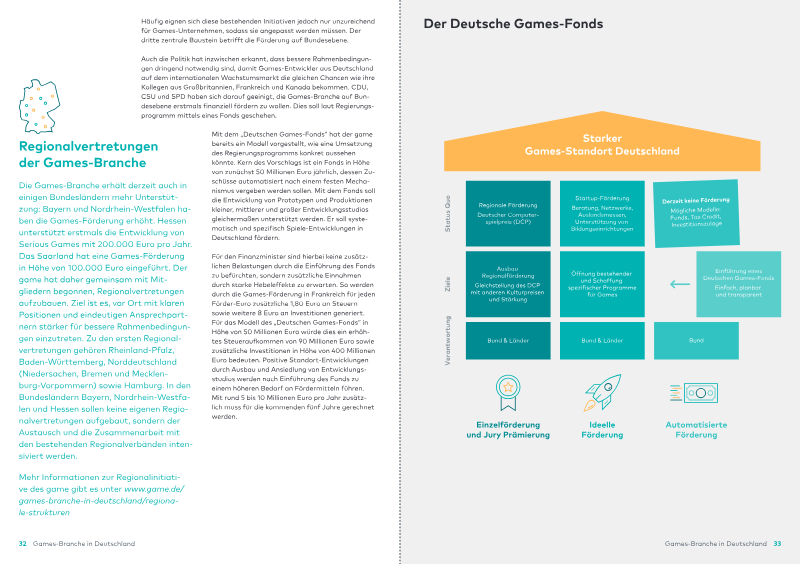
The German games industry experienced a transformative period in 2017 and early 2018, characterized by robust market expansion and a strategic consolidation of industry representation. Total market revenue surged by 15 percent to reach 3.3 billion euros, driven largely by a 26 percent increase in hardware sales and the widespread adoption of digital distribution models, including in-game purchases and subscription services. With a user base of 34.3 million people, the market has matured significantly; the average player age now exceeds 35, and the 50-plus demographic has emerged as the largest segment. Smartphones have officially overtaken PCs as the primary platform for German gamers, reflecting broader global consumption trends. Despite this commercial success, domestic developers face a precarious competitive landscape. The market share for games developed within Germany dropped to 5.4 percent in 2017, highlighting a disconnect between high consumer demand and the local industry's ability to capture that value. High production costs and a lack of state-level financial support compared to international peers have created significant barriers to growth. Consequently, the industry is actively lobbying for a dedicated German Games Fund and improved framework conditions to bolster competitiveness, innovation, and the professionalization of the eSports sector. To address these structural challenges, the industry has moved toward greater unity and political engagement. The merger of the BIU and GAME associations into a single representative body, "game," marks a pivotal shift toward a more cohesive advocacy strategy. This unified front is working closely with government entities to secure formal recognition for eSports, enhance media literacy, and promote the cultural value of gaming. While the sector maintains a stable workforce of approximately 30,000 employees, sustained growth and international relevance depend on the successful implementation of these proposed policy reforms and continued investment in domestic production capabilities.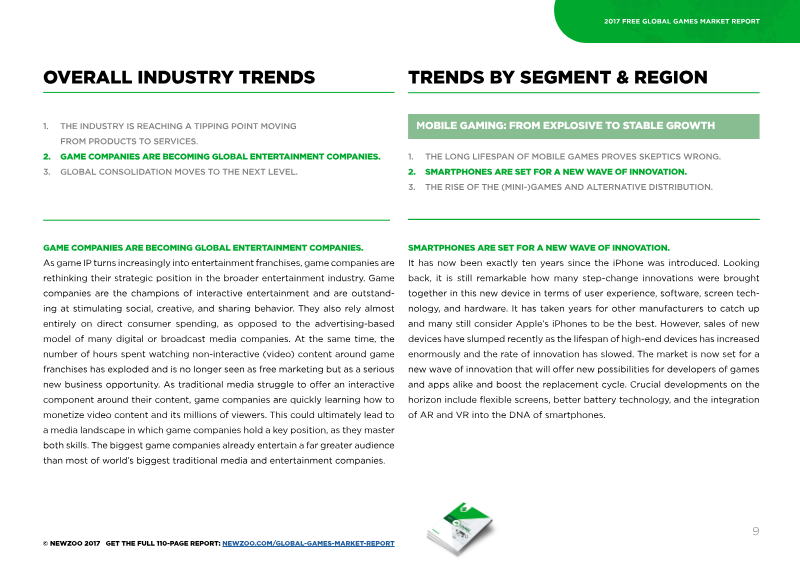

Newzoo · 2017
Report2017 Global Games Market Report
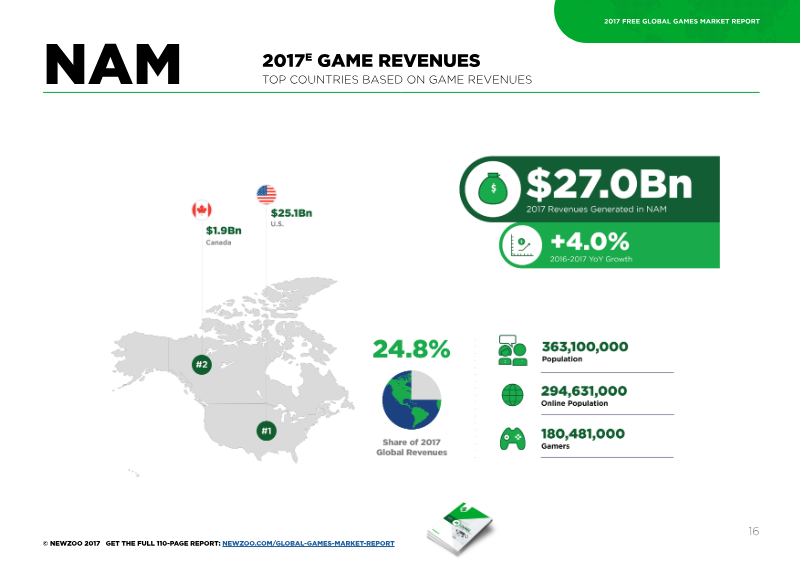
The 2017 Global Games Market Report analyzes the state of the interactive entertainment industry, identifying a pivotal shift toward a "games-as-a-service" model. The primary thesis posits that the traditional distinction between developers, publishers, and consumers is dissolving as gaming evolves into a comprehensive entertainment ecosystem. This transformation is characterized by the rise of "game enthusiasts"—a broader demographic that engages with content through playing, viewing, and creating, rather than solely through active gameplay. The industry reached a significant milestone in 2017, with global revenues surpassing $100 billion to reach $108.9 billion. Mobile gaming remains the dominant segment, accounting for 42% of total market revenue and 2.1 billion players, with projections indicating it will capture 50% of the market by 2020. Conversely, PC browser and boxed/downloaded PC games are experiencing a slight decline as consumers transition toward mobile platforms. Geographically, the Asia-Pacific region leads the market, generating $51.2 billion—nearly half of the global total—followed by North America at $27 billion. Methodologically, these findings are derived from a proprietary predictive analytics model that synthesizes data from over 100 public and private companies, continuous behavioral tracking of 10 million PC gamers, and device usage metrics from over one billion mobile devices. The research also incorporates primary consumer surveys across 28 countries involving 80,000 respondents. The report concludes that as game companies increasingly adopt service-based business models and integrate interactive elements into broader media landscapes, they are effectively positioning themselves as the primary architects of the world's most popular form of entertainment.

Newzoo · 2016
Report2016 Global Games Market Report: An Overview of Trends & Insights
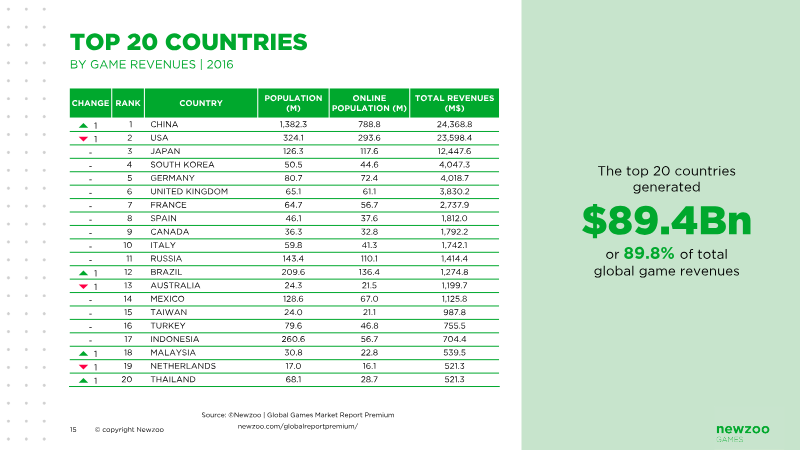
The 2016 Global Games Market Report provides a comprehensive analysis of the international gaming landscape, offering revenue projections and trend forecasts for the 2015–2019 period. The primary thesis posits that the industry is undergoing a fundamental shift toward community-centric engagement, where gaming has evolved into a primary form of entertainment that transcends traditional hardware boundaries. By synthesizing proprietary data with external research, the report evaluates market performance across various geographic regions, device segments, and screen types. Key findings indicate that the global games market reached $99.6 billion in 2016, representing an 8.5% year-on-year growth. The Asia-Pacific region remains the dominant market, accounting for 47% of global revenues and experiencing 10.7% growth. Mobile gaming emerged as a critical driver, generating $36.9 billion—or 37% of the total market—with a significant 21.3% year-on-year increase. While virtual reality is identified as a significant technological development, the analysis concludes that its near-term financial impact will be marginal, with revenues largely absorbed into existing PC, console, and mobile segments. The report highlights the rising influence of esports, noting that traditional media companies are increasingly investing in the sector to capture millennial audiences. Furthermore, the data reveals a trend toward "games as a service," where developers prioritize community management and live-streaming integration. The top 20 countries, led by China and the United States, account for nearly 90% of total global game revenues. The methodology relies on a multi-source data aggregation approach, providing a granular look at market segments, including smartphone, tablet, handheld, and PC/console gaming, to assist industry stakeholders in strategic decision-making.

Newzoo · 2016
Report