Marketing & User Acquisition
Campaigns, ad creatives, app store optimization and the cost of a player.
232 documents

Newzoo · 2017
ReportChina Mobile Market Update: December 2017
The Chinese mobile market remained stable throughout October 2017, characterized by consistent brand rankings and steady adoption rates. Based on an analysis of 350 million active devices from a total pool of 947 million smartphones and tablets, the data indicates that Apple maintained a 25.6% market share, while domestic manufacturers OPPO, Huawei, Vivo, and Xiaomi continued to dominate the remaining landscape. The ecosystem saw minor shifts in app store distribution, with Vivo expanding its presence by placing both its standard app store and its dedicated game center within the top 10, effectively displacing Google Play from the rankings. Consumer behavior in the gaming sector showed intense competition between industry leaders Tencent and NetEase. Honor of Kings reclaimed its position as the top-grossing game on Android, while NetEase demonstrated strong performance on iOS. The market also saw a strategic pivot toward the battle royale genre, with both publishers aggressively developing mobile iterations of popular titles to capture market share. Beyond gaming, the social and utility sectors remained anchored by established platforms like WeChat, Mobile QQ, and Alipay, though new entrants such as Wifi Master Key and Weibo successfully broke into the top 10 most installed applications. A specific performance analysis of the iPhone X during its launch week revealed high consumer interest, with the device significantly outperforming the iPhone 8 and 8 Plus in active usage. The data suggests that the iPhone X maintained a stronger appeal among high-end users compared to flagship offerings from domestic brands, which continued to focus primarily on mid-to-low-end market segments. These findings, supported by data from the independent smart data platform TalkingData, underscore a market that is increasingly defined by high-frequency mobile engagement, rapid adoption of new hardware, and a robust, localized app ecosystem.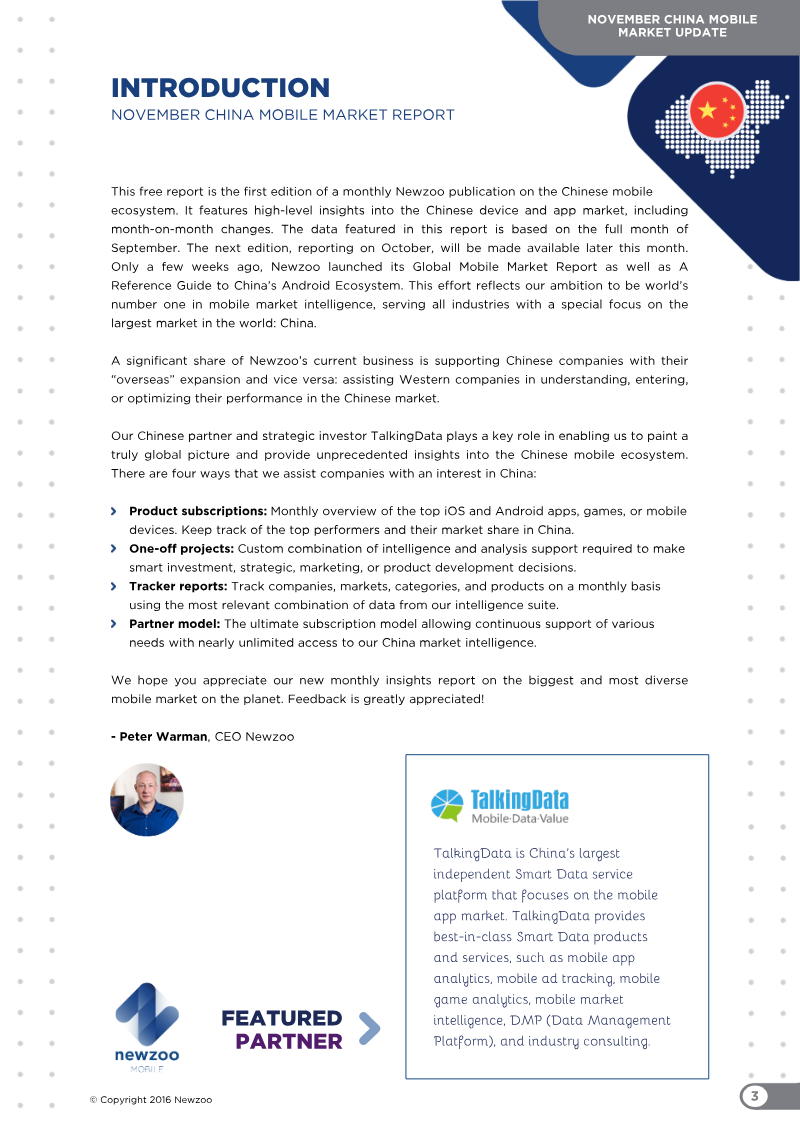

Newzoo · 2016
ReportChina Mobile Market Update: November 2016
The November 2016 China Mobile Market Update provides a comprehensive analysis of the Chinese mobile ecosystem, focusing on device market share, app store performance, and top-grossing applications for September 2016. The report serves as a strategic intelligence resource for companies navigating the Chinese market, utilizing data derived from a monthly sample of 350 million iOS and Android devices in partnership with TalkingData. In the hardware sector, Apple maintained its position as the leading mobile brand with a 23.6% market share, despite a decline from the previous month. Huawei and Xiaomi followed as the top Android manufacturers, while OPPO secured the fourth position, displacing Samsung. Within the Android app store landscape, Tencent’s Myapp remained the market leader with 24% coverage. Notably, Wandoujia experienced significant growth in both coverage and monthly active users following its acquisition by Alibaba. The application market remains heavily influenced by social and video platforms, with WeChat leading the non-gaming category with over 750 million monthly active users. In the gaming sector, Tencent and NetEase dominated revenue rankings across both Android and iOS platforms. Tencent’s King of Glory maintained its status as the top-grossing Android title, while NetEase’s newly released Onmyoji achieved immediate commercial success, ranking among the top-grossing games on iOS within its first month of release. The report also highlights the consolidation of the ride-hailing market, specifically the acquisition of Uber China by Didi Chuxing. This merger reflects the broader trend of high-cost competition in the Chinese mobile space, where market dominance is increasingly driven by massive user acquisition and strategic investment. These findings underscore a highly competitive, rapidly evolving environment where local giants continue to command the majority of user engagement and revenue.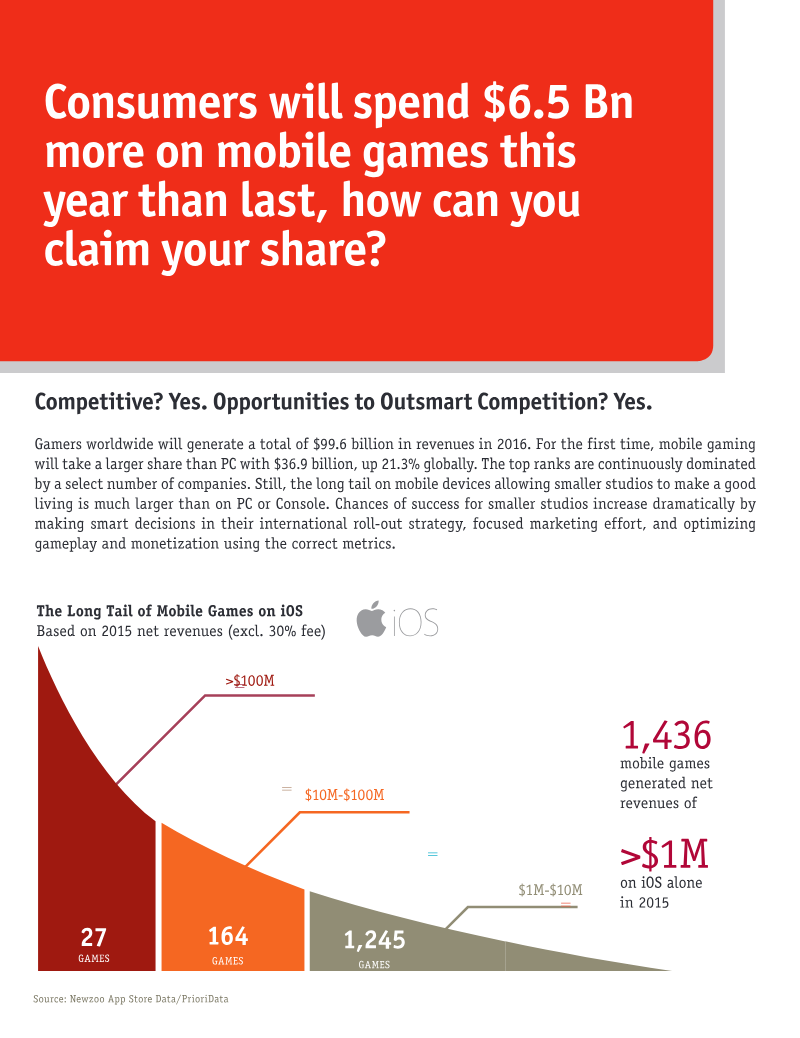

Newzoo · 2016
ReportCasual Games Sector Report 2016: How to Compete in the Crowded Marketplace
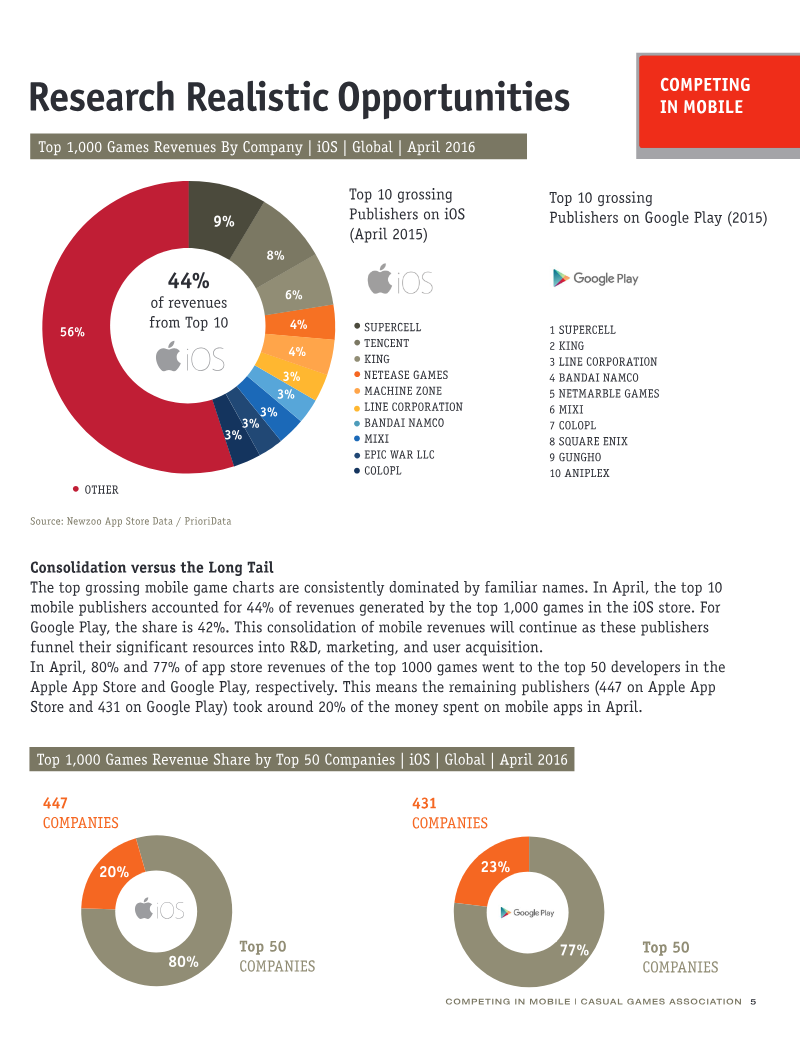
The 2016 Casual Games Sector Report provides a strategic analysis of the global mobile gaming landscape, focusing on how smaller studios can navigate a highly consolidated and competitive marketplace. The central thesis posits that while the mobile sector is dominated by a small group of top-tier publishers, developers can achieve success by utilizing precise market intelligence, optimizing international roll-out strategies, and applying rigorous, non-average performance metrics to their business models. The industry is experiencing significant growth, with global gaming revenues projected to reach $99.6 billion in 2016. Mobile gaming has surpassed PC as the leading segment, generating $36.9 billion—a 21.3% year-over-year increase. This growth is heavily concentrated in the Asia-Pacific region, with China alone contributing $2.9 billion in new revenue. Despite this expansion, market consolidation remains a defining feature; the top 10 mobile publishers account for approximately 44% of revenues on iOS and 42% on Google Play, while the top 50 developers capture roughly 80% of total app store revenue. Methodologically, the report synthesizes global market revenue projections with granular app store data, demographic profiling of high-spending users, and performance benchmarks. It emphasizes that relying on average industry metrics is insufficient for profitability, advocating instead for the use of 75th-percentile benchmarks to set realistic targets for retention and monetization. By analyzing specific regional data—such as conversion rates in Switzerland or device penetration in Australia—the report illustrates how developers can move beyond generic strategies to identify niche opportunities. Ultimately, the findings suggest that success in the crowded mobile sector requires a data-driven approach that integrates global market trends with localized, platform-specific optimization.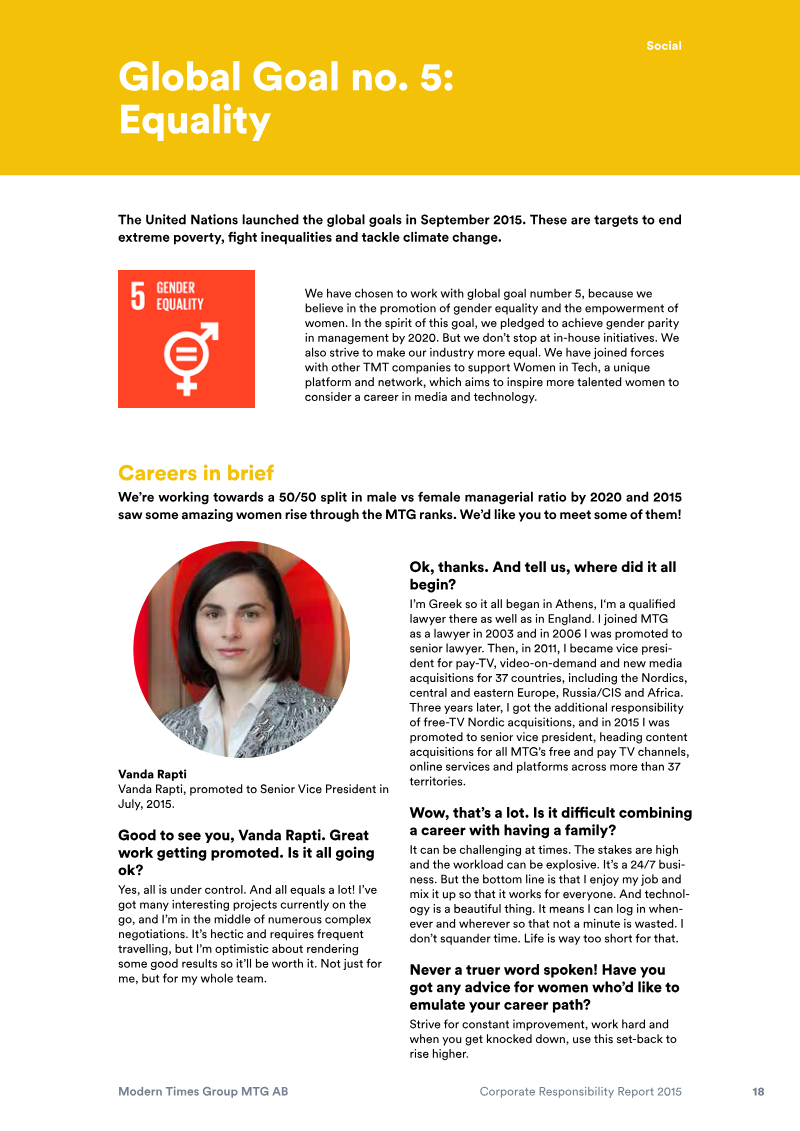
Modern Times Group · 2015
ReportMTG Corporate Responsibility Report 2015
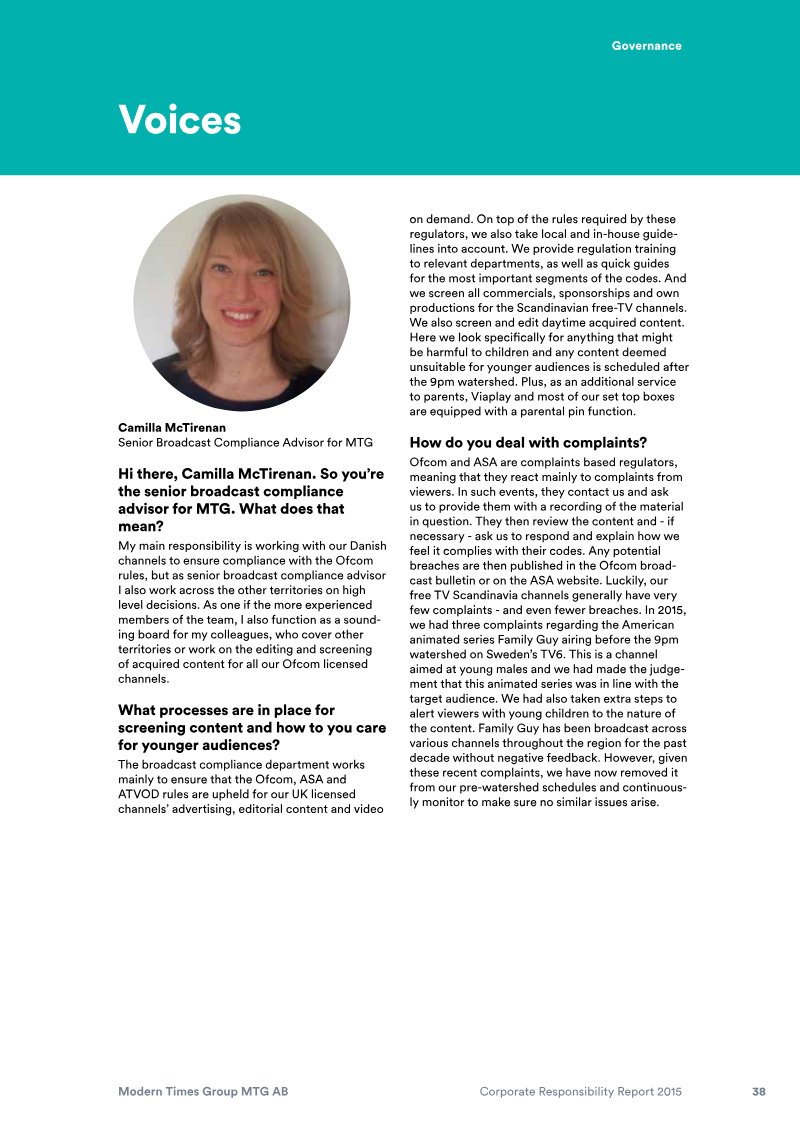
In 2015 the media group placed corporate responsibility at the core of its strategy, integrating ethical governance, sustainability and gender-parity objectives across a global operation that spans 165 countries and includes broadcast, content localisation and e-sports segments. The company achieved a 96% compliance rate among 514 new hires—drawn from 38 nationalities—who signed a unified code of conduct, whistle-blower and anti-bribery policies aligned with the UN Global Compact and OECD guidelines, while stakeholder engagement was overseen by a dedicated board committee. Environmental performance showed mixed results: total carbon emissions rose 13% since 2010, driven largely by travel that accounted for 61% of emissions, and overall energy use increased 3%. Nevertheless, the firm earned a 95 C rating on the Dow Jones Sustainability Index for the third consecutive time, a CDP disclosure score of 95 C, and operates a “green” office equipped with more than 200 solar panels. Targets for 2016 include a 23% reduction in employee energy use (baseline 2010), expansion of renewable energy, and comprehensive data-privacy training in response to upcoming EU legislation. Social impact was highlighted by a 91% accessibility rate for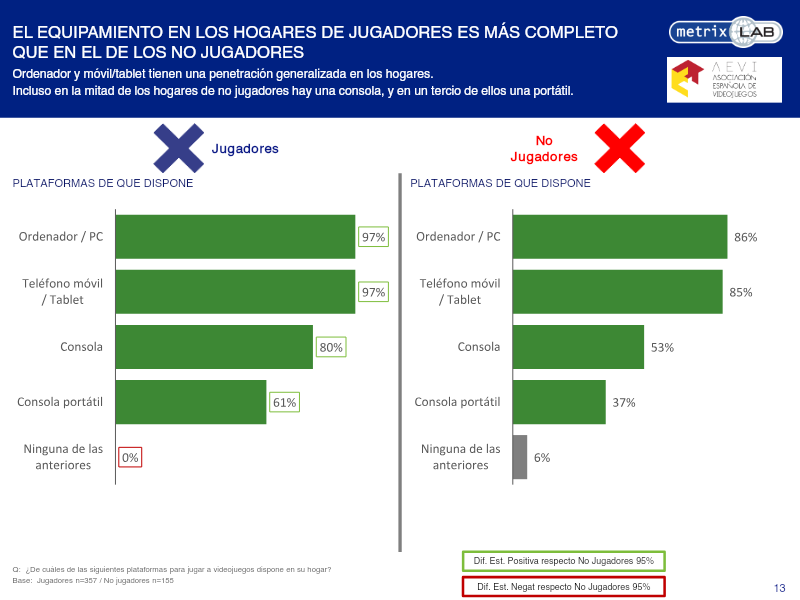
AEVI · 2014
ReportPadres y Videojuegos Hoy: España 2014
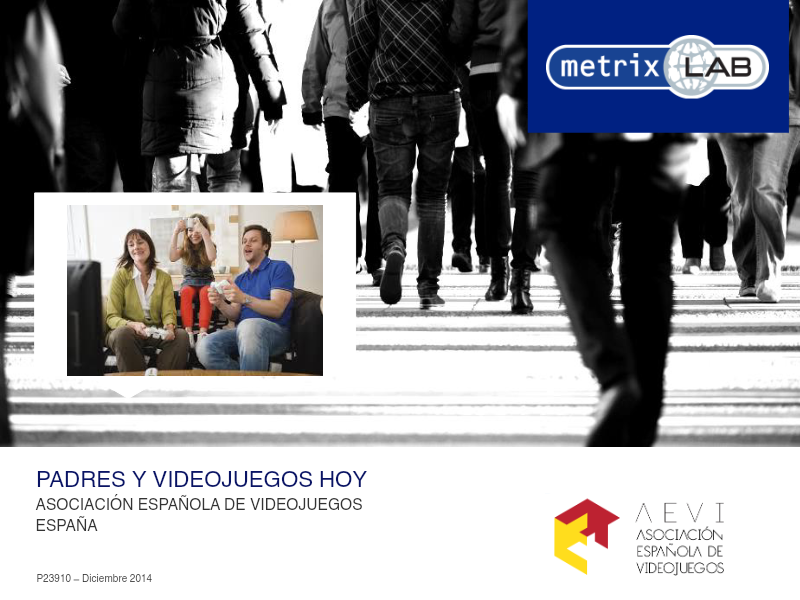
The research investigates contemporary Spanish parental attitudes toward video gaming, focusing on usage patterns, perceived competence, and consumer behavior during the 2014 holiday season. It reveals that a substantial majority—84%—of parents actively play video games and consider themselves technologically equal to or more knowledgeable than their children. This confidence translates into a notable educational dimension, with 40% of parents employing games as learning tools for their offspring. Family interaction emerges as a key driver, as more than half of the surveyed parents have maintained or increased their gaming time after becoming parents, citing shared play as a primary motivator. Economic analysis shows a modest decline in overall holiday spending on games compared with the previous year; however, parents who identify as gamers intend to allocate higher expenditures than non-gamer parents. Video games rank as the most coveted Christmas gift for half of the children surveyed, with a particular preference for physical console titles. Overall, the findings underscore a robust integration of gaming within Spanish households, highlighting parental confidence, educational utilization, and sustained consumer demand despite slight seasonal spending fluctuations. The study’s scope encompasses Spanish families during the December 2014 period, offering insight into parental influence on market dynamics across both digital and physical gaming segments.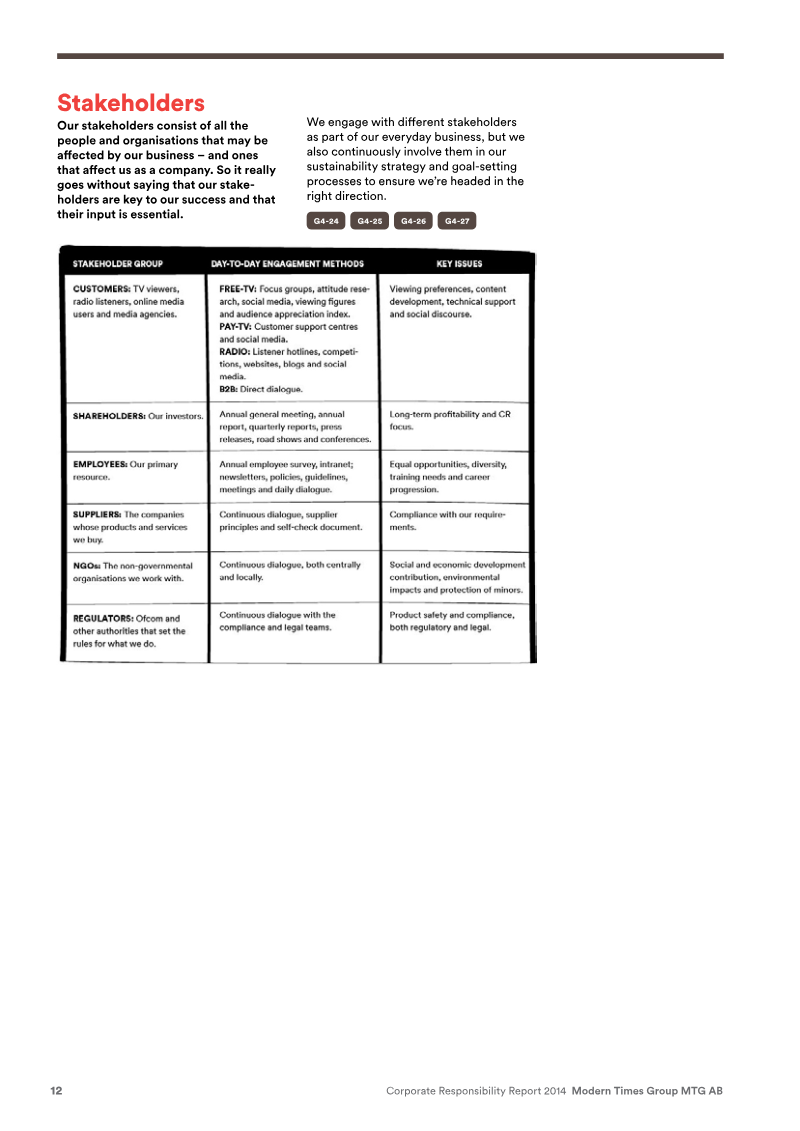
Modern Times Group · 2014
ReportMTG Corporate Responsibility Report 2014
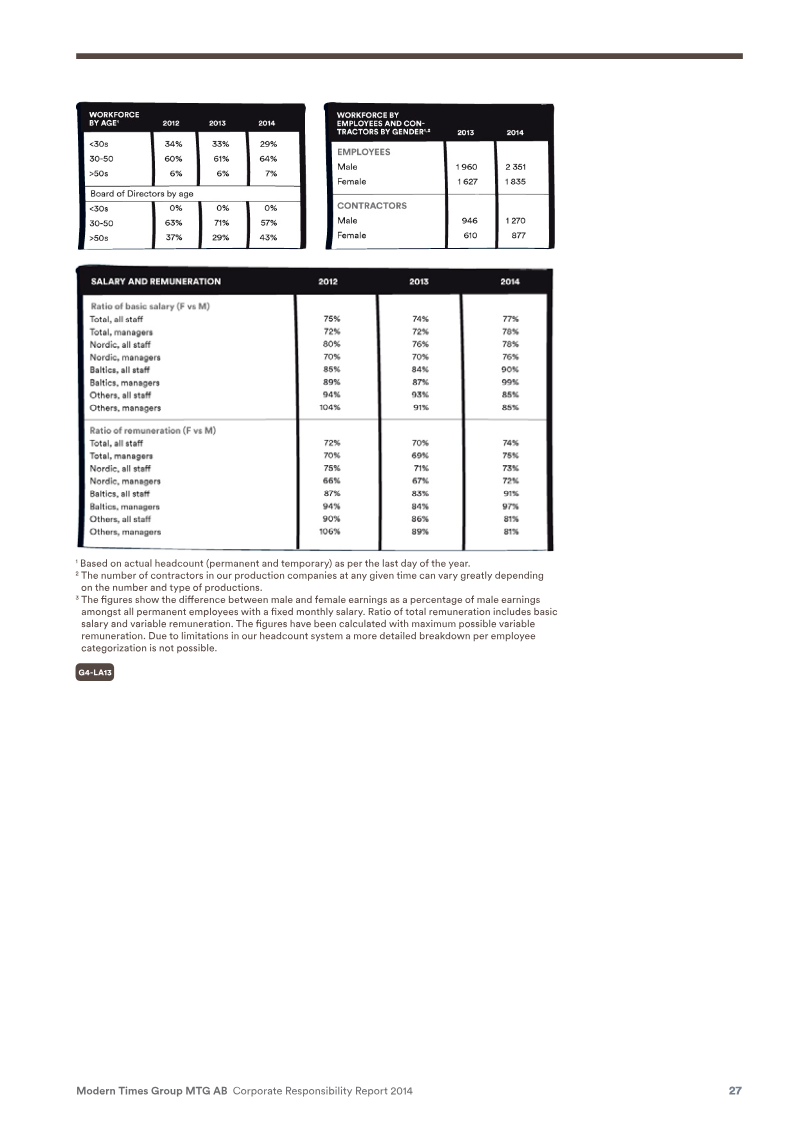
Modern Times Group positioned 2014 as a year of deepening corporate responsibility, linking its expanding digital portfolio to heightened standards in data-privacy, child protection, freedom of expression and sanctions compliance. The narrative underscores a strategic shift toward embedding ethical, anti-corruption and sustainability practices across a globally dispersed media operation. Financially, the company recorded net sales of SEK 16.7 billion, up from SEK 13.3 billion in 2012, while operating income contracted, reflecting investment in new digital initiatives. Governance was reinforced through a dedicated corporate-responsibility advisory group, multiple board committees and local representatives, ensuring that compliance mechanisms permeated all levels of the organization. A UN-Global Compact-aligned system saw 787 employees endorse an anti-bribery policy, the launch of a sanctions-risk register and an Interpol-backed anti-piracy project, alongside comprehensive updates to data-protection protocols. The workforce grew to 4,186 full-time equivalents, achieving an 84% appraisal completion rate and a zero-fatality safety record, with work-related accidents falling from ten to six. Diversity expanded to 44 nationalities and the gender-pay gap narrowed to women earning 75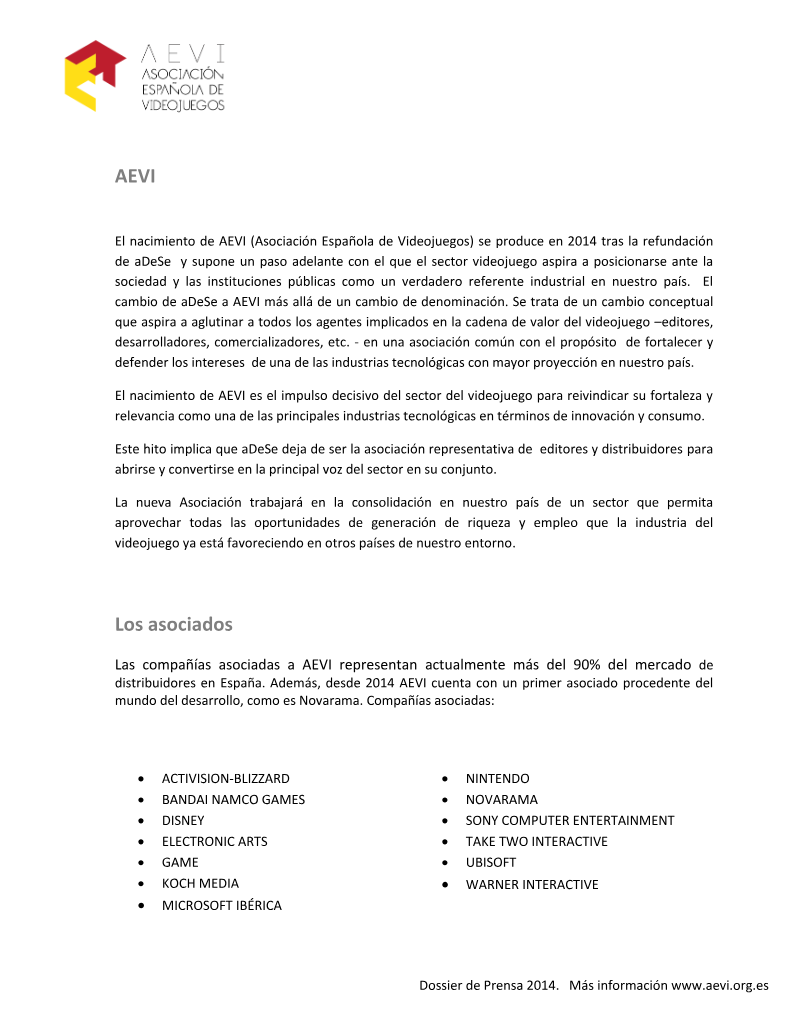
AEVI · 2014
ReportDossier de Prensa: España 2014
AEVI was created in 2014 to replace aDeSe and to serve as the unified voice of Spain’s video-game ecosystem, encompassing publishers, developers, distributors and related agents. Its core mission is to promote domestic industry growth, attract investment, defend intellectual-property rights and foster a sustainable, responsible market that highlights the sector’s cultural and innovative value. The association now gathers companies that control more than 90% of the national distribution market, including major global publishers such as Activision-Blizzard, Nintendo, Sony, Electronic Arts, Ubisoft and Microsoft Iberia, as well as the first development member, Novarama. Industry data indicate that Spain ranks among the top five European and top ten global gaming markets, with 19 million players across all platforms. In 2013 total consumer spending reached €762 million—software €401 million, hardware €275 million and accessories €86 million—despite a 7% decline in physical sales that nevertheless halved the previous years’ downturn. Adult participation stands at 24% while 62% of minors play regularly. Regulatory focus centers on the PEGI self-rating system, introduced in 2003, and on pending legislative reforms to the Penal Code and Intellectual-Property Law aimed at curbing piracy, which cost the sector €284 million in 2013 and, if eliminated, could generate roughly 26 600 new jobs. AEVI also promotes major events, notably the second edition of Madrid Games Week in October 2014, positioning the capital as a key venue on the international exhibition circuit and providing a forum for industry debate.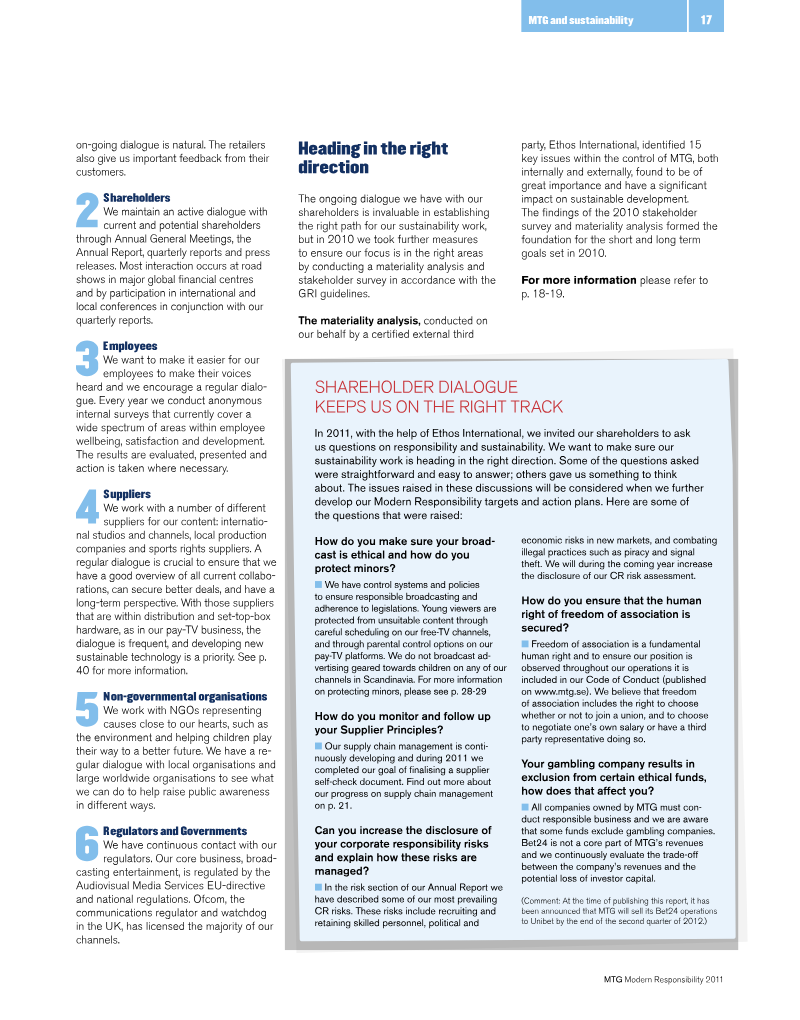
Modern Times Group · 2011
ReportMTG Corporate Responsibility Report 2011
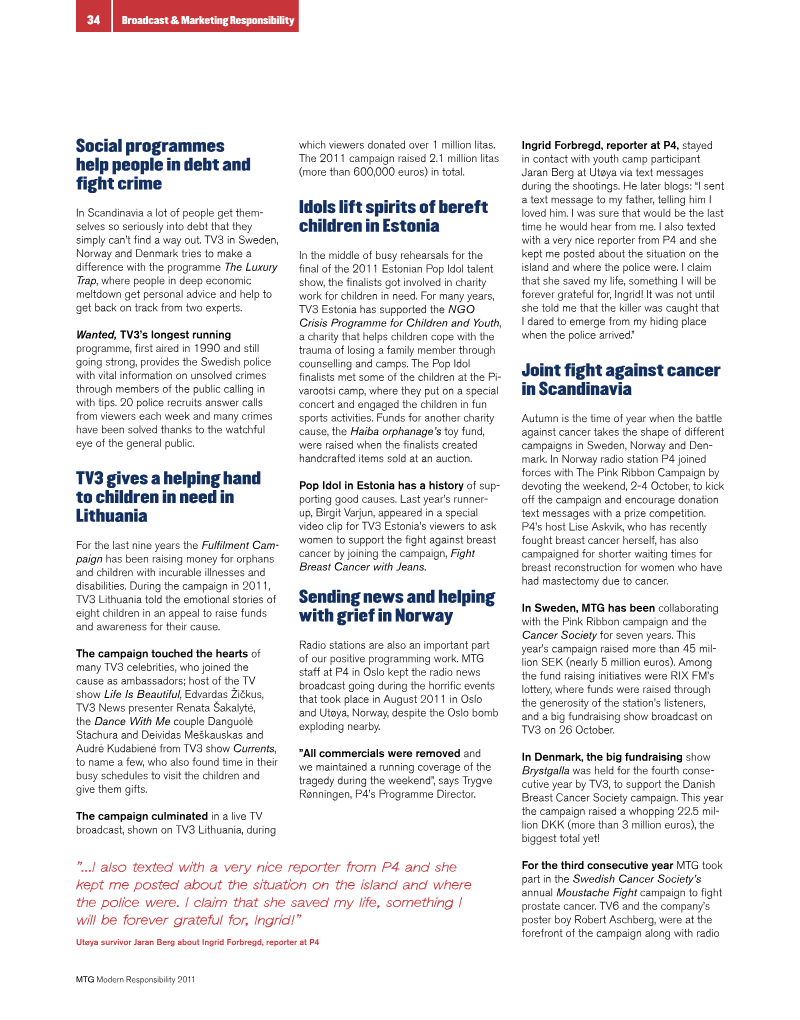
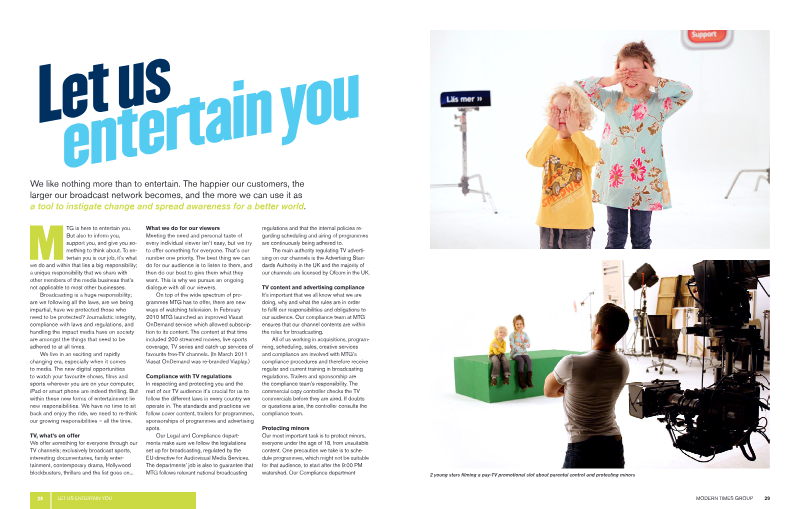
The 2011 Modern Responsibility Report demonstrates how Modern Times Group (MTG) has integrated a comprehensive sustainability framework across its operations in 39 countries, targeting employee welfare, anti-corruption, climate action and community engagement. By the end of 2011 the company achieved a 5% reduction in carbon footprint per employee—equating to a 16% total cut in emissions—and a 6% per-employee decline in CO₂ versus the 2009 baseline, while overall office energy use fell by the same 16% margin. These environmental gains were accompanied by a record-low incidence of work-related accidents (zero) and consistently low absenteeism around one percent. MTG’s expansion strategy in 2011 combined geographic and product growth, acquiring stakes in TV Prima, Darial TV and Balkan Media Group, launching Viasat HD, History HD and Nature HD in 22 Central- and Eastern-European markets, and entering four African nations (Ghana, Uganda, Tanzania, Kenya). The broadcasting arm, including Strix, continued to produce and co-produce TV formats sold in more than 80 territories, while its gambling subsidiary Bet24 remained a marginal revenue source subject to strict responsible-gaming controls. Stakeholder dialogue was institutionalised through a GRI-aligned materiality analysis, enabling MTG to meet 14 of 15 short-term sustainability targets for the year. Employee turnover averaged 18% among 3,031 staff (mean age 34) and training participation rose, though the rollout of anti-bribery e-learning was deferred for policy refinement. The whistle-blower system recorded only two operational reports, underscoring a relatively clean compliance environment. Community contributions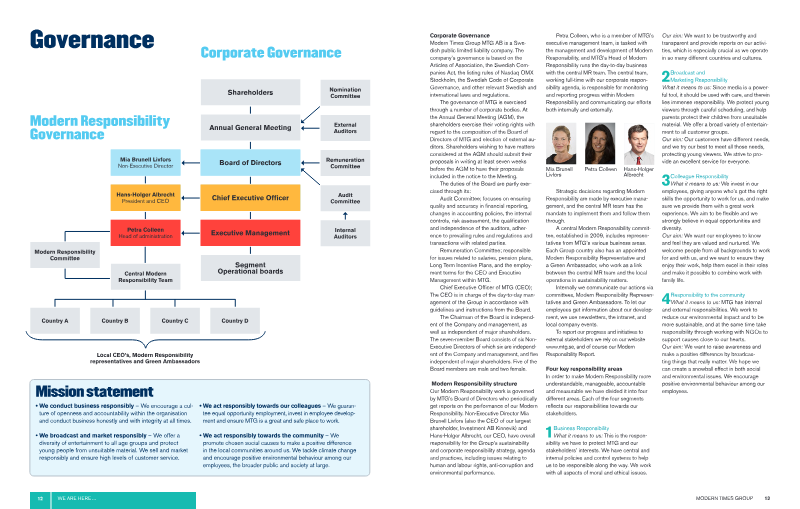
Modern Times Group · 2010
ReportMTG Corporate Responsibility Report 2010
The 2010 Modern Responsibility report presents Modern Times Group’s first GRI-aligned disclosure, expanding the reporting perimeter to encompass all subsidiaries and leased assets that employ staff. It establishes a comprehensive materiality analysis, stakeholder survey, and a crisis-support team, framing corporate responsibility as a strategic pillar that underpins responsible broadcasting across MTG’s television, radio and digital platforms. The document’s thesis is that transparent governance, measurable sustainability targets, and inclusive social initiatives can drive long-term value for both the business and its broader stakeholder community. Governance is overseen by a seven-member board—six independent non-executives, five men and two women—supported by audit, remuneration and Modern Responsibility committees. The report sets concrete performance goals, including training 50% of relevant staff on compliance by the end of 2010 and achieving full coverage by 2012, reducing per-employee CO₂ emissions by 5% versus the 2009 baseline by February 2012, and extending a supplier self-check system to half of MTG’s partners. Parallel gender-equity objectives launch a women-in-leadership network in Sweden and benchmark gender-pay gaps in Scandinavia by June 2011 and globally by February 2012. Operational outcomes for 2010 demonstrate strong social and environmental stewardship. MTG achieved 100% subtitling/closed-captioning for Swedish output, delivered 110 hours of compliance training, recorded only 21 internal complaints and incurred no fines. Philanthropic activity leveraged media assets to donate roughly 111 million SEK of airtime and raise over €58 million for health, disaster relief and child-health campaigns across more than 20 countries. The United for Peace football tournament engaged 130 youths from 12 nations, with 88% reporting new friendships and a near-universal endorsement of sport as a conflict-resolution tool, while the Playing for Change initiative secured a Social Capitalist award and raised 160 k SEK. Environmental performance shows a 7% rise in total greenhouse-gas emissions to 15,032 t CO₂e, driven mainly by facility energy (5,496 t) and business travel (8,727 t), raising per-employee emissions to 5.6 t CO₂e. In response, MTG plans greener travel options, country-specific green-action lists, 80% employee training in “green thinking,” and supplier CO₂ assessments to meet the 5% per-employee reduction target. The report thus captures a global, multi-segment (broadcasting, digital, philanthropy, sports) snapshot of MTG’s 2010 responsibility performance and its forward-looking commitments through
Modern Times Group · 2009
ReportMTG Corporate Responsibility Report 2009
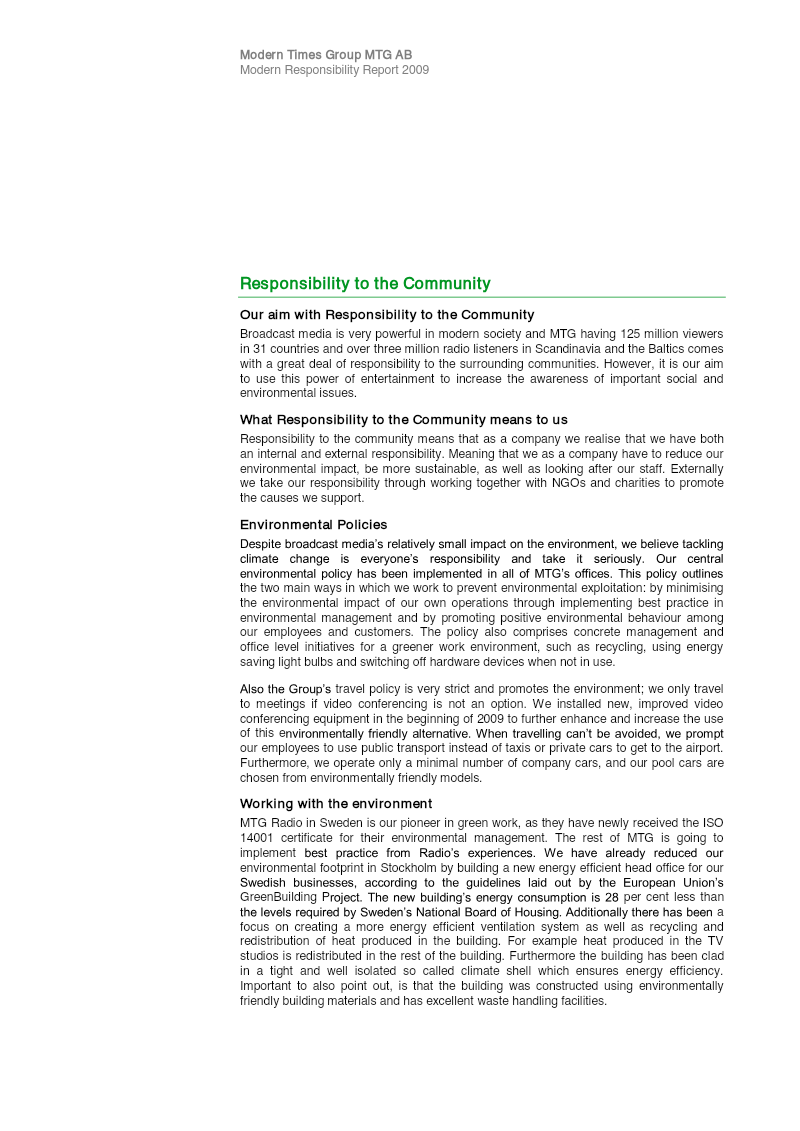
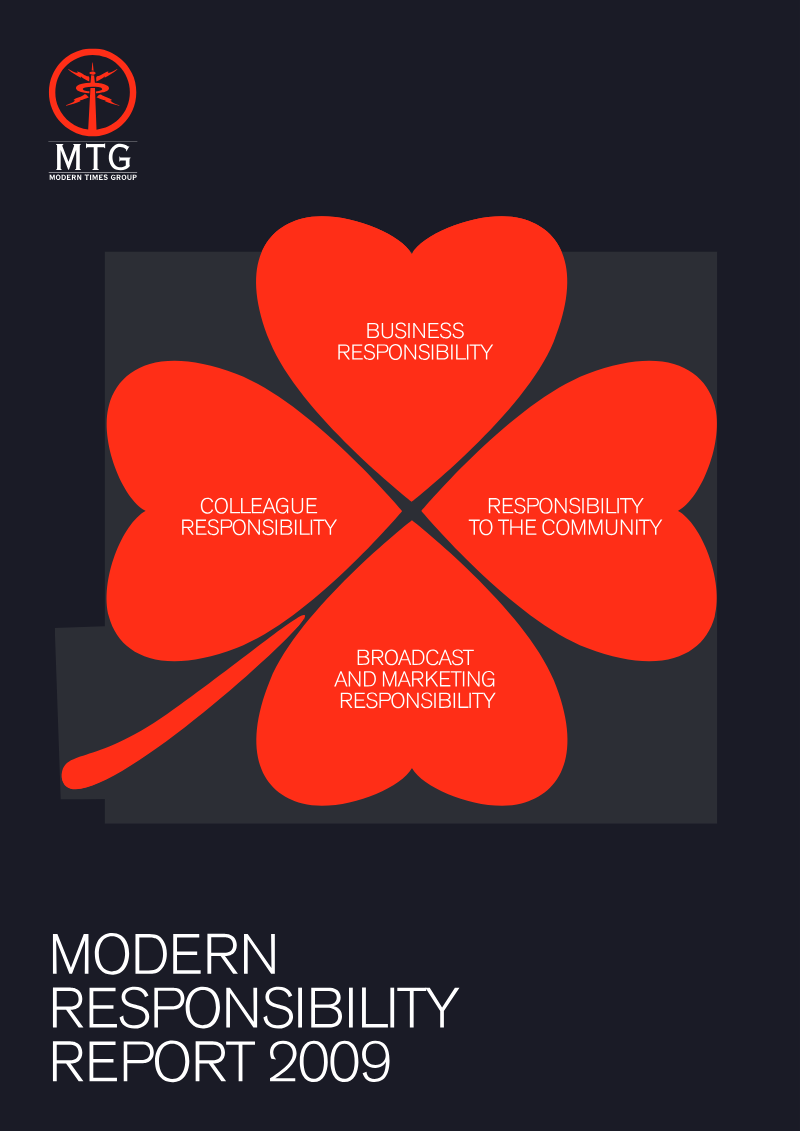
The 2009 Modern Responsibility Report presents Modern Times Group’s (MTG) effort to embed corporate responsibility across its broadcasting and media operations while navigating the aftermath of the 2008-09 financial crisis. The report’s thesis is that a structured, multi-pillar responsibility programme can coexist with commercial growth, even as the group expands its channel portfolio and geographic reach. In 2009 MTG recorded net sales of SEK 14.2 billion and launched three new channels—TV3 Puls, Prima COOL and Viasat Hockey—while completing a major restructuring of its Bulgarian assets. Despite revenue growth, operating income fell to a loss of SEK 1.4 billion and basic earnings per share turned negative at -30.86 SEK. The responsibility framework, introduced in 2004, is now governed by the CEO, board directors, a central committee and local “Green Ambassadors,” with KPIs, internal audits and external consultancy guiding progress. Targets for 2010 include broader KPI coverage, reduced carbon emissions and enhanced stakeholder communication across business, broadcast-marketing, colleague and community dimensions. Employee engagement proved strong: 86% of the 2,906 staff across 38 national markets completed the annual survey, 88% expressed enthusiasm for their work and 90% embraced the company’s three lead words. Gender balance approached parity overall (52% male, 48% female) though managerial levels remained skewed (63% male, 37% female). Internal recruitment accounted for 40% of hires. The carbon footprint for 2009 amounted to roughly 13 000 t CO₂e across 19 countries, split evenly between facilities and office-supply material use, with an intensity of 4.2 t CO₂e per employee (0.9 t per MSEK turnover). ISO 14001 certification for the Swedish radio division and energy-efficient headquarters illustrate concrete mitigation steps. Partnerships with WWF and Sweden’s BLICC, together with expanded carbon-footprint audits, underscore MTG’s commitment to environmental stewardship within the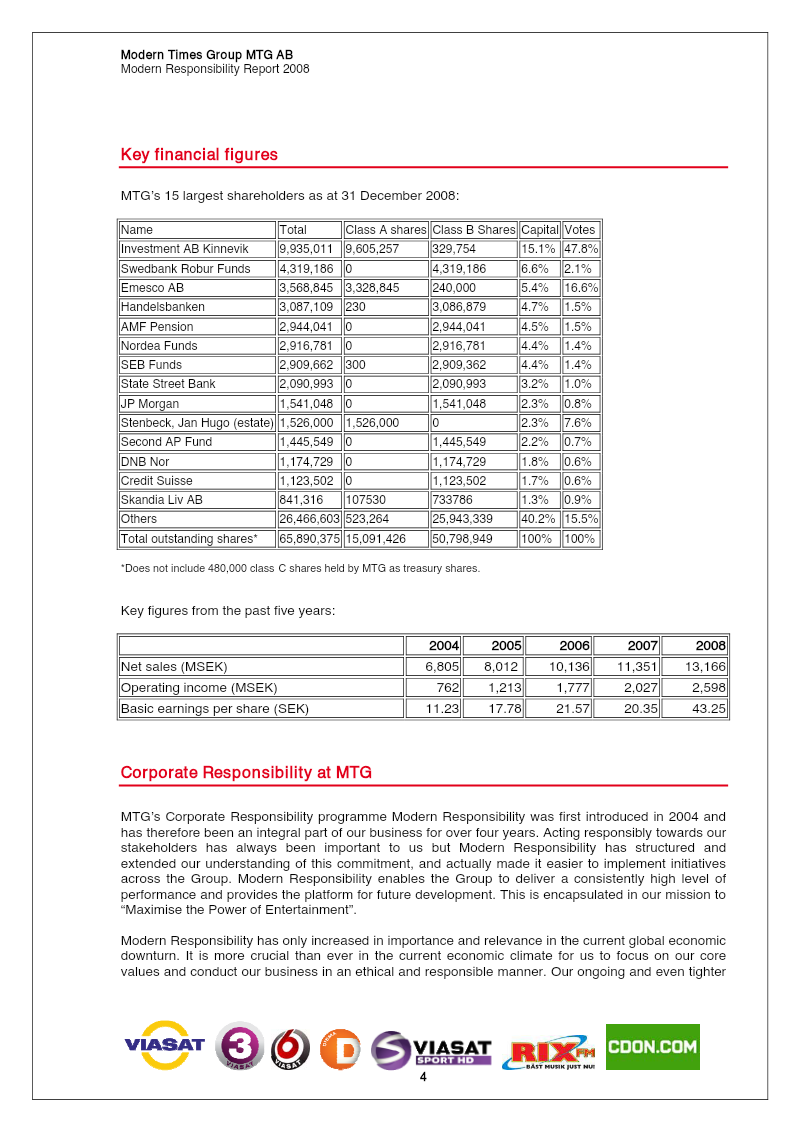
Modern Times Group · 2008
ReportMTG Corporate Responsibility Report 2008
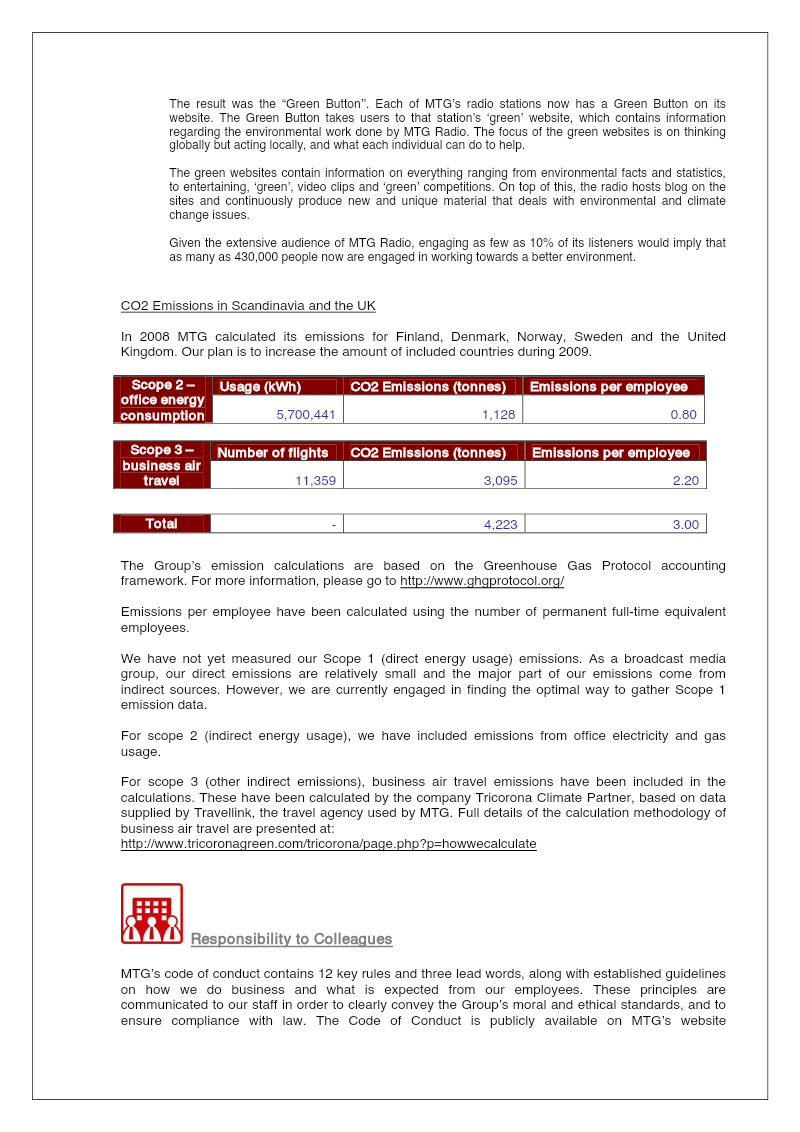
Modern Times Group’s Modern Responsibility programme, launched in 2004, is presented as a strategic framework for leveraging entertainment to create social and environmental value across the company’s global operations. The initiative is positioned as core to MTG’s mission to “maximise the power of entertainment,” with responsibility articulated through five measurable pillars: community, environment, colleagues, broadcasting standards, and marketing. In 2008 the group reached 125 million viewers in 30 countries, operating 70 brands across television, radio, online retail and production. Financial performance showed net sales rising to SEK 13.2 billion and operating income to SEK 2.6 billion, while basic earnings per share more than doubled to SEK 43.25. Employee data indicate an average workforce of 2 810, with 35% female representation, a 22% turnover rate and 461 training days delivered to 46% of staff. Community engagement generated 78 million SEK of donated airtime and raised 56 million SEK for charities, while environmental actions reduced office energy use by 28% relative to national standards and produced a total carbon footprint of 4 223 tonnes CO₂ (3.0 t per employee), calculated under the Greenhouse Gas Protocol with external verification. Stakeholder governance is overseen by senior management, a dedicated coordinator and a Modern Responsibility Committee, supported by local ambassadors in each market. Reporting draws on internal data, carbon accounting from Tricorona Climate Partner, and regular stakeholder feedback through surveys and focus groups. The 2008 snapshot underscores MTG’s expanding footprint, its commitment to ethical broadcasting, and its ambition to deepen responsibility reporting in subsequent years.

Korea Creative Content Agency
Report