Development & Publishing
Making and shipping games: design, engines, QA and publishing deals.
169 documents
Dataspelsbranschen
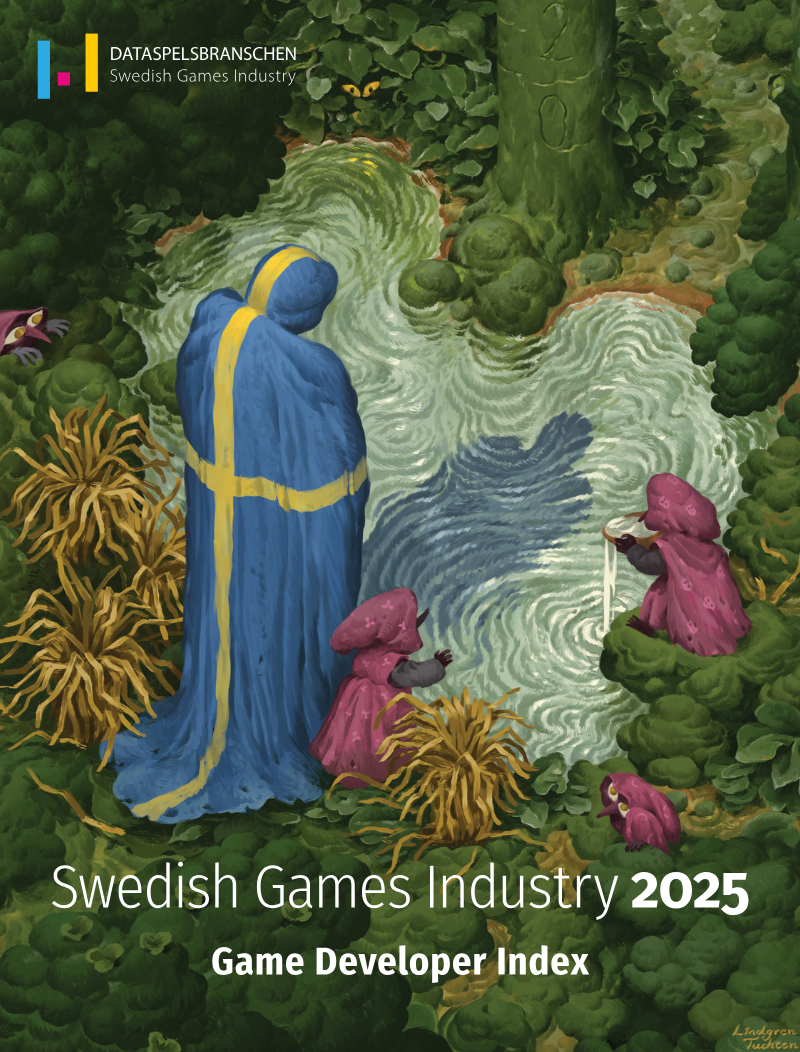
ReportGame Developer Index: Sweden 2025
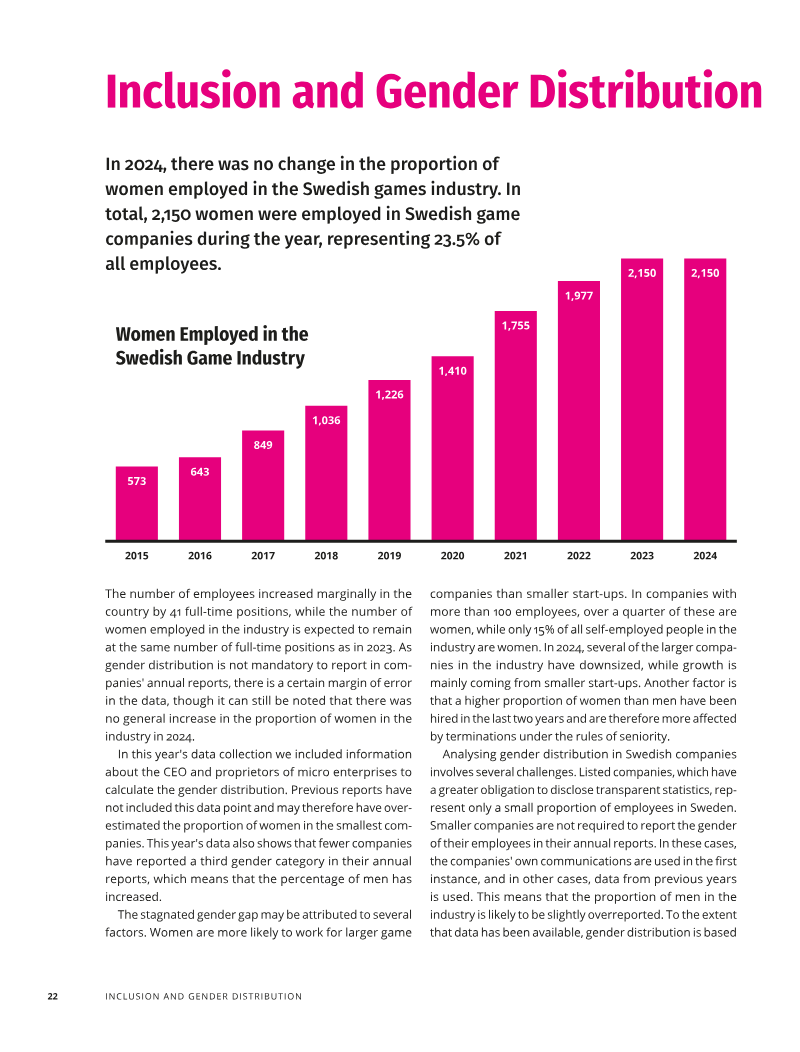
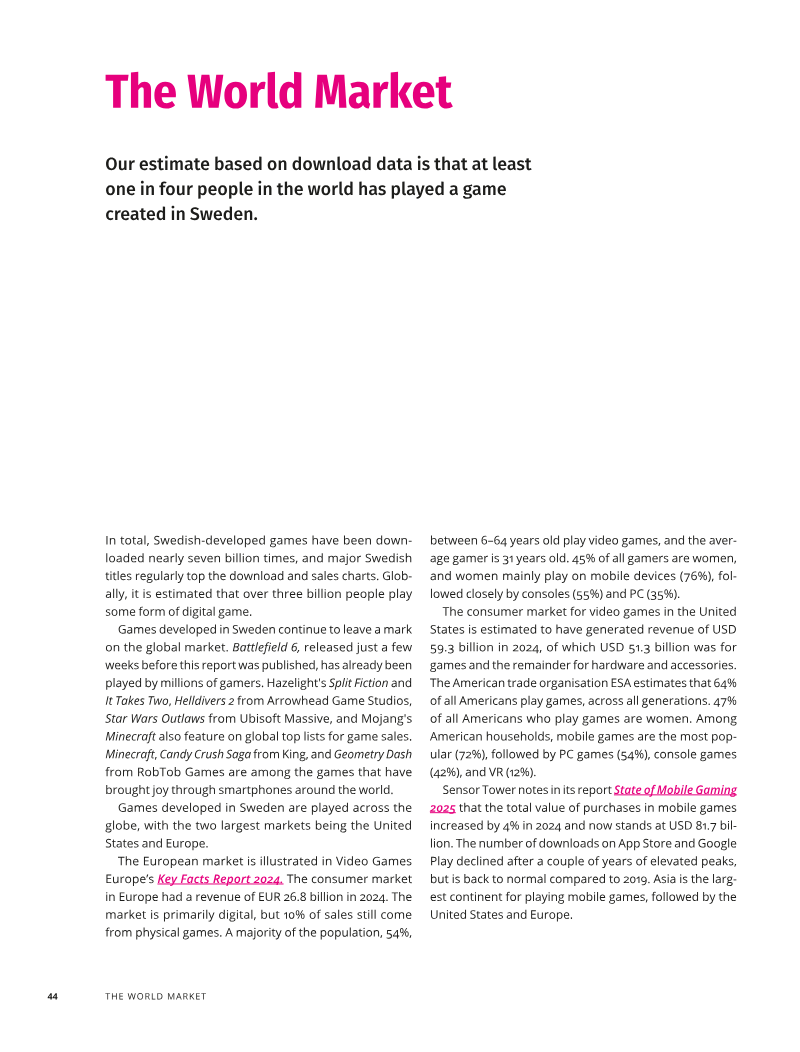
The Swedish games industry remains a cornerstone of the national economy, demonstrating significant resilience throughout 2024 despite a challenging global financial climate. With total domestic revenue reaching SEK 37 billion and global revenue climbing to nearly SEK 73 billion, the sector accounts for 3% of Sweden’s total service exports. The industry’s footprint is extensive, comprising 1,101 companies and employing over 9,000 domestic staff. While large corporations like Embracer Group, Stillfront, and Modern Times Group generate 90% of international net sales, the ecosystem is fundamentally entrepreneurial, with 93% of firms operating as small businesses with fewer than ten employees. The industry is currently navigating a period of structural adjustment characterized by corporate divestments, studio closures, and approximately 400 to 500 redundancies. Despite these pressures, the sector maintains a dominant global position, with Swedish-developed titles reaching an estimated one in four people worldwide. This success is supported by a robust infrastructure of regional incubators, academic partnerships, and vocational programs designed to address long-term skills shortages. However, the industry faces ongoing hurdles, including restricted access to capital, regulatory uncertainty regarding artificial intelligence, and a stagnation in gender diversity, with women currently representing 23.5% of the workforce. Looking forward, the Swedish games sector is prioritizing sustainability and digital safety, reporting a 14% reduction in emissions while actively researching the social benefits of gaming. By leveraging data from the Swedish Companies Registration Office and Statistics Sweden, the industry continues to professionalize its operations. Despite recent volatility and the complexities of a shifting global market, the Swedish gaming ecosystem remains a highly productive, innovative, and essential contributor to both the national economy and the international digital landscape.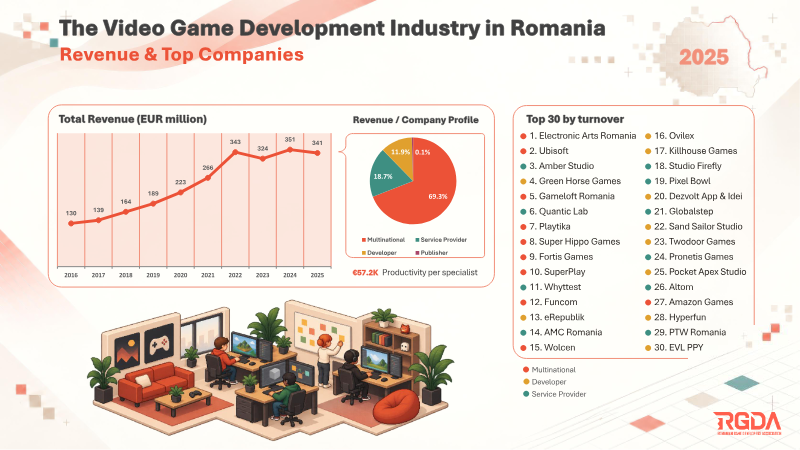
RGDA – Romanian Game Developers Association
ReportRevenue & Top Companies: Romania 2025
The Romanian video game industry has demonstrated significant resilience and structural evolution, reaching a total revenue of 351 million EUR by 2025. While the sector experienced a post-pandemic contraction that impacted service providers, the market has pivoted toward a surge in creative output. This shift is evidenced by a 2.5-fold increase in game releases over the past two years, signaling a robust expansion within the independent development sector. The industry currently maintains a productivity rate of 57,200 EUR per specialist, supported by a workforce of 6,000 professionals. Geographically, the industry remains heavily concentrated in major urban hubs, with Bucharest serving as the primary center of operations, hosting 46 percent of all studios. Cluj, Iași, Timiș, and Brașov follow as secondary clusters, collectively accounting for 28 percent of the ecosystem. The current landscape comprises 234 active studios, ranging from multinational corporations to independent developers and service providers. Among the top 30 companies by turnover are major international players such as Electronic Arts Romania, Ubisoft, and Gameloft, alongside a diverse array of specialized local studios. The industry ecosystem is supported by a domestic player base of 8.6 million individuals. The transition from a service-heavy model to a more balanced mix of development and publishing has fostered a more sustainable environment for local talent. By diversifying its operational focus, the Romanian gaming sector has successfully navigated recent economic pressures, positioning itself as a key European hub for both large-scale multinational production and agile, independent game creation.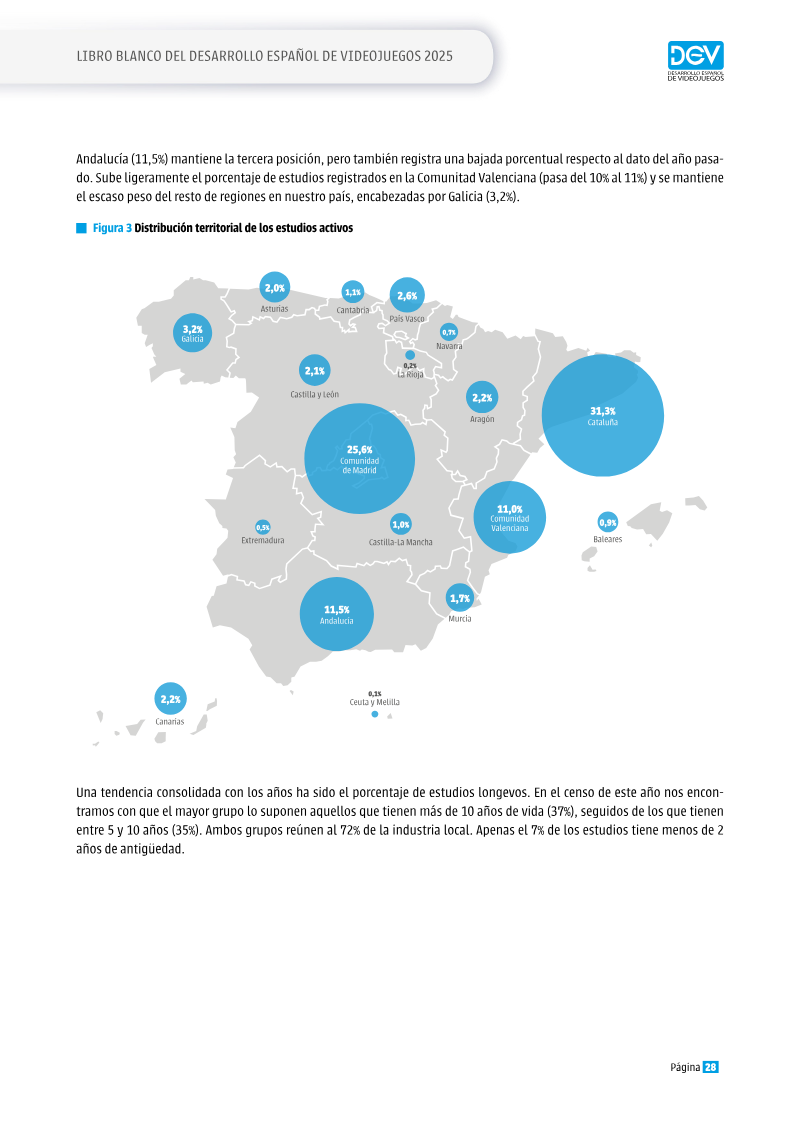

DEV – Asociacion Espanola de Empresas Productoras y Desarrolladoras de Videojuegos
ReportLibro Blanco del Desarrollo Español de Videojuegos 2025
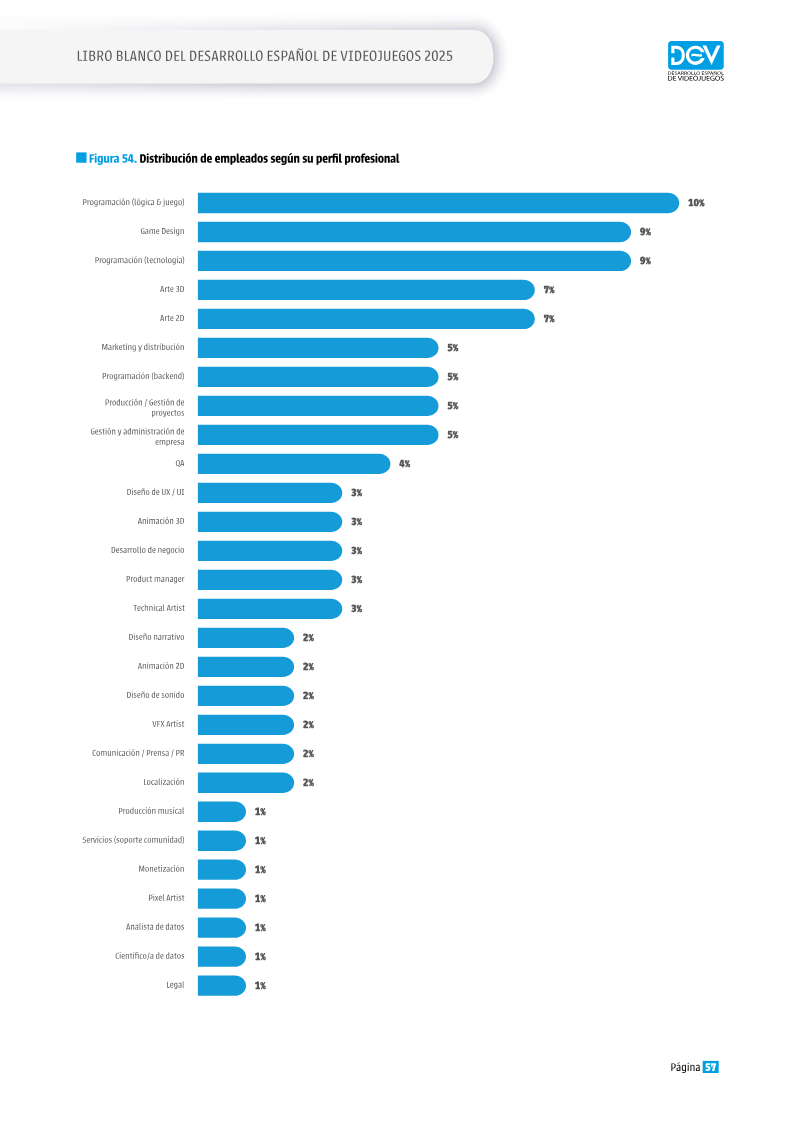
The Spanish video game industry stands at a critical juncture, characterized by resilience and creative output despite a global climate of economic instability. As of 2024, the sector generated €1,464 million in turnover and sustained over 10,500 direct jobs, with Catalonia and Madrid serving as the primary hubs for development. While the industry maintains a stable core—with 72% of studios operating for over five years—it faces a notable slowdown in growth. Currently, 820 active studios operate within the country, yet approximately 200 of these entities remain at risk of closure due to project cancellations and workforce reductions, reflecting a broader vulnerability to international market volatility. Structural challenges persist, particularly regarding the industry's reliance on self-financing and self-publishing models. Most studios operate on a small scale, often managing only one project at a time, which complicates the transition toward complex "games as a service" models. While 53% of companies have begun integrating generative artificial intelligence into their workflows, adoption remains cautious and technically experimental. Furthermore, the industry continues to depend heavily on international sales, which account for 52% of revenue, highlighting a need for stronger domestic investment ecosystems and more robust collaboration with international platforms to retain intellectual property within Spain. To ensure long-term competitiveness, the sector requires a strategic shift toward institutional support. Key priorities include the implementation of targeted tax incentives, the consolidation of public funding, and improved professional training programs to address the persistent shortage of experienced talent in programming and design. By fostering a more sustainable financial environment and bridging the gap between small-scale production and global market demands, the industry aims to transition from a fragmented landscape of small studios to a more scalable, technologically advanced, and strategically recognized pillar of the Spanish economy.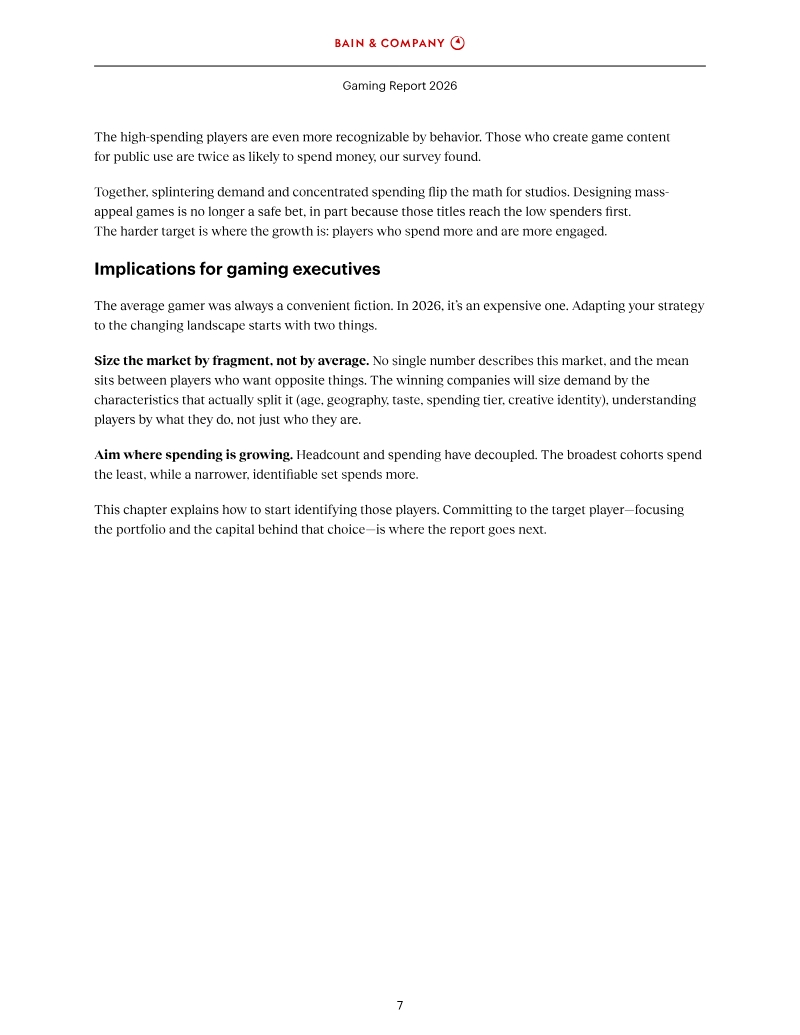

Bain & Company
ReportGaming Report 2026: Choose Your Player
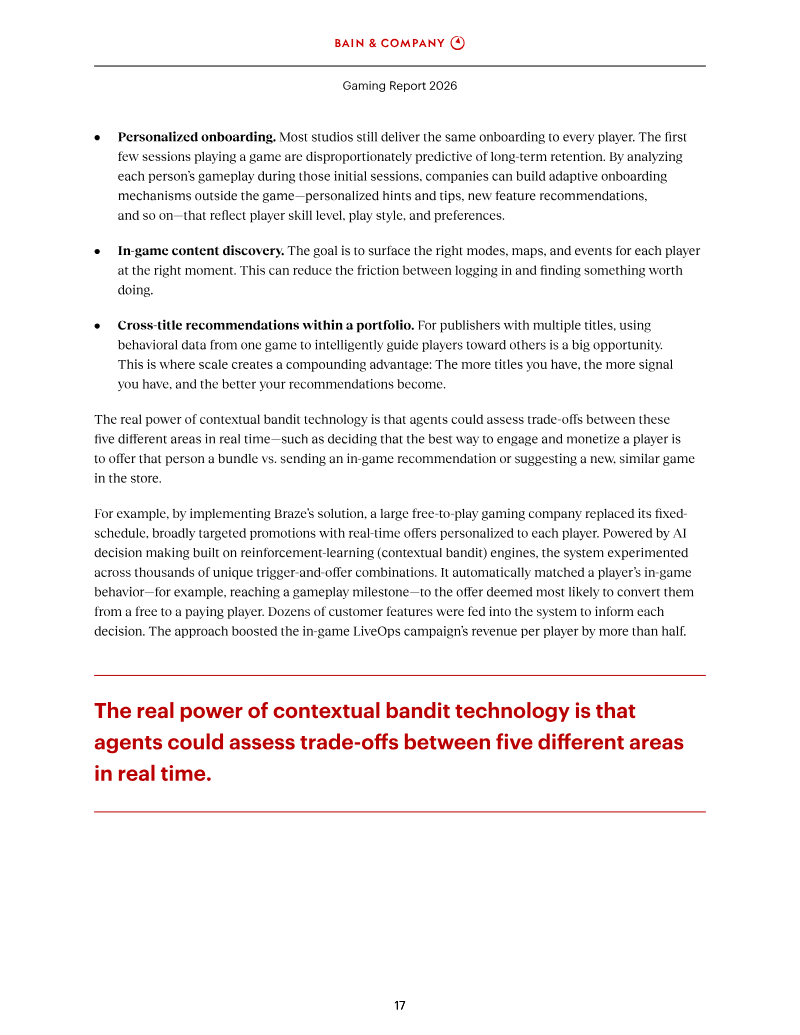
The gaming industry has reached a critical inflection point where the concept of the average player has become obsolete. Market fragmentation across age, geography, and playstyle necessitates a shift away from broad, mass-appeal strategies toward highly targeted engagement models. Because unfocused titles are increasingly prone to failure in a saturated market, studios must prioritize direct relationships with core, high-value player segments. This strategic pivot is essential for maintaining profitability as growth plateaus across the global sector. To navigate this landscape, developers are increasingly deploying AI-driven personalization to deliver real-time, one-to-one experiences. By utilizing advanced algorithms, studios can optimize in-game offers and retention mechanics, effectively moving beyond traditional segmentation. This technical integration is most effective when paired with a robust direct-to-consumer distribution strategy. Currently, three-quarters of top-grossing mobile titles have established proprietary web stores to bypass platform fees and capture higher margins. These direct channels are proving to be a significant financial lever, with successful implementations now accounting for over one-third of total revenue for leading publishers. Ultimately, the transition to a direct-to-consumer model requires more than simple discounting; it demands a sophisticated engagement engine capable of leveraging granular player data. As companies migrate their portfolios toward these owned channels, they reduce long-term incremental costs and gain greater control over the player lifecycle. Executives who prioritize the development of these internal infrastructures are better positioned to sustain growth and maximize revenue in an increasingly competitive 2026 market environment.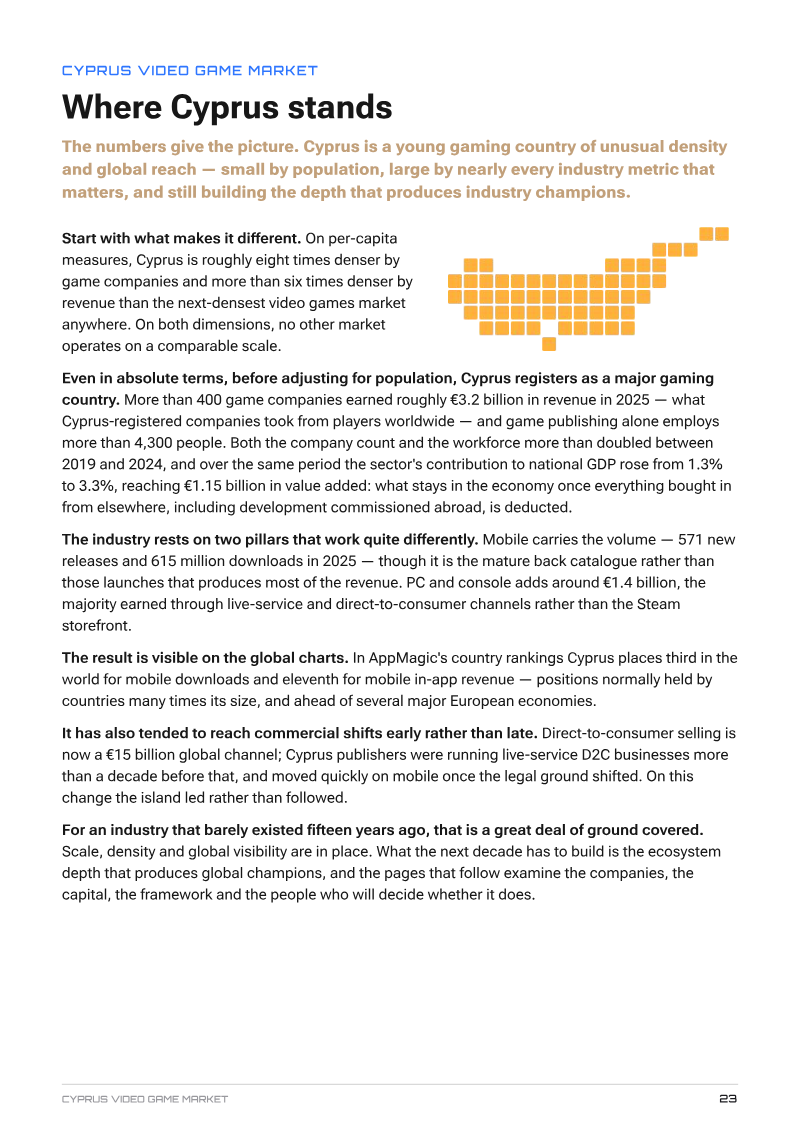

Cyprus Game Makers Association
ReportCyprus Video Game Industry Report 2025
Cyprus has emerged as the world’s most efficient video game development ecosystem, functioning as a critical hub within the $263.7 billion global gaming market. By 2025, the island’s industry comprised over 400 companies and a workforce exceeding 4,300 employees, contributing approximately €1.15 billion directly to the national GDP. This rapid expansion, which saw the number of firms more than double between 2019 and 2024, is underpinned by a mobile-first strategy, a favorable IP Box tax regime, and a high concentration of mobile game installs per capita. Despite its small population, Cyprus ranks third globally in mobile downloads and eleventh in mobile in-app revenue, reflecting a mature, export-oriented sector. The ecosystem’s financial health is characterized by significant capital activity, including €2.76 billion in M&A and €137 million in equity funding between 2020 and 2025. A unique feature of this landscape is the prevalence of user-acquisition financing, which provided €128.3 million in non-dilutive capital in 2025, allowing studios to maintain agility. Furthermore, Cyprus-based developers are at the forefront of the industry-wide shift toward direct-to-consumer (D2C) sales models. By bypassing traditional platform fees and securing direct access to player data, these studios have gained a distinct competitive advantage in an increasingly saturated global market that now prioritizes profitability and player relationship management over rapid, unchecked expansion. Despite these successes, the industry faces structural challenges regarding long-term sustainability. While the tax framework is highly competitive for established studios, there is a notable deficit in dedicated early-stage grants and seed funding for startups. Additionally, the talent pipeline remains a bottleneck; although the nation hosts a large student population, the annual output of graduates specifically trained for game development is insufficient to meet current demand. Future growth will depend on closing these funding and educational gaps, as exemplified by upcoming initiatives like the 2026 Plug&Play accelerator, which aim to solidify Cyprus’s position as a premier global gaming destination.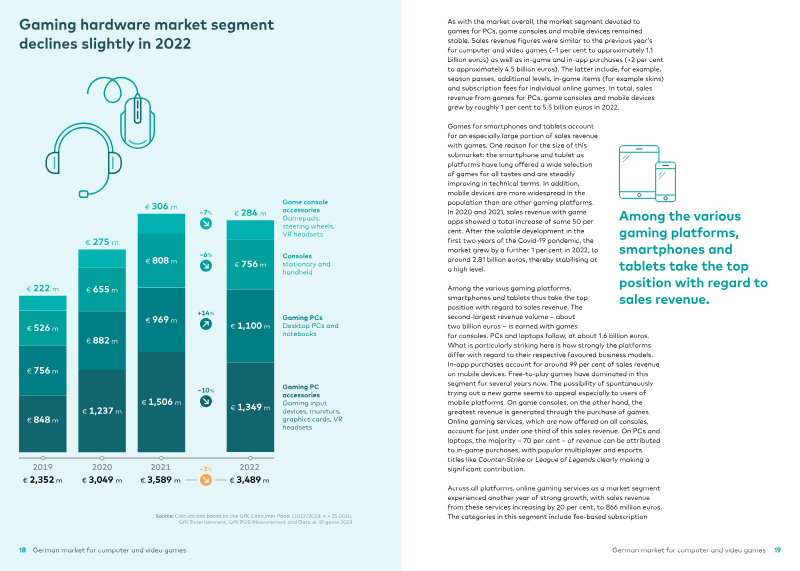

game – Verband der deutschen Games-Branche e. V.
ReportAnnual Report of the German Games Industry 2023
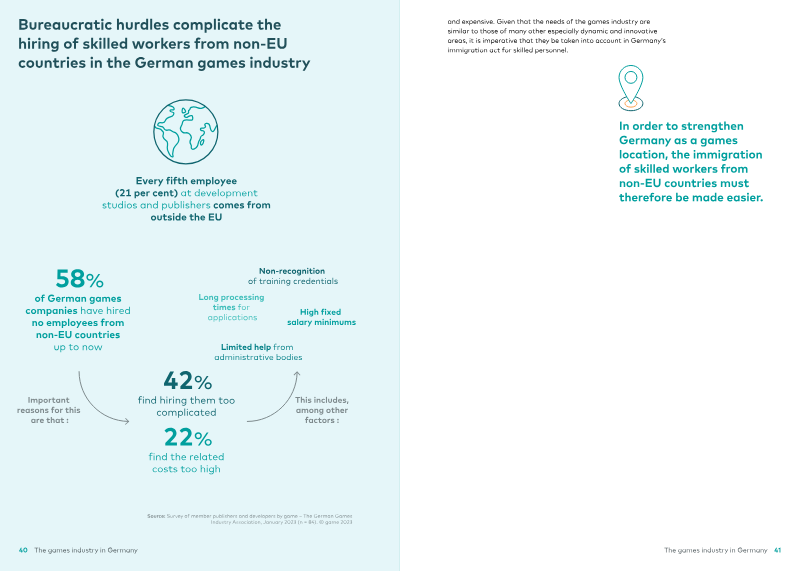
The German games industry demonstrated remarkable resilience throughout 2022, maintaining a stable market valuation of 9.87 billion euros despite global economic headwinds, inflationary pressures, and hardware supply constraints. This performance represents a 1% growth rate, bucking international trends of market decline. The sector’s expansion is further evidenced by a 15.5% increase in the number of companies and a 7% rise in the workforce over the past year. Mobile gaming continues to dominate revenue streams, while digital distribution has solidified its position as the primary purchasing method for PC users and younger demographics. Despite this growth, the industry faces structural challenges that threaten its long-term international competitiveness. A critical shortage of skilled labor in programming, technical art, and production persists, exacerbated by bureaucratic hurdles that impede the recruitment of international talent. Furthermore, the intermittent availability of federal funding has created an environment of instability, hindering strategic planning. To address these issues, the industry is advocating for a transition toward tax-based incentives, improved educational standards, and the establishment of specialized academic institutions to foster domestic expertise. Beyond economic metrics, the sector is increasingly focused on professionalizing its ecosystem and enhancing its global footprint. Events such as Gamescom and the devcom Developer Conference have reinforced Germany’s status as a central hub for digital innovation, attracting significant international attention and political engagement. Simultaneously, the industry is prioritizing sustainability through climate-neutral initiatives and strengthening youth protection frameworks to ensure a safe gaming environment. By aligning advocacy efforts with a commitment to diversity and educational outreach, the German games sector aims to secure its position as a leading global player in the digital economy.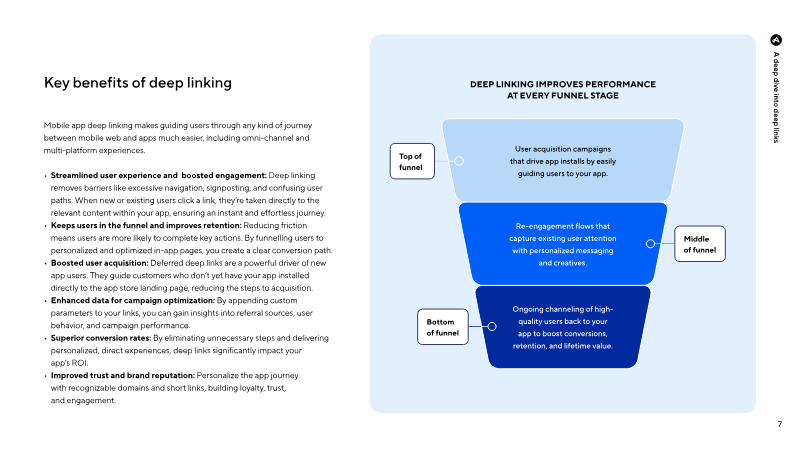

Adjust
WhitepaperA Deep Dive into Deep Links: The All-in-One Handbook for Mobile App Marketers, Developers, and Product Managers
Deep linking serves as a foundational strategy for mobile growth, functioning as a critical mechanism to bridge the gap between web and app environments. By directing users to specific in-app content rather than generic landing pages, this approach effectively minimizes friction throughout the user funnel. The primary thesis posits that a robust, standardized linking infrastructure is essential for modern mobile marketing, as it directly correlates with higher activation, improved retention rates, and more precise attribution across diverse digital touchpoints. The current landscape of mobile marketing faces significant technical fragmentation, exacerbated by the recent deprecation of legacy services like Google’s Firebase Dynamic Links. To address these challenges, centralized solutions such as Adjust’s TrueLink provide a scalable framework for managing direct, deferred, and contextual links. These tools enable automated link generation and sophisticated cross-platform routing, ensuring that user journeys remain uninterrupted whether they originate on mobile, desktop, or connected television environments. By standardizing these interactions, organizations can maintain consistent performance and data integrity across the entire ecosystem. These strategies are particularly impactful within high-growth verticals such as e-commerce, gaming, and finance, where the quality of the initial user experience dictates long-term engagement. Data indicates that implementing comprehensive linking platforms not only streamlines the transition for brands migrating from deprecated services but also enhances the granular measurement capabilities required for data-driven decision-making. Ultimately, the integration of a unified linking architecture is a prerequisite for scaling app growth, as it transforms fragmented traffic sources into cohesive, high-converting user experiences that support sustained business objectives.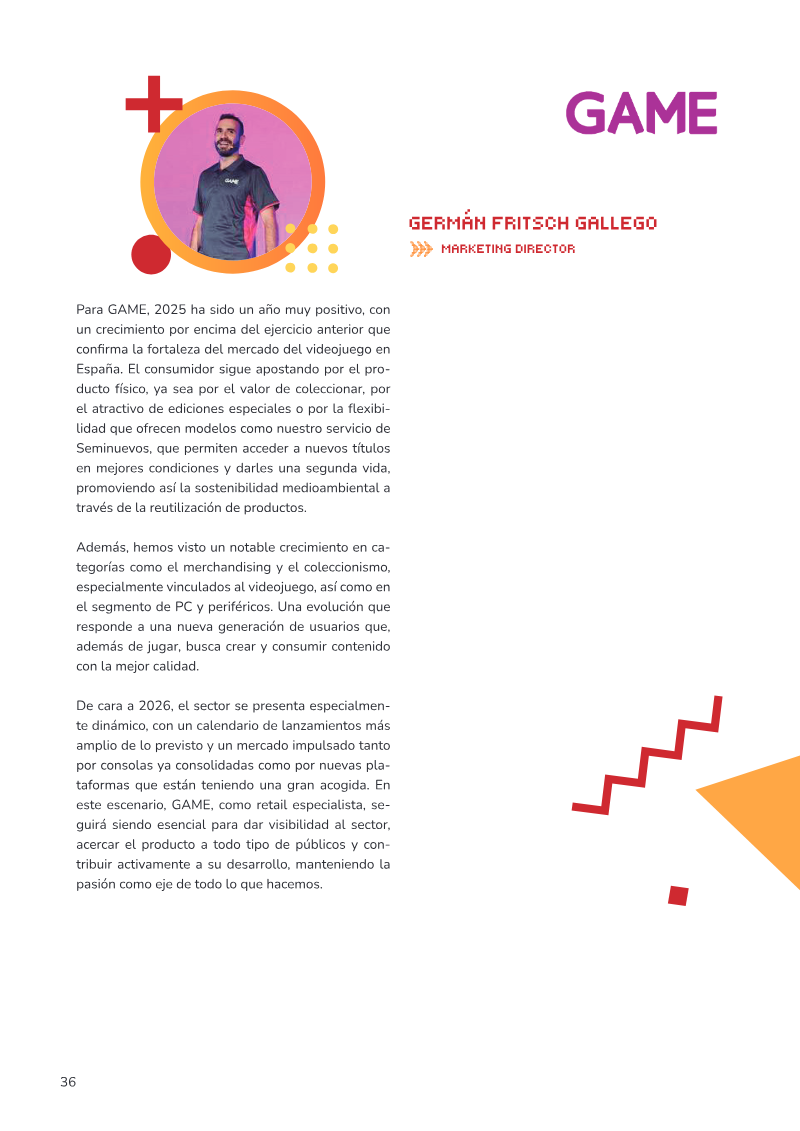

AEVI
ReportLa Industria del Videojuego en España: Anuario 2025
The Spanish video game industry in 2025 stands as a vital cultural and technological pillar, characterized by a maturing ecosystem that balances robust consumer engagement with complex economic and regulatory challenges. With a player base of 22.8 million individuals—spanning demographics up to 75 years of age—the sector generated 2.293 billion euros in revenue. While this represents a 3.2% decline compared to the previous year, largely attributed to a contraction in digital content spending, the market remains dominated by digital sales, which account for 61.9% of total revenue. Mobile devices lead platform preference with 18 million users, followed by consoles and PC, with an average weekly playtime of over eight hours. Strategic growth is currently driven by international expansion, the integration of specialized academic training, and a focus on niche-oriented development. Initiatives such as the DEVIUM platform and collaborations between global publishers and local studios underscore a commitment to professionalizing the workforce and bridging the gap between emerging talent and industry requirements. Furthermore, the sector is actively navigating the ethical and legal implications of generative artificial intelligence, emphasizing the necessity of human-in-the-loop protocols to protect intellectual property and maintain the long-term capital value of creative assets. Beyond economic metrics, the industry is prioritizing social responsibility and digital literacy. Through programs like The Good Gamer and PlayEquall, stakeholders are promoting inclusive gaming environments, accessibility, and the integration of video games into educational frameworks. As the sector faces an increasingly stringent European regulatory landscape regarding monetization and child protection, it continues to advocate for institutional support modeled after successful international frameworks, such as those in the United Kingdom and South Korea. By leveraging standardized data analytics and fostering public-private partnerships, the Spanish industry aims to solidify its position as a strategic, sustainable, and innovative contributor to the national economy.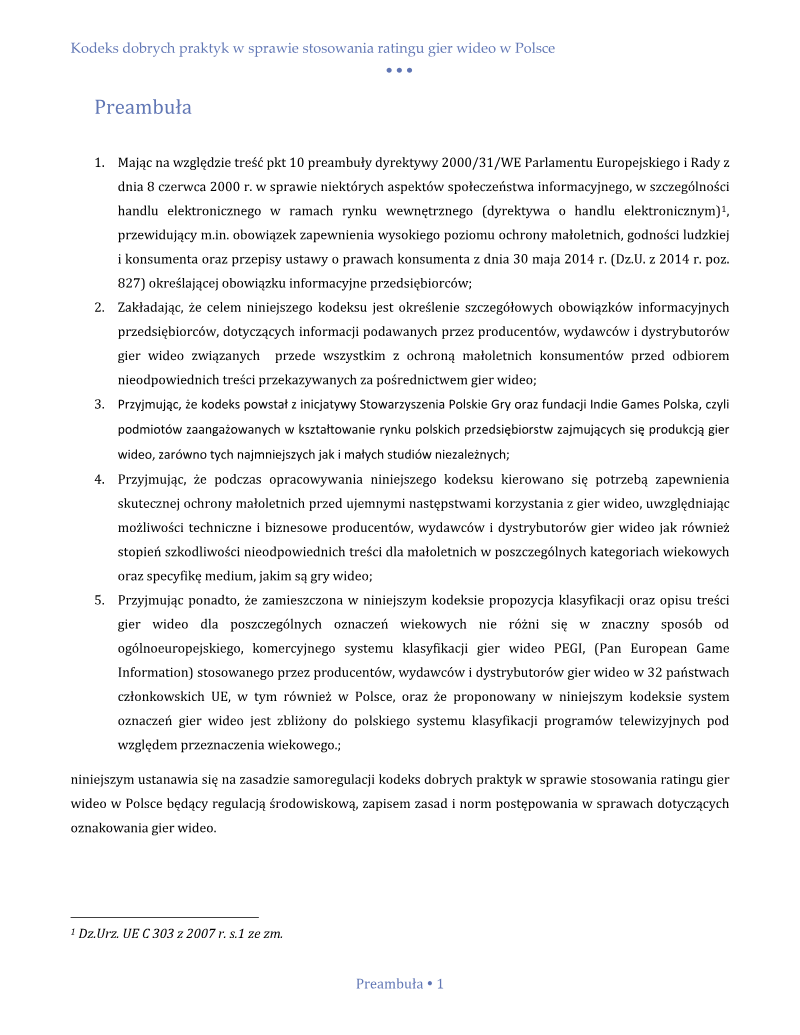

Stowarzyszenie Polskie Gry
ReportKodeks Dobrych Praktyk w Sprawie Stosowania Ratingu Gier Wideo: Polska
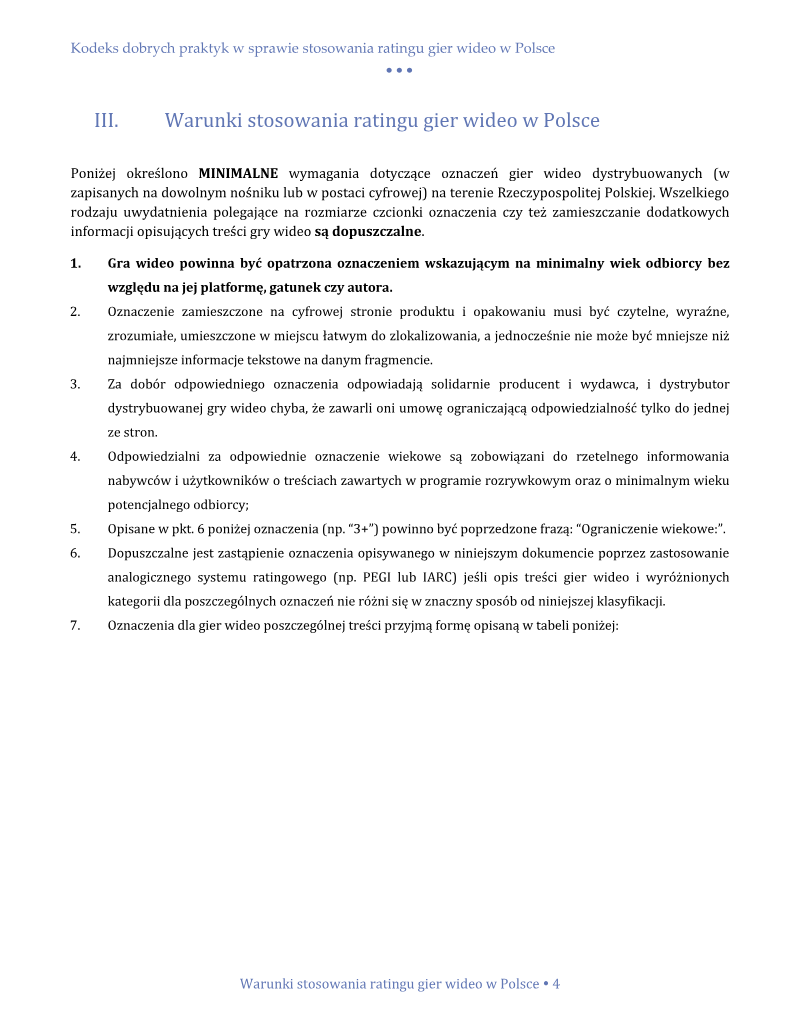
The Kodeks Dobrych Praktyk w Sprawie Stosowania Ratingu Gier Wideo (Code of Good Practice for Video Game Rating in Poland), established in November 2016 by the Stowarzyszenie Polskie Gry and the Indie Games Polska foundation, serves as a self-regulatory framework for the Polish video game industry. Its primary objective is to protect minors from exposure to inappropriate content by standardizing the information provided to consumers regarding age-appropriate game classifications. The code functions as an industry-wide commitment to transparency, ensuring that producers, publishers, and distributors clearly label games regardless of the platform or distribution method. The framework establishes five distinct age-based categories—3+, 7+, 12+, 16+, and 18+—which align closely with the established Pan European Game Information (PEGI) system. These categories define acceptable levels of violence, language, sexual content, and fear-inducing elements. By adopting these standards, participating entities agree to provide clear, legible, and accessible age ratings on all digital and physical product packaging. The code emphasizes that responsibility for accurate labeling lies with the producers and publishers, who are required to assess the effectiveness of their rating practices at least every two years. Enforcement of these standards is managed through an internal Sąd Koleżeński (Peer Court), which oversees compliance and adjudicates potential violations. While the code is a voluntary, industry-led initiative, it is designed to complement existing Polish consumer protection laws and European Union directives regarding the protection of minors in digital environments. By formalizing these ethical and professional norms, the industry aims to foster greater social trust and ensure that consumers, particularly parents, can make informed purchasing decisions. Entities that choose to adopt the code must formally register their commitment, and any false claims of adherence are subject to scrutiny under national regulations concerning unfair market practices.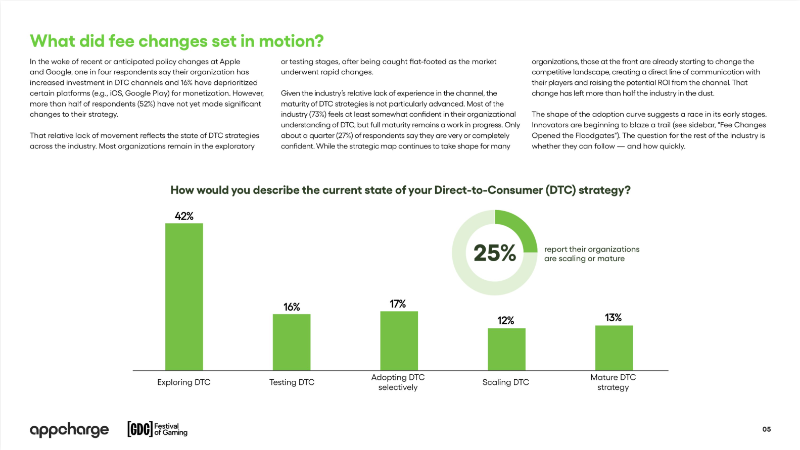


Appcharge
ReportDirect-to-Consumer: A $17 Billion Market for Mobile Gaming
The mobile gaming industry is undergoing a fundamental structural shift toward direct-to-consumer (DTC) distribution models, a transition that has already established a $17 billion market. By bypassing traditional app store ecosystems, publishers are successfully reclaiming profit margins previously lost to platform fees while simultaneously securing ownership of first-party player data. This evolution represents a strategic pivot from passive reliance on third-party storefronts to the active cultivation of proprietary, data-driven player relationships that foster long-term retention and competitive differentiation. While the transition presents significant hurdles regarding technical infrastructure and player acquisition, the industry is increasingly adopting a hybrid model. This approach balances internal, player-facing strategies with specialized external partnerships for payment processing and regulatory compliance. Early adopters of these DTC frameworks are already demonstrating superior revenue growth and improved engagement metrics, creating a widening performance gap between firms that have integrated these channels and those that remain tethered to traditional distribution methods. Looking toward the next decade, the broader digital economy is poised to mirror the success of mobile gaming, with the global in-app purchase market projected to reach $721.4 billion by 2034. DTC strategies are no longer the exclusive domain of large-scale enterprises; they have become a scalable imperative for developers of all sizes. By leveraging personalized experiences and sophisticated marketing analytics, firms can achieve higher year-over-year growth and greater valuation stability. Ultimately, the ability to control the end-to-end user experience has emerged as the primary driver of economic sustainability and long-term success in the modern mobile landscape.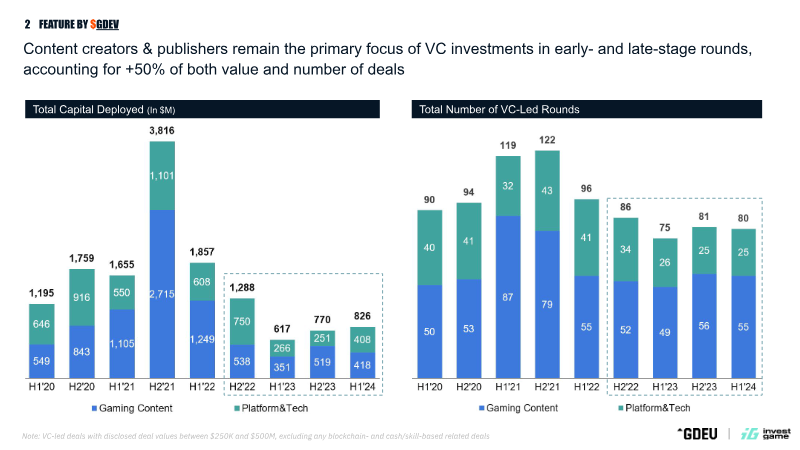

InvestGame
ReportIs There a Shift from Content to Tech Startups Among Gaming VCs?
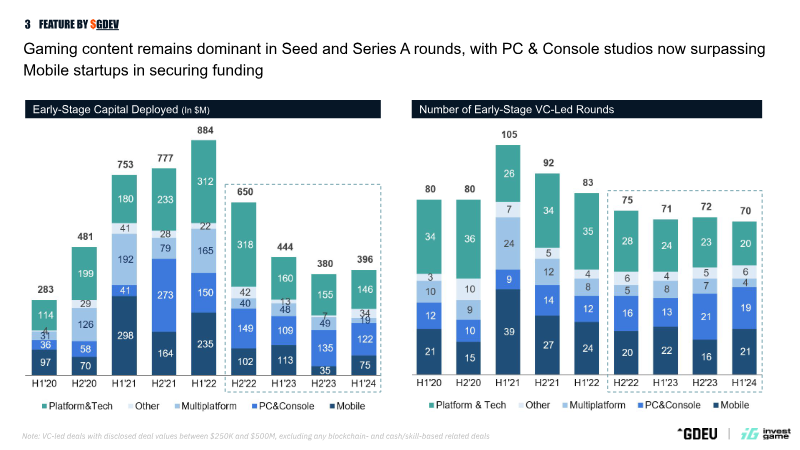
The analysis examines venture capital activity in the gaming sector from 2020 to early 2024, focusing on whether investment priorities are shifting from traditional content creation and publishing toward technology‑driven startups. Data show that, across all stages, content creators and publishers continue to dominate VC allocations, representing over half of both capital deployed (≈$1.76 billion) and the number of deals in early‑, mid‑, and late‑stage rounds. However, a closer look at seed and Series A financing reveals a notable trend: PC and console studios now secure more funding than mobile startups, indicating a pivot toward higher‑budget, platform‑centric projects. In the last twelve months, gaming‑focused VC funds have increased their exposure to technology and platform companies. Capital deployed by select funds such as VENTURES, BEHOLD Venture, and Lightspeed Lvp. rose from roughly $1.3 billion in early 2020 to over $2.4 billion by H1 2024, while the number of rounds led by these funds grew from 67 to 289. This shift is evident across multiple funds, with several moving a larger share of their capital into tech‑centric ventures rather than pure content studios. Geographically, the data encompass global markets with a concentration in North America and Europe, covering all major gaming segments—mobile, PC, console, and emerging platform technologies. The methodology aggregates publicly disclosed VC‑led rounds from 2020 through H1 2024, using capital deployed and round counts as primary metrics. The findings suggest that while content remains the core focus, gaming VCs are progressively allocating more resources to technology and platform innovations, reflecting an evolving investment landscape in the industry.

InvestGame
Report