Development & Publishing
Making and shipping games: design, engines, QA and publishing deals.
222 documents
Slovak Game Developers Association · 2020
PresentationSlovak Game Industry Infographic
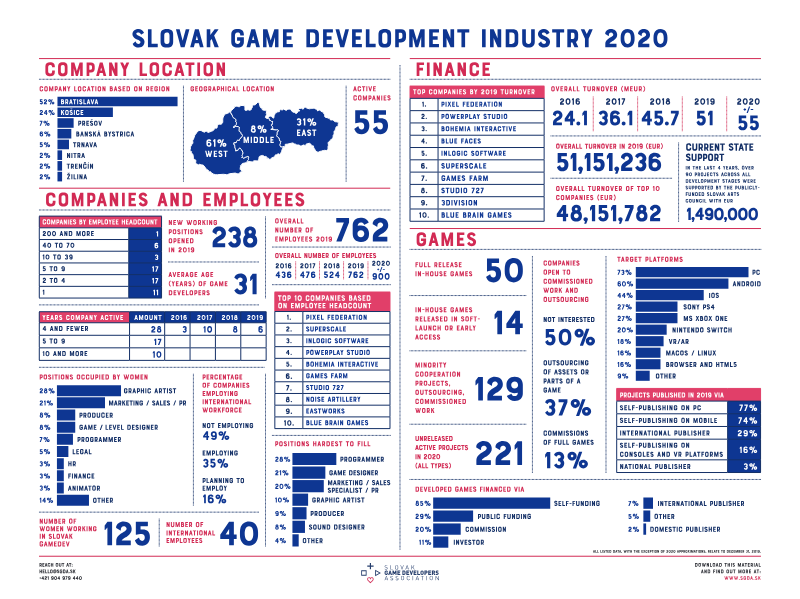
The Slovak game industry demonstrates consistent growth and professional maturation, characterized by a robust increase in both turnover and workforce capacity. As of the end of 2019, the sector comprised 55 active companies, with a significant geographic concentration in Bratislava, which hosts 52 percent of all firms, followed by Košice at 24 percent. The industry’s economic footprint is substantial, with the top ten companies generating over 48 million euros in annual turnover. Workforce development has kept pace with this expansion, as the total number of employees rose from 436 in 2016 to 762 by 2019, supported by the creation of 238 new positions in the final year of the reporting period. Development activity remains diverse, with a strong emphasis on PC and mobile platforms. PC development leads the market at 73 percent, followed closely by Android and iOS at 60 percent and 44 percent, respectively. While self-publishing remains the dominant business model—utilized by 77 percent of companies for PC and 74 percent for mobile—the industry also leverages a mix of public funding, which supports 29 percent of projects, and commissioned work. Despite this growth, the sector faces talent acquisition challenges, particularly in filling roles for programmers, game designers, and marketing specialists. The industry maintains a global outlook, with 40 international employees and a significant portion of the workforce engaged in outsourcing and international collaboration. Women represent a notable segment of the industry, occupying 129 positions, primarily within graphic arts, marketing, and production roles. With 221 active projects reported in 2020 and ongoing support from the Slovak Arts Council, the industry is positioned for continued development, balancing in-house creative output with strategic international partnerships and a diversified platform strategy.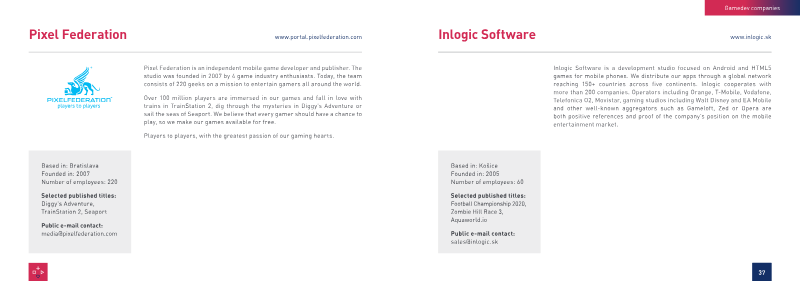
Slovak Arts Council · 2020
ReportSlovak Game Industry Annual Report 2020/2021
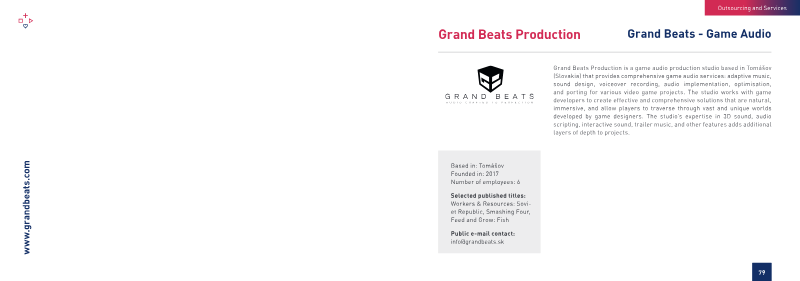
The Slovak game industry represents a resilient and rapidly maturing sector, characterized by a robust ecosystem of independent studios that generated approximately €51 million in turnover during the 2019 fiscal period. With a dedicated workforce of 762 professionals, the industry has successfully navigated global economic challenges by prioritizing self-funded, cross-platform development. The sector’s primary thesis centers on leveraging high-level technical expertise—specifically in 3D modeling, photogrammetry, and motion capture—to produce globally competitive titles across mobile, PC, console, and virtual reality platforms. The industry landscape is defined by a diverse range of entities, from established mid-sized firms like Pixel Federation to specialized outsourcing studios and deep-tech innovators such as SuperScale and EastWorks. These organizations frequently utilize unique artistic styles and narrative-driven gameplay to secure international recognition. This creative output is bolstered by a strategic focus on both independent intellectual property development and high-tech service provision, allowing Slovak studios to integrate effectively into the global gaming value chain. Long-term sustainability is supported by a growing institutional commitment to the sector. Educational initiatives, ranging from specialized academic programs in game theory to industry-focused labs like Butterfly Effect, ensure a steady pipeline of local talent. Furthermore, the industry benefits from a structured support framework that includes R&D tax deductions facilitated by SARIO and non-repayable grants from the Slovak Arts Council. By fostering community engagement through game jams and festivals, the region has established a cohesive environment that balances artistic innovation with technical scalability, positioning Slovakia as an increasingly significant player in the European digital entertainment market.
Polish Agency for Enterprise Development · 2020
ReportThe Game Industry of Poland: 2020
The Polish game development industry has matured into a significant global powerhouse, characterized by a diverse ecosystem of over 440 studios and a workforce of approximately 9,710 full-time professionals. As of 2019, the sector generated €479 million in annual revenue, with an overwhelming 96% of this income derived from international exports. This growth is underpinned by a consistent year-over-year expansion rate of nearly 30%, supported by a domestic base of 16 million gamers and a robust pipeline of talent fostered by 60 university-level degree programs. The industry’s success is driven by a multifaceted business model that balances high-budget AAA productions with a thriving independent sector. While major publicly traded entities like CD PROJEKT RED and Ten Square Games anchor the market, the ecosystem is heavily populated by small-to-medium enterprises, with 79% of studios employing 16 or fewer people. These developers demonstrate remarkable technical versatility, specializing in premium PC and console titles, mobile free-to-play models, and a highly successful simulator genre. Furthermore, the sector provides essential auxiliary services, including localization, quality assurance, motion capture, and porting, which solidify its role within the global gaming supply chain. Geographically and strategically, Poland has leveraged its strong programming talent and high English proficiency to integrate deeply into the U.S. and European markets. By combining creative freedom with a professionalized approach to development, Polish studios have successfully navigated the transition from hobbyist roots to a sophisticated, multi-platform industry. Looking toward the future, the sector continues to prioritize innovation in VR/AR technology and narrative-driven experiences, ensuring its continued relevance and competitive edge in the projected $200 billion global gaming market.
Neogames Finland · 2020
ReportThe State of the Finnish Game Industry 2020
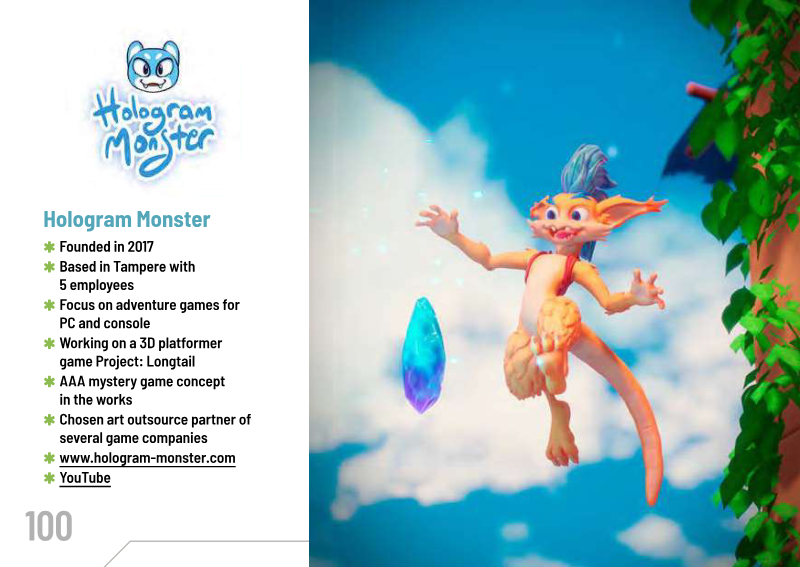
The Finnish game industry solidified its position as a cornerstone of the national economy in 2020, maintaining a turnover exceeding €2 billion for the sixth consecutive year. Despite a slight contraction in the total number of active studios to approximately 200, the sector experienced a maturation phase characterized by increased revenue stability and a rise in high-performing firms. With 46 studios now generating over €1 million annually and a collective net profit surpassing €500 million, the industry demonstrated remarkable resilience against the operational disruptions of the COVID-19 pandemic. This economic strength is supported by a workforce of 3,600 professionals, with a persistent demand for hundreds of additional hires, reflecting a healthy, expanding ecosystem. The industry is currently undergoing a strategic transformation driven by technological shifts toward cloud gaming, artificial intelligence, and Games as a Service models. While developers benefit from a robust network of public funding, private investment, and professional associations, they face mounting pressures from market consolidation, rising user acquisition costs, and regulatory fragmentation. To remain competitive in a saturated global market, Finnish studios are increasingly prioritizing data-driven design, social integration, and the development of strong intellectual property. This shift is accompanied by a positive trend in workforce diversification, with female representation reaching 22 percent. The Finnish landscape remains defined by a diverse array of entities, ranging from global mobile giants like Supercell and Rovio to specialized indie developers and B2B service providers. These companies successfully balance creative autonomy with sustainable business practices, leveraging both original IP and work-for-hire models. By integrating emerging roles such as content creators and streamers into the development lifecycle, the industry continues to evolve, ensuring that Finnish studios maintain their significant footprint in the global digital entertainment market through innovation in mobile, console, and emerging technology platforms.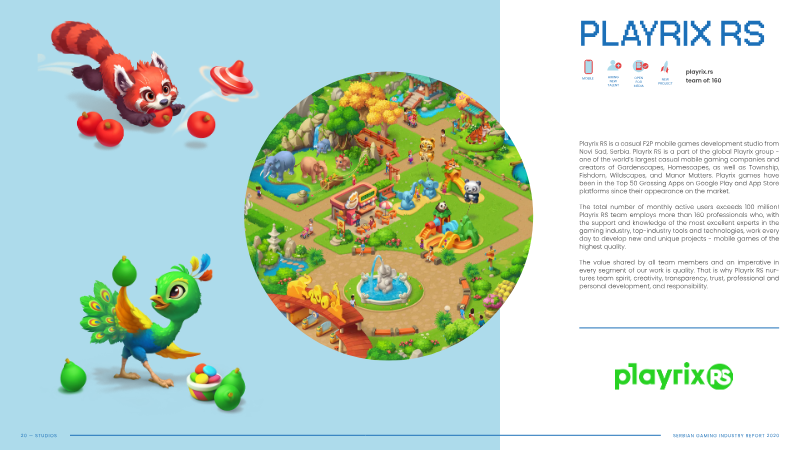

SGA · 2020
ReportGaming Industry Report: Serbia 2020
The 2020 assessment of Serbia’s video‑game sector presents a rapidly expanding ecosystem that has moved beyond a modest, paper‑based association to become a central hub for nearly one hundred companies. In a single year the industry surpassed €100 million in revenue, a 20 percent increase over the previous period, while supporting 120 development teams and roughly 2 100 employees, about one‑third of whom are women. The market delivered 41 new mobile titles, with most studios concentrated in Belgrade and financing split between angel investors and state‑funded programmes, which together account for 45 percent of capital. A clear majority of firms intend to grow their staff in 2021, despite citing regulatory red‑tape, limited legal incentives and insufficient console support as persistent obstacles. The sector is dominated by small‑to‑mid‑size studios, typically employing five to twenty‑five people, that provide full‑cycle development, consulting and backend‑as‑a‑service solutions. Companies such as Elbet and Tummy Games have already achieved notable market traction, with Elbet’s products operating on more than 130 operators across 30 countries. The pandemic forced a swift transition to remote work, exposing resource constraints and talent‑recruitment challenges, yet overall productivity remained stable and the community’s outlook stayed positive. Industry networking was sustained through a dedicated Discord community of over a thousand members and forty channels, while the Serbian Games Association launched talent‑development initiatives including a “Shift 2 Games” job‑role series and a mentorship pilot for fifteen participants. Parallel to these efforts, game‑related education expanded dramatically: the Master 4.0 Hub in Gaming at the University of Kragujevac and a new master’s programme at the University of Arts in Belgrade will together serve more than 1 500 students, supported by over thirty professors and a dozen new degree and certificate programmes across ten institutions. Backed by partners such as Epic Games, Crater Training Center and Nordeus, this coordinated educational push is poised to supply a robust pipeline of world‑class talent for Serbia’s indie and mid‑size studios.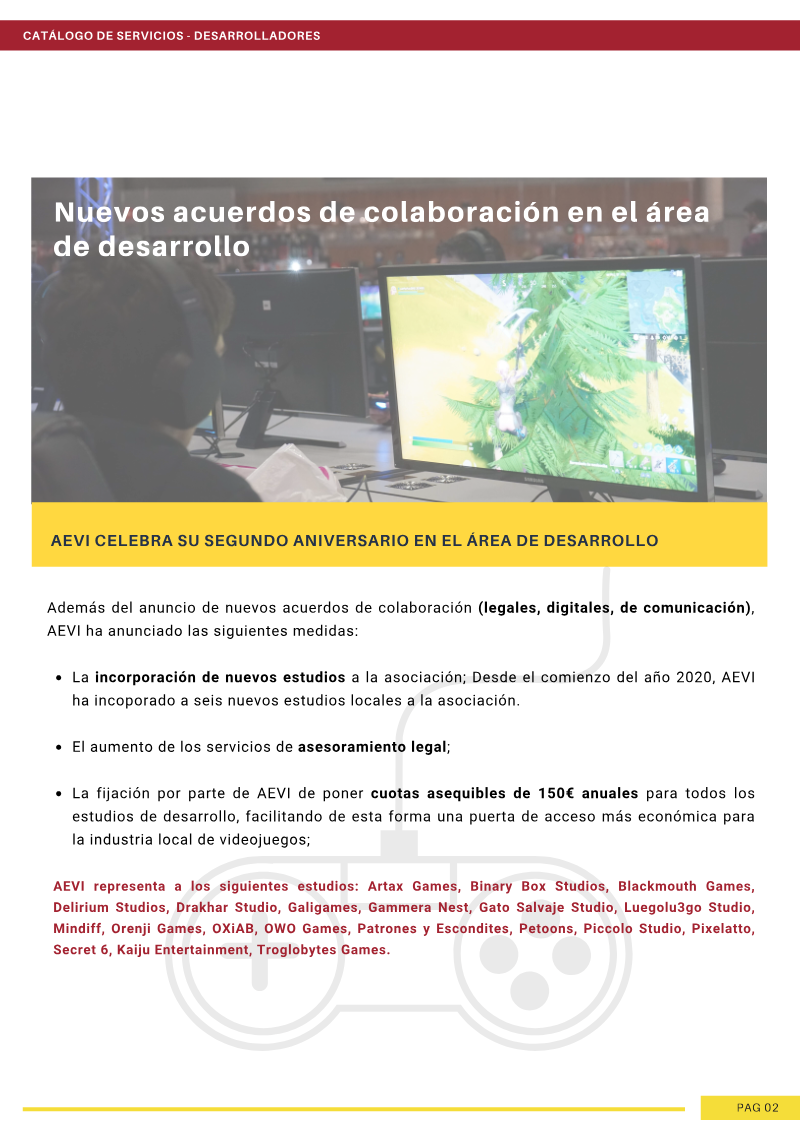

AEVI · 2020
ReportCatálogo de Servicios – Desarrolladores: España
The catalogue presents AEVI’s strategy to strengthen Spain’s video‑game development sector through a suite of collaborative services and targeted initiatives. Central to the effort is the celebration of the second anniversary of the association’s development area, which underscores a commitment to expand support for local studios, from established references to emerging independents. Since the start of 2020, six new development studios have joined AEVI, bringing the total roster to more than thirty members, including Artax Games, Binary Box Studios, Blackmouth Games and others. Financial assistance is offered through a €10,000 grant programme, while an affordable annual membership fee of €150 eases entry for smaller firms. AEVI also operates a mentor network, a job‑matching platform, and a €10,000 aid scheme, and has conducted outreach across 15,000 km, meeting over 300 developers in cities such as Madrid, Barcelona, Bilbao and Seville. Key partnerships extend legal, technological and commercial expertise to members. Bird & Bird provides free initial legal consultations on intellectual‑property, labour and tax matters; Tutelio supplies blockchain‑based IP protection services; B2Boost grants access to weekly market‑intelligence reports covering PSN, Xbox Live, Steam and Nintendo e‑shop sales; Sorastream enables cost‑free integration of games into its cloud‑gaming platform with revenue‑share terms for AEVI affiliates. Additional collaborations with Enumbers, Screenglitch, Make Good Art Agency and Gamingates deliver accounting tools, marketing support, digital‑strategy advice and visibility in professional networks. Collectively, these measures aim to create a sustainable ecosystem for Spanish developers, fostering talent, facilitating market entry and enhancing the international profile of locally produced games.
AEVI · 2019
ReportImpact of Cloud Gaming and Other Trends in the Indie Ecosystem: Spain
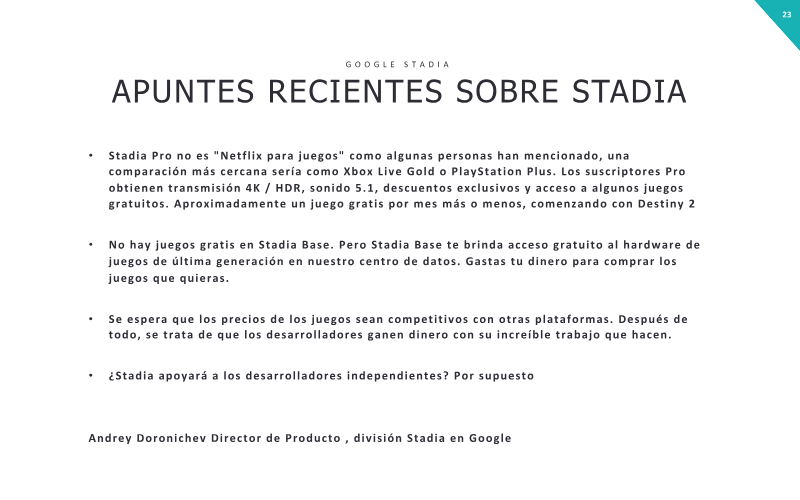
The analysis evaluates how cloud‑gaming and emerging distribution models are reshaping the Spanish indie game ecosystem, arguing that while the broader gaming audience is expanding across new platforms and financing structures, cloud‑gaming remains experimental and will not achieve mass‑market penetration for several years due to bandwidth constraints and uneven consumer readiness. Console users, especially those who are price‑sensitive and less tied to a single PC ecosystem, are identified as the most promising segment for indie titles delivered via cloud, with subscription‑or‑free‑to‑play (GaaS) approaches offering the strongest revenue potential. Current platform data show PlayStation Now operating in 19 high‑speed‑Internet markets and reaching more than 79 million PS4 owners—approximately 0.6 % of the console base—yet its relatively high subscription fee and overlap with PS Plus dilute its attractiveness. Google Stadia leverages extensive data‑center and AI resources, providing a free tier alongside a €9.99‑per‑month option, illustrating divergent pricing strategies within the nascent market. Strategic recommendations for indie studios emphasize hybrid monetisation that combines subscriptions with direct sales, targeting latency‑tolerant mid‑core audiences, including a growing female demographic. Development pipelines should prioritise engines with broad cross‑platform support, notably Unreal for versatility and Unity for seamless Stadia integration, while adopting low‑cost, high‑quality marketing to compensate for the reduced role of traditional publishers. Cloud‑gaming’s principal advantage lies in creating a more level playing field, granting indie developers visibility and access to users lacking high‑end hardware, thereby expanding market reach in Spain and comparable European territories over the coming three to five years.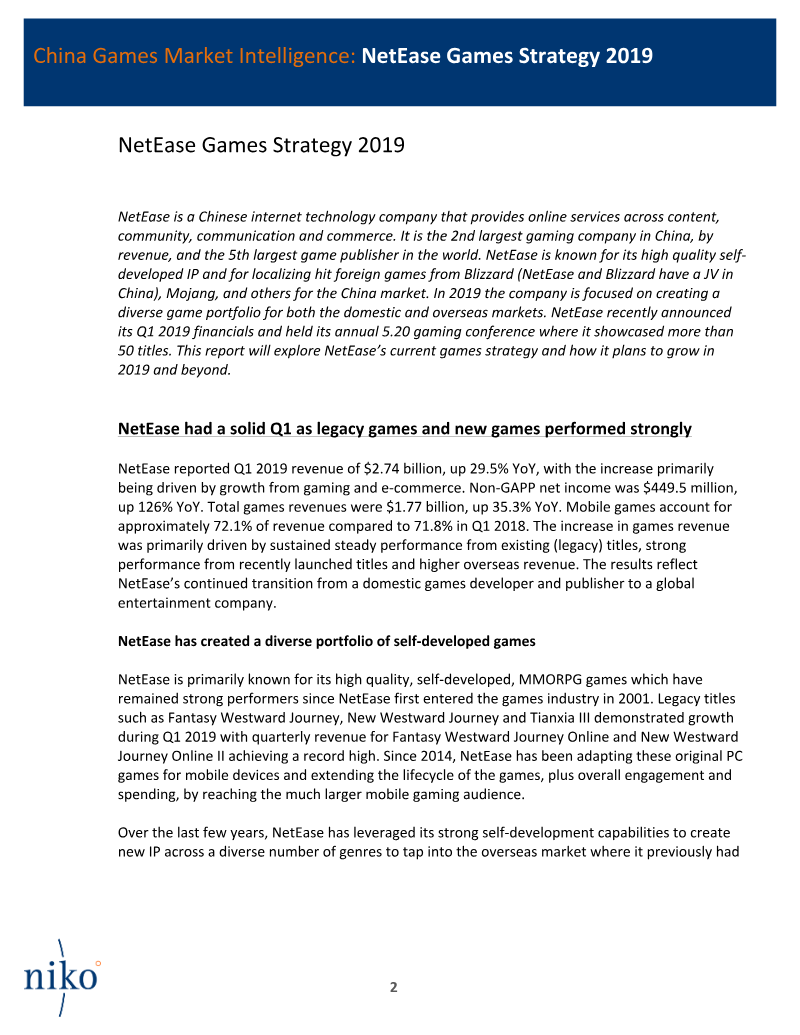
Niko Partners · 2019
ReportNetEase Games Strategy: 2019
NetEase is executing a strategic transition from a domestic-focused MMORPG developer to a global entertainment powerhouse. By diversifying its portfolio across multiple genres and expanding into international markets, the company aims to mitigate the risks associated with slowing growth in China. This strategy centers on leveraging high-quality self-developed intellectual property, fostering international partnerships, and building a comprehensive gaming ecosystem that integrates esports, live streaming, and pan-entertainment content. Financial performance in early 2019 underscored the company’s stability, with total revenue reaching $2.74 billion, a 29.5% year-over-year increase. Gaming revenue accounted for $1.77 billion of this total, driven by the sustained performance of legacy titles and the success of newer mobile games. Mobile platforms remain the primary revenue driver, representing 72.1% of total gaming income. Despite a regulatory freeze on game licenses in China during 2018, NetEase maintained growth by capitalizing on its existing library and expanding its footprint in key overseas markets, particularly Japan and the United States. To sustain this momentum, the company is aggressively pursuing global expansion through simultaneous worldwide launches, porting mobile titles to PC and console, and investing over $200 million in overseas studios. Furthermore, NetEase is building a robust gaming ecosystem that encompasses developer support, social platforms like the Da Shen app, and significant investments in esports, including the NeXT tournament brand. By evolving its top-tier intellectual properties into multi-media franchises—spanning film, comics, and merchandise—and securing strategic collaborations with global brands, NetEase is positioning itself as a formidable, long-term competitor in the global interactive entertainment industry.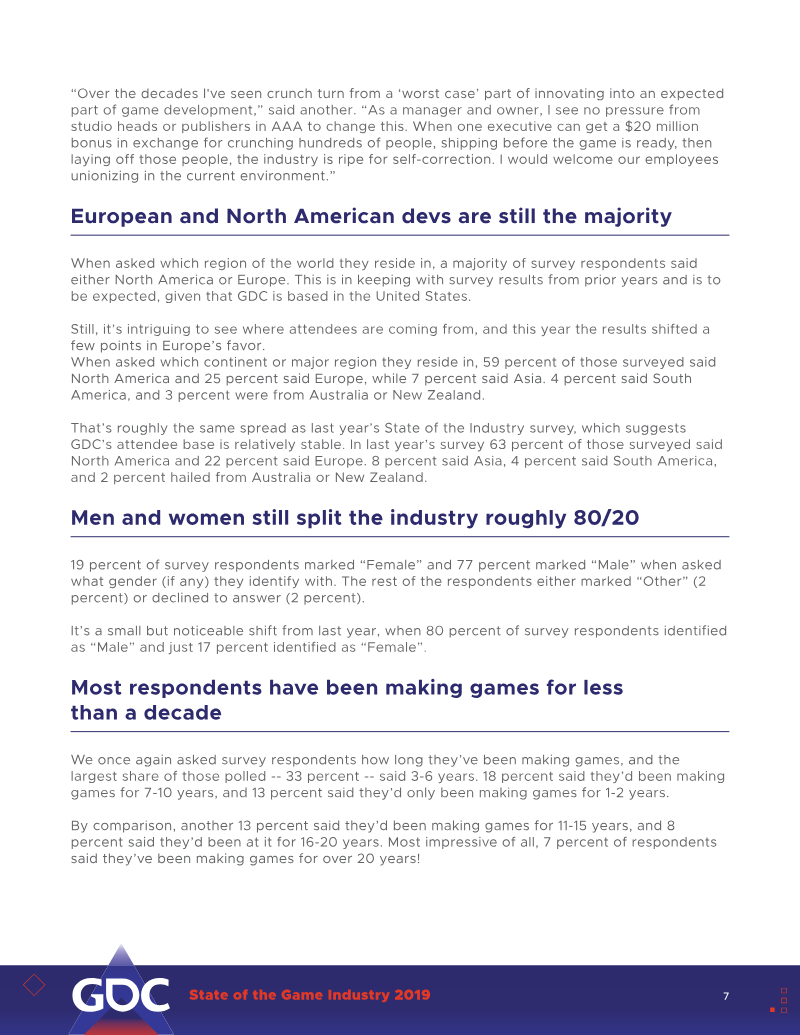
Game Developers Conference · 2019
ReportState of the Game Industry 2019
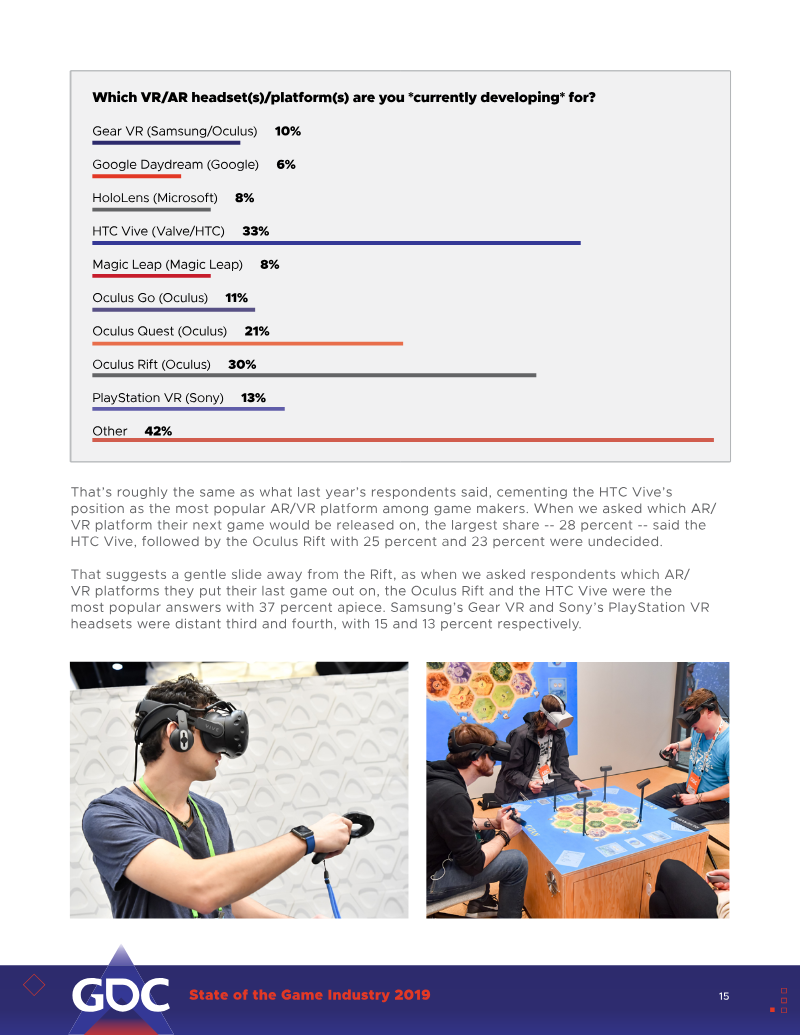
The global game development landscape in 2019 reflects a period of significant structural and cultural transition. While PC remains the primary platform for development, the Nintendo Switch has emerged as a major point of interest, signaling a shift in hardware priorities. Despite these technical advancements, the industry faces persistent labor challenges, including widespread overtime and a workforce demographic that remains heavily skewed toward male professionals with less than ten years of experience. Growing support for unionization among developers highlights a collective desire to address these systemic working conditions and professional sustainability. Economic strategies are also evolving as developers move away from traditional monetization models. Interest in loot boxes and crowdfunding has cooled, with a majority of creators favoring self-funding and self-publishing. This financial independence is coupled with growing friction regarding digital storefronts, specifically the 30 percent revenue share model on Steam, which many developers now view as unjustifiable. Meanwhile, the industry remains divided on the future of immersive technology, though a notable minority anticipates that augmented reality will achieve dominance within a five-year window. Marketing and accessibility represent critical areas for improvement in the current development cycle. Developers increasingly rely on social media and word-of-mouth for game discovery, while live events are frequently cited as ineffective promotional channels. Furthermore, while the adoption of accessibility features remains low, with only about a quarter of projects incorporating such elements, there is a clear trend toward prioritizing inclusive design. Features such as customizable controls and colorblind support are becoming central to the development conversation, marking a gradual shift toward more equitable and accessible gaming experiences.
Neogames Finland ry · 2019
ReportFinnish Game Industry Report 2018
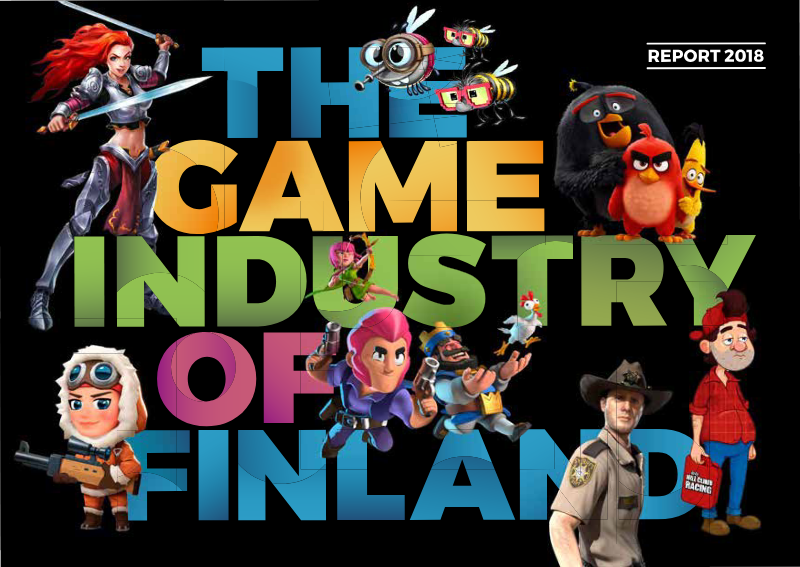
The Finnish game industry has matured into a stable, two-billion-euro sector characterized by professionalization and a strategic shift toward long-term sustainability. While the total number of active studios has consolidated to 220, the industry maintains a robust workforce of 3,200 professionals. This ecosystem is increasingly international, with foreign talent now comprising over 27 percent of the labor force. Despite a slight decline in total turnover since 2016, the sector has successfully diversified its revenue streams, moving away from an over-reliance on a few dominant players toward a more resilient, multi-faceted market presence. The prevailing business model has transitioned toward games-as-a-service, prioritizing live operations, data-driven design, and sustained player engagement over the rapid release of new titles. This evolution reflects a broader industry focus on mobile and cross-platform development, where Finnish studios demonstrate global competitiveness through massive download volumes and the creation of high-profile intellectual property. While the industry benefits from a decentralized network of regional hubs—with Helsinki serving as the primary center supported by specialized clusters in Tampere, Oulu, and Kajaani—it faces ongoing challenges, including rising user acquisition costs, regulatory pressures, and a persistent shortage of senior-level talent. Looking forward, the industry maintains a cautious but strategic approach to emerging technologies like XR and blockchain, preferring to anchor growth in proven mobile-first and free-to-play models. The sector is bolstered by a collaborative infrastructure of academic institutions, public funding bodies, and support organizations that foster innovation and corporate responsibility. By balancing the agility of specialized startups with the global reach of established leaders, the Finnish game industry continues to leverage its unique ecosystem to navigate international trade barriers and maintain its position as a significant force in the global digital entertainment market.
Slovak Game Developers Association · 2019
ReportSlovak Game Industry 2019
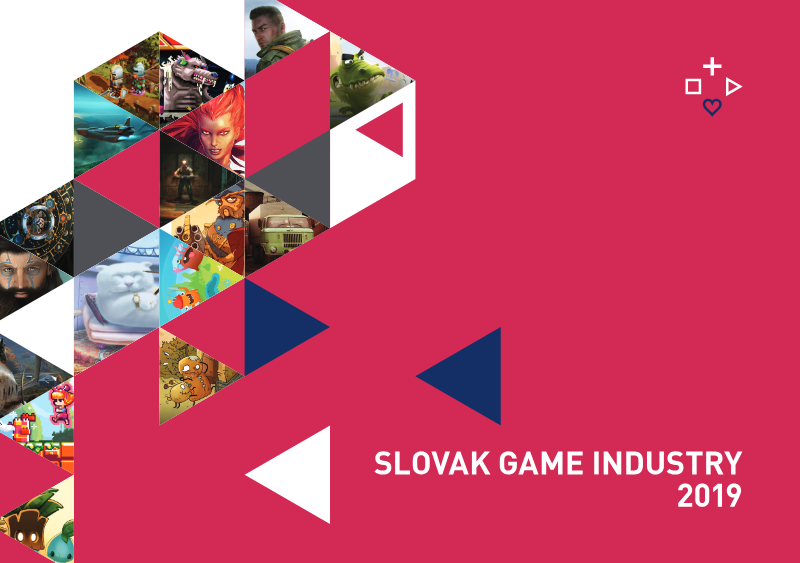
The Slovak game industry experienced a period of robust expansion in 2019, characterized by a growing professional workforce of 682 individuals and total annual revenues reaching €56.6 million. The sector is defined by an agile, community-driven ecosystem composed primarily of small, independent studios founded between 2005 and 2019. These entities focus heavily on PC and mobile development, balancing the creation of original intellectual property with the provision of high-end technical services, such as audio and VFX, for the global market. A defining feature of this landscape is its reliance on self-funding, with 81 percent of studios operating without external capital. While the industry remains largely independent, it benefits from a structured support system, including university programs, specialized art schools, and frequent professional events like game jams and festivals. This educational and community infrastructure fosters a diverse creative output, ranging from niche platformers and RPGs to educational software, often produced by teams of fewer than ten people. Public sector involvement plays a critical role in sustaining this growth, particularly through the Slovak Arts Council. In 2019, the council allocated €420,000 to support artistic and innovative projects, contributing to a three-year total of over €1 million distributed across 165 applications. Although this funding is vital for smaller developers and solo creators, the existing cap of €100,000 per entity creates a structural limitation for larger studios seeking to scale. Despite these constraints, the industry maintains a strong trajectory, leveraging international partnerships and local talent to solidify its position within the broader European gaming market.
DEV - Desarrollo Español de Videojuegos · 2019
Whitepaper