Development & Publishing
Making and shipping games: design, engines, QA and publishing deals.
222 documents
PCF Group
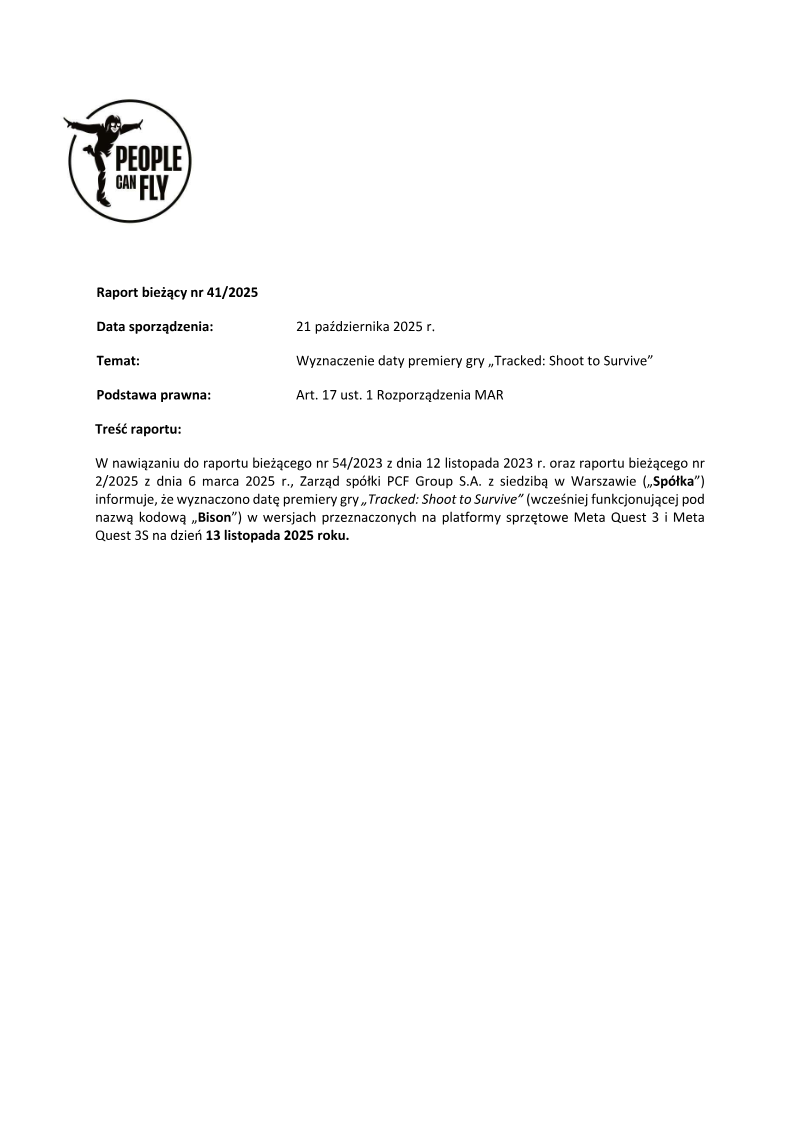
ReportRaport bieżący nr 41/2025: Wyznaczenie daty premiery gry „Tracked: Shoot to Survive”
PCF Group S.A. has officially scheduled the global release of the title Tracked: Shoot to Survive for November 13, 2025. This announcement confirms the commercial launch timeline for the project, which was previously developed under the internal codename Bison. The game is specifically optimized for the Meta Quest 3 and Meta Quest 3S virtual reality hardware platforms. The decision to finalize the release date follows a multi-year development cycle, with initial project disclosures dating back to late 2023 and further updates provided in early 2025. By targeting the Meta Quest ecosystem, the company is positioning this release within the growing sector of standalone virtual reality gaming. This strategic move reflects the studio's ongoing efforts to expand its portfolio within the immersive technology market. The announcement serves as a formal regulatory disclosure, ensuring transparency regarding the company’s production pipeline and commercial milestones. As the launch date approaches, the focus shifts toward the final deployment of the software to the specified VR platforms. This release represents a significant step in the company's current development roadmap, marking the transition of the project from the production phase to active market availability.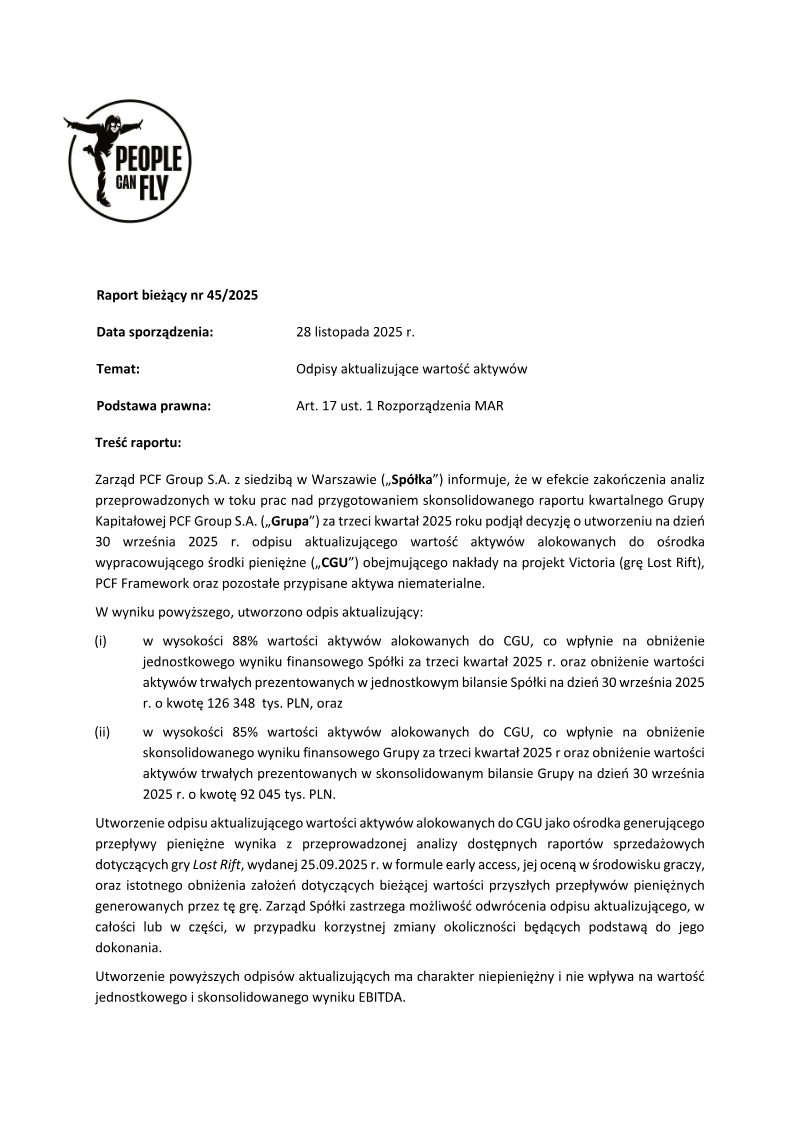
PCF Group
ReportRaport Bieżący Nr 45/2025: Odpisy Aktualizujące Wartość Aktywów
PCF Group S.A. has initiated significant asset impairment charges following a performance review of the project Victoria, specifically the game Lost Rift, alongside the PCF Framework and associated intangible assets. This decision, finalized in November 2025, reflects a strategic reassessment of the carrying value of these assets as of September 30, 2025. The impairment was triggered by disappointing sales data following the early access launch of Lost Rift on September 25, 2025, compounded by unfavorable player reception and a downward revision of projected future cash flows. The financial impact of these adjustments is substantial, affecting both the company’s standalone and consolidated financial statements. On a standalone basis, the company recognized an impairment of 88% of the relevant asset value, resulting in a reduction of 126,348 thousand PLN. On a consolidated level, the impairment accounts for 85% of the asset value, totaling 92,045 thousand PLN. While these figures significantly lower the value of fixed assets reported on the balance sheet for the third quarter of 2025, the charges are non-cash in nature and do not impact the company’s EBITDA. Management maintains the possibility of reversing these impairment charges, either in whole or in part, should market conditions or the commercial performance of the affected assets improve. These figures remain estimates and are subject to final audit verification before the publication of the full 2025 financial statements. The scope of this adjustment is limited to the specific cash-generating unit associated with the Lost Rift project and its supporting technological framework within the broader PCF Group portfolio.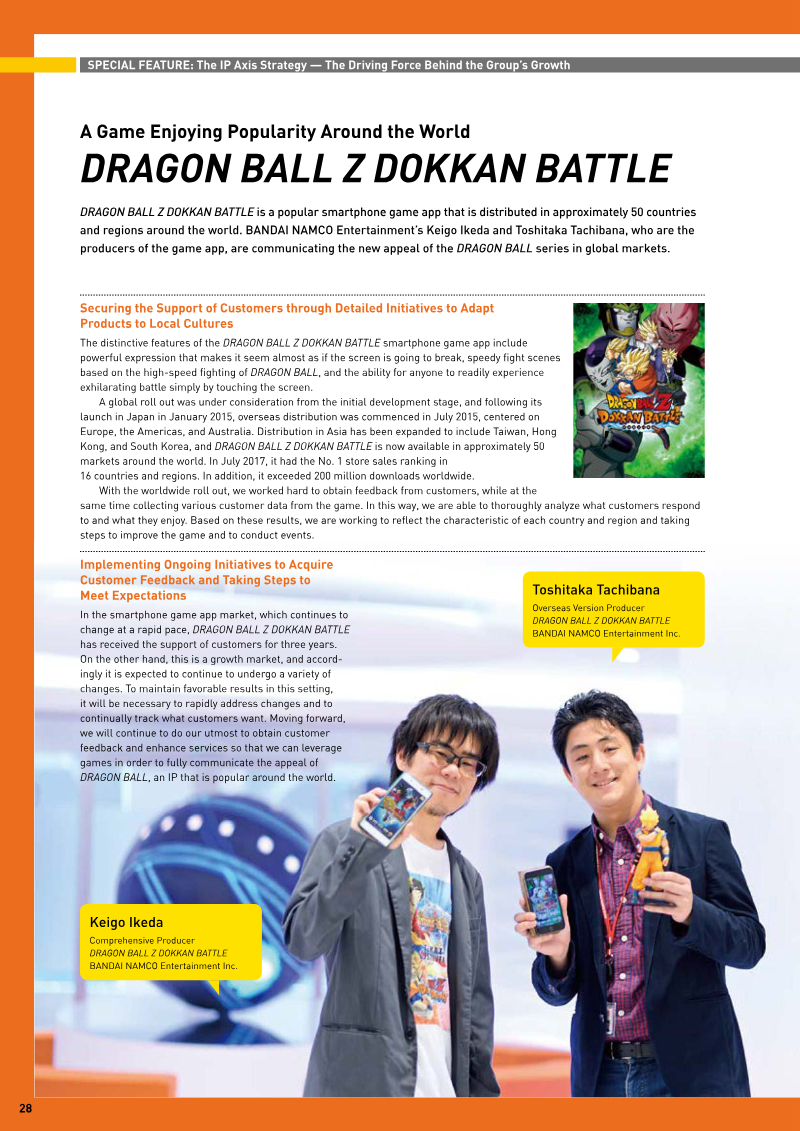
Bandai Namco
ReportIntegrated Report 2017
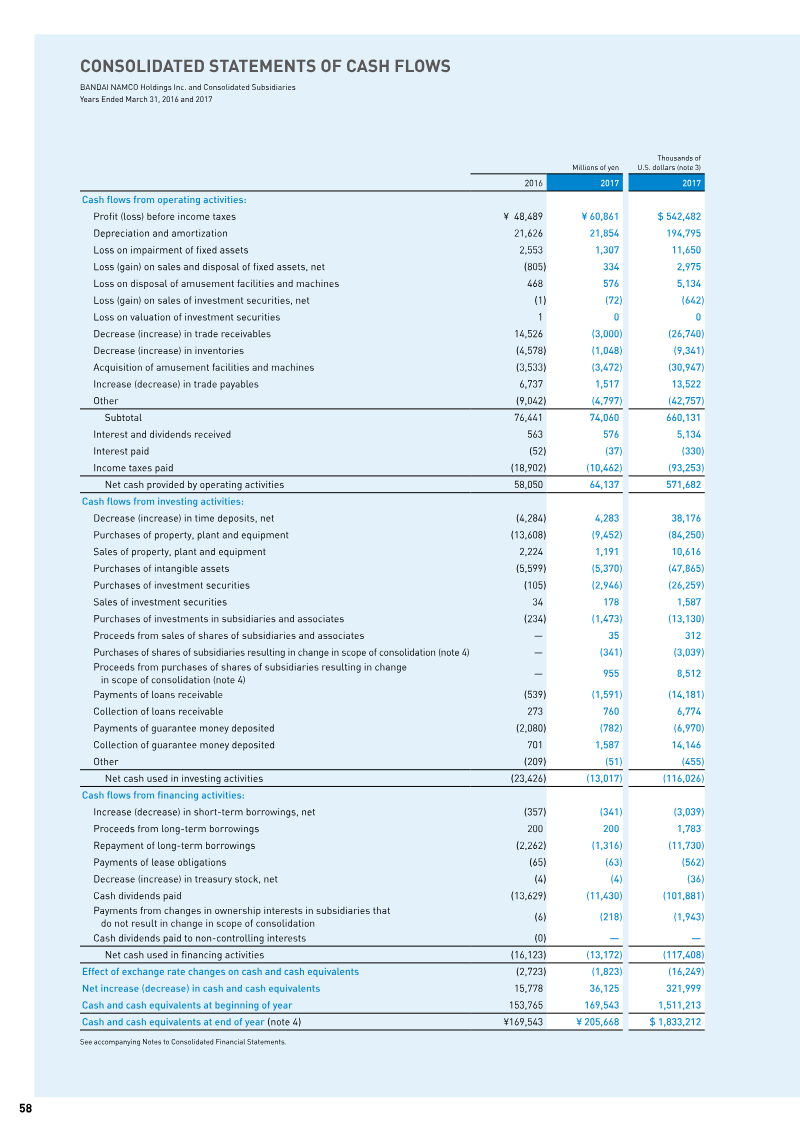
The BANDAI NAMCO Group’s 2017 Integrated Report details a period of record-breaking financial performance, characterized by the successful execution of its core IP axis strategy. By leveraging established intellectual properties such as Mobile Suit Gundam, DRAGON BALL, and ONE PIECE across toys, network content, and visual production, the company achieved consolidated net sales of ¥620.1 billion and an operating profit of ¥63.2 billion. This performance allowed the Group to meet its mid-term financial targets one year ahead of schedule, resulting in an increased annual dividend of ¥82 per share and a consolidated payout ratio of 40.8%. The primary thesis of the report centers on the IP axis strategy as a sustainable engine for global growth. This approach integrates physical and digital entertainment experiences—including home video games, VR initiatives like "VR ZONE," and live animation events—to maximize the value of core franchises across diverse demographics and international markets. To support this expansion, the Group has prioritized organizational agility, delegating greater authority to overseas subsidiaries and restructuring operations to better align business functions with regional needs. Corporate governance and sustainability remain central to the Group’s operational framework. The company has strengthened its oversight through a robust system of independent directors, rigorous board evaluations, and a performance-based remuneration structure designed to align executive interests with long-term shareholder value. Furthermore, the Group has integrated corporate social responsibility into its core operations, achieving a 27% reduction in CO2 emissions since 2012 and implementing comprehensive work-style reforms. By maintaining a conservative financial strategy, utilizing structured risk management, and fostering talent development, the Group aims to navigate market volatility while continuing to provide global audiences with consistent, high-quality entertainment content.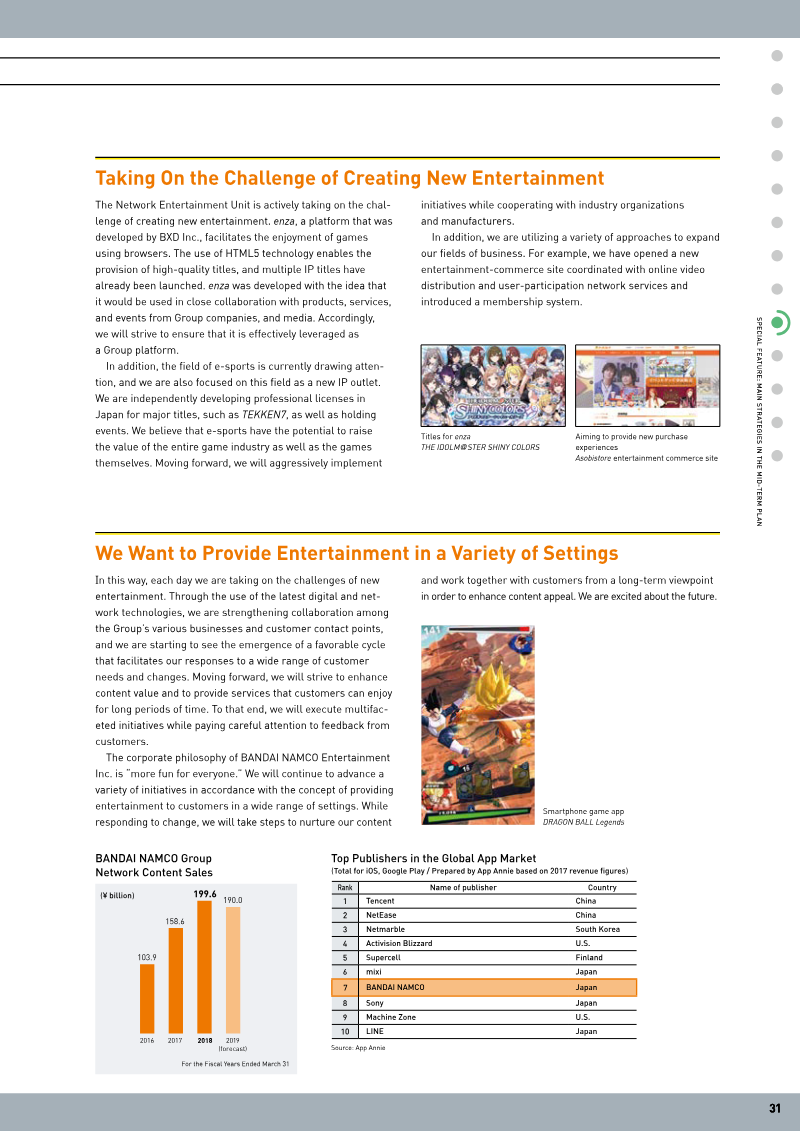
Bandai Namco
ReportIntegrated Report 2018
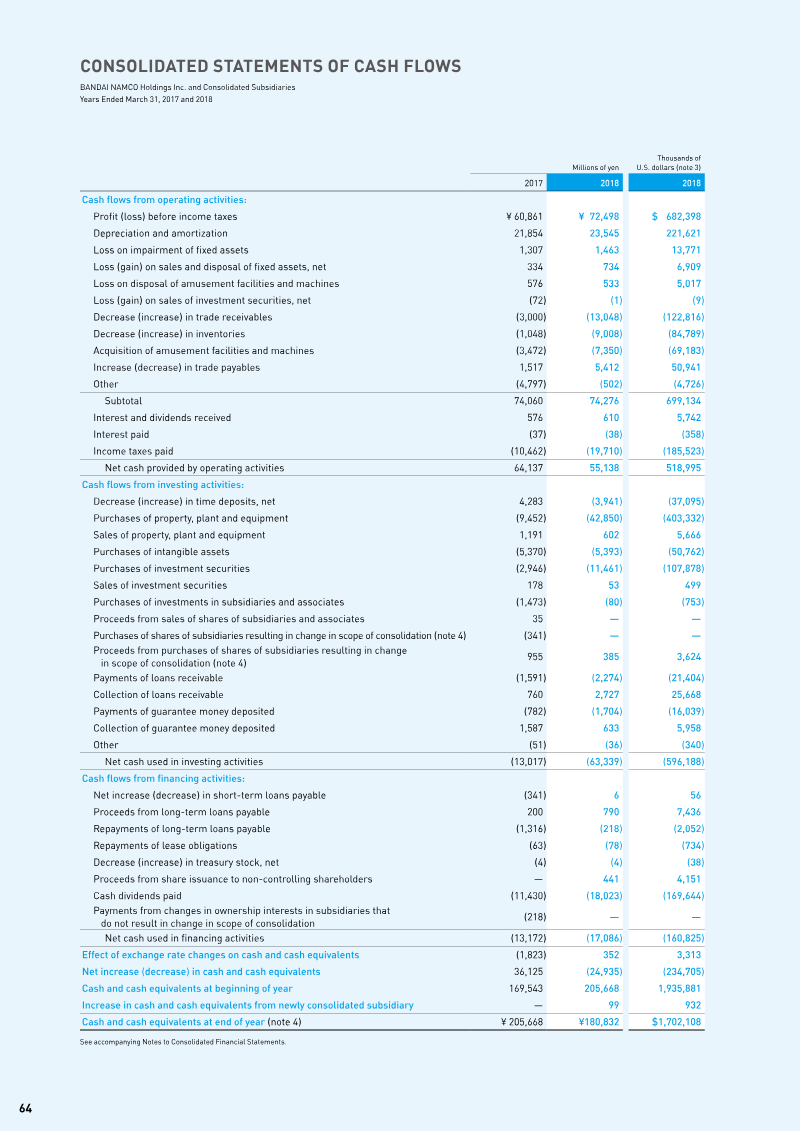
The Bandai Namco Group’s 2018 Integrated Report outlines a strategic pivot toward becoming a global intellectual property (IP) development powerhouse. Following a record-breaking fiscal year in 2018, which saw consolidated net sales reach ¥678.3 billion and operating profit climb to ¥75.0 billion, the organization has transitioned to a new mid-term plan spanning through 2021. The core thesis centers on the "IP Axis Strategy," which seeks to maximize the value of properties like Dragon Ball and Mobile Suit Gundam by leveraging cross-unit collaboration and digital transformation to extend the lifecycle of entertainment content across global markets. To facilitate this growth, the group underwent a significant structural reorganization, moving from three strategic business units to five specialized segments: Toys and Hobby, Network Entertainment, Real Entertainment, Visual and Music Production, and IP Creation. This restructuring is supported by a ¥25 billion strategic investment fund aimed at fostering original IP creation and accelerating expansion into key growth regions, particularly China. The company is also prioritizing the "ALL BANDAI NAMCO" branding concept, which integrates regional and business-axis operations to provide cohesive, long-term entertainment experiences for a diverse, international fan base. Financial stability and corporate governance remain central to the group’s operational philosophy. The company has adopted a shareholder-friendly return policy, targeting a total return ratio of 50% or more, and has strengthened its oversight through an independent board structure and rigorous internal controls. While the group anticipates a temporary performance plateau in 2019 due to heavy reinvestment in infrastructure and new IP, the long-term objective remains a sustainable increase in corporate value, supported by robust risk management and a commitment to transparency in its Japanese GAAP-compliant financial reporting.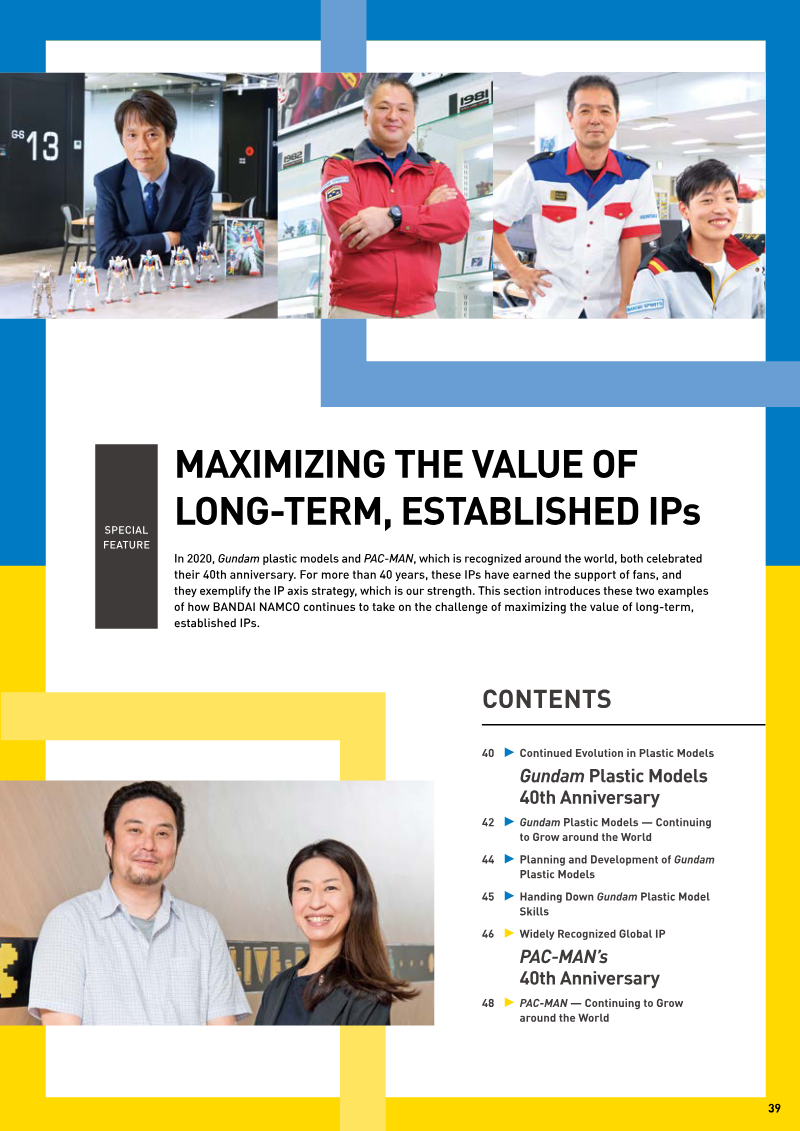
Bandai Namco
ReportIntegrated Report 2020
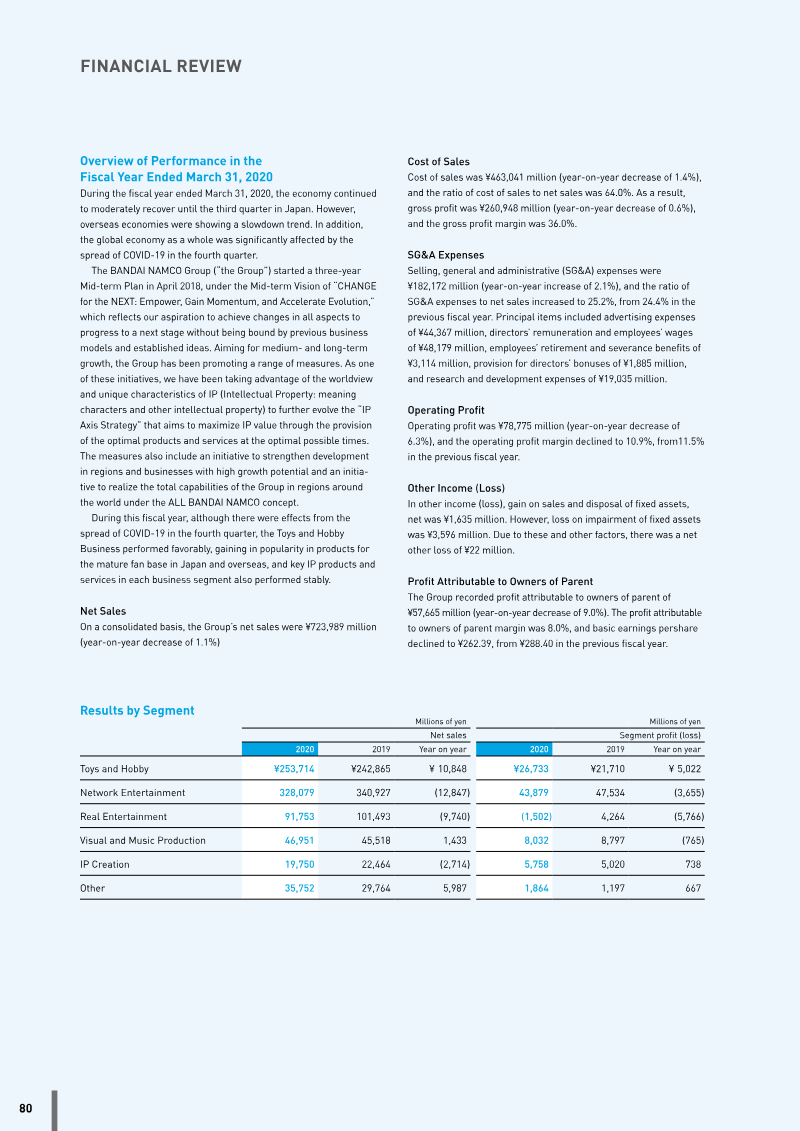
The Bandai Namco Group’s 2020 Integrated Report outlines a strategic framework centered on its proprietary IP axis strategy, which seeks to maximize the value of approximately 300 intellectual properties by deploying them across diverse entertainment formats, including toys, network content, visual and music production, and live amusement facilities. The primary thesis of the report is that by integrating these business units and fostering organizational synergy, the company can ensure long-term global growth and resilience. This strategy is anchored by flagship franchises such as Gundam, PAC-MAN, and One Piece, which serve as the foundation for both domestic and international expansion. Financially, the group demonstrated stability during the fiscal year ending March 31, 2020, reporting net sales of ¥723.9 billion and an operating profit of ¥78.7 billion. Despite these strong figures, the company faced headwinds in the fourth quarter due to the COVID-19 pandemic, which necessitated a strategic pivot toward increased digitalization, centralized cash management, and the postponement of its next mid-term plan to April 2022. The company maintains a robust balance sheet with an equity ratio of 72.5% and continues to prioritize shareholder returns through a total payout ratio of 50%. Key operational developments during this period included the acquisition of SOTSU CO., LTD. to bolster the IP Creation segment and the expansion of global production capacity for the Gundam plastic model business, which reached 700 million cumulative shipments. Beyond financial performance, the report emphasizes a commitment to corporate governance, ESG initiatives, and human capital development. The group utilizes a performance-based remuneration framework for directors and maintains a diverse board to ensure transparency and effective oversight. Furthermore, the company is actively integrating sustainability into its operations through product safety, environmental footprint reduction, and inclusive employment practices. By aligning its organizational structure—specifically through the unification of business units—with its long-term vision, the group aims to navigate current market volatility and sustain its position as a leader in the global entertainment industry.
AEVI
Report