Development & Publishing
Making and shipping games: design, engines, QA and publishing deals.
222 documents
Spanish Association for the Game and Entertainment Software Development and Publishing Industry · 2021
WhitepaperWhite Paper on Video Game Development Sector in Spain
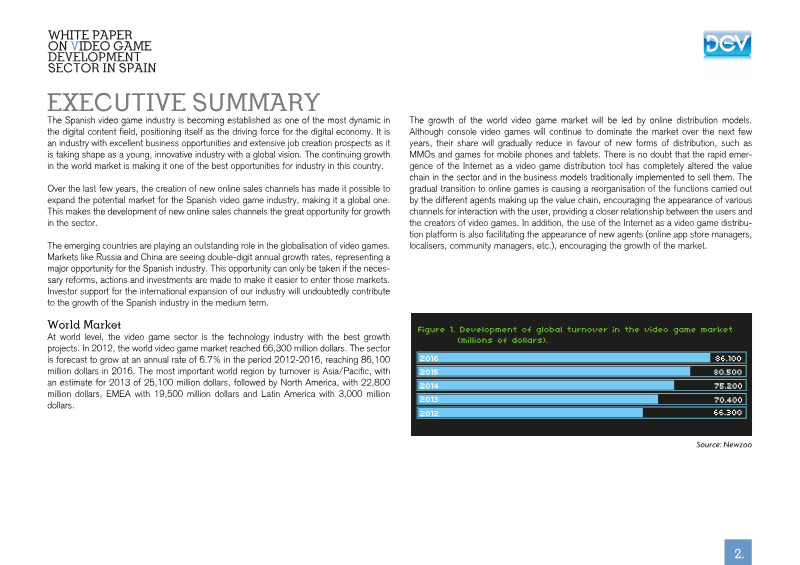
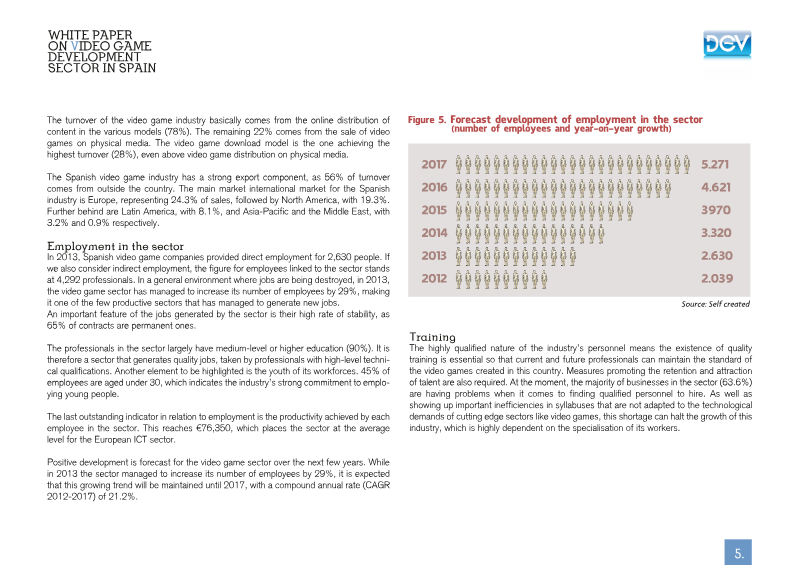
The Spanish video game development sector has emerged as a vital component of the national digital economy, characterized by rapid growth, high innovation, and a strong global orientation. As of 2013, the industry comprised 330 companies, largely concentrated in Madrid and Catalonia, with a workforce that is notably young and highly qualified. The sector generated 313.7 million euros in turnover in 2013, with projections suggesting a compound annual growth rate of 23.7% through 2017. This expansion is driven primarily by online distribution models, which account for 78% of industry revenue, and a robust export market that represents 56% of total sales. The industry is defined by its youth, with 68% of firms established within the last five years and 97% of capital originating domestically. Employment trends are equally positive; the sector supported 2,630 direct jobs in 2013, marking a 29% increase from the previous year, with a high proportion of permanent contracts. Despite this success, the industry faces significant challenges, particularly a talent gap, as 63.6% of businesses report difficulty finding qualified personnel. This highlights a misalignment between current educational curricula and the specialized technical demands of the video game market. To sustain this momentum, the sector advocates for an integrated support plan that includes fiscal incentives for research and development, public funding for prototypes, and streamlined internationalization efforts. Recommendations emphasize the need for specialized technology clusters, improved tax treatment for intangible assets, and stronger synergies with transversal industries such as health and education through the development of serious games. By addressing these structural needs and fostering closer collaboration between public administration, private investors, and academic institutions, the industry aims to solidify its position as a competitive, high-productivity leader within the European digital landscape.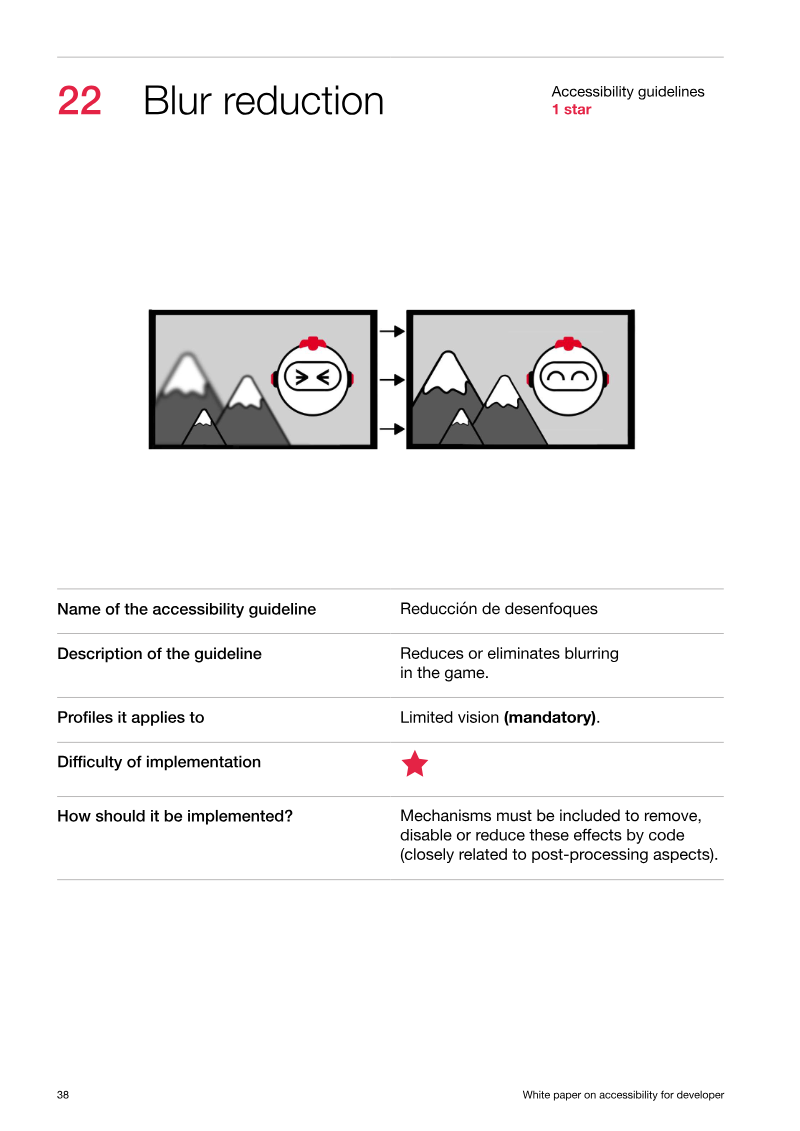

Fundación ONCE · 2021
WhitepaperAccessibility for Developers: Spain
The Spanish video game industry is undergoing a strategic shift toward universal design, prioritizing the integration of accessibility features from the earliest stages of development to ensure inclusivity for players with motor, sensory, and cognitive disabilities. By aligning with the European standard EN 301549, developers are encouraged to move beyond reactive updates and instead embed accessibility into the core production cycle. This proactive approach not only reduces long-term development costs but also ensures that games are inherently playable for a broader demographic, effectively removing social barriers to digital entertainment. The technical framework for this initiative includes a comprehensive suite of over 40 specific guidelines, ranging from low-complexity adjustments—such as customizable font sizes, remappable controls, and color-blind modes—to more advanced implementations like automated gameplay, speech-to-text integration, and sign language interpretation. These software-based solutions are designed to address diverse functional profiles, providing developers with clear, actionable strategies to improve user experience. The guidelines emphasize that many of these features are essential for specific user groups, necessitating a standardized approach to self-assessment and compliance. Beyond software, the industry is increasingly focused on the synergy between digital interfaces and adaptive hardware. Innovations such as the Xbox Adaptive Controller, the PlayStation Access Controller, and specialized haptic technology like the OWO jacket are transforming the gaming landscape. Furthermore, the rise of 3D printing has democratized access to customized peripherals, allowing for highly personalized input solutions. By centralizing these resources through platforms like ga11y and Accessibilitas, the Spanish gaming sector is fostering a collaborative ecosystem that empowers developers to create more equitable gaming experiences while providing players with the tools necessary for independent and inclusive play.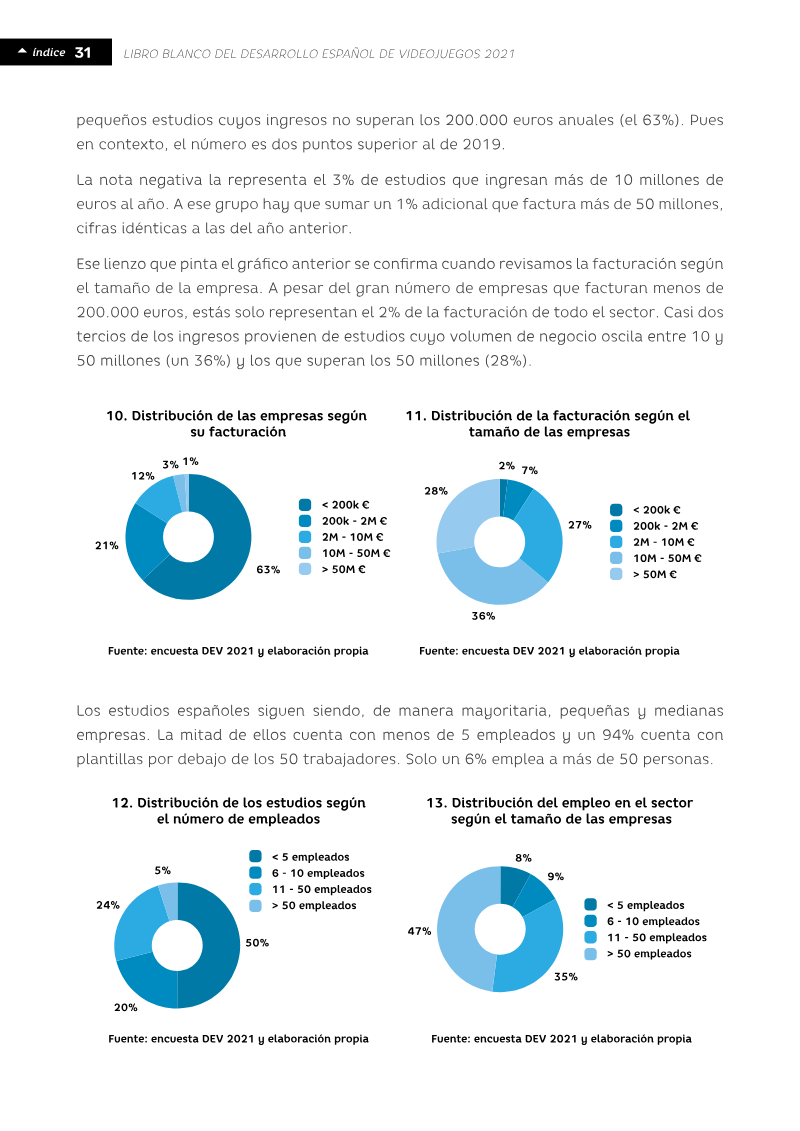
Fondo Europeo de Desarrollo Regional · 2021
WhitepaperLibro Blanco del Desarrollo Español de Videojuegos 2021
The Spanish video game industry demonstrated notable resilience and growth in 2021, reaching a total revenue of 1,105 million euros, a 20% increase over the previous year. With 435 active studios, the sector is increasingly consolidated, as 60% of companies possess over five years of experience. Despite this expansion, the industry remains characterized by a high density of small studios, with 63% earning under 200,000 euros annually, while a small minority of large firms generate the bulk of total revenue. Employment also trended upward, growing by 9.6% to reach over 8,000 professionals, though talent remains heavily concentrated in the hubs of Catalonia and Madrid. Strategic challenges persist, particularly regarding financing and workforce development. With 65% of studios actively seeking capital, the industry relies heavily on internal funds and publishers, highlighting a critical need for improved public policy, such as tax incentives and streamlined grant processes. Furthermore, the sector faces a significant gender gap, with women comprising only 23% of the workforce, and a recruitment bottleneck caused by a perceived mismatch between generalized academic training and the specific experience required by studios. While Spain ranks as a top-five European market, the absence of domestically produced titles in the national top 20 best-sellers underscores a need for greater product visibility and international competitiveness. To address these structural deficiencies, the industry advocates for a strategic roadmap that includes a mandatory 5% reinvestment scheme for international distributors and the adoption of successful international models from countries like France and Germany. By prioritizing tax incentives, formalizing diversity and anti-harassment policies, and fostering stronger educational networks, the sector aims to transition into a more sustainable, high-tech economic pillar. These efforts are supported by the ongoing advocacy of the Spanish Association of Video Game Development Companies, which continues to push for the formal recognition of video games as a vital cultural and technological industry.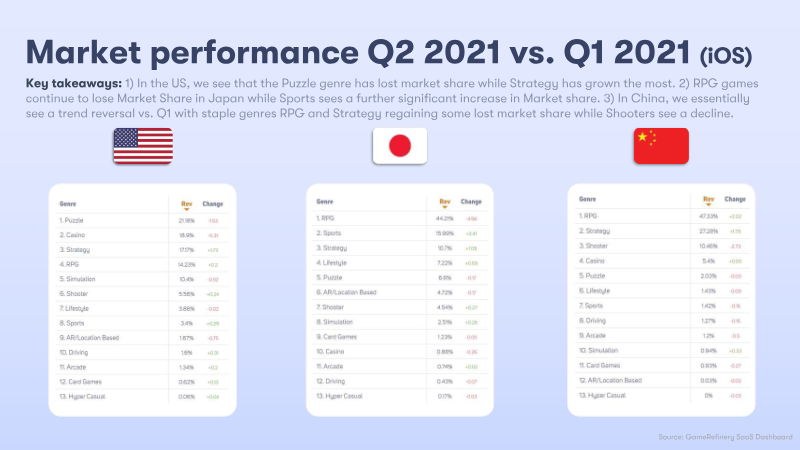
GameRefinery · 2021
ReportMarket Snapshot: Q2 2021 US, China & Japan
The mobile gaming market in the second quarter of 2021 experienced notable shifts in genre performance and publisher dominance across the United States, China, and Japan. The primary objective is to provide a comparative analysis of these regional markets, highlighting evolving trends in genre market share, publisher success, and the increasing importance of live-service feature updates. The analysis utilizes a proprietary taxonomy and motivation framework, supported by a survey of over 7,000 mobile gamers in English-speaking western countries, to categorize games and identify player archetypes. Key findings indicate that the United States saw a decline in the Puzzle genre’s market share, while the Strategy genre experienced significant growth. In Japan, the Sports genre continued to gain momentum, largely driven by the success of titles like Umamusume Pretty Derby, while RPGs faced a decline. China exhibited a trend reversal from the previous quarter, with RPG and Strategy genres regaining market share at the expense of Shooters. Publisher performance was marked by strong results from Supercell in the US and Cygames in Japan, while Leiting Games nearly doubled its market share in China. A critical trend identified is the 37% year-over-year increase in feature updates, with Strategy games leading this surge at 208%. Developers are increasingly prioritizing engagement through non-recurring live events and limited in-app purchase offers, which saw frequency increases of 143% and 122%, respectively. These features are becoming essential for retention and monetization across major genres. Furthermore, player motivation data reveals that games appealing to fast-paced action and competitive play continue to dominate the top-grossing charts in the US, with specific archetypes like King of the Hill and Skill Master remaining highly relevant.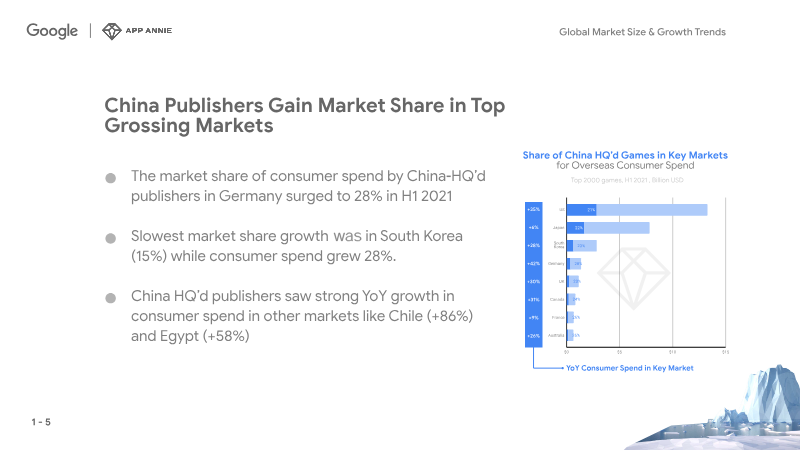

data.ai · 2021
ReportInnovate to Win on the Next Level with Hybrid Genre Games
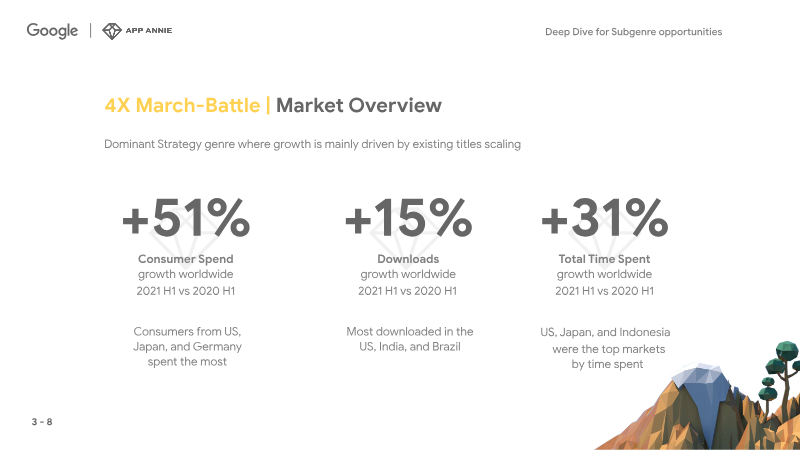
The global mobile gaming landscape has entered a period of sustained growth following the pandemic, with overseas consumer spending reaching $36 billion in the first half of 2021. This represents a 73% increase since 2018, a trend largely spearheaded by China-based publishers who now command a 23% share of the international market. To sustain this trajectory, the industry is shifting toward hybridization, a strategy that blends core mechanics from disparate subgenres to broaden player demographics and optimize revenue streams. By integrating casual elements like farming or social multiplayer features into hardcore frameworks, developers are successfully diversifying their monetization models beyond traditional structures. Market performance in early 2021 reveals that while Strategy, RPG, and Match subgenres remain the primary revenue drivers, high-growth categories such as Luck Battle and Merge-Saga are emerging as significant leaders. The 4X March-Battle subgenre, in particular, saw a 51% year-over-year increase in consumer spend, fueled by strong performance in the United States, Japan, and Germany. Additionally, the Idol Training subgenre experienced an explosive 129% surge in spending, highlighting the rising influence of Asian cultural themes and "Nijigen" aesthetics in the global market. Despite these gains, the industry faces challenges from evolving user privacy policies, which contributed to a 12% contraction in Puzzle RPG spending. In response, successful developers are increasingly utilizing hybrid tactics such as Gacha monetization, home design meta-layers, and social connectivity to maintain engagement. The transition toward these multifaceted game designs suggests that the future of mobile gaming lies in the ability to merge deep, mid-core progression systems with accessible, casual mechanics to capture a more diverse and resilient global audience.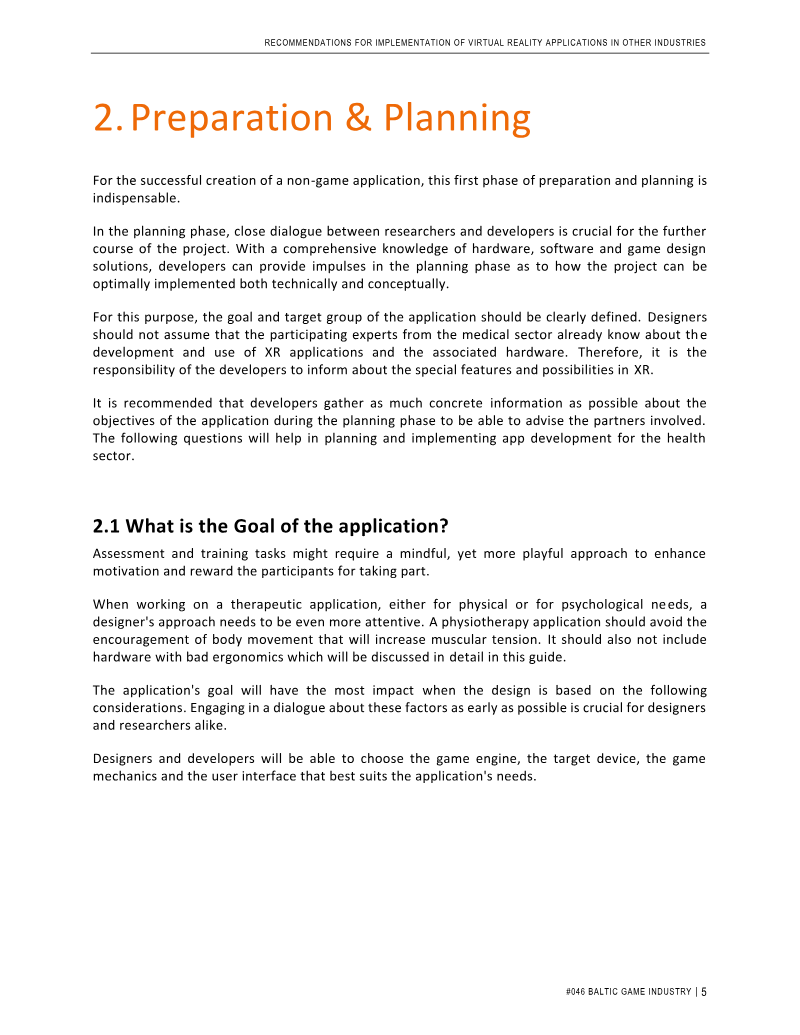
Baltic Game Industry · 2020
WhitepaperRecommendations for Implementation of Virtual Reality Applications in Other Industries
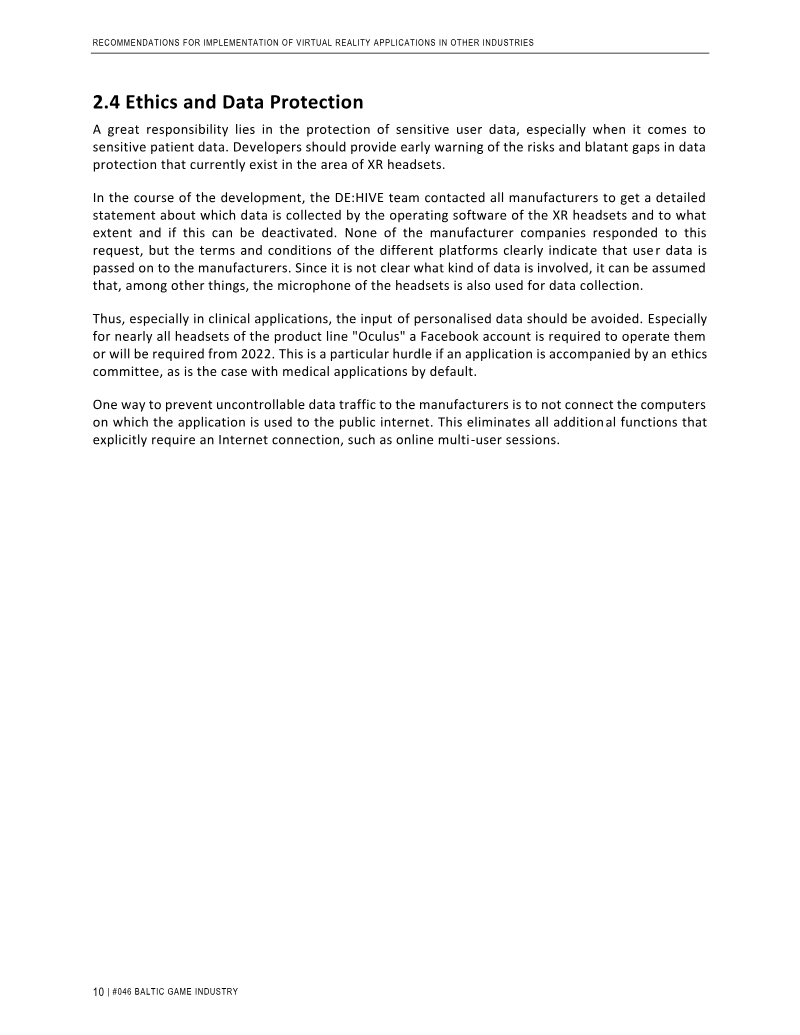
Virtual reality and extended reality technologies offer transformative potential for the healthcare sector, provided that development strategies prioritize interdisciplinary collaboration between game designers and medical professionals. The primary objective of integrating these immersive tools is to enhance therapeutic outcomes through precise data output and high-fidelity visual environments. Successful implementation hinges on clearly defined project goals, the selection of hardware tailored to the specific physical and cognitive capabilities of patients, and the design of intuitive interfaces that remain accessible to individuals without prior gaming experience. Technical and ethical rigor remains central to the deployment of these applications within clinical settings. Developers must navigate complex trade-offs between wired and wireless hardware configurations and tracking methodologies while maintaining a steadfast commitment to data security. Given the sensitivity of medical information, the creation of secure, offline environments is essential to protect patient privacy. Furthermore, the adoption of standardized workflows and the utilization of digital twins represent critical strategies for improving the scalability and cost-effectiveness of therapeutic solutions, ensuring that these technologies can be reliably integrated into broader medical practices. This framework focuses on the intersection of game development and clinical application within the Baltic region, supported by the European Regional Development Fund. By bridging the gap between entertainment-focused development practices and the stringent requirements of the medical field, these recommendations provide a roadmap for creating sustainable, high-impact XR tools. The ultimate goal is to foster a collaborative ecosystem where technical innovation directly supports clinical efficacy, ensuring that virtual reality serves as a robust, secure, and scalable asset in modern healthcare delivery.
BGZ Berliner Gesellschaft für internationale Zusammenarbeit mbH · 2020
ReportThe Game Incubation Landscape in Europe: Appraisal of the BSR in the European Context
The European game incubation landscape functions as a critical pillar of regional economic development, operating primarily through a mix of public subsidies, academic partnerships, and private-sector initiatives. These programs are categorized into three primary models: regional ecosystem development, student and alumni support, and investment scouting. While incubation focuses on long-term technical mentoring for early-stage startups, acceleration provides intensive, short-term business readiness. The industry’s unique nature as a content-oriented, project-based creative field necessitates specialized support structures that differ significantly from generic technology startup models, which often fail to account for the specific challenges of game production. Across the Baltic Sea region and broader Europe, the sustainability of these programs remains heavily dependent on institutional backing. Public-private partnerships and university-based initiatives, such as those seen in Sweden and the Netherlands, provide the stability required to nurture startups through the high-risk phases of development. While purely private, profit-driven models face significant financial hurdles, they are increasingly experimenting with subscription-based frameworks to provide specialized industry knowledge. Successful programs, such as The Game Incubator in Sweden, demonstrate that these support systems are effective drivers of job creation and regional competitiveness, having successfully professionalized hundreds of studios. Ultimately, the most effective incubation strategies balance artistic expression with rigorous business training in areas like monetization and user acquisition. By transitioning developers from creative projects to scalable companies, these initiatives serve as essential social infrastructure. The ongoing evolution of programs like the Dutch Game Garden toward modular, digital-first models reflects a broader trend of adapting to administrative scalability while maintaining the personalized mentorship necessary for success. Establishing durable, publicly supported frameworks remains the most viable path for positioning European regions as global hotspots for sustainable game innovation.

Pullup Entertainment · 2020
ReportAnnual Financial Report: 2019/20
Focus Home Interactive achieved significant financial growth during the 2019/20 fiscal year, characterized by a 13% revenue increase to €142.8 million and a substantial rise in net income to €13 million. This performance was underpinned by the successful execution of the company’s Enhance, Evolve, and Explore strategy, which prioritized a robust digital sales model—now accounting for 82% of total revenue—and the strong market reception of titles such as World War Z, A Plague Tale, and Greedfall. The company demonstrated operational resilience, maintaining business continuity despite the onset of the COVID-19 pandemic and navigating complex regulatory environments, including an ongoing European Commission investigation into distribution agreements. The company’s financial position strengthened considerably, with total equity reaching approximately €55 million and a healthy net cash position of nearly €20 million. Strategic growth was facilitated by securing €46 million in new credit lines, which supported both internal development and the acquisition of Deck13 Interactive. Furthermore, the company significantly increased its investment in the future pipeline, with commitments to development studios and rights holders rising to €78.4 million. This expansion reflects a deliberate shift toward securing intellectual property and fostering long-term partnerships. Geographically, the company saw growth across the Americas and Asia, supported by a workforce of 127 employees. Governance remained a priority, with statutory auditors providing an unqualified opinion on the consolidated financial statements, confirming adherence to French accounting principles. While the firm manages risks associated with currency fluctuations, external studio reliance, and regulatory scrutiny, its proactive liquidity management and strategic focus on digital-first service models position it for continued stability and expansion within the global video game industry.
Ventspils High Technology Park · 2020
WhitepaperModel Scheme and Manual for Game Incubation Programming and Financing: Baltic Games Industry
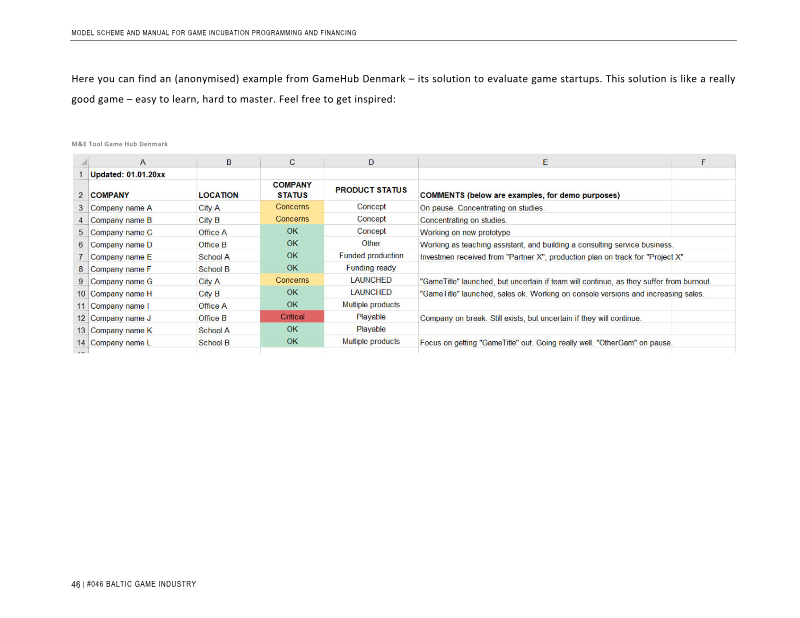
The Baltic Sea region is currently undergoing a strategic transformation aimed at establishing itself as a globally competitive hub for game development. By fostering durable incubation programs and specialized business support services, the region seeks to integrate policy and industry development to attract international investment and talent. The primary objective is to create a sustainable ecosystem where startups can navigate the complexities of business development, monetization, and professional growth through structured mentorship and cross-sector innovation, such as virtual reality applications. Successful incubation requires a blend of adaptive management and strategic partnerships, with programs often embedded within university ecosystems or technology parks to leverage existing infrastructure. Because no universal model exists, incubators must operate as professional, startup-like entities that utilize tools such as the Business Model Canvas to validate their operations. Financial sustainability is achieved through diversified revenue streams, including public grants, equity stakes, royalties, and service fees. These financial frameworks are bolstered by intensive networking with industry associations, government units, and established studios to provide the necessary mentorship and recruitment support for emerging developers. Long-term success depends on rigorous monitoring and evaluation systems that track both organizational and incubatee performance using quantitative and qualitative data. By setting SMART goals across ex-ante, mid-term, and ex-post horizons, incubators can pivot their strategies based on local demand or scale through internationalization and brand building. Ultimately, the evolution of these programs into comprehensive industry hubs—as evidenced by benchmarks like Digital Dragons and Game Hub Denmark—is essential for fostering a resilient regional game industry. Through continuous evaluation and community-building events like game jams, these incubators ensure that the Baltic region remains a unified, innovative, and attractive destination for the global gaming market.
BGI Project · 2020
WhitepaperGuideline for Set-Up and Maintenance of a Mentoring System for Game Business Incubation
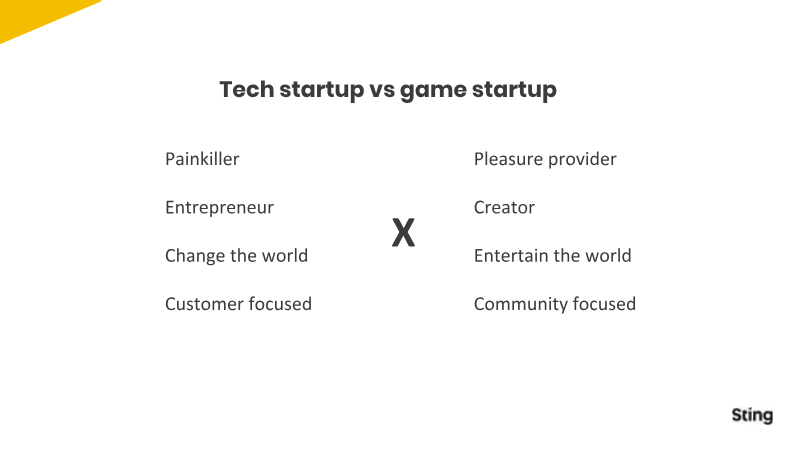
Establishing and maintaining a successful game business incubator requires a specialized framework that addresses the unique, multidisciplinary challenges of the gaming sector, such as rapid market volatility and complex monetization strategies. Unlike general technology incubators, effective game-focused programs must prioritize team dynamics, coachability, and long-term adaptability over the specific merits of a single game project. By analyzing local ecosystem gaps—such as shortages in senior talent or business acumen—incubators can tailor their support structures to foster sustainable growth and innovation. The operational core of these programs relies on a hybrid model that integrates dedicated in-house staff with external industry mentors. This approach utilizes a pull-based coaching philosophy, where mentors guide founders toward self-identified needs while leveraging local networks to facilitate knowledge sharing. As these ecosystems mature, transitioning successful alumni into mentor roles creates a self-sustaining cycle of expertise. Programs like Sting Game demonstrate the efficacy of this model by applying lean methodologies, such as Minimum Viable Product testing and the Hook Model, to validate business hypotheses and accelerate market entry for high-potential startups. Measuring the impact of these initiatives requires a dual-track approach that balances objective hard metrics—including profitability, funding acquisition, and company longevity—with subjective indicators like founder satisfaction and overall ecosystem health. While incubators provide the essential framework, advisory support, and access to capital, the ultimate responsibility for strategic development remains with the founders. Through the Baltic Game Industry project and similar regional efforts, these frameworks aim to professionalize the sector, ensuring that game development expertise is effectively integrated into the broader economy to drive long-term, scalable success across Northern and Baltic Europe.
BGZ Berliner Gesellschaft für internationale Zusammenarbeit mbH · 2020
WhitepaperManual on International Cooperation for BSR-Wide Game Business Development
The Baltic Sea Region (BSR) game development sector requires a unified, transnational approach to overcome the resource constraints and fragmentation inherent in local incubation environments. By fostering formal cooperation among incubators across eight countries, the region aims to transform from a collection of isolated hotspots into a cohesive global player. The core thesis posits that internationalization is not merely an advantage but a necessity for startup survival, requiring incubators to provide specialized support in culturalization, regulatory navigation, and global networking to ensure long-term industry growth. To achieve this, the initiative established the Baltic Sea Games umbrella brand, which serves as a strategic identity to increase visibility among international investors and policymakers. Pilot projects, including curated awards and joint exhibition appearances, have successfully reached over 600,000 people, demonstrating the efficacy of shared branding. However, sustaining this momentum requires moving beyond opportunistic partnerships toward formal governance structures. Collaborative efforts, such as transnational mentor training, shared knowledge repositories, and intensive 10–14 day bootcamps, are essential for bridging the gap between local incubation and the demands of the global market. Ultimately, the strategy focuses on creating a durable support ecosystem that encourages talent retention and attracts investment within the BSR. While regional diversity and competition from established industry brands present ongoing challenges, the integration of resources and the professionalization of management structures remain the primary drivers for success. By leveraging funding from the European Regional Development Fund, the project provides a comprehensive framework for incubators to standardize support services, thereby positioning the Baltic Sea region as a premier hub for game innovation and cross-industry VR applications.
Norsk Spill- og Multimedieforening · 2020
Report