PresentationSlovak Game Developers Association
Slovak Game Industry Infographic
20201 pages~3 min full read
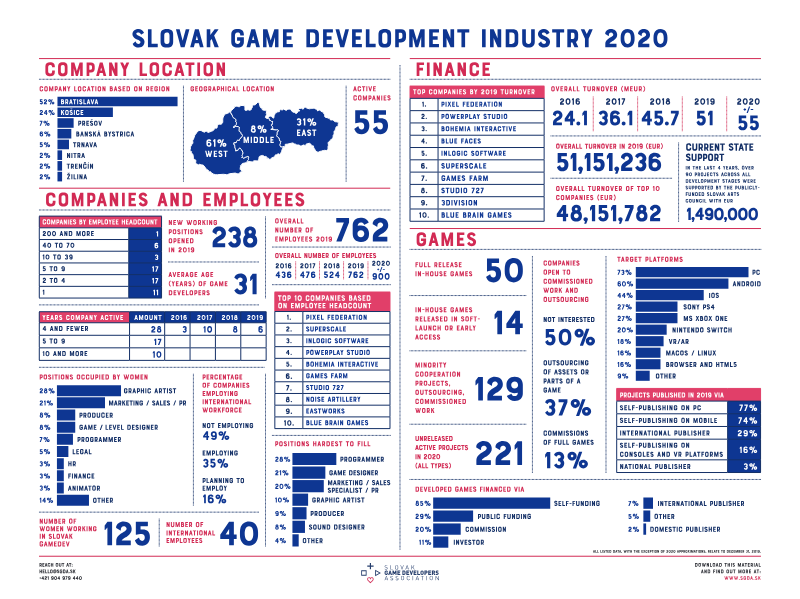
The Slovak game industry demonstrates consistent growth and professional maturation, characterized by a robust increase in both turnover and workforce capacity. As of the end of 2019, the sector comprised 55 active companies, with a significant geographic concentration in Bratislava, which hosts 52 percent of all firms, followed by Košice at 24 percent. The industry’s economic footprint is substantial, with the top ten companies generating over 48 million euros in annual turnover. Workforce development has kept pace with this expansion, as the total number of employees rose from 436 in 2016 to 762 by 2019, supported by the creation of 238 new positions in the final year of the reporting period.
Development activity remains diverse, with a strong emphasis on PC and mobile platforms. PC development leads the market at 73 percent, followed closely by Android and iOS at 60 percent and 44 percent, respectively. While self-publishing remains the dominant business model—utilized by 77 percent of companies for PC and 74 percent for mobile—the industry also leverages a mix of public funding, which supports 29 percent of projects, and commissioned work. Despite this growth, the sector faces talent acquisition challenges, particularly in filling roles for programmers, game designers, and marketing specialists.
The industry maintains a global outlook, with 40 international employees and a significant portion of the workforce engaged in outsourcing and international collaboration. Women represent a notable segment of the industry, occupying 129 positions, primarily within graphic arts, marketing, and production roles. With 221 active projects reported in 2020 and ongoing support from the Slovak Arts Council, the industry is positioned for continued development, balancing in-house creative output with strategic international partnerships and a diversified platform strategy.
Slovak Game Developers Association · 2024
Slovak Game Developers Association · 2023
Slovak Game Developers Association · 2022
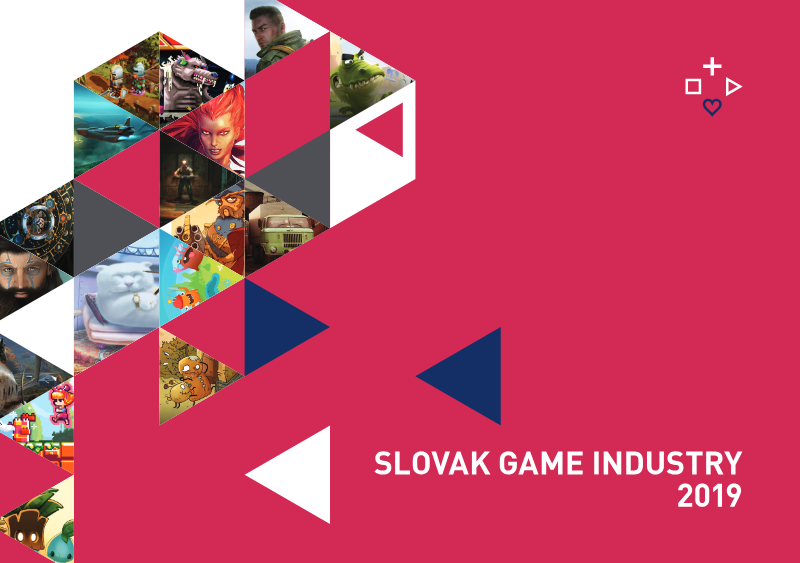
Slovak Game Developers Association · 2019
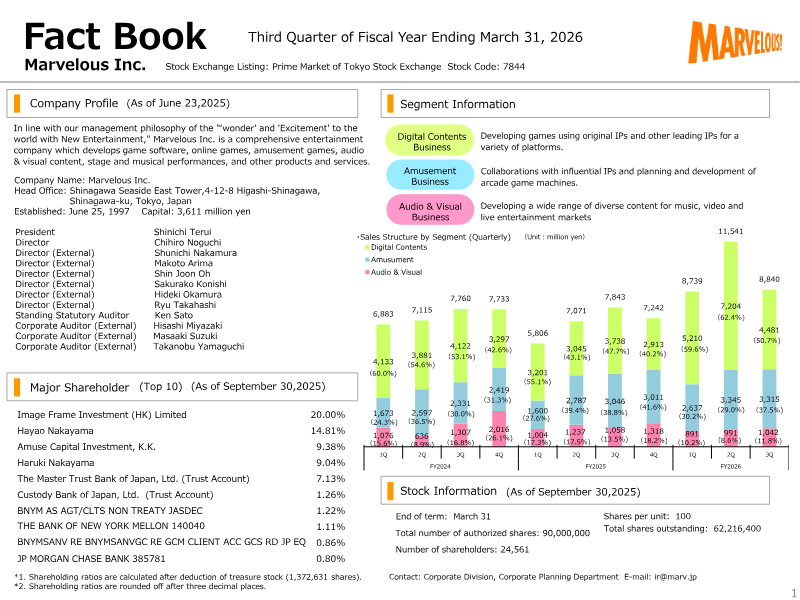
Marvelous · 2026
InvestGame · 2025
Direcció General d’Innovació i Cultura Digital · 2025
PCF Group · 2025
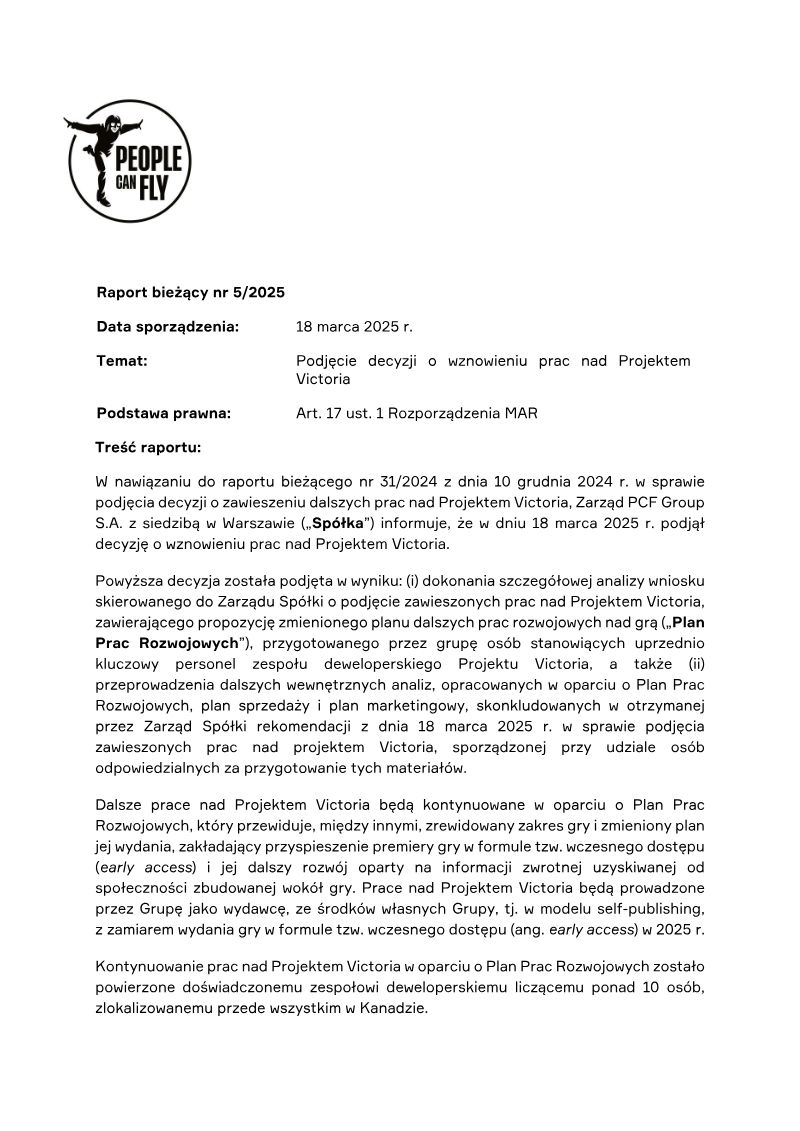
PCF Group · 2025
Remedy Entertainment · 2025
Polish Agency for Enterprise Development · 2025
Game Developer Collective · 2024
Swiss Game Developers Association · 2024
PCF Group · 2023
Slovak Arts Council · 2020
11 bit studios · 2019