
University of Jyväskylä
The University of Jyväskylä is a public research university in Finland with six faculties. In this context it publishes academic research, including an article on World of Warcraft and players' sense of belonging.
Documents
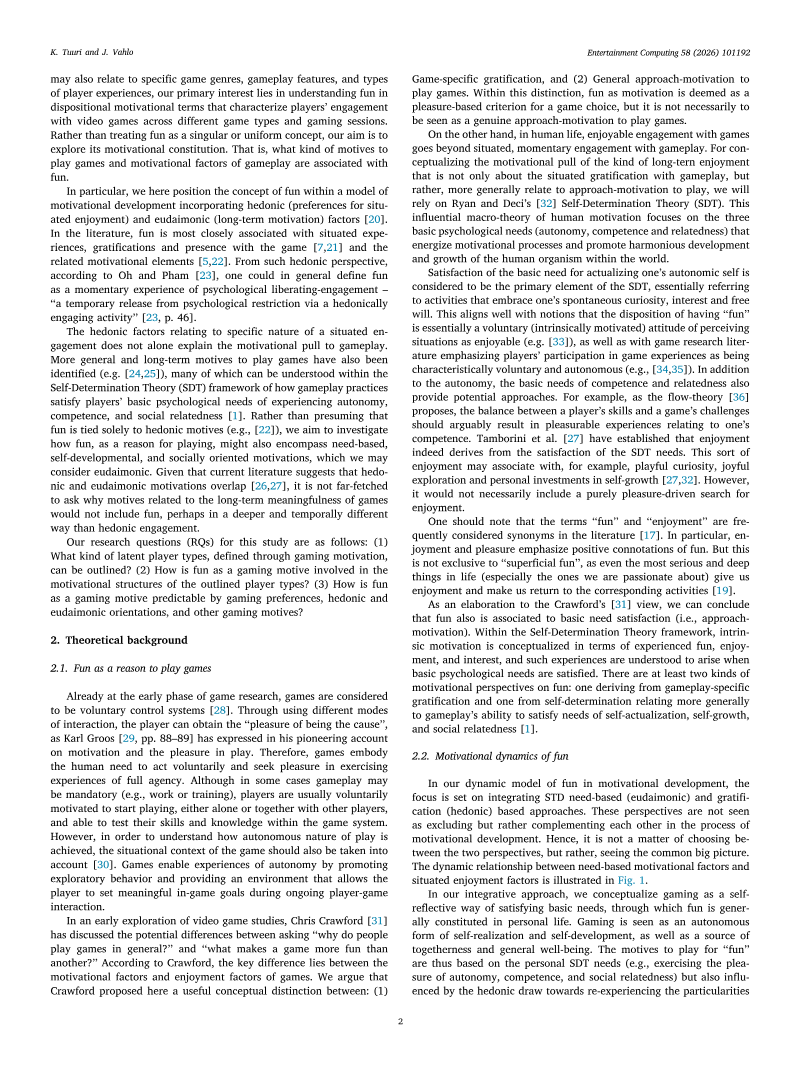
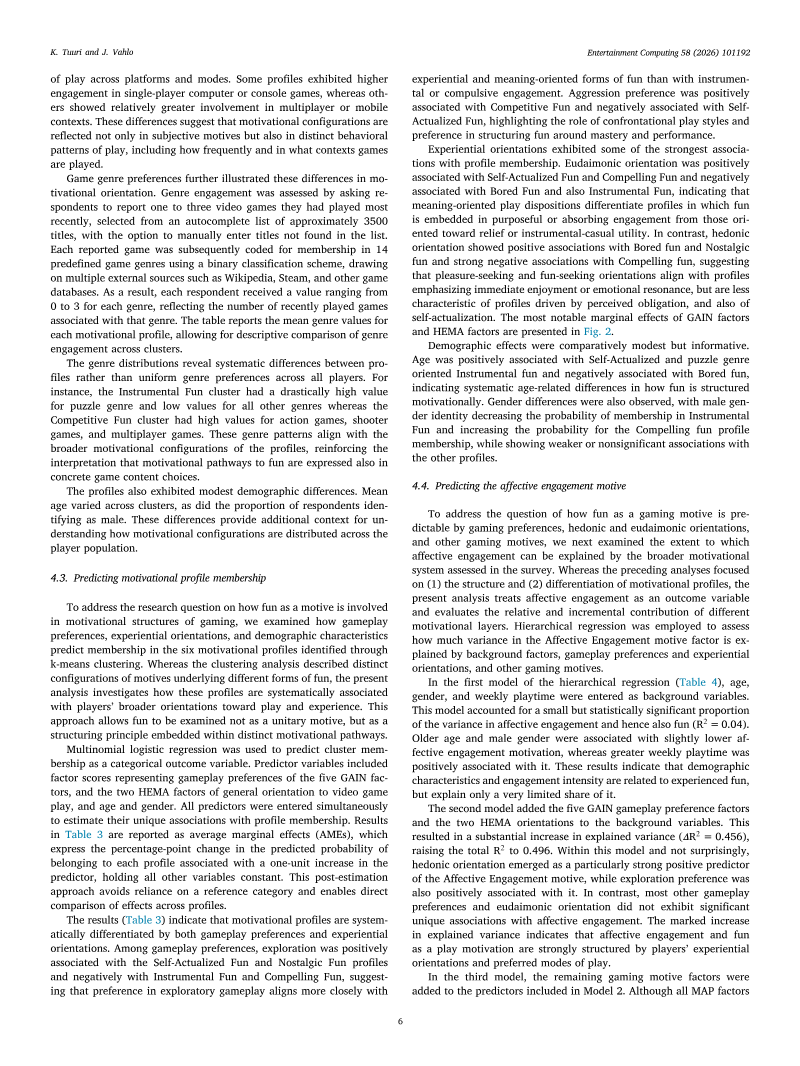
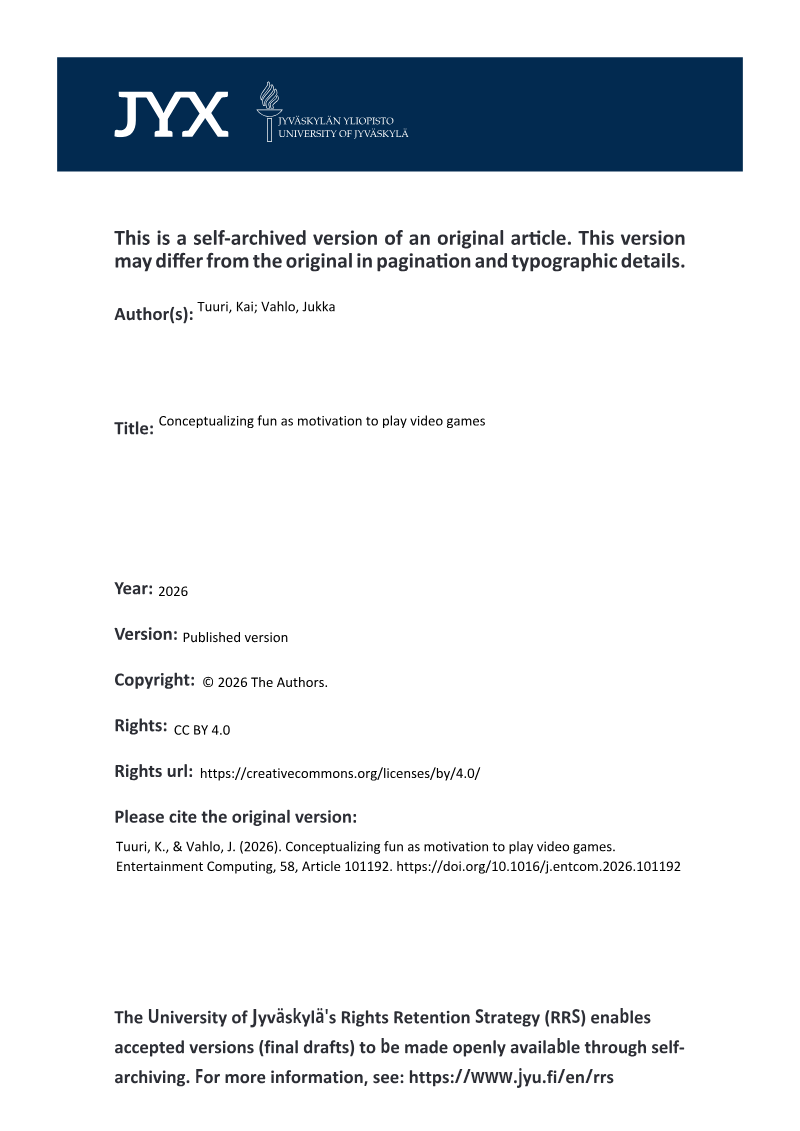
Conceptualizing Fun as Motivation to Play Video Games
Fun serves as the foundational motivational driver for video game engagement, acting as a multifaceted construct that bridges immediate hedonic pleasure with long-term eudaimonic fulfillment.
- Fun is not a singular, uniform motive but a foundational experiential principle that takes on distinct meanings depending on a player's underlying motivational profile.
- Six distinct player profiles emerge based on gaming motivations: Self-Actualized, Bored, Competitive, Instrumental, Compelling, and Nostalgic fun.
- Affective engagement (fun) is a universal driver of play, consistently high across all six identified player profiles regardless of specific motivational configurations.
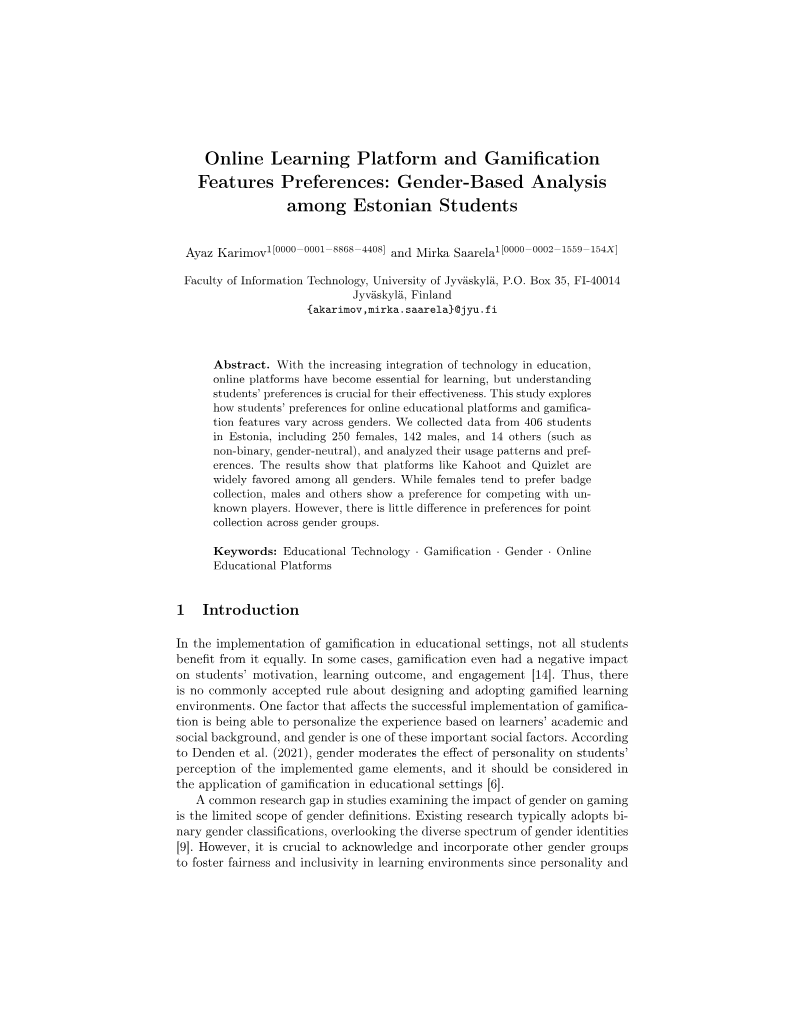
Online Learning Platform and Gamification Features Preferences: Gender-Based Analysis Among Estonian Students
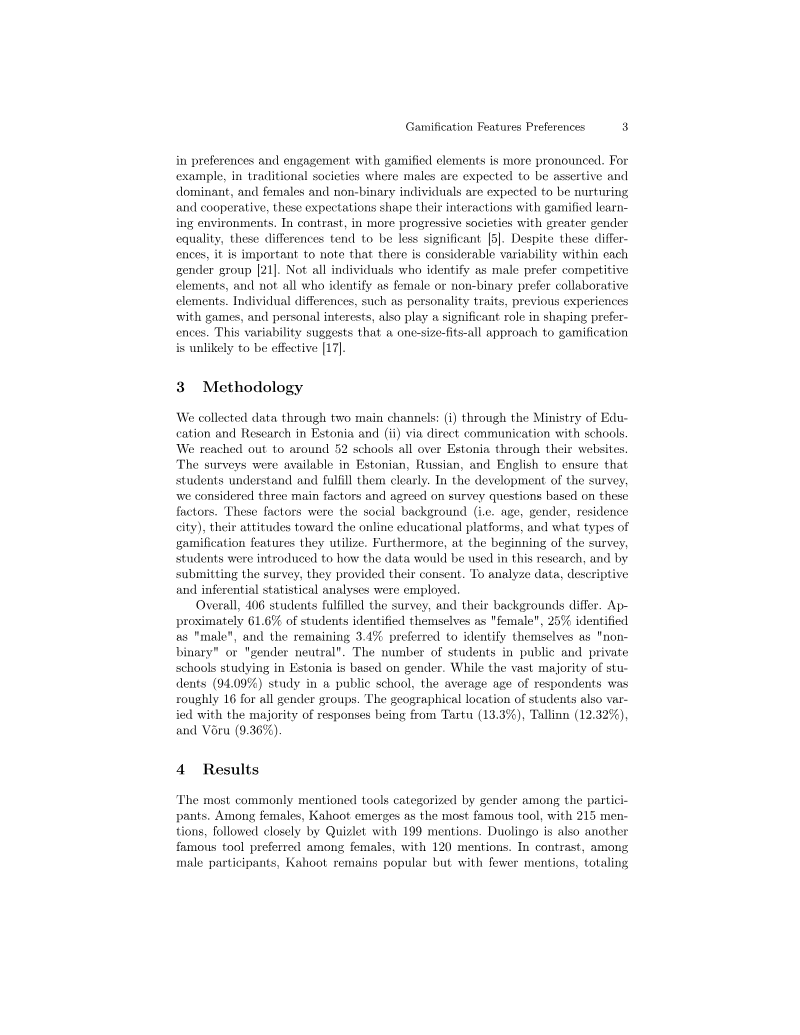
This study investigates how gender identity influences student preferences for online educational platforms and specific gamification features within the Estonian education system.
- Gamification preferences vary significantly by gender, with males and non-binary students showing a higher preference for competing against unknown players, while females demonstrate a stronger preference for badge collection.
- Point collection is a universally accepted gamification feature, showing no statistically significant difference in preference between male, female, and non-binary students (F=0.11, p=0.9).
- Kahoot and Quizlet are the most widely favored educational platforms across all gender groups, though females show higher engagement with tools like Duolingo.
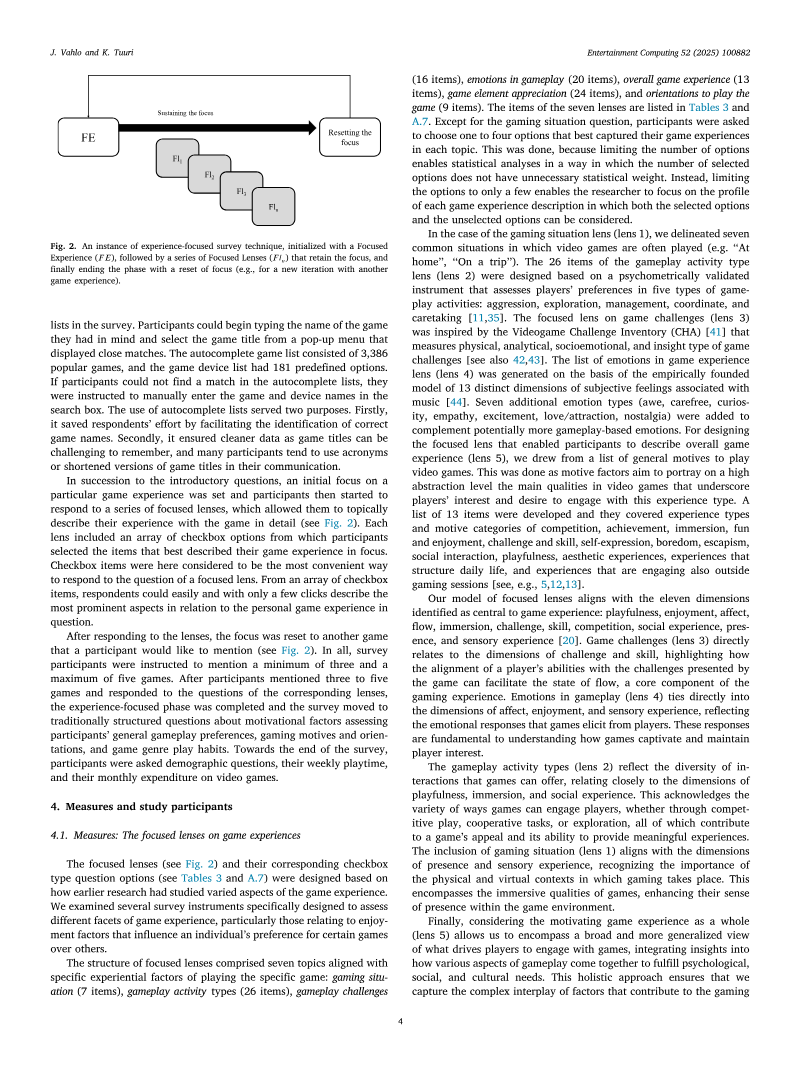
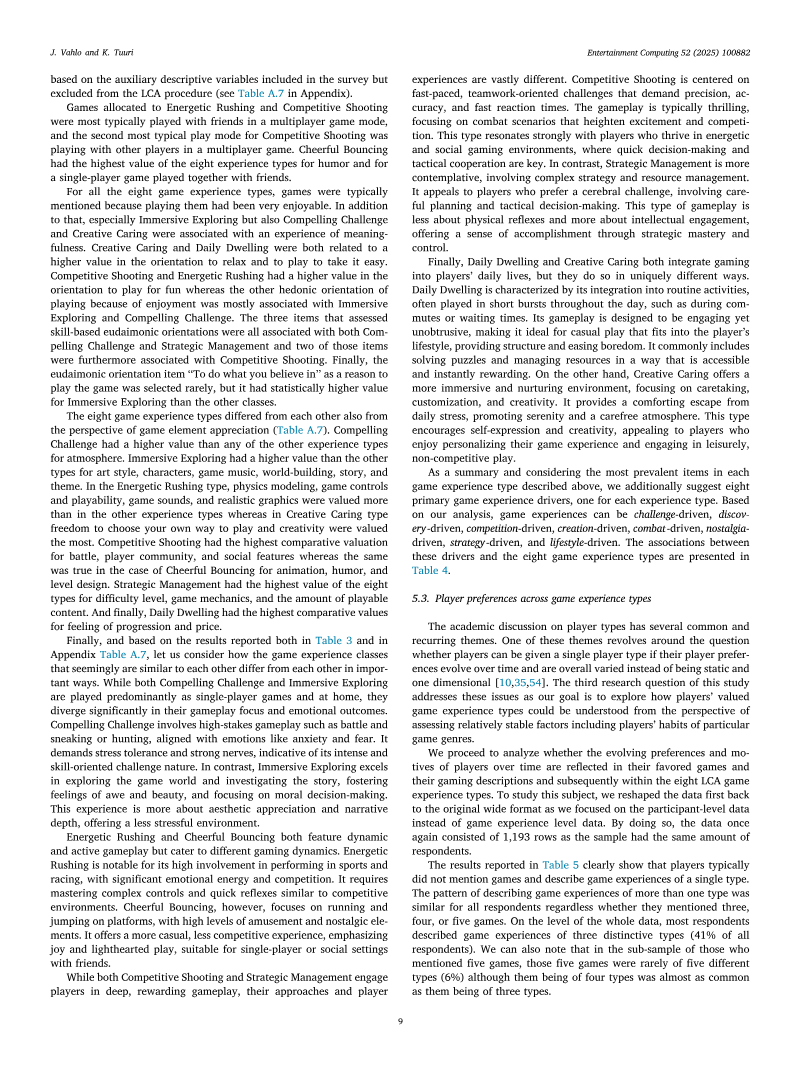
Eight Types of Video Game Experience
Video game engagement is defined by eight distinct experiential categories: Compelling Challenge, Immersive Exploring, Creative Caring, Energetic Rushing, Competitive Shooting, Cheerful Bouncing, Strategic Management, and Daily Dwelling.
Aesthetics of Agency and the Rhythm of Gameplay
The aesthetics of agency in digital games are best understood through the lens of rhythm, which functions as a continuous, temporal process rather than a series of static, isolated choices.
Becoming a Gamer: Performative Construction of Gendered Gamer Identities
The Finnish gaming industry functions as a site of performative identity construction where gendered norms are continuously negotiated against a backdrop of hegemonic, masculine-coded discourse.
- The gaming industry maintains a rigid hierarchy that privileges competitive, hardcore gaming while systematically devaluing casual play as feminized.
- Women in the professional gaming sector face a double bind where they must either adopt masculine standards to gain legitimacy or risk harassment and professional exclusion.
- Many women navigate industry barriers by reframing technical engagement as a creative and social pursuit, effectively challenging the traditional 'nerd' archetype.
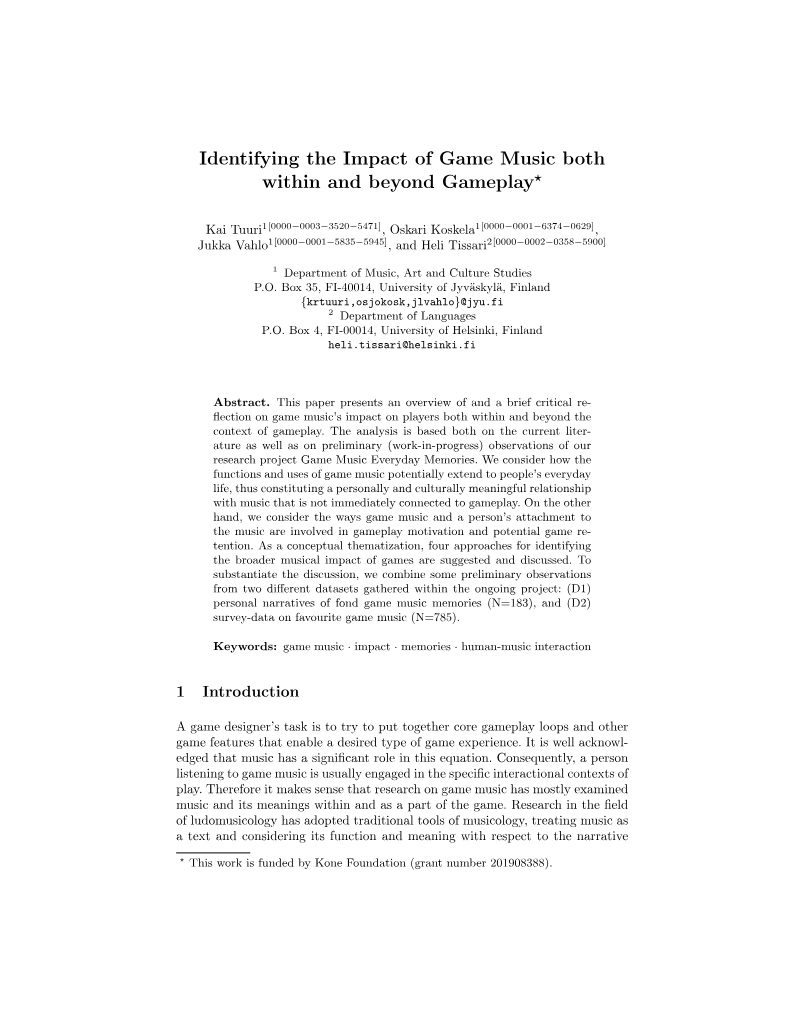
Identifying the Impact of Game Music both Within and Beyond Gameplay
This research explores the multifaceted impact of game music, challenging the traditional view that its function is limited to the gameplay experience.
Let's Play Tinder! : Aesthetics of a Dating App
Tinder functions primarily as a ludic artifact rather than a conventional romantic tool, utilizing design principles that prioritize sustained user engagement over successful interpersonal connection.
- Tinder functions primarily as a ludic artifact designed to prioritize sustained user engagement and platform retention over the facilitation of successful interpersonal connections.
- The application utilizes gamified mechanics, such as swipe logic, to create psychological feedback loops similar to those found in slot machines and video games.
- By framing social interaction as a mechanical, game-like interface, the platform incentivizes users to focus on the act of playing and strategic impression management rather than romantic outcomes.
Not Only for a Celebration of Competitive Overwatch but Also for National Pride: Sportificating the Overwatch World Cup 2016
The 2016 Overwatch World Cup serves as a definitive case study in the sportification of digital competition, illustrating how esports organizations intentionally adopt the production conventions of traditional athletics to secure professional legitimacy.
Azeroth the Homeland: World of Warcraft and the Sense of Belonging
Belonging to a place is conventionally tied to the nation-state, and this paper asks whether a virtual world can offer a different model.
- The paper argues that players of World of Warcraft (Blizzard Entertainment, 2004) come to regard its game world, Azeroth, as a homeland, a form of belonging that is simultaneously "here" and "elsewhere" and lacks clear physical borders unlike nation-states.
- The study uses autoethnography, based on the author's own play from 2013 to 2016, plus discussions with other players and commentary beneath YouTube videos of in-game content.
- Drawing on Donna Haraway's concept of figure, the author traces recurring rhetorical patterns, such as the repeated use of "Azeroth" in player discussions, while also identifying fractures and affective openings.
Do you work at University of Jyväskylä? Get a free report of how these documents are read and cited here.