The core thesis posits that human cognition functions similarly to file compression, where individuals simplify complex, unfamiliar information into manageable, pre-existing ideological frameworks. This process, often manifested through the creation or consumption of memes and online commentary, allows individuals to categorize new data within their established worldviews. When information is too abstract or alien to fit these existing mental models, individuals frequently default to filtering the news through their most prominent personal or societal anxieties, effectively compressing the narrative into a familiar, albeit potentially distorted, format.
This analytical framework is applied to the public reception of a February 2025 announcement regarding Microsoft’s advancements in quantum computing. Observations of reader comments on mainstream news coverage reveal that instead of engaging with the technical complexities of the breakthrough, audiences frequently reinterpreted the news through unrelated, pre-existing lenses—such as geopolitical paranoia, corporate skepticism, or environmental concerns. This behavior suggests that the psychological burden of processing nuanced, high-complexity information leads users to seek out socially validated, simplified perspectives that align with their internal operating systems.
The analysis highlights that while this cognitive shortcut provides a sense of relief and community, it carries the significant risk of obscuring the actual meaning of complex events. As societal uncertainty regarding technological progress grows, the tendency to rely on these reductive compression algorithms appears to intensify. Ultimately, the practice of scanning comments sections serves as a search for a "meme" that validates one's own perspective, prioritizing the comfort of familiar ideological alignment over the effort required to digest the broader, more complicated reality of the subject matter.
The viral success of a 15-second gameplay clip for the upcoming indie title TAMASHIKA serves as a case study for modern social media marketing in the game industry. Despite prevailing industry sentiment that X (formerly Twitter) has become ineffective for driving game sales due to algorithmic shifts, this specific post achieved significant reach. The clip’s success is attributed to its concise, high-impact presentation of the core gameplay loop, including combat mechanics and a clear call-to-action, which effectively captured audience attention within a short timeframe.
The post’s virality was further amplified by two unusual factors: a trend of other developers quote-tweeting the original post with their own 15-second clips, and an unexpected surge of hostile engagement. While the game faced vitriol and accusations of being derivative, this negative attention functioned as a form of free promotion, increasing the game's visibility. The developer, Tokyo-based indie creator vidhvat, suggests that the game’s vibrant, colorful aesthetic may have inadvertently triggered culture-war-related backlash, a phenomenon often observed in online discourse.
The impact of this viral moment was measurable, resulting in a reported 1,000% increase in Steam wishlists. While the developer notes that such spikes do not guarantee long-term success, the event highlights the continued potential for organic discovery on social platforms when content is perfectly tailored to the medium. The episode underscores the complex relationship between social media algorithms, community engagement, and the unpredictable nature of online discourse in the current indie game landscape.
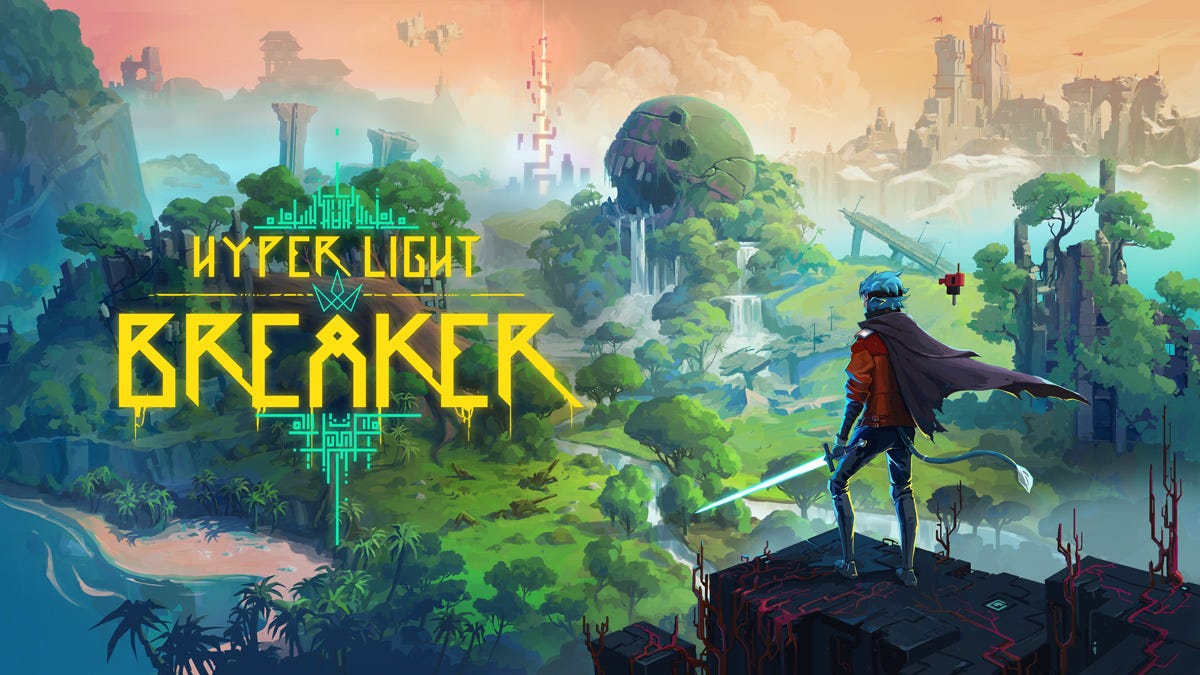
The interview with Heart Machine’s lead producer, Michael Clark, explores the studio’s strategy for navigating the challenging Steam Early Access launch of Hyper Light Breaker. Despite receiving mixed critical reception—currently holding a 63% approval rating based on over 2,500 reviews—the title maintains a reputation among players for having significant potential. The studio’s primary objective is to address community feedback regarding an uneven difficulty curve and core gameplay systems, such as perks and weapon durability, while committing to a substantial expansion of content, including new biomes, bosses, and playable characters.
The development of Hyper Light Breaker represents a strategic pivot for the Culver City-based studio, which moved toward procedural generation to avoid the rigid content creation requirements experienced during the development of its previous title, Solar Ash. This shift was documented extensively through collaborations with Noclip, providing transparency into the studio’s internal processes, including the difficult decision to implement staff layoffs. Clark emphasizes that the team prioritizes internal creative intuition over market-driven metrics, aiming to build a product that resonates with a core audience of dedicated fans rather than targeting the mass market.
The studio’s approach to the current development phase is characterized by humility and rapid iteration. By leveraging the Early Access model, the team is actively refining the game’s balance, acknowledging that previous attempts to adjust difficulty prior to launch were over-corrected. Ultimately, the studio remains focused on delivering a high-quality, escapist experience that rewards the faith of its existing player base. The ongoing development cycle is expected to span the next year, with a primary focus on improving player onboarding and significantly increasing the volume of available game content.
The independent game development sector faces a significant psychological and professional challenge when creators achieve a breakout, "canonical" hit. The primary thesis is that the immense pressure to replicate past success, combined with the financial security provided by long-term, perennial sales of a debut hit, often leads to creative paralysis or the cancellation of follow-up projects. This phenomenon creates a high-stakes environment where developers struggle to balance the expectations of a massive, established audience with the desire to innovate.
Key findings indicate that while games like Celeste, Hollow Knight, and Stardew Valley continue to generate significant monthly revenue years after release, this financial stability does not necessarily translate into easier development cycles for subsequent titles. Instead, the pressure to deliver a "bigger and better" product can become suffocating, leading to project cancellations or extended development delays. Data from SteamDB highlights that these canonical titles maintain consistent, high-volume sales, which paradoxically increases the burden of expectation on developers to maintain that level of performance.
The analysis also contrasts these experiences with smaller, successful studios like Red Nexus Games. Despite the success of Peglin, the studio’s follow-up title, Fowl Damage, struggled to gain similar traction, demonstrating that even well-reviewed games face significant hurdles in a crowded market where player attention is increasingly captured by established hits. The methodology relies on industry observation, anecdotal evidence from developer blogs, and public sales data from platforms like Steam. Ultimately, the industry remains a difficult landscape where the transition from a one-hit wonder to a sustainable, multi-title studio is fraught with both creative and market-driven obstacles.
The modern era is defined by an unprecedented deluge of information and entertainment options, creating a crisis of attention for the average consumer. As the volume of available media—ranging from books and podcasts to video games—has exploded, the ability to consume even a fraction of high-quality content has become impossible. This reality necessitates a shift toward intentionality, where individuals must exercise greater agency in selecting how they spend their limited time to avoid the pitfalls of passive, habitual consumption.
Data illustrates this shift in accessibility and scale. For instance, the Nintendo 64 library featured fewer than 300 titles over its entire lifespan, making it theoretically possible for a dedicated player to experience the system's entire catalog. In contrast, the modern gaming landscape is characterized by overwhelming volume, with Steam alone seeing over 19,000 new game releases in a single year. This saturation extends to digital media, where streaming services and subscription-based content models provide near-infinite access, often leading to a state of constant, fragmented distraction rather than meaningful engagement.
The central thesis posits that because time is finite—estimated at approximately 2,500 books for a 33-year-old individual—the only viable strategy for a fulfilling life is to curate one's consumption habits. By prioritizing specific interests, such as niche historical literature or novel indie video games, individuals can move away from the "doomscrolling" cycle and toward deeper, more rewarding experiences. Ultimately, the challenge lies in rejecting the pressure to keep pace with the infinite stream of content and instead reclaiming personal agency to focus on the pursuits that provide genuine value.
The 2024 retrospective of the Push to Talk newsletter serves as a summary of a year-long project dedicated to analyzing the video game industry through interviews, essays, and strategic deep dives. With over 50 weekly issues and 130,000 words published, the project has established a community of more than 4,000 subscribers. The primary objective is to move beyond surface-level industry reporting to explore the cultural and economic forces shaping game development, marketing, and player behavior.
The content is categorized into three distinct pillars: marketing strategy, industry culture, and analytical essays. Key themes include the challenges of modern game marketing, the difficulty of predicting commercial hits, and the impact of live-service models on player retention. The analysis highlights a growing interest in the "cultural superstructure" of gaming, featuring insights from diverse industry participants such as speedrunners, modders, esports hosts, and independent developers. Notable coverage includes the success of solo-developed titles like Lethal Company and the shifting power dynamics between traditional industry gatekeepers and independent creators.
The methodology relies on qualitative research, including long-form interviews and observational essays that synthesize industry data with expert perspectives. The scope of the work is global in its focus on the gaming industry, covering the 2024 calendar year. Looking ahead to 2025, the project intends to maintain its focus on marketing strategy while evolving its interview format into more observational, essay-driven pieces that integrate broader cultural and creative ideas. The project continues to position itself as a resource for those seeking a deeper, more critical understanding of the evolving games landscape.
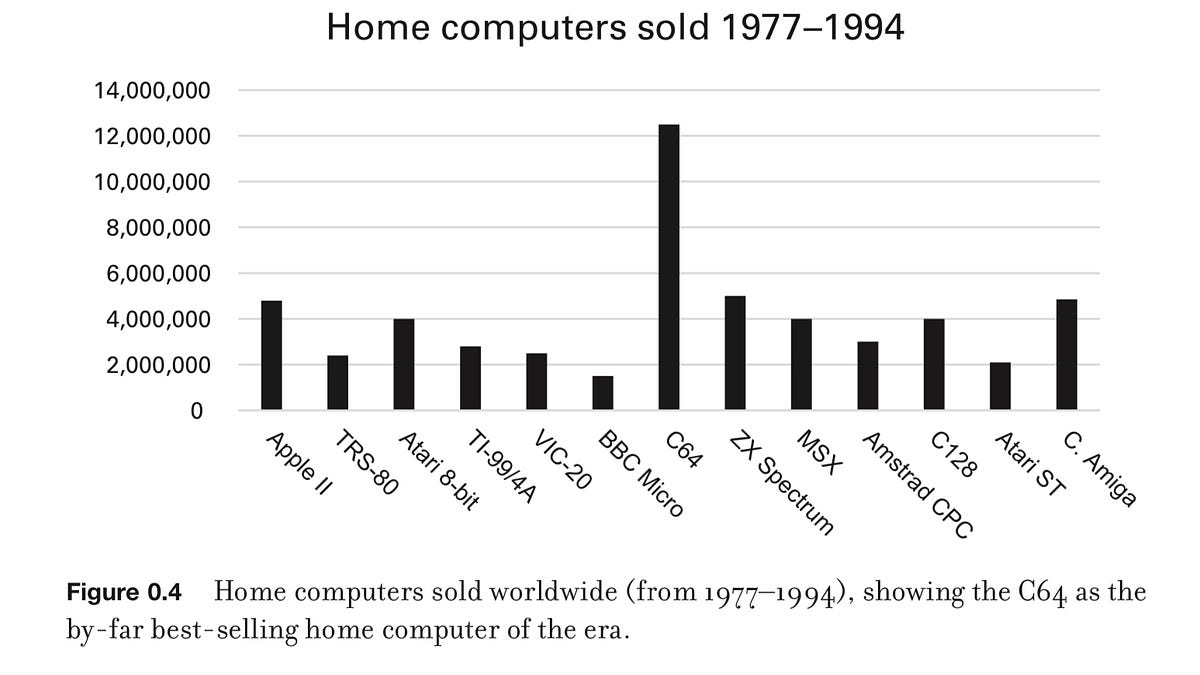
The book Too Much Fun: The Five Lives of the Commodore 64 Computer by academic and game designer Jesper Juul serves as a critical re-examination of the Commodore 64’s role in video game history. The central thesis challenges the prevailing industry narrative that the 1983 North American video game crash created a vacuum filled exclusively by the Nintendo Entertainment System. Juul argues that this perspective ignores the significant, ongoing influence of the Commodore 64, which remained a dominant force in the home computer market throughout the 1980s, representing over 31% of the U.S. home computer market as late as 1986.
Utilizing media archaeology, the work categorizes the history of the Commodore 64 into five distinct eras, ranging from its initial role as a functional home computer to its eventual status as a historical, stylistic artifact. The research highlights the platform's massive software library, which included over 5,000 published games—the largest of any platform prior to the MS-DOS era. To overcome the limitations of missing sales data due to rampant piracy, the analysis reconstructs popularity trends using historical reader surveys from the UK magazine Zzap!64.
Beyond technical history, the book explores the concept of technological imaginaries—the fictional or conceptual expectations that shape how users interact with hardware. A notable historical anecdote detailed in the text involves a missed business opportunity between Commodore and Nintendo. While some have speculated that CEO Jack Tramiel’s refusal to license Nintendo games was influenced by concerns regarding the organized crime associations of his existing partner, Bally/Midway, former Commodore product manager Michael Tomczyk clarifies that the decision was driven by professional loyalty and business ethics rather than fear.
The rise of automated discovery algorithms across digital media platforms has created a significant shift in how consumers find and engage with creative content. While platforms like Steam, Spotify, and Amazon utilize recommendation engines to suggest content based on past user behavior, these systems often suffer from inherent limitations, including a tendency to reinforce existing habits and a failure to surface genuine novelty. This creates a cycle of consumption that leads to user burnout, as audiences are repeatedly fed similar, algorithmically approved content rather than discovering new or unexpected works.
In response to this trend, human curators have emerged as essential intermediaries who provide a necessary alternative to automated systems. Effective curation functions by introducing serendipity and novelty, acting as a "lootbox" of discovery that operates independently of a user's established consumption history. Beyond simply finding hidden gems, skilled curators provide value by mapping conceptual connections between works, offering historical context, and articulating the relationships within creative traditions. This human-led approach avoids the rigid hierarchies often found in "best of" lists, instead fostering a deeper understanding of artistic evolution.
The influence of these curators remains powerful because they can shape cultural discourse and establish "grooves" in the collective consciousness, guiding audiences toward specific works through authoritative endorsement. As consumers become increasingly wary of the noise generated by algorithms and the influence of sponsored content, the role of the individual curator is expected to grow in importance. Ultimately, the long-term success of these tastemakers will depend on their personal credibility and integrity, as audiences continue to seek authentic, human-driven recommendations in an increasingly automated digital landscape.
The creative industries are undergoing a fundamental structural transition, shifting from a model defined by centralized publisher-led gatekeeping to one governed by algorithm-driven discovery. Historically, industry kingmakers exerted significant influence over the literary and entertainment landscapes, yet their ability to manufacture commercial success was consistently overstated. Data indicates that breakout hits have always been driven primarily by organic audience reception rather than marketing spend or editorial endorsement. As the influence of these traditional intermediaries has eroded since the early 2000s, the industry has moved toward a more volatile, hyper-competitive environment where established creators and newcomers alike struggle to guarantee commercial viability.
This democratization of content creation has successfully lowered barriers to entry, allowing for unprecedented accessibility across global markets. However, the removal of traditional editorial oversight has resulted in extreme market saturation. The current landscape is characterized by a glut of content that complicates the discovery process for audiences, who must now navigate an overwhelming volume of material to find high-quality work. Without the structured career paths and guidance once provided by institutional gatekeepers, creators are increasingly forced to rely solely on the intrinsic quality of their output and their ability to navigate algorithmic visibility.
Ultimately, the decline of the gatekeeper has replaced a rigid, exclusionary system with a more democratic but inherently unstable ecosystem. While the shift empowers creators to bypass traditional hurdles, it simultaneously places the burden of discovery and promotion entirely on the individual. The industry now functions as a high-stakes meritocracy where the absence of institutional curation creates a paradox: while more content is available than ever before, the lack of reliable filters makes it increasingly difficult for both creators to find their audience and for consumers to identify quality amidst the noise.
Game development success relies on the strategic synthesis of a singular, passionate creative vision and objective market validation. Rather than allowing external data to dictate core design choices, developers should utilize market signals—such as playtest feedback and social media engagement—as diagnostic tools to refine execution and identify potential flaws. This iterative approach ensures that a project remains grounded in its original intent while simultaneously mitigating the risk of launching a product that fails to connect with a viable audience.
The process of constructing a formal publisher pitch deck serves as a critical exercise in achieving this necessary clarity. By distilling a game’s core loop, unique value proposition, and market positioning into a concise format, developers can effectively pressure-test their concepts. Analyzing successful case studies, such as the development of Mars First Logistics, reveals that a well-structured pitch is not merely a fundraising instrument but a foundational planning tool. This exercise forces a rigorous examination of scope and audience appeal, which in turn highlights the specific metrics and signals that require validation during the early stages of production.
Ultimately, the most effective development strategies prioritize a balance between creative conviction and analytical rigor. By treating market signals as traffic lights that guide the development process rather than blueprints for design, teams can maintain the integrity of their vision while ensuring the final product resonates within the competitive landscape. This methodology provides a framework for developers to navigate the complexities of the modern gaming market, fostering a disciplined approach that aligns artistic ambition with commercial viability.
Determining the quality of a video game during development is a persistent challenge for creators, as the specialized nature of production often obscures whether individual components will coalesce into a successful final product. This analysis explores how creative leads from diverse projects—including Apex Legends, Caravan SandWitch, and the Age of Empires series—identify signs of potential success amidst the uncertainty of the development cycle.
The primary thesis is that while there is no singular, objective metric for success, developers can identify "magic moments" where the project transcends its technical state. Key findings suggest that internal playtesting serves as the most reliable indicator; when team members choose to play the game voluntarily after hours, it signals that the core experience is engaging. For shooters like Apex Legends, this involves rigorous iteration on "game feel," such as movement and input responsiveness, while for narrative-driven or strategy titles, it involves reaching a threshold where content is sufficiently polished to allow for strategic depth or immersive exploration.
The contributors emphasize that while metrics are useful for identifying specific friction points or areas to avoid, they should not dictate the core creative vision. Instead, developers are encouraged to trust their intuition and personal commitment to a design hypothesis. By focusing on a clear target audience and refining the experience through iterative playtesting, teams can validate their vision rather than relying on external market research to generate ideas. Ultimately, the consensus among industry veterans is that success is best achieved by prioritizing a passionate, cohesive vision over data-driven compromise.
The speedrunning community recently witnessed a historic achievement in Super Mario 64, as a 19-year-old Canadian gamer known as Suigi set a new world record in the highly competitive 120-star category. Despite a difficult start to the run that nearly led to a reset, Suigi executed a near-perfect performance in the latter half, ultimately beating the previous world record by 29 seconds. This feat solidifies his status as a dominant force in the speedrunning scene, as he currently holds the fastest times in four of the five major Super Mario 64 categories.
The success of this record-breaking run is attributed to a combination of rigorous, goal-oriented practice and the evolution of speedrunning techniques. The community has significantly advanced its capabilities through collaborative efforts, such as the 2023 discovery of the "carpetless" maneuver, which utilized bot-driven simulations to identify new movement paths. Suigi’s approach to these challenges involves a deliberate, data-driven methodology, where he breaks down game segments into specific targets and practices them until he achieves consistent, high-level performance.
This analysis highlights the collaborative and iterative nature of modern speedrunning, where players build upon decades of community-developed strategies and glitches. Suigi’s career, which includes an estimated 5,500 hours of playtime in a game released nearly a decade before his birth, underscores the dedication required to reach the pinnacle of the discipline. As he prepares for live competitive events, his trajectory remains a primary example of how focused, analytical practice can push the boundaries of human performance in classic video games.