The emergence of AI-generated content in the gaming industry has sparked significant debate regarding the authenticity and feasibility of digital art. The central focus is a viral, five-second video clip generated via Midjourney that initially misled many viewers into believing it was a playable game. The creator of this clip, a software engineer operating under the handle "Desimulate," leveraged the intense online reaction to the post to launch a new game studio, despite the fact that the original viral imagery was entirely synthetic.
The industry response to the clip was polarized, with observers debating whether the visual style was derivative, impossible to replicate, or a new aesthetic frontier. The creator’s subsequent decision to form a studio to build a game based on the concept—while explicitly committing to a development workflow that excludes AI tools—highlights a unique approach to market validation. By using AI to generate high-engagement visual concepts, the developer effectively crowdsourced interest and demand before beginning actual production.
The methodology behind the viral clip involved extensive A/B testing of over 15,000 prompts and the mining of 5,000 custom style reference (SREF) codes within Midjourney. While the creator acknowledges that current AI tools lack the technical performance required for complex 3D game development, the project serves as a case study in using synthetic media as a marketing engine. The developer’s transition from an AI enthusiast to a traditional game developer underscores a growing trend where creators leverage viral social media traction to secure community interest and build momentum for independent projects.
The proliferation of generative AI in digital media has introduced a significant cognitive burden, characterized as AI squinting—the constant, exhausting mental effort required to verify the human or synthetic provenance of content. This phenomenon affects both creators and consumers, as the ubiquity of AI-generated text, imagery, and media forces individuals to scrutinize even mundane interactions for signs of automation. The resulting skepticism creates a pervasive sense of cognitive dissonance, as users struggle to maintain trust in the authenticity of the information they encounter online.
Within the video game industry, this trend is actively eroding professional motivation. Industry participants, such as content creators and reviewers, report increasing frustration with the influx of AI-assisted game development, which is perceived as a cost-cutting measure that devalues human artistry. This disillusionment is compounded by a lack of transparency, as many developers fail to disclose AI usage, forcing critics to spend excessive time vetting games. Consequently, some professionals are experiencing a decline in their interest toward the medium, as the effort required to navigate a synthetic-heavy landscape outweighs the rewards of engagement.
The long-term outlook suggests a shift in digital consumption habits. While a portion of the audience may remain indifferent to the synthetic nature of content, a significant segment is expected to withdraw from open web platforms in favor of private, curated, or human-centric spaces. This migration reflects a growing demand for cognitive security, as users seek to escape the exhaustion of constant verification. Ultimately, the rise of AI in media is likely to accelerate the fragmentation of digital communities, as the perceived loss of truth and authenticity drives audiences toward more controlled and verifiable environments.
The video game industry is currently facing a systemic crisis of oversupply, where the volume of new game releases significantly outpaces consumer demand. This imbalance mirrors challenges in the book publishing sector, where a vast majority of titles fail to achieve commercial success. While YouTube has historically served as a critical discovery engine for indie games—with 64% of gamers identifying the platform as their primary source for new game information—the sheer quantity of daily releases has overwhelmed content creators, rendering the existing discovery infrastructure increasingly ineffective.
Industry data highlights the severity of this saturation. While the number of games released on Steam continues to climb, the count of successful titles—measured by those achieving over 1,000 reviews—has remained stagnant. Content creators, such as those managing channels with hundreds of thousands of subscribers, report receiving over 100 pitch emails daily during peak periods, forcing them to filter content aggressively. Consequently, creators are increasingly incentivized to cover games that already demonstrate market traction rather than acting as early-stage discovery agents for unknown titles.
The traditional model of streamer sponsorships is also failing to bridge this gap. Developers report that the cost of sponsoring content often outweighs the resulting sales, as creators are selective and audiences prioritize established hits. This shift forces a reversal in the discovery pipeline: rather than a YouTuber’s coverage causing a game to "pop off," creators now prioritize games that are already trending. Ultimately, the current ecosystem lacks the capacity to support the volume of indie titles entering the market, leaving many developers without a viable path to visibility.
The success of the indie game Balatro serves as a case study for the critical role of organic word-of-mouth in modern game discovery. Despite the developer, LocalThunk, being an unknown entity, the game achieved significant commercial success, selling over 5 million copies on Steam. The analysis highlights that traditional outreach methods, such as cold-emailing streamers with Steam keys, are increasingly ineffective due to the high volume of daily solicitations received by content creators.
The primary catalyst for Balatro’s growth was an inflection point occurring between June and July 2023, where the game’s Steam wishlists surged from 183 to nearly 30,000. This growth was driven by streamer Dan Gheesling, who discovered the game not through a formal pitch, but via a recommendation in his community Discord server. This underscores a shift in how influential creators identify new titles, relying heavily on trusted community feedback rather than direct marketing efforts.
The findings suggest that the foundational layer of a game’s success is its ability to generate genuine enthusiasm among early players. LocalThunk’s experience demonstrates that positive feedback from a small group of initial testers can create the momentum necessary to attract larger influencers. Ultimately, while marketing and publishing support play a role, the ability of a game to inspire players to advocate for it remains the most vital factor in achieving breakout status in a saturated digital marketplace.
Effective game marketing relies on concise, high-impact communication rather than exhaustive detail. By analyzing a successful outreach campaign for the game Spellmasons, which generated 6,000 Steam wishlists and significant YouTube coverage, it becomes clear that developers often over-communicate. The most effective pitch emails are brief, typically under 300 characters, and focus on two primary objectives: demonstrating a unique gameplay hook and providing a clear, immediate call to action.
The case study highlights the strategic use of visual assets, specifically a five-second gameplay GIF, to instantly convey the game's core appeal. By withholding Steam keys in the initial outreach, developers can create a barrier that encourages direct, warmer communication with content creators. This approach transforms a transactional cold email into a relationship-building opportunity, allowing for more personalized follow-ups, such as invitations to private Discord channels or exclusive preview events.
The analysis emphasizes that successful marketing funnels in the gaming industry prioritize awareness and interest through brevity. By avoiding unnecessary backstory and focusing on the "what" and "next steps," developers can effectively capture the attention of busy influencers. Ultimately, the quality of the game's hook and the clarity of the pitch are the primary drivers of conversion, proving that professional communication strategies can significantly amplify organic reach without the need for bloated press kits or excessive upfront disclosure.
The traditional media landscape is undergoing a structural shift as the reliance on broad-audience, ad-driven revenue models faces increasing competition from specialized, subscription-based platforms. Legacy media figures often misinterpret this transition by applying outdated metrics of volume and general reach to independent newsletters. In reality, the modern creator economy thrives by cultivating highly specific, niche audiences that prioritize direct access to specialized expertise over the mass-market appeal required by institutional publications.
Writers should abandon the false dichotomy that forces a choice between legacy outlets and independent platforms. Instead, a hybrid approach allows creators to leverage the institutional credibility of established media while simultaneously capturing the direct financial value of a dedicated subscriber base. By moving beyond 20th-century institutional thinking, writers can achieve greater autonomy and financial stability. This evolution reflects a broader trend toward deprofessionalization in the industry, where the value of content is increasingly defined by the strength of the relationship between the creator and the reader rather than the prestige of the publication house.
This analysis focuses on the evolving business models within the digital journalism and commentary sectors, specifically examining the tension between traditional media and independent platforms like Substack. By prioritizing flexible distribution and direct monetization, writers can better navigate the current market landscape. Ultimately, the shift toward niche, audience-centric models represents a fundamental realignment of how specialized content is produced, distributed, and valued in the digital age.
The development of the Playdate handheld console represents a decade-long, unconventional hardware project for Panic, Inc., a company historically focused on software and indie game publishing. The project originated in 2012 as a commemorative effort for the company’s 15th anniversary, drawing inspiration from vintage Nintendo Game & Watch devices. The core philosophy behind the Playdate centers on intentional limitation, utilizing a monochrome screen and physical crank to offer a distinct, distraction-free gaming experience that contrasts with modern smartphone-based play.
The project faced significant operational hurdles, most notably during the COVID-19 pandemic, which disrupted supply chains and forced a mid-production transition to a new CPU architecture. This engineering challenge required six months of intensive work to maintain performance consistency across units. Despite these obstacles, the platform has fostered a robust developer ecosystem, currently hosting over 300 games in its official catalog and approximately 1,300 titles on third-party platforms. The company credits the financial success of its publishing arm, specifically the revenue generated by Untitled Goose Game, as a critical factor in sustaining the Playdate’s development.
Panic maintains that there are no current plans for a successor device, emphasizing that the platform’s value lies in its specific constraints rather than technological advancement. The company’s strategic focus for the coming year is to expand the Playdate’s reach beyond its existing enthusiast base to a broader audience. By prioritizing unique, hook-driven game design and maintaining a commitment to the device's original vision, Panic continues to treat the Playdate as a specialized, long-term creative endeavor rather than a traditional mass-market hardware product.
The gaming industry is currently witnessing a significant shift in consumer priorities, where high-fidelity graphics are increasingly decoupled from a game’s commercial success and player engagement. The central thesis posits that younger generations, in particular, prioritize gameplay mechanics, accessibility, and social experiences over technical graphical prowess. This trend is evidenced by the massive popularity of titles like Grow a Garden, which achieves concurrent player counts exceeding the top ten games on Steam despite having rudimentary visual design.
This shift marks a departure from the industry’s historical trajectory, where each console generation was defined by a clear, objective leap in visual quality that served as a primary driver for consumer adoption. Today, the ubiquity of high-quality visuals has rendered them a baseline expectation rather than a competitive differentiator. Consequently, players are demonstrating a renewed appreciation for older titles and intentionally stylized games that favor distinct aesthetics over photorealism.
The analysis draws on anecdotal evidence and observations of contemporary gaming habits, noting that even when provided with high-end hardware capable of maximum graphical settings, younger players often gravitate toward simpler, more accessible experiences. This behavior suggests that the "graphics arms race" has reached a point of diminishing returns for a large segment of the audience. Ultimately, the industry is moving toward a landscape where technical fidelity is secondary to the core interactive experience, mirroring the evolution of other entertainment media where production value no longer guarantees audience interest.
The Playdate handheld console serves as a case study for the creative potential of hardware limitations in an industry otherwise dominated by trends toward larger budgets and expansive scale. By examining the platform’s ongoing Season Two content, the analysis highlights how developers are utilizing the device’s 2.7-inch, 400x240 black-and-white screen to push technical boundaries while maintaining a focus on precision and clarity. Rather than viewing the console’s constraints as obstacles, creators leverage them to refine design focus, optimize performance, and explore unique input mechanics like the device’s signature crank.
Key findings from interviews with developers, including those from Subset Games and Scenic Route Software, indicate that the platform’s limitations foster a distinct, satisfying problem-solving environment. Developers report that the small, niche user base simplifies testing and allows for a more intimate, focused design process compared to the complexities of multi-platform development. Despite the device’s modest scale, the ecosystem has matured significantly, with over 70,000 units sold and more than 250 releases available on the platform, resulting in over $1 million in total payouts to developers.
The analysis concludes that the Playdate has evolved into a legitimate, collaborative platform that functions as a modern, physical equivalent to a curated collection of classic games. While the console is often marketed as a playful, non-serious device, the depth of the software library and the dedication of its developer community suggest a need for a critical reassessment of its role in the industry. The platform demonstrates that meaningful, high-quality gaming experiences can thrive within strict technical boundaries, offering a compelling alternative to the industry’s broader obsession with commercial metrics and ever-increasing production scales.
Nintendo remains a singular entity in the modern video game industry by maintaining a strict hardware-exclusive business model. While competitors like Microsoft and Sony have increasingly moved toward hardware-agnostic strategies—porting flagship titles to PC or competing platforms—Nintendo continues to tether its software library exclusively to its proprietary consoles. This approach, which has defined the company’s operations since the 1983 launch of the Famicom, persists even as the broader entertainment landscape shifts toward platform-independent access for media like music and film.
The company’s history of hardware-software integration spans five decades, beginning with early projector-based systems in the 1970s and evolving through various arcade and home console iterations. This strategy has historically been the industry standard, where platform holders relied on first-party exclusives to drive hardware sales. However, the current market is experiencing a significant transition as major publishers abandon traditional exclusivity in favor of wider distribution. The recent release of the Switch 2 highlights Nintendo’s commitment to this legacy model, as the company continues to successfully leverage its intellectual property to incentivize consumer investment in its specific hardware ecosystem.
Ultimately, Nintendo stands as the last major developer to prioritize the hardware-exclusive model as a core pillar of its business. While the industry at large trends toward a future where content is accessible across diverse devices, Nintendo’s ability to sustain its traditional playbook remains a notable outlier. The continued consumer demand for its proprietary platforms suggests that, for now, the company’s strategy of bundling exclusive software with dedicated hardware remains a viable and effective market position.
The current digital distribution landscape for PC gaming is heavily influenced by Valve’s Steam platform, which maintains a dominant market position by leveraging long-term user lock-in and a robust feature set. The central thesis posits that Valve’s standard 30% revenue-share fee acts as a regressive tax on small developers, who are effectively forced to accept these terms to reach the platform’s massive, entrenched audience. While Valve previously introduced a tiered fee structure—reducing commissions to 25% for revenue over $10 million and 20% for revenue over $50 million—these concessions primarily benefit large, established developers rather than the independent creators who represent the vast majority of titles on the platform.
The industry’s 30% fee standard, which traces its roots back to early arcade licensing and digital storefront precedents like iTunes, remains largely unchallenged in the PC space. Despite the launch of the Epic Games Store, which offers a more favorable 88/12 revenue split, it has failed to capture significant market share from Steam. Data indicates that Steam generated approximately $14.1 billion in 2024, while the Epic Games Store reported significantly lower third-party spending. This disparity highlights the difficulty of competing against the network effects and user loyalty cultivated by Steam over its 22-year history.
Ultimately, the lack of meaningful competitive pressure allows Valve to maintain its fee structure without further concessions. This creates a precarious financial environment for small developers, who often retain only a fraction of their gross earnings after platform fees and operational costs. The analysis suggests that without external intervention from regulators or a shift in market dynamics, the current 30% standard will persist, continuing to place a disproportionate financial burden on smaller, independent game studios.
The global games industry is currently undergoing a significant structural shift characterized by the fragmentation of large-scale, triple-A development and the rise of a decentralized, indie-centric model. This transition, described as the deprofessionalization of the industry, reflects a move away from massive corporate studios toward smaller, artist-led teams. This trend is not entirely new; it mirrors the collapse of the Australian games industry following the 2008 global financial crisis, which forced developers to abandon large-scale, work-for-hire models in favor of independent, self-financed projects.
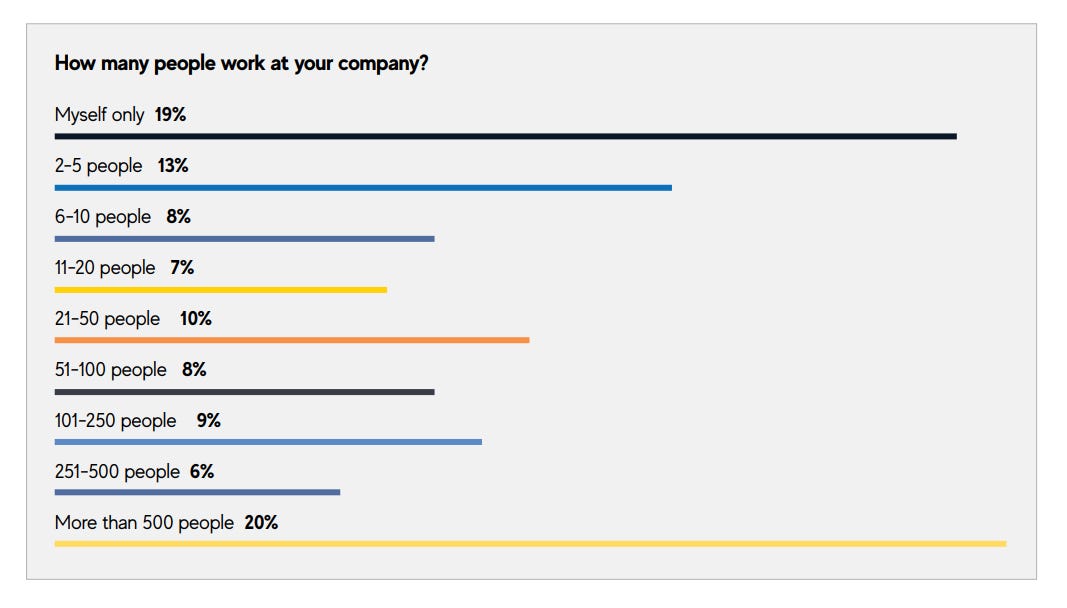
The analysis draws on extensive qualitative research, including interviews with over 400 developers across Australia, Europe, and North America. Data from the 2021 State of the Game Industry report highlights that even prior to recent market volatility, a majority of developers worked in studios with five or fewer employees, contradicting the popular perception of the industry as dominated by mega-corporations. This shift is driven by the accessibility of development tools like Unity and Unreal, alongside digital distribution platforms that allow small teams to reach global markets without traditional publishing support.
The current struggle of Western triple-A studios is attributed to the diminishing returns of technology-driven demand. Historically, publishers generated growth by marketing incremental graphical and technical improvements; however, as hardware advancements have plateaued, this model has become unsustainable. Consequently, risk is increasingly outsourced to independent developers, who operate within a high-stakes, power-law-driven economy. The analysis concludes that the industry is evolving into a model more akin to the music industry, where success is defined by creative output from small, non-scaling clusters rather than the perpetual expansion of corporate headcount.