The primary objective of this analysis is to identify effective strategies for indie game developers to secure their initial 1,000 players and build sustainable community momentum. The central thesis posits that while initial marketing tactics vary—ranging from social media campaigns to participation in industry showcases—successful titles eventually converge on a common growth trajectory. This path involves securing enough pre-launch wishlists to trigger Steam’s "New & Trending" algorithm, which subsequently attracts content creators and initiates a self-sustaining cycle of word-of-mouth growth.
Key findings emphasize the importance of visibility through boutique industry events. For instance, the horror game White Knuckle achieved nearly 1,000 wishlists and demo downloads shortly after participating in the Indie Horror Showcase, which provided critical placement on a Steam event page. This initial traction served as the catalyst for subsequent waves of growth driven by high-profile content creators, such as Markiplier, whose coverage significantly amplified the game's reach. The analysis also highlights a practical Discord onboarding technique: prompting new members to identify how they discovered the game. This method provides developers with direct, timestamped data on their acquisition sources, allowing for a clearer understanding of which marketing efforts are yielding results.
The scope of this research covers the indie game sector, specifically focusing on the early-stage launch phase on the Steam platform. The methodology relies on qualitative interviews with developers of successful indie titles, including Loddlenaut, Lil Gator Game, SKALD: Against the Black Priory, Chants of Sennaar, and White Knuckle. These case studies demonstrate that while specific marketing channels differ, the underlying mechanism for success remains consistent: generating sufficient early interest to activate algorithmic discovery and organic community advocacy.
The evolution of video games is currently defined by a tension between the pursuit of hyper-realistic, high-budget escapism and the potential for more intimate, reality-grounded experiences. Grand Theft Auto VI serves as the industry’s current benchmark for the former, with production budgets estimated to exceed $1 billion. This massive investment reflects a drive toward unprecedented visual fidelity and immersive scale, positioning the title as a modern Platonic ideal of the traditional, high-budget blockbuster game.
In contrast, the television series Black Mirror explores a diverging trajectory for interactive entertainment through the fictional "Experiencer Disk." This technology represents a theoretical endpoint for gaming, moving beyond external hardware to provide direct neural immersion. The series utilizes this concept to examine various applications of game technology, ranging from the ultimate escapist fantasy to tools that reconstruct personal memories and deepen engagement with reality. These narratives suggest that while the industry is currently obsessed with maximizing immersion for the sake of escape, future technological advancements could shift the focus toward emotional resonance and the exploration of human experience.
Ultimately, the industry remains at a crossroads regarding the purpose of interactive media. While massive capital investment continues to push the boundaries of graphical performance and world-building, there is a parallel, albeit less commercially dominant, interest in how game mechanics might evolve to serve purposes beyond mere distraction. By contrasting the massive scale of contemporary titles like Grand Theft Auto VI with the speculative, consciousness-altering technology depicted in fiction, the analysis highlights a fundamental question about the future of the medium: whether games will continue to prioritize the perfection of virtual escape or pivot toward technologies that bridge the gap between digital environments and the complexities of human life.
The Steam user review section for the puzzle game Blue Prince serves as a case study in how player feedback often transcends simple product evaluation, evolving into a space for community discourse, humor, and complex self-reflection. While Steam reviews are traditionally intended to guide purchasing decisions, the discourse surrounding this specific title reveals a unique trend where even positive reviews frequently function as warnings, characterizing the game as an obsessive, potentially frustrating experience for a niche audience of puzzle enthusiasts.
Key findings indicate that players often struggle to reconcile their appreciation for the game’s intricate design with significant frustrations regarding its roguelike mechanics. A notable pattern emerges where users report a love-hate relationship with the title, with some players documenting a shift in perspective after investing over 100 hours of playtime. These users often move from initial frustration over grinding and RNG-based progression to a begrudging respect for the game’s depth and craftsmanship, illustrating the influence of the sunk-cost fallacy on user sentiment.
The analysis highlights a broader cultural tendency among players to use the phrase "not for everyone" as a way to avoid critical confrontation with popular titles. By examining both positive and negative feedback, it becomes clear that while Blue Prince is recognized for its originality and ambition, it suffers from a failure to effectively synthesize its disparate gameplay elements. Ultimately, the review concludes that despite these legitimate design flaws, the game remains a worthwhile experience for those interested in engaging with its unique, albeit challenging, puzzle-solving environment.
The rise of desktop idle games represents a shifting trend in independent game development, where creators prioritize simple, low-overhead concepts that cater to specific player engagement patterns. These games, often designed to run in the corner of a user's screen, function as digital toys that provide passive entertainment alongside other computing tasks. The genre has evolved from early parodies like Progress Quest to modern, commercially successful titles that balance minimal interaction with satisfying user experience design.
A primary driver for this development approach is the desire for sustainable, solo-led production. By focusing on UI-heavy designs rather than complex, character-driven animations, developers can create titles that are both manageable to build and well-suited for the Steam marketplace. For instance, the game Cornerpond achieved notable traction with over 270 reviews in its first few days, demonstrating that even niche, low-cost titles can find an audience without traditional marketing or extensive YouTuber coverage. This success highlights a broader industry shift toward deprofessionalized, agile development where creators leverage personal strengths to produce profitable, bite-sized experiences.
While the genre includes free-to-play titles that utilize aggressive monetization strategies to target high-spending players, recent indie experiments emphasize shorter, self-contained experiences. These newer titles often incorporate light skill-based elements, such as target-clicking minigames, to provide moments of urgency within an otherwise passive framework. As the genre continues to mature, developers are increasingly refining these mechanics to better align with player expectations for both convenience and engagement, signaling a continued interest in desktop-integrated gaming as a viable, creative career path for independent artists.
The video game industry is currently undergoing a structural shift characterized as deprofessionalization, marked by the erosion of stable, long-term corporate employment. This trend is driven by the disintegration of the industry's middle market, as legacy studios struggle to maintain consistent distribution and profitability in an environment where older, established titles increasingly dominate player attention. Consequently, the traditional career model—defined by steady roles within large organizations—is becoming increasingly precarious for professionals in high-GDP countries.
Several key factors contribute to this transformation. Major studios are grappling with the aftermath of corporate overextension during the pandemic, leading to ongoing workforce reductions. Simultaneously, the market has become bifurcated: while large-scale live-service and premium titles face significant headwinds, independent developers are achieving unprecedented commercial success, with some solo projects generating tens of millions of dollars in revenue. This disparity has prompted a shift toward more fragmented, flexible work arrangements, where experienced industry veterans are increasingly transitioning into freelance or contract-based roles.
This transition represents a move toward a more volatile, "choose your own adventure" era of game development. While unionization efforts are emerging as a mechanism to mitigate the risks associated with this instability, the long-term viability of these new, decentralized career paths remains uncertain. The industry is moving away from a centralized, institutionalized structure toward a more precarious landscape, where the potential for high-reward independent success exists alongside a significant decline in traditional job security.
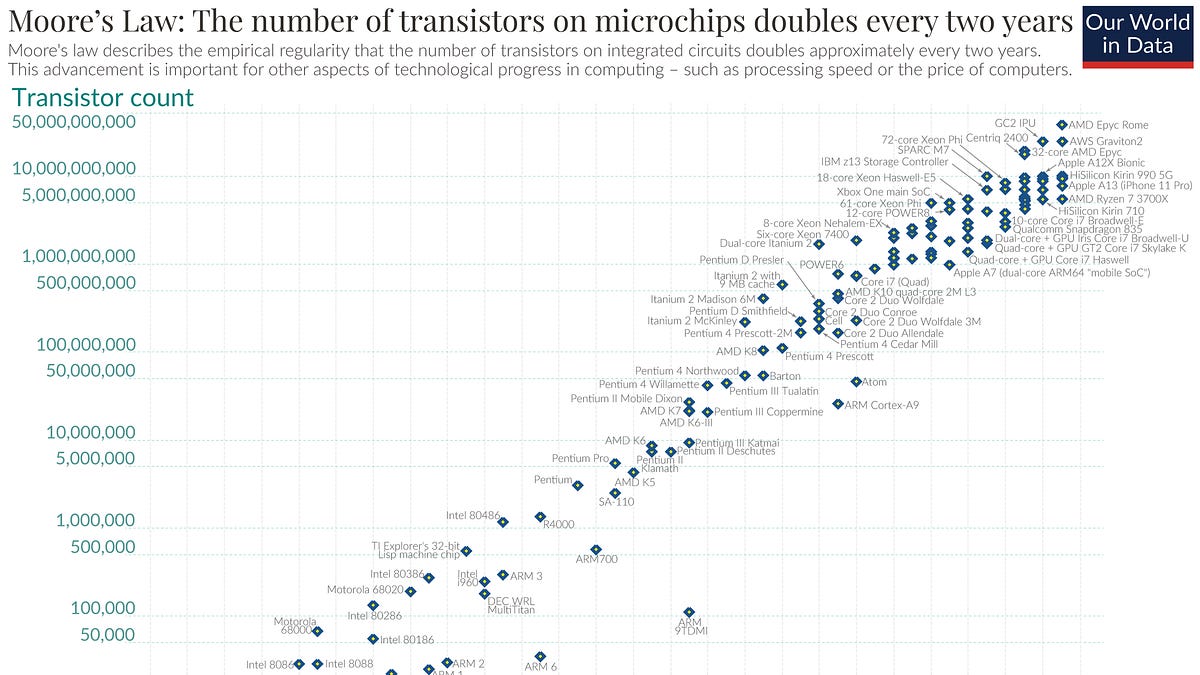
The integration of artificial intelligence into the video game industry represents a deeply polarizing issue, characterized by a divide between those who view the technology as a transformative, positive force and those who fear it threatens creative integrity and labor. The central thesis posits that an individual’s stance on AI is largely predictive of their belief in the technology’s potential for exponential improvement. While skeptics argue that current progress is overstated or ethically compromised, proponents emphasize historical precedents of exponential technological growth, such as Moore’s Law and the declining costs of solar and battery technologies, as indicators of AI’s future trajectory.
The analysis draws upon historical data regarding technological efficiency, noting that while price-performance gains are measurable, quantifying the "usefulness" or "intelligence" of AI remains a significant challenge. Current benchmarks often fail to capture emergent capabilities, such as the adaptation of generative video models for complex weather prediction. This suggests that AI is not a monolithic entity but a collection of distinct technological primitives that may evolve at varying speeds and in unpredictable directions.
Within the games industry, the current application of AI is largely confined to development-side efficiencies, such as asset generation and coding assistance. However, the industry’s long-term outlook depends on whether AI continues to improve exponentially. If it does, the sector may face a paradigm shift that transcends current debates over asset usage and NPC behavior, potentially redefining the fundamental nature of games as an art form. The analysis concludes that while the path forward remains uncertain, the industry is approaching a critical juncture where the distinction between games as commercial commodities and as evolving creative vehicles will be tested by these emerging computational capabilities.
The success of the indie game Spilled! serves as a case study for the intersection of personal narrative and commercial viability in the modern game industry. Developed by 25-year-old Dutch creator Lente, the title is a meditative, solar-powered boat simulator focused on environmental cleanup. The game achieved significant market traction shortly after its release, securing over 1,000 overwhelmingly positive reviews on Steam within its first week—a milestone reached by only 445 of the 18,239 games released on the platform in 2024.
The development process was characterized by a series of strategic community-building efforts, including a successful Kickstarter campaign funded within 12 hours and a collaborative visual overhaul by artist Starbi. These efforts, combined with viral social media engagement, propelled the game to the top of Steam’s New and Trending charts. The project’s development was deeply influenced by Lente’s personal history; she currently lives and works on a renovated houseboat, mirroring the lifestyle she experienced during her childhood. This nautical upbringing, which included a protracted legal struggle with local authorities over her family’s right to reside on their vessel, informs the game’s themes of environmental stewardship and reclaiming one's surroundings from external, destructive forces.
The narrative highlights the unpredictable nature of indie game success, noting that while Lente benefited from strategic marketing and community support, many high-quality projects fail to gain similar visibility. Ultimately, the game’s reception underscores a growing audience appetite for bite-sized, thematic experiences that offer a sense of agency and restoration in an increasingly complex digital landscape.
This analysis investigates whether sentiment expressed in YouTube comments on game trailers can serve as a reliable predictor of a video game’s commercial performance. The study explores the hypothesis that aggregated audience reactions—ranging from enthusiasm to disdain—provide actionable signals regarding a title's potential success or failure upon launch.
The methodology involved two distinct phases. An initial, smaller-scale test analyzed tens of thousands of comments for four high-profile titles, including both critical successes and commercial flops. To improve rigor, a second, broader analysis examined 59 independent games released in late 2024. This phase utilized the YouTube API to collect over 18,000 comments, which were then processed using OpenAI’s GPT-4o model to assign sentiment scores of positive, neutral, or negative. The resulting sentiment data was compared against estimated sales figures provided by the GameDiscoverCo database, filtering for non-free-to-play, non-adult titles that sold between 1,000 and 250,000 copies.
The findings indicate that while sentiment analysis appears to align with the reception of major AAA titles, it fails to predict the commercial performance of independent games. In the broader sample of indie titles, there was no meaningful correlation between the mean sentiment of trailer comments and subsequent game revenue. However, the study identified a robust relationship between the total volume of comments and game performance. This suggests that for independent developers operating in a crowded marketplace, the sheer level of audience engagement—regardless of whether the sentiment is positive or negative—is a more significant indicator of market awareness and potential reach than the qualitative nature of the feedback itself. Ultimately, the research concludes that predicting game success remains an elusive challenge, with raw engagement metrics currently offering more utility than sentiment-based analysis.
The evolution of the massively multiplayer online (MMO) genre is characterized by a shift from diverse, experimental design toward a rigid, content-consumption model dominated by the "DikuMUD" template. While early online worlds in the 1990s explored varied mechanics—including social interaction, player-driven economies, and world simulation—the massive commercial success of World of Warcraft established a standard based on quest-driven progression and raiding. This template, while lucrative, created a "content treadmill" trap where developers must constantly produce new material to satisfy players, leading to "mudflation" and diminishing returns on investment.
The core thesis posits that the original spirit of the MMO has not vanished but has instead fragmented and migrated into other segments of the games industry. Elements of early MMO design, such as crafting, housing, and world modification, now underpin successful titles in the survival-crafting, sandbox, and social-world genres. Despite the dominance of the leveling-treadmill model, there remains significant, unfulfilled demand for persistent, simulated alternate realities that offer players agency beyond simple combat progression.
This analysis draws on the perspective of industry veteran Raph Koster, who argues that the industry’s focus on high-budget, quest-streamlined experiences has stifled innovation. By comparing the historical trajectory of MMOs to modern titles like Breath of the Wild, the discussion highlights a disconnect between current market offerings and the latent desire for immersive, player-driven virtual worlds. The emergence of new projects, such as Stars Reach, reflects a strategic attempt to return to these foundational, simulation-heavy roots to serve an audience that has outgrown the traditional, repetitive MMO loop.
The central thesis posits that marketing efforts are secondary to the inherent quality of a game, specifically its ability to generate organic word-of-mouth growth. While foundational marketing tasks—such as audience targeting, positioning, and storefront optimization—are necessary to prevent failure, they cannot compensate for a product that fails to resonate deeply with its target audience. A game must achieve a level of quality that compels players to actively recommend it to others, a phenomenon that aligns with the principles of the Net Promoter Score (NPS).
The analysis highlights that only players who rate a game as a 9 or 10 out of 10 contribute to meaningful growth. Scores of 7 or 8, while often considered positive, fail to trigger the word-of-mouth momentum required for a breakout success. Consequently, games that do not reach this high threshold of player satisfaction are unlikely to succeed regardless of the marketing budget or promotional strategies employed. While some legacy franchises with established brand equity may maintain sales through inertia, even these titles risk decline if they consistently fail to meet high quality standards.
Drawing on a decade of industry experience, the analysis suggests that the primary responsibility of a marketing team is to act as a bridge between the player base and the development team. By conducting rigorous research and establishing feedback loops, marketers must identify whether a game possesses the potential to "pop off" before launch. If a game fails to generate a strong, positive reaction during testing, the marketing team’s role is to provide this data to product leads, enabling necessary adjustments before the product reaches the market. Ultimately, the success of a game is determined by its ability to provide an experience that justifies the significant time investment required of players, making high-level player advocacy the most critical factor in commercial performance.
Large-budget AAA game marketing is currently facing significant challenges as traditional industry best practices lose efficacy in a shifting media landscape. The core thesis suggests that AAA studios can improve their promotional outcomes by adopting specific, agile marketing principles long utilized by successful indie developers. These insights are derived from professional observations and expert commentary from industry veterans, specifically focusing on the disconnect between high-production marketing materials and the actual needs of modern players.
Key findings highlight three primary areas where AAA marketing often falters. First, trailers frequently fail to hook audiences quickly; effective marketing requires establishing the genre and the game’s unique selling point within the first 10 to 15 seconds. Second, there is a tendency for AAA teams to be embarrassed by their specific niches, leading them to obscure gameplay mechanics behind cinematic cutscenes that mislead potential players. Finally, many AAA campaigns prioritize demonstrating high production values over clearly communicating what makes a game unique, resulting in promotional content that fails to distinguish the product from competitors.
The analysis emphasizes that while AAA marketers are often highly skilled, they have become overly reliant on institutional habits that no longer resonate with contemporary audiences. By shifting focus toward transparent, gameplay-first communication and embracing the specific appeal of their target niches, AAA studios can better align their marketing efforts with player expectations. This approach advocates for a move away from generic, blockbuster-style presentation in favor of clear, informative content that demonstrates the actual experience of playing the game.
The modern video game industry is experiencing a fundamental breakdown in traditional marketing efficacy, leaving major publishers struggling to secure commercial success for new releases. The core thesis posits that the long-standing playbook—relying on significant marketing budgets to drive sales for high-budget, mid-tier titles—is no longer viable. As consumer attention shifts toward established "forever games" and surprise indie hits, publishers that lack a stable of reliable, evergreen franchises are facing a systemic crisis of viability.
Key findings indicate that the decline of traditional retail and the diminishing returns of paid influencer campaigns have severely hampered the ability of large publishers to generate organic interest. Data points from recent market performance highlight that even high-budget titles from major studios often fail to resonate when they are merely "good" rather than exceptional. Consequently, the industry has bifurcated into a small group of publishers sustained by massive, long-running cash-cow franchises and a larger group of companies desperately searching for a hit to justify their operational scale.
The scope of this analysis encompasses the global AAA games industry, with a focus on the challenges faced by major publishers throughout the early 2020s. The methodology relies on industry observation and comparative analysis of recent market trends, contrasting the struggles of large-scale publishers with the adaptive strategies of independent developers. Successful indie developers are increasingly prioritizing product quality and algorithmic discovery on platforms like Steam, utilizing demos, festival participation, and direct outreach to content creators. Ultimately, the analysis suggests that for large publishers to survive, they must move beyond traditional advertising and focus on earlier market signaling and more precise, value-driven product positioning.