Overwolf
Technology53 documents
UGC gaming platform. Publishes insights on creator economy, in-game modding, and user-generated content trends in gaming.
Documents
Article
Overwolf Ads at ThinkLA Gaming Brunch: The Uncomfortable Truths About Gaming Advertising
Overwolf Ads sponsors the 2026 ThinkLA Gaming Brunch, positioning itself as a data‑driven partner for brands seeking precise reach within the gaming ecosystem. The event, held on May 14 at Los Angeles’ Skirball Cultural Center, features a 15‑minute fireside chat with Overwolf’s VP of Brand Partnerships and Digitas North America’s SVP of Innovative Experiences. The session promises to move beyond generic “gamers” narratives, offering actionable insights on segmenting audiences, choosing between contextual integrations and immersive activations, and setting realistic performance expectations.
Overwolf claims a monthly audience of 113 million gamers across hundreds of major titles and premium gaming sites, ranking second among U.S. gaming properties by Comscore. The platform has earned industry accolades—including ADWEEK’s Top Ad Tech Company, Digiday’s Best Gaming Ad Tech, and The Drum’s Best Platform/Tech Partner of the Year—underscoring its credibility with global brands such as Universal Pictures, H&R Block, and Monster Energy.
Methodologically, the discussion emphasizes leveraging proprietary data to map brand targets onto specific gaming segments rather than treating gamers as a monolith. While the article does not disclose survey sizes or detailed analytics, it highlights Overwolf’s ability to deliver granular audience insights and measurable outcomes for gaming campaigns.
Geographically, the focus remains on the U.S. market, with a broader implication that Overwolf’s platform serves global brands seeking to engage diverse gaming audiences. The content positions the ThinkLA Gaming Brunch as a forum for candid, tactical dialogue aimed at advancing effective gaming advertising strategies.
- Overwolf reaches 113 million monthly gamers across hundreds of titles, ranking as the second-largest U.S. gaming property according to Comscore.
- The platform facilitates granular audience segmentation to move away from treating 'gamers' as a monolithic demographic.
- Overwolf provides data-driven advertising solutions for major global brands, including Universal Pictures, H&R Block, and Monster Energy.
- Industry recognition for the platform includes awards from ADWEEK, Digiday, and The Drum for excellence in gaming ad tech.
- The May 14, 2026, ThinkLA Gaming Brunch focused on tactical strategies for choosing between contextual integrations and immersive brand activations.
+2
OverwolfMay 2026
Article
April Roundup: User Reviews Land on the Web Appstore, Big New Game Support Arrives
The April 2026 Overwolf developer update outlines key platform enhancements, expanded game support, and strategic industry engagement initiatives. The primary objective is to improve developer tools and increase monetization opportunities within the ecosystem. A significant functional update includes the migration of user reviews from the client-side appstore to the web-based appstore, a feature now extended to Electron-based applications. This update also introduces upcoming support links to facilitate better communication between developers and their user bases.
The platform has expanded its technical support to include major titles such as Slay the Spire 2, which has seen over 574,000 concurrent players since its March 2026 early access launch, and the open-world title Crimson Desert. These additions are intended to provide creators with new opportunities to develop interactive maps, combat guides, and co-op synchronization tools. Furthermore, the platform reported the addition of support for 22 new games during the period, alongside ongoing updates to game event integration for titles like Fortnite and Arknights.
On the business and marketing front, the organization has focused on strengthening brand partnerships through high-profile industry events in London and New York, as well as at GDC. These efforts have resulted in the platform being shortlisted for multiple industry awards, including recognition for its ad technology and gaming platform capabilities. Looking ahead, the company has confirmed its participation in Gamescom 2026, scheduled for late August, to foster direct engagement with the developer community. These initiatives collectively aim to bolster advertiser confidence and drive higher-value campaigns for developers within the Overwolf ecosystem.
- Overwolf has expanded its technical support to 22 new games, including major titles like Slay the Spire 2—which reached over 574,000 concurrent players—and Crimson Desert.
- User reviews have been migrated from the client-side appstore to the web-based appstore, with this functionality now extended to Electron-based applications.
- New support links have been introduced to the web appstore to improve direct communication channels between developers and their user bases.
- The platform continues to update game event integrations for established titles, specifically citing ongoing work for Fortnite and Arknights.
- Overwolf is focusing on increasing advertiser confidence and high-value campaign opportunities through recent brand partnerships and industry event appearances in London, New York, and GDC.
+1
OverwolfApr 2026
Article
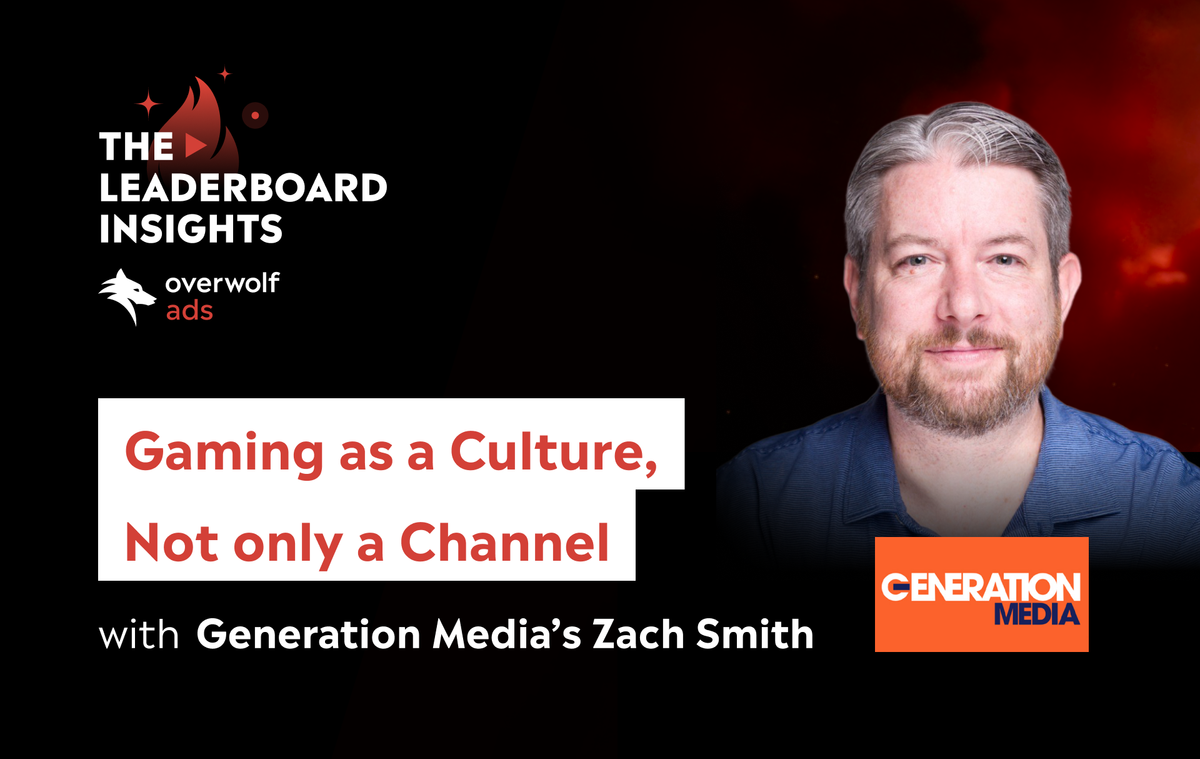
Gaming as a Culture, Not Only a Channel
The episode of The Leaderboard Insights Podcast focuses on the evolving role of gaming as a cultural touchstone rather than merely an advertising channel. Hosted by Nathan Lindberg, VP of Brand Partnerships at Overwolf, the discussion centers on insights shared by Zach Smith, Vice President of Client Partnerships at Generation Media. Smith’s career trajectory—from game testing to marketing roles at Acclaim, Majesco, and Gameloft—provides a foundation for his current work building Generation Media’s North American practice, which serves publishers such as Square Enix, Nexon, Plaion, and Capcom.
Key points explored include the pitfalls of treating gamers as a monolithic audience, with Smith arguing that surgical targeting yields more efficient media spend. The conversation also highlights Discord join metrics as a superior pre‑launch indicator compared to Steam wishlists for indie developers. Additionally, the episode critiques common agency missteps in gaming campaigns and outlines Generation Media’s specialist model designed to address these gaps.
The podcast underscores the broader shift toward community‑driven brand campaigns within gaming, positioning Overwolf’s platform—serving over 113 million monthly gamers across major titles—as a critical partner for brands seeking authentic engagement. The episode serves as a concise briefing on strategic considerations and emerging best practices for advertisers looking to integrate gaming into their marketing mix.
- Overwolf’s platform currently facilitates authentic brand engagement for a user base exceeding 113 million monthly gamers across major titles.
- Effective gaming marketing requires moving away from treating gamers as a monolithic audience in favor of surgical targeting to improve media spend efficiency.
- For indie developers, Discord join metrics serve as a more reliable pre-launch performance indicator than traditional Steam wishlists.
- Generation Media utilizes a specialist agency model to address common industry missteps when executing gaming campaigns for publishers such as Square Enix, Nexon, Plaion, and Capcom.
- Modern gaming marketing is shifting away from viewing games as simple advertising channels toward prioritizing community-driven, culturally integrated brand campaigns.
+1
OverwolfApr 2026
Article
Overwolf Ads Named Best Gaming Platform at the Campaign Media Company of the Year Awards 2026
Overwolf Ads secured the Best Gaming Platform award at the 2026 Campaign Media Company of the Year Awards, underscoring its status as a leading in‑game advertising solution. The accolade follows a period of rapid expansion, highlighted by record creator payouts of $300 million in 2025 and the addition of senior talent across North America and Europe. Overwolf’s platform reaches more than 113 million monthly gamers through hundreds of top‑tier titles and premium gaming websites, positioning it as the second‑largest U.S. gaming property according to Comscore.
The platform’s credibility is reinforced by a roster of global brands and agencies—including Universal Pictures, P&G, Lancôme, AMD, Monster Energy, Nissan, KFC, WPP, Dentsu, Havas, and The Trade Desk—that rely on its contextual, immersive ad formats to drive measurable outcomes. Industry recognitions such as ADWEEK’s Top Ad Tech Company, Digiday’s Best Gaming Ad Tech, and The Drum’s Best Platform/Tech Partner of the Year further validate Overwolf’s market leadership.
Methodologically, the announcement draws on internal performance metrics and external award criteria rather than a formal survey. The coverage is global, with data points focused on U.S. and European operations, and the time frame spans 2025–2026. The announcement signals Overwolf’s intent to push in‑game advertising innovation forward, building on its award-winning platform and expanding partnerships into 2026 and beyond.
- Overwolf Ads was named Best Gaming Platform at the 2026 Campaign Media Company of the Year Awards, cementing its position as a top-tier in-game advertising solution.
- The platform reaches over 113 million monthly gamers and is ranked as the second-largest gaming property in the U.S. by Comscore.
- Overwolf paid out a record $300 million to creators in 2025, reflecting significant platform growth and ecosystem scale.
- The company maintains a high-profile client roster including global brands such as P&G, Universal Pictures, Nissan, and KFC, alongside major agencies like WPP and Dentsu.
- In addition to the 2026 Campaign award, Overwolf has received industry recognition from ADWEEK, Digiday, and The Drum for its ad tech and platform performance.
+1
OverwolfApr 2026

Article
Overwolf Ads Shortlisted for 4 Categories at The Drum Awards Marketing EMEA 2026
Overwolf Ads announces that its campaign for Universal Pictures’ “Nobody 2” has earned shortlist positions in four categories at The Drum Awards Marketing EMEA 2026: Entertainment & Consumer Technology, Digital Experience, Gaming, and Technology Innovation. The nomination stems from a world‑first in‑game activation that inserted the film’s protagonist, portrayed by Bob Odenkirk, into Fortnite. By creating a bespoke NPC of Hutch Mansell on the popular Speed Realistics 2v2 map, the team delivered custom voice lines, cosmetics, and weapon skins directly sourced from the movie, while in‑lobby posters further immersed players into the film’s universe.
The campaign targeted 25‑34 year‑old gamers, a demographic identified as highly cinema‑goers; action/shooter players are 1.7 × more likely to visit the cinema monthly and show a 34 % higher propensity for action films on opening weekend. Overwolf’s platform, which reaches over 113 million monthly gamers across major titles, enabled the activation to reach a broad audience. Key performance indicators include more than 25 million NPC impressions, over one million players engaging with branded cosmetics, and an average engagement time of 27 minutes per player.
The announcement highlights Overwolf’s position as a leading gaming advertising platform, recognized by industry bodies such as Comscore and ADWEEK. Winners of the Drum Awards will be announced on 3 June, with the full shortlist available online.
- Overwolf Ads’ campaign for Universal Pictures’ “Nobody 2” earned four shortlist nominations for The Drum Awards Marketing EMEA 2026, including categories for Gaming and Technology Innovation.
- The campaign featured a bespoke NPC of the film’s protagonist, Hutch Mansell, integrated into a Fortnite map with custom voice lines, cosmetics, and weapon skins.
- The activation generated over 25 million NPC impressions and saw more than one million players engage with branded in-game cosmetics.
- Players engaged with the branded content for an average of 27 minutes per session.
- The campaign targeted 25–34 year-old gamers, a demographic that is 1.7 times more likely to visit the cinema monthly and 34% more likely to watch action films on opening weekend.
OverwolfApr 2026
Article
Overwolf Ads Shortlisted at the Campaign Tech Awards 2026
Overwolf Ads has secured a shortlist spot at the 2026 Campaign Tech Awards in the Best Use of Gaming category for its “78‑Minute Gamer Break” campaign, developed with Tropicana’s Naked Smoothie and dentsu X. The initiative leveraged deep behavioural data from Overwolf’s 113 million monthly PC gamers to identify a natural pause point at the 78‑minute mark, an unclaimed brand moment during gameplay. By deploying contextual messaging and in‑game rewards precisely at this interval across loading screens, pre‑match lobbies, and rich media placements in flagship Gen Z titles such as Fortnite, VALORANT, and Apex Legends, the campaign met players during every relevant downtime moment.
The results were significant: over one million players engaged, generating 48 000 hours of cumulative playtime—equivalent to 5.48 years—and driving measurable lifts in purchase intent, brand favorability, awareness, and recall for Naked Smoothie. The campaign’s effectiveness was further validated by three Drum Awards received in November 2025.
Overwolf Ads positions itself as a leading gaming advertising platform, ranked by Comscore as the second‑largest U.S. gaming property and recognized by ADWEEK, Digiday, and The Drum for its technology and partnership excellence. Its client roster includes global brands such as Universal Pictures, P&G, Lancôme, AMD, Monster Energy, Nissan, KFC, and major agencies including WPP, Dentsu, and Havas. The campaign exemplifies how precision technology and gamer insight can create owned brand moments that resonate with a massive, engaged audience.
- The '78-Minute Gamer Break' campaign by Overwolf Ads, Tropicana’s Naked Smoothie, and dentsu X was shortlisted for the 2026 Campaign Tech Awards for its effective use of behavioral data.
- By identifying a 78-minute interval as a natural pause point in gameplay, the campaign reached over one million players across titles like Fortnite, VALORANT, and Apex Legends.
- The initiative generated 48,000 hours of cumulative playtime and produced measurable increases in brand favorability, purchase intent, awareness, and recall.
- Overwolf Ads leverages a monthly user base of 113 million PC gamers to deliver contextual messaging during loading screens and pre-match lobbies.
- The campaign's success was previously recognized in November 2025 with three Drum Awards.
+3
OverwolfApr 2026
Article
Overwolf Ads Launches ‘Gamer Grid’ To Revolutionize Gaming Ad Targeting
Overwolf Ads introduces Gamer Grid, a data‑driven audience platform that leverages deterministic PC gameplay signals, hardware telemetry and content consumption to segment high‑value gamers in real time. The platform addresses a long‑standing gap in gaming advertising by distinguishing deeply engaged PC players from casual users, refreshing segments weekly to capture recency and frequency. Gamer Grid draws on Overwolf’s first‑party ecosystem—including CurseForge, in‑game apps and premium gaming sites—and filters more than 8,000 data points to create precise audience buckets. Core segments cover title and genre players, hardware audiences, high‑engagement users, and high‑value spenders. Custom “buckets” can be engineered for brand‑specific KPIs, such as high‑spending GPU owners or late‑night gamers. By partnering with data marketplaces like LiveRamp and Experian, the platform layers traditional purchase intent signals (automotive, grocery, finance) onto gaming behavior, enabling non‑endemic brands to reach audiences with verified first‑ and third‑party data in a brand‑safe environment. The launch targets the global PC gaming market, with Overwolf’s network reaching over 113 million monthly gamers across major titles and premium sites. The initiative positions Overwolf as a leading provider of high‑precision, live behavioral targeting for both gaming and non‑gaming advertisers.
- Overwolf has launched Gamer Grid, a targeting platform that utilizes deterministic PC gameplay signals, hardware telemetry, and content consumption data to segment over 113 million monthly active gamers.
- The platform filters more than 8,000 data points to categorize users into specific segments, including title and genre preferences, hardware specifications, and high-value spending habits.
- Gamer Grid refreshes audience segments on a weekly basis to ensure advertising reflects current player recency and frequency.
- By integrating with data marketplaces like LiveRamp and Experian, the platform combines first-party gaming data with third-party purchase intent signals such as automotive, grocery, and finance.
- The platform enables non-endemic brands to target specific, high-value PC gaming audiences within a brand-safe environment using verified behavioral data.
+2
OverwolfApr 2026
Article
Overwolf, Tebex & CurseForge for Studios at GamesBeat Summit 2026
The announcement targets game developers and publishers attending the GamesBeat Summit on May 18‑19, 2026, positioning Overwolf, Tebex, and CurseForge for Studios as key partners in the evolving creator economy. The event features two sessions that address core challenges: building an operating system for user‑generated content (UGC) and redefining growth through continuous player relationships. Overwolf’s CEO, Uri Marchand, will discuss the platform’s infrastructure that has distributed $800 million to creators and supports 113 million monthly active gamers, citing case studies such as Hytale’s 20 million downloads, Hogwarts Legacy’s 30 million mod‑driven downloads, and ARK: Survival Ascended’s 1.1 billion total downloads with a 60 percent console share. Tebex’s General Manager, Liam Wiltshire, will lead a panel on monetization strategies that treat player engagement as an ongoing loop rather than a funnel, highlighting how data ownership and trust can drive resilient economies. The sessions underscore that studios excelling in UGC and player relationship management are gaining competitive advantage.
Geographically, the focus is global, with Overwolf’s reach spanning hundreds of major titles worldwide and Tebex supporting 130+ local payment methods. The time frame centers on the immediate future of game publishing, with data points drawn from recent platform metrics and industry case studies. Methodologically, the content relies on internal performance figures (e.g., $800 M paid out, 113 M MAU) and anecdotal evidence from high‑profile titles. The summary conveys the strategic intent of the partners to equip studios with tools for sustainable growth and community engagement.
- Overwolf has distributed $800 million to creators and currently supports 113 million monthly active gamers.
- High-profile UGC implementations include 20 million downloads for Hytale, 30 million mod-driven downloads for Hogwarts Legacy, and 1.1 billion total downloads for ARK: Survival Ascended.
- ARK: Survival Ascended demonstrates the cross-platform potential of UGC, with 60 percent of its 1.1 billion downloads occurring on consoles.
- Tebex supports monetization through 130+ local payment methods, facilitating global revenue streams for game studios.
- The industry is shifting toward treating player engagement as a continuous loop rather than a traditional sales funnel to build more resilient game economies.
+2
OverwolfApr 2026
Article
High Scores Dinner x Publicis: Bringing Gaming's Biggest Conversations to the Table
The article explains how Overwolf’s “High Scores” dinner series facilitates in‑depth conversations between gaming platform executives and senior agency leaders, using a recent event in Chicago as an example. The series began as a newsletter and evolved into invitation‑only dinners that bring together about fifteen decision makers from Publicis, who oversee media strategy for major global brands. The setting—a private dining room at The Alston—creates an intimate atmosphere that encourages candid discussion about gaming’s role in contemporary media planning.
During the Chicago dinner, Overwolf’s VP of Brand Partnerships and Brand Partnerships Director presented data on audience reach, media efficiency, and the unique engagement opportunities within game environments. The dialogue focused on why gaming should be a core component of media budgets, how activation inside games can feel native and dynamic, and the measurable impact on hard‑to‑reach audiences. The article highlights that gaming is no longer a niche add‑on but a strategic channel for reaching highly engaged users.
The piece positions Overwolf as a leading gaming platform with 113 million monthly gamers across top titles and premium sites, recognized by industry awards such as ADWEEK’s Top Ad Tech Company. The narrative underscores the value of face‑to‑face, data‑driven conversations in shaping future advertising strategies within the gaming ecosystem.
- Overwolf operates a gaming platform reaching 113 million monthly active users across major titles and premium sites.
- The 'High Scores' dinner series serves as a strategic forum for Overwolf executives to engage senior media planners from Publicis regarding gaming's role in global brand budgets.
- Industry discourse is shifting to position gaming as a core media channel rather than a niche, experimental add-on.
- Presentations at these events focus on justifying gaming investments through data points regarding audience reach, media efficiency, and engagement metrics.
- In-game advertising is being promoted as a method to deliver native, dynamic brand activations that effectively reach difficult-to-capture demographics.
OverwolfApr 2026
Article
Overwolf Ads Is Coming to POSSIBLE Miami 2026
Overwolf is positioning its advertising division as a central player in the gaming industry by announcing its participation in the POSSIBLE Miami 2026 conference. The primary objective of this engagement is to demonstrate how brands can effectively convert gaming attention into measurable purchase intent. By showcasing its proprietary ad technology at the event, the company aims to connect with media buyers and industry stakeholders to discuss the future of premium gaming supply.
The platform highlights its significant market reach, noting a network of 113 million monthly active gamers across a diverse portfolio of major gaming titles and websites. According to industry rankings, the company is recognized as the second-largest gaming property in the United States. Its value proposition centers on providing global advertisers with access to curated, first-party audience segments designed to drive both brand awareness and performance-based outcomes.
The company’s presence at the 2026 event serves as a platform to reinforce its status as a leading ad-tech partner, supported by recent industry accolades including recognition from the Campaign Media Company of the Year Awards and multiple shortlistings at The Drum Awards Marketing EMEA. By facilitating direct meetings and presentations, the organization continues to emphasize its role in bridging the gap between gaming culture and commercial advertising strategies for major global brands such as Universal Pictures, P&G, and Nissan.
- Overwolf reaches 113 million monthly active gamers, positioning itself as the second-largest gaming property in the United States.
- The company is participating in POSSIBLE Miami 2026 to demonstrate how its proprietary ad technology converts gaming attention into measurable purchase intent.
- Overwolf provides advertisers with access to curated, first-party audience segments to support both brand awareness and performance-based marketing outcomes.
- The platform facilitates advertising strategies for major global brands, including Universal Pictures, P&G, and Nissan.
- Recent industry recognition for the company includes a win at the Campaign Media Company of the Year Awards and multiple shortlistings at The Drum Awards Marketing EMEA.
+3
OverwolfApr 2026
Article
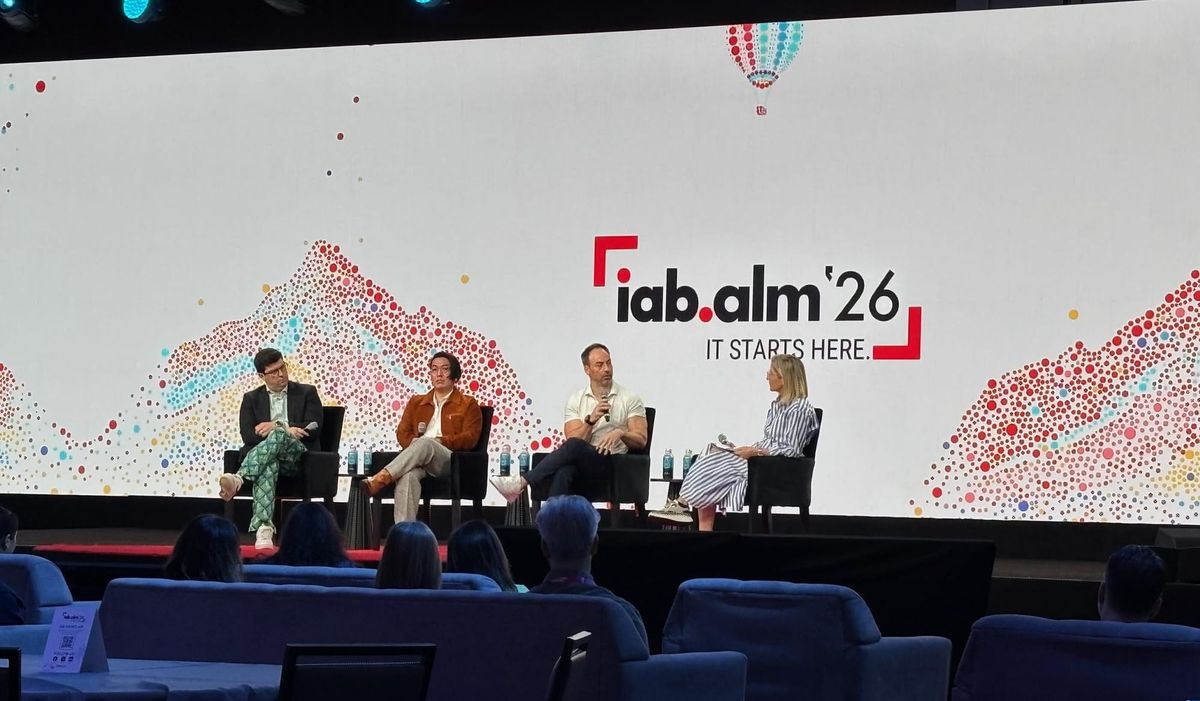
How Gaming Is Delivering Real Business Outcomes for Brands
The presentation demonstrates that gaming has become a strategic channel for brands seeking measurable marketing impact. It explains why marketers are reallocating budgets toward gaming, citing the sector’s high engagement rates and the ability to capture intent‑driven audiences. The session highlights how platforms such as Overwolf, Microsoft Advertising’s gaming division, and Twitch Brand Partnership Studio provide end‑to‑end measurement across the marketing funnel—from awareness to conversion—using data‑driven attribution models and real‑time analytics.
Key findings include that Overwolf reaches more than 113 million monthly gamers across hundreds of major titles and premium gaming sites, positioning it as the second‑largest U.S. gaming property by Comscore metrics. The platform’s partnership portfolio features global brands such as Universal Pictures, P&G, Lancôme, AMD, Monster Energy, Nissan, and KFC, illustrating its appeal to diverse industry segments. Microsoft’s gaming advertising arm leverages the Xbox ecosystem and cloud services to deliver cross‑device targeting, while Twitch’s creative studio offers immersive branded content that drives repeat engagement.
The scope covers the global gaming market, with a focus on North America and Europe, and spans the period up to early 2026. Methodology is implied through platform‑level analytics, third‑party verification from Comscore, and case studies of brand campaigns. The overarching conclusion is that gaming delivers tangible business outcomes—measurable reach, engagement, and conversion metrics—that justify continued investment and repeat spend from advertisers.
- Gaming has transitioned into a performance-marketing channel capable of tracking the full funnel from initial brand awareness to final conversion.
- Overwolf serves as a major advertising hub, reaching over 113 million monthly gamers and ranking as the second-largest U.S. gaming property according to Comscore.
- Global brands including Universal Pictures, P&G, Lancôme, AMD, Monster Energy, Nissan, and KFC are actively utilizing gaming platforms to achieve measurable business outcomes.
- Platforms like Microsoft Advertising and Twitch provide advanced infrastructure for cross-device targeting, cloud-based delivery, and immersive branded content.
- Advertisers are increasingly reallocating budgets toward gaming due to high engagement rates and the ability to capture intent-driven audiences.
+3
OverwolfApr 2026
Article
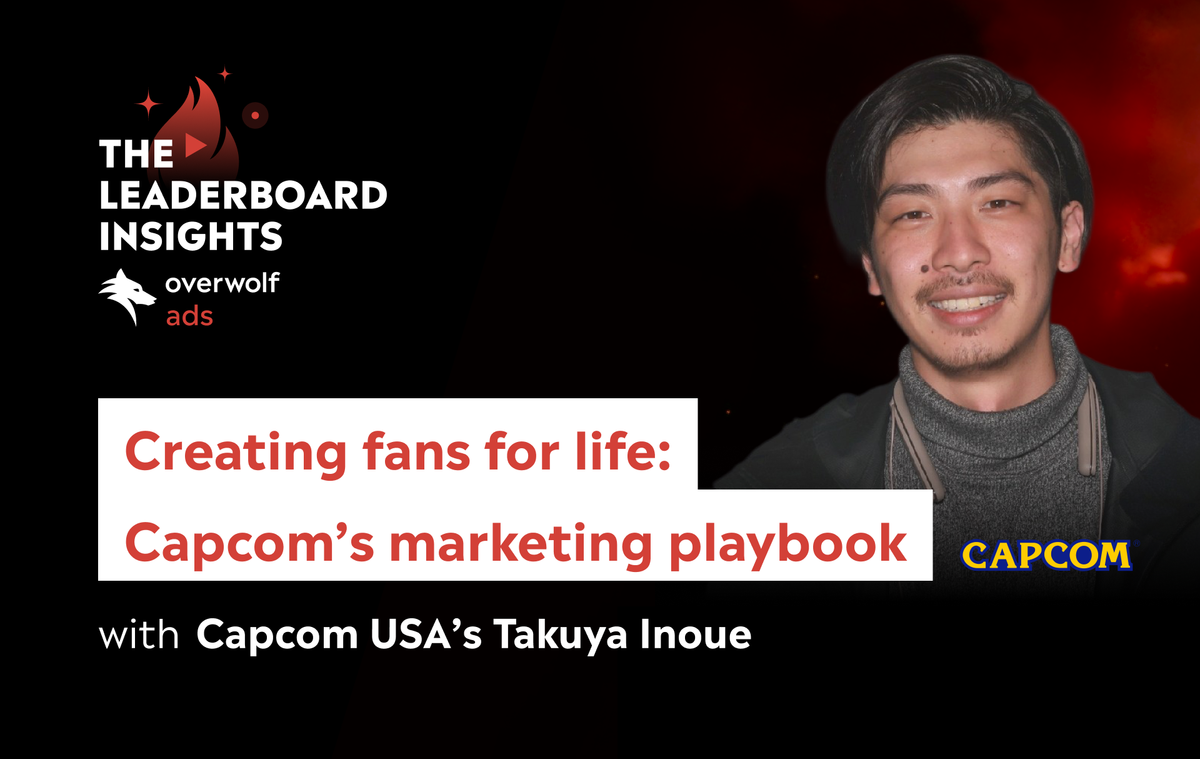
Creating Fans for Life: Capcom’s Marketing Playbook with Takuya Inoue
The provided content outlines a podcast episode featuring Takuya Inoue, the Director and Head of Marketing at Capcom USA, discussing modern gaming marketing strategies. The primary thesis centers on the transition toward an entertainment-first marketing approach, which prioritizes long-term fan engagement over traditional transactional advertising. By leveraging cinematic storytelling and human-centric drama, the company aims to cultivate deeper connections with its audience across both established franchises and new intellectual properties.
Key insights from the discussion highlight the strategic nuances required when marketing different types of titles. Inoue contrasts the approach for long-standing, 30-year franchises with the launch requirements for new intellectual properties like Pragmata. Furthermore, the conversation emphasizes the success of recent campaigns, such as Resident Evil Requiem, in utilizing narrative-driven content to resonate with contemporary horror audiences. These tactics demonstrate a broader industry shift toward treating gaming as a cultural medium rather than merely a distribution channel.
The content serves as an industry resource for brands and advertisers seeking to integrate gaming into their marketing mix. It reflects a professional perspective on the evolving landscape of global gaming, specifically focusing on the intersection of community-driven campaigns and high-production-value entertainment. The discussion is framed within the context of Overwolf’s broader platform, which supports engagement with over 113 million monthly gamers, underscoring the scale and reach of modern gaming advertising ecosystems.
- Capcom is shifting from transactional advertising to an entertainment-first marketing model that prioritizes long-term fan engagement over short-term sales.
- Modern marketing strategies now treat gaming as a cultural medium, utilizing cinematic storytelling and human-centric drama to build deeper connections with audiences.
- Marketing tactics must be differentiated based on the product lifecycle, requiring distinct approaches for established 30-year franchises versus new intellectual properties like Pragmata.
- Narrative-driven content, such as the campaign for Resident Evil Requiem, is increasingly effective at resonating with contemporary audiences in specific genres like horror.
- The Overwolf platform currently facilitates engagement with an ecosystem of over 113 million monthly gamers, highlighting the massive scale of modern gaming advertising.
+1
OverwolfMar 2026