Overwolf
Technology53 documents
UGC gaming platform. Publishes insights on creator economy, in-game modding, and user-generated content trends in gaming.
Documents
Article
What Are the Most Effective Media Channels to Reach 18–25-Year-Olds Who Don't Watch Linear TV?
Reaching the 18–25 demographic requires a multi-channel strategy that acknowledges the decline of linear television and the fragmentation of audience attention across digital environments. Rather than seeking a single replacement for traditional TV, effective media planning must treat distinct platforms—including YouTube, TikTok, Twitch, Spotify, and in-game environments—as specialized touchpoints that serve unique roles in the consumer journey.
Data indicates that Gen Z spends an average of 7.2 hours per week in PC and console gaming environments, making these spaces essential for capturing deep, uninterrupted engagement. Platforms like Overwolf Ads consolidate this fragmented ecosystem, reaching over 113 million monthly gamers. By serving ads during natural gameplay pauses, such as loading screens or post-match lobbies, these environments achieve high performance metrics, including an institutional average of 90% ad viewability and an 85% video completion rate.
The analysis emphasizes that gaming should be treated as a premium, measurable media channel rather than an experimental sponsorship. By utilizing programmatic standards—such as verified viewability and third-party brand-lift studies—advertisers can effectively reach young adults who are otherwise unreachable through traditional networks. Successful campaigns, such as those executed by Universal Pictures, demonstrate that aligning brand messaging with the player’s immediate gaming state fosters significant resonance.
Ultimately, the most effective media mix for this demographic balances cultural discovery on platforms like YouTube and TikTok with the high-impact, clutter-free attention found in gaming. By assigning each channel a specific operational role and auditing for standardized metrics, planners can overcome the challenges of audience fragmentation and deliver consistent, high-quality engagement across the digital landscape.
- Gaming environments are a primary engagement channel for the 18–25 demographic, who spend an average of 7.2 hours per week on PC and console gaming.
- Platforms like Overwolf Ads reach over 113 million monthly gamers by serving advertisements during natural gameplay pauses such as loading screens and post-match lobbies.
- In-game advertising achieves high performance metrics, including an institutional average of 90% ad viewability and an 85% video completion rate.
- Gaming should be treated as a premium, measurable media channel by applying programmatic standards like verified viewability and third-party brand-lift studies rather than viewing it as experimental sponsorship.
- A successful media strategy for Gen Z requires balancing cultural discovery on platforms like YouTube and TikTok with the high-impact, clutter-free attention found in gaming environments.
+2
OverwolfAug 2026
Article
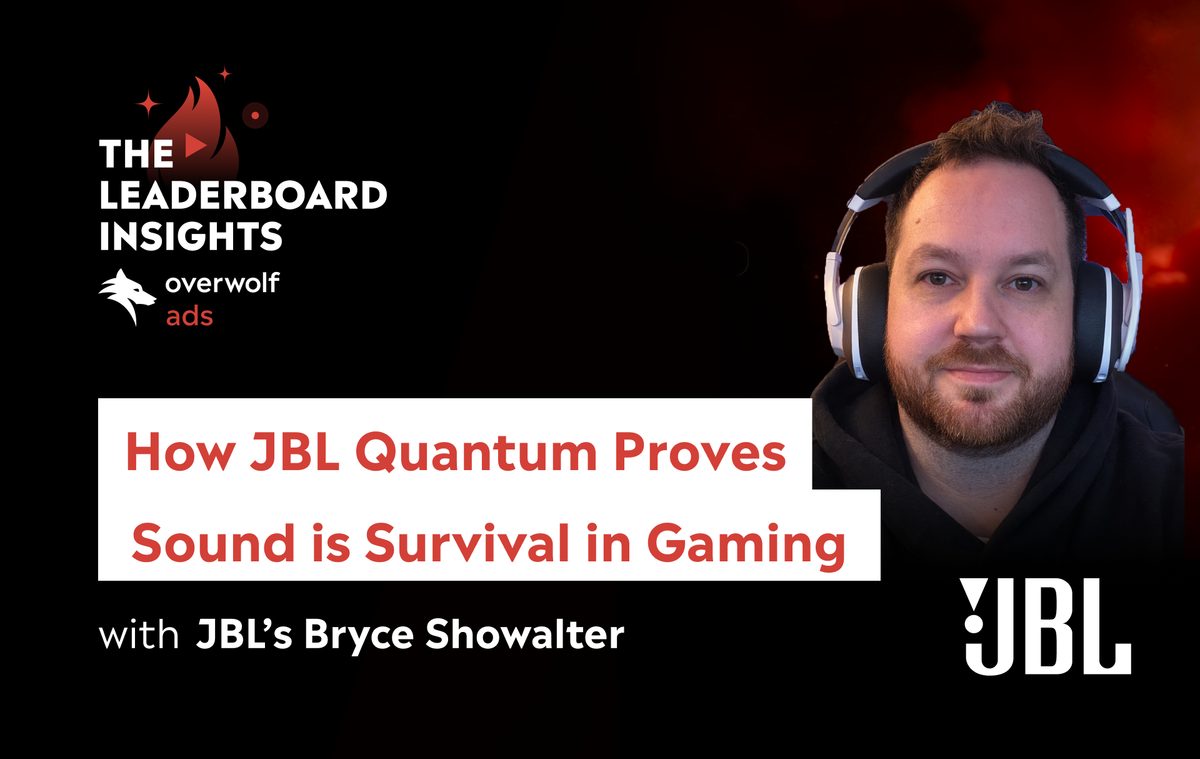
How JBL Quantum Proves Sound Is Survival in Gaming
The gaming industry continues to evolve as brands seek deeper integration into player culture through performance-driven marketing strategies. A primary focus for modern hardware manufacturers is the development of specialized sub-brands that cater specifically to the competitive gaming demographic. By aligning product development with authentic community engagement and creator partnerships, companies can successfully transition from general consumer electronics into the specialized gaming hardware space.
JBL exemplifies this shift through its Quantum sub-brand, which emphasizes the critical role of audio precision in competitive gameplay. The strategy relies on a combination of high-performance product development and targeted advertising initiatives. By leveraging advanced data-driven platforms, such as Overwolf’s ecosystem, the brand effectively reaches a vast audience of over 113 million monthly gamers. This approach allows for precise engagement, including the ability to target users currently utilizing competitor hardware, thereby facilitating direct market penetration.
The effectiveness of these campaigns is rooted in a culture-first philosophy that prioritizes long-term brand advocacy over transactional interactions. By utilizing influencer partnerships—such as the collaboration with professional gamer Clix—the brand establishes credibility within the gaming community. These efforts demonstrate that successful market entry in the gaming sector requires a synthesis of technical product superiority and a nuanced understanding of the competitive landscape, ensuring that marketing efforts resonate with the specific needs and behaviors of the gaming audience.
- Overwolf reaches over 113 million monthly gamers across hundreds of major titles and premium gaming websites.
- JBL utilizes Overwolf's advanced targeting capabilities to engage gamers who are currently using competitor headsets.
- Bryce Showalter, North America’s Head of Gaming at JBL, leads the brand's gaming portfolio through a combination of culture-first strategy, creator partnerships, and product development.
- JBL Quantum operates as a distinct sub-brand to navigate the specific challenges of entering and establishing credibility within the competitive gaming market.
- Gaming currently accounts for less than 5% of worldwide media investment, despite representing a significant share of total consumer attention.
+1
OverwolfJul 2026
Article
How Does In-Game Advertising Compare to OTT?
Over-the-top (OTT) media and in-game advertising serve distinct roles in modern media planning, functioning as complementary channels rather than direct competitors. While OTT is optimized for broad reach and premium storytelling in a lean-back environment, in-game advertising captures high-attention engagement during active, immersive participation. A unified strategy that leverages both allows brands to maximize impact across different consumer mindsets and stages of the user journey.
The current media landscape features significant scale for both channels, with US connected TV (CTV) ad spend reaching $38 billion and a global gaming population exceeding 3.4 billion. Data indicates that these audiences are largely distinct; for instance, approximately 85% of the audience reached by Overwolf, which serves over 113 million monthly players, does not overlap with streaming platforms like Twitch. This suggests that relying solely on streaming video to reach gamers results in significant missed opportunities during active gameplay sessions.
Effective media allocation depends on specific campaign objectives. OTT is best suited for broad awareness and household-level reach, whereas in-game advertising provides contextual relevance for tech product launches or reaching high-earning Gen Z and Millennial professionals. To maintain effectiveness, in-game advertising must be deployed during natural breaks—such as loading screens or post-match periods—to avoid disrupting the user experience. While OTT faces challenges regarding fragmented measurement and walled gardens, in-game advertising offers precise targeting based on hardware specifications, game titles, and real-time behavioral signals. Ultimately, integrating both channels ensures that brands maintain visibility whether consumers are passively watching content or actively engaged in interactive digital experiences.
- OTT and in-game advertising are complementary channels, with OTT driving broad awareness and in-game advertising capturing high-attention, active engagement.
- The global gaming population exceeds 3.4 billion, while US connected TV (CTV) ad spend has reached $38 billion.
- Audience overlap is minimal; data from Overwolf shows that 85% of its 113 million monthly active users do not overlap with streaming platforms like Twitch.
- In-game advertising allows for precise targeting based on hardware specifications, specific game titles, and real-time behavioral signals, contrasting with the fragmented measurement often found in OTT.
- In-game advertising is most effective when deployed during natural breaks like loading screens or post-match periods to avoid disrupting the immersive user experience.
+3
OverwolfJul 2026

Article
The Changelog: July 2026
The July 2026 developer update from Overwolf outlines significant platform enhancements and strategic developments within the gaming software ecosystem. The primary objective is to provide developers with improved tools for app distribution, monetization, and community engagement, while highlighting the platform's expanding influence in the advertising sector.
Key technical updates include a major overhaul of the desktop client, which now features a unified store experience for both native and Electron-based applications. This integration streamlines the user experience by consolidating download metrics and providing more detailed listing information, such as support links and framework specifications. Additionally, the platform expanded its game support, most notably with the full release of Palworld 1.0, which boasts a player base exceeding 20 million units on PC, presenting new opportunities for companion tool development.
The platform also emphasized its growing role in brand partnerships and advertising. Recent initiatives, such as the Uncrustables multi-game campaign and Rewarded Achievements in Fortnite, demonstrate the efficacy of in-game advertising in driving conversion rates among high-intent audiences. These efforts are supported by broader industry trends, including the push to integrate gaming into core media buying plans. To assist developers in scaling their products, the update provides guidance on collaborating with influencers and optimizing monetization strategies.
The scope of these updates is global, focusing on the PC gaming market and the developer community utilizing the Overwolf framework. The information is derived from internal platform data, recent industry event participation in London, and ongoing developer relations efforts. By fostering a more robust infrastructure for app discovery and brand-led monetization, the platform aims to increase the overall economic potential for its developer ecosystem.
- Overwolf overhauled its desktop client to unify the web and desktop store experience, enabling combined download counts for native and Electron apps and adding support for social links and file size displays.
- Palworld 1.0 has officially launched with over 20 million PC units, creating new opportunities for developers to build companion tools and overlays using Overwolf's game event integrations.
- Overwolf added support for 42 new game titles in July 2026, alongside specific event updates for Subnautica 2, CS2, and TFT.
- Brand advertising performance is scaling, evidenced by a J.M. Smucker's campaign across titles like Minecraft and Rocket League, and a high-conversion 'Rewarded Achievements' campaign for peripheral buyers in Fortnite.
- Overwolf is emphasizing creator-led marketing, providing guidance on structuring and pricing YouTube and Twitch influencer campaigns to help developers grow their app user bases.
+2
OverwolfJul 2026
Article
How to Market Your Overwolf App With Creators (And What It Costs)
Effective marketing for Overwolf applications requires a strategic approach to creator partnerships, balancing audience relevance with measurable performance metrics. The primary objective is to transition from speculative spending to data-driven acquisition by utilizing specific tools to track installs, revenue, and daily active users. Success hinges on selecting creators whose audience aligns with the specific games supported by the application, rather than prioritizing raw subscriber counts.
For YouTube campaigns, the recommended format is a 30-to-60-second creator-delivered sponsor segment that integrates naturally into existing content. Pricing should be structured around a cost-per-mille (CPM) model, typically starting at $20 or less, with a view cap to manage financial risk. Conversely, Twitch partnerships are better suited for establishing ongoing brand presence and real-time product demonstration. These should be initiated on a month-to-month basis, focusing on consistent callouts, chatbot links, and visible branding within the stream interface.
Rigorous documentation is essential for all partnerships. Developers must formalize agreements in writing, clearly defining deliverables, usage rights, and payment terms to avoid scope creep. Furthermore, the use of unique campaign URLs for every creator is critical for isolating performance data. By distinguishing between the acquisition-focused nature of YouTube segments and the relationship-building potential of Twitch, developers can optimize their marketing budgets and ensure that every campaign serves a clear, measurable business objective.
- Use the Overwolf Affiliations tool to generate unique tracking URLs for every creator, allowing for precise measurement of installs, revenue, and daily active users (DAU) per campaign.
- Target a maximum cost of $20 CPM for YouTube sponsor segments, using a view cap based on the channel's historical performance to control total spend.
- Prioritize audience fit over subscriber count by selecting creators whose viewers actively play the specific games supported by your app.
- Structure YouTube campaigns as 30-to-60-second creator-delivered segments that prioritize authentic user experience over scripted ad copy.
- Utilize Twitch partnerships for ongoing brand presence and community relationship building, starting with month-to-month agreements rather than long-term commitments.
+2
OverwolfJul 2026
Article
How Should I Add Gaming to My Media Buying Plan?
Gaming represents a significant opportunity for advertisers to capture consumer attention, yet it remains underutilized in modern media planning. While digital gaming accounts for over one hour of daily consumption per US consumer, it currently receives less than 5 percent of worldwide media investment. The primary thesis is that media planners should transition gaming from an experimental budget allocation to a permanent, core media line to capitalize on this disparity and achieve incremental reach beyond traditional channels like connected TV and social media.
The industry landscape for 2026 indicates that while nearly 60 percent of the US population engages in digital gaming, in-game advertising is projected to comprise only 2.3 percent of total US digital ad spend. To bridge this gap, media buying should align with specific campaign objectives using established frameworks. Standardized, IAB-compliant display and video formats allow for seamless integration into existing programmatic workflows, while custom media and native activations—such as in-game skins, tournaments, and branded mods—offer deeper contextual engagement.
Effective media planning in this space relies on deterministic audience intelligence rather than inferred interests. By leveraging gameplay behavior and hardware signals, advertisers can achieve precise targeting. While third-party validations from organizations like Comscore and Adelaide provide credibility, they do not replace the necessity for rigorous, campaign-level measurement of metrics such as viewability and brand lift. Ultimately, gaming should be treated as an addressable, measurable channel that functions alongside existing media investments to drive scalable and impactful audience engagement.
- Gaming currently receives less than 5% of worldwide media investment despite consumers spending over one hour per day on digital gaming, creating a significant gap between attention and ad spend.
- In-game advertising is projected to account for only 2.3% of total US digital ad spend in 2026, even though 59.2% of the US population is expected to be digital gamers.
- Media planners are encouraged to shift gaming from an experimental budget allocation to a permanent, core media line to capture incremental reach beyond CTV and social channels.
- Standard IAB-compliant display and video gaming inventory can be purchased through existing programmatic workflows, including Direct, Private Marketplace (PMP), and Programmatic Guaranteed (PG) deals.
- Overwolf’s 'Gamer Grid' provides deterministic audience targeting based on actual gameplay behavior and hardware signals, enriched by third-party data from Experian and LiveRamp.
+1
OverwolfJul 2026
Article
Overwolf Ads at MAD//Fest London 2026
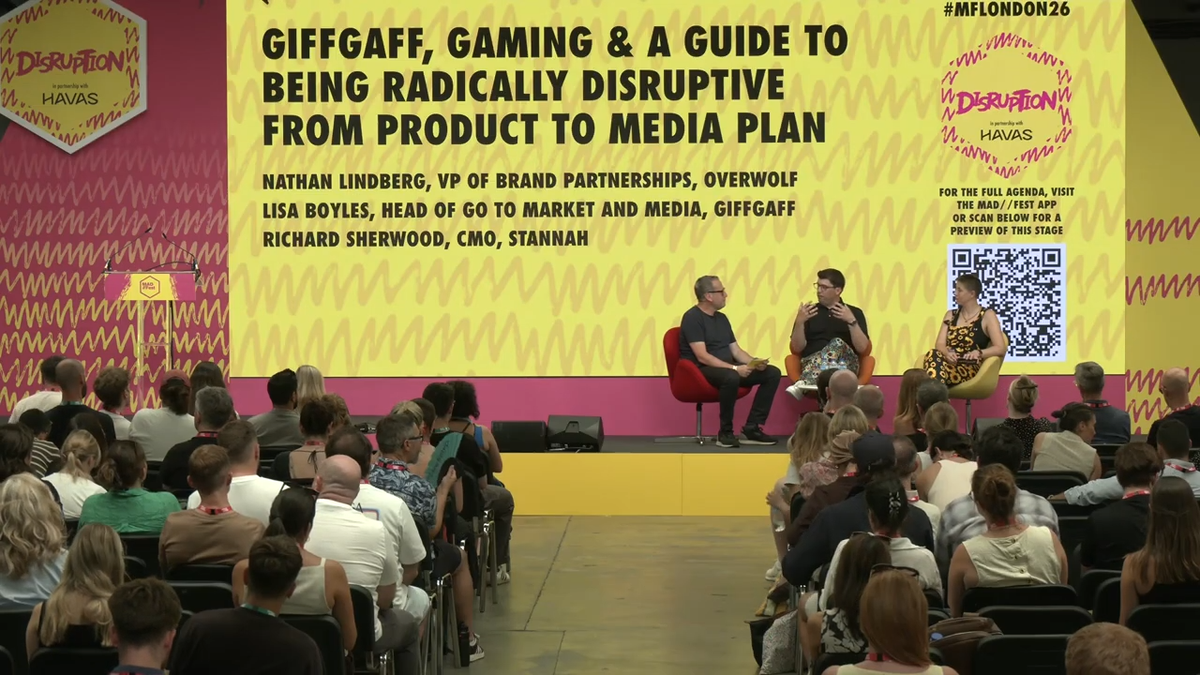
The Overwolf Ads team participated in the 2026 MAD//Fest London, an industry event that convened 16,000 marketers, brand leaders, and agency decision-makers. The primary purpose of the team's attendance was to advocate for the strategic importance of gaming environments in modern media planning and to engage with potential partners through the event’s structured brand-matching program and direct outreach.
A central thesis presented by the team is that gaming is a critical platform for advertisers because it captures high levels of audience attention and recall. By positioning gaming as an environment where users have actively chosen to spend their time, the company argues that brands can achieve superior campaign performance compared to traditional media channels. Supporting this, the company highlighted its role in the creator economy, noting that it paid out over $300 million to creators in 2025.
During the three-day event, the team conducted over 80 individual conversations with brand and agency representatives to discuss the efficacy of gaming-based advertising. The session featured insights from brand-side partners, such as giffgaff, which emphasized the necessity of allocating dedicated budgets for testing and innovation to avoid media obsolescence. Overwolf, which claims a reach of over 113 million monthly users across hundreds of gaming titles, continues to position itself as a key partner for global brands seeking to integrate into the gaming ecosystem.
- Overwolf paid out over $300 million to creators in 2025, highlighting the scale of its creator economy platform.
- Overwolf serves as a gaming platform reaching over 113 million monthly users across hundreds of major titles and gaming websites.
- During MAD//Fest London 2026, the Overwolf Ads team conducted over 80 direct conversations with brand and agency contacts to expand their partnerships.
- Nathan Lindberg, VP of Global Brand Partnerships at Overwolf, argued that gaming is a critical media platform for brands because it offers higher audience attention and recall compared to traditional channels.
- The mobile network giffgaff maintains a dedicated budget for testing innovative media platforms, citing the necessity of early adoption before new channels become standard industry buys.
+1
OverwolfJul 2026
Article
Gamescom 2026: Meet the Overwolf Pack in Cologne
Overwolf is positioning its diverse business units to engage with industry stakeholders at Gamescom 2026, scheduled for August 25–28 in Cologne, Germany. The primary objective is to facilitate direct networking and strategic discussions with game studios, brands, and developers regarding the company’s integrated ecosystem of gaming tools, monetization platforms, and advertising services.
The company highlights several key operational metrics to demonstrate its market scale. Its platform for in-game apps and overlays currently supports over 113 million monthly active gamers across hundreds of titles. Furthermore, the CurseForge for Studios division manages a significant infrastructure for modding, facilitating 32 billion annual mod downloads for major industry partners. The monetization arm, Tebex, serves more than 45,000 stores, while the company’s advertising network reaches 113 million monthly players across 1,500 titles, supported by a secondary monetization solution, Nitro, which serves over 500 premium gaming and entertainment websites.
By consolidating five distinct business groups—Apps, CurseForge, Tebex, Overwolf Ads, and Nitro—under a single booth, the company aims to provide comprehensive solutions for studios exploring modding, brands seeking scalable reach, and developers building in-game tools. The presence at Gamescom serves as a strategic touchpoint for the company to reinforce its position as a leading gaming platform, as evidenced by its recognition as the second-largest gaming property in the United States according to Comscore. The event will feature scheduled meetings and a networking happy hour to foster professional connections within the global gaming industry.
- Overwolf will exhibit at Gamescom 2026 in Cologne from August 25–28 at Halle 2.2, Stand C-020, featuring five distinct business groups.
- The Overwolf platform supports 113 million monthly gamers across hundreds of titles, providing infrastructure for in-game apps, overlays, and ad monetization.
- CurseForge for Studios manages modding ecosystems for industry partners like Warner Bros. Games, KRAFTON, and Studio Wildcard, facilitating 32 billion annual mod downloads.
- Tebex provides a monetization platform for over 45,000 game stores, offering 130+ local payment methods and Merchant of Record services.
- Overwolf Ads operates as the world's largest owned-and-operated gaming ad network, reaching 113 million monthly players across 1,500+ titles and holding a #2 ranking among US gaming properties per Comscore.
OverwolfJul 2026
Article
How Brands Can Reach Gen Z Gamers Without Disrupting Gameplay
The primary objective is to provide marketers with strategies for engaging Gen Z gamers without utilizing intrusive advertising formats that degrade the user experience. The central thesis posits that because 43% of Gen Z gamers perceive traditional ads as detrimental to gameplay, brands must transition toward native, non-disruptive integrations that align with player incentives and high-engagement moments.
To achieve this, the analysis advocates for native advertising formats such as Rewarded Achievements, which trigger branded creative during specific gameplay milestones, and Branded Mods, which allow brands to become part of community-created content. These methods prioritize opt-in engagement over passive exposure. For instance, a campaign involving Crocs across 12 mods in eight games successfully generated over 49,000 downloads and a 6.9% increase in brand consideration, demonstrating the efficacy of integrated, high-intent advertising.
The scope of these solutions covers a broad gaming ecosystem, reaching players across more than 1,500 titles, including major franchises like Fortnite, Minecraft, and Call of Duty. Rather than relying on broad demographic data, the methodology utilizes a deterministic targeting layer known as Gamer Grid. This system analyzes actual gameplay behavior, hardware signals, and third-party purchase data to identify specific player segments, such as late-night gamers or those interested in in-game customization.
Ultimately, the analysis concludes that while scalable media buying remains available through programmatic and direct channels, the most effective way to reach Gen Z is through direct partnerships that prioritize deep, non-intrusive integration. By shifting focus from interruptive pre-roll or pop-up ads to value-added experiences, brands can successfully navigate the sensitivities of the gaming audience while maintaining high levels of engagement.
- Gen Z gamers are highly sensitive to traditional advertising, with 43% stating that interruptive ads can ruin their gaming experience.
- Overwolf Ads utilizes native formats like Rewarded Achievements, which trigger branded content based on real-time gameplay events such as goals or eliminations to avoid disrupting play.
- Branded Mods allow brands to integrate directly into community-created content; a Crocs campaign across 12 mods in eight games achieved over 49,000 downloads and a 6.9% lift in brand consideration.
- The Gamer Grid targeting layer uses deterministic gameplay behavior and hardware signals rather than inferred demographic interests to reach specific player segments like 'Midnight Players' or 'Customization Players'.
- Overwolf Ads provides reach across more than 1,500 game titles, including major franchises like Fortnite, Minecraft, Call of Duty, and League of Legends.
+2
OverwolfJul 2026
Article
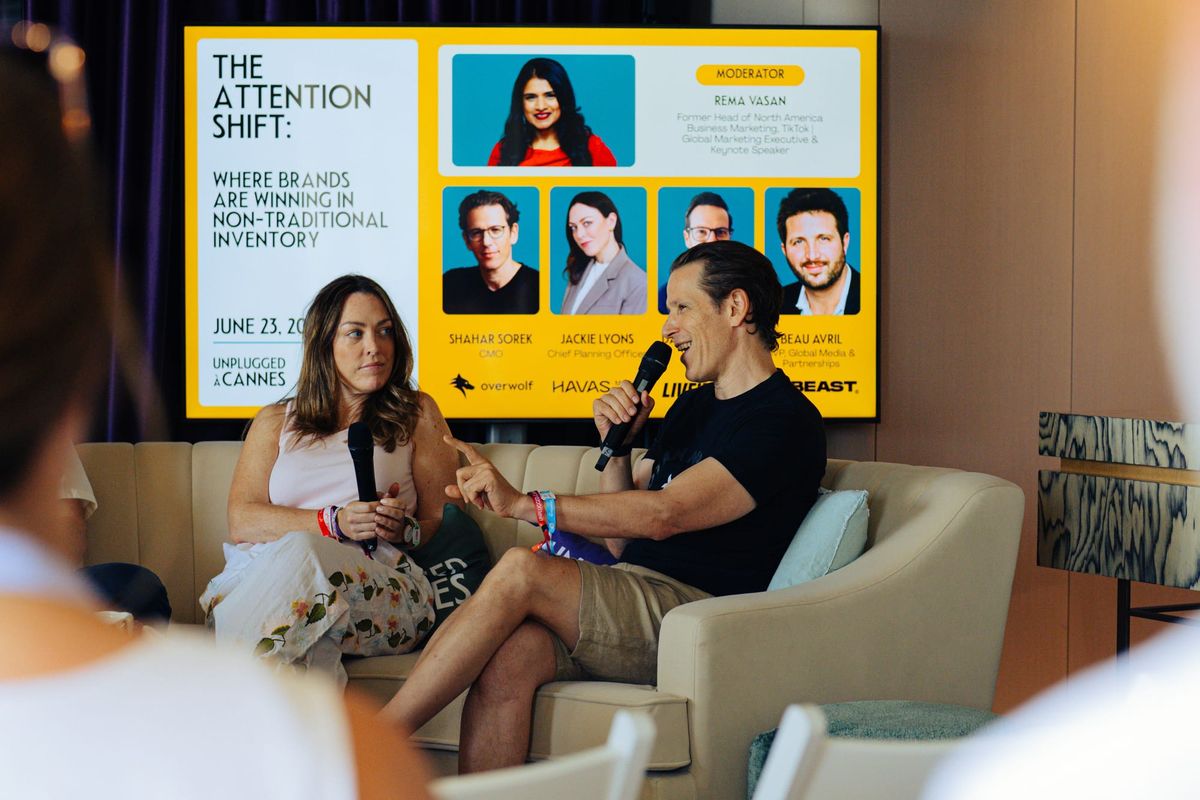
Cannes Lions 2026: The Attention Shift
The 2026 Cannes Lions session titled "The Attention Shift" addresses the growing disconnect between traditional advertising channels and modern consumer behavior. The core thesis posits that as audience attention fragments, brands must pivot toward non-traditional inventory—specifically within gaming and creator-led platforms—to maintain relevance. The discussion emphasizes that while traditional media often relies on passive consumption, gaming environments offer a high-engagement, active mindset that significantly enhances the value of brand impressions.
Data presented during the session highlights a critical shift in consumer influence: only 31% of consumers cite brand advertising as a primary factor in purchase decisions, compared to 71% for word-of-mouth and 43% for influencers. Furthermore, 63% of individuals report that their attention spans are declining, underscoring the scarcity of consumer focus. To counter this, the session advocates for precise targeting based on player behavior, genre, and specific titles, rather than broad demographic reach.
The analysis concludes that successful brand integration in these spaces requires a move away from one-off experiments toward sustained, long-term relationships with creators and gaming communities. By treating these environments as essential components of a media strategy, brands can leverage the compounding effects of creator-led relevance. The session serves as a call to action for marketers to re-evaluate their media planning tables and prioritize environments where consumers are actively engaged, ensuring that both the message and the context are aligned to maximize impact.
- Consumer attention is increasingly scarce, with 63% of people reporting that their attention span is only okay or not great.
- Traditional brand advertising is losing influence, as only 31% of consumers cite it as a primary factor in purchase decisions, compared to 71% for word of mouth and 43% for influencers.
- Gaming environments offer superior engagement compared to traditional media because players are actively participating in the content rather than passively consuming it.
- Brands can achieve high-precision targeting in gaming by reaching specific player cohorts based on behavior, game title, and genre at moments of high active engagement.
- Effective marketing in non-traditional inventory requires moving beyond one-off experiments toward long-term investments in creator relationships and community-driven IP.
+3
OverwolfJul 2026

Article
June Recap: AI Coding Tools, Cannes Lions, and a New Era for Desktop Ads
Overwolf’s June 2026 developer newsletter highlights two pivotal industry shifts. First, the company has launched a new MCP integration that allows AI coding assistants—such as Claude Code and Cursor—to access Overwolf’s full documentation in real time. This feature eliminates context switching for developers working with the Overlay package, game events, or the Ads SDK, promising faster integration workflows. Second, Jounce Media’s latest programmatic measurement report formally designates desktop applications as premium ad inventory. The report cites that 11 % of all web bid requests originate from desktop apps, surpassing any single website; 89 % of the 241 classified desktop app categories are exclusive to Overwolf, and 68 % of total category supply is driven by Overwolf apps. Jounce’s confirmation that ads refresh only when an app is open and visible reinforces the premium nature of this inventory, encouraging advertisers to allocate budgets toward trusted sellers like Overwolf.
The newsletter also recaps Overwolf’s presence at Cannes Lions 2026, where the brand showcased its future of attention and non‑traditional inventory alongside major agencies and advertisers. In‑game campaigns launched in Fortnite—an accountant tycoon role and a real‑time ping overlay—earned three Drum Awards (Gold, Silver, Bronze) for the Nobody 2 x Fortnite partnership with Universal Pictures. These achievements underscore growing brand demand and validate the value of real‑time event data for contextual advertising.
Additional updates include support for 43 new games, new game events for titles such as Windrose and Marvel Rivals, and community initiatives encouraging developers to request missing events or order milestone swag after reaching 5 000 downloads. The overall narrative positions Overwolf as a leading platform for AI‑enhanced development and premium desktop advertising, with expanding game support and industry recognition driving future growth.
- Jounce Media has officially classified desktop applications as premium ad inventory, noting that 11% of all web bid requests now originate from this sector.
- Overwolf dominates the desktop app ad market, accounting for 89% of the 241 classified categories and 68% of the total category supply.
- Overwolf integrated its full documentation with AI coding assistants like Claude Code and Cursor, allowing developers to access Overlay, game events, and Ads SDK data in real time.
- Jounce Media confirmed that Overwolf’s ad inventory is premium because ads only refresh when the application is actively open and visible to the user.
- The 'Nobody 2' partnership with Universal Pictures in Fortnite earned three Drum Awards, validating the effectiveness of real-time event data for contextual in-game advertising.
+3
OverwolfJun 2026
Article
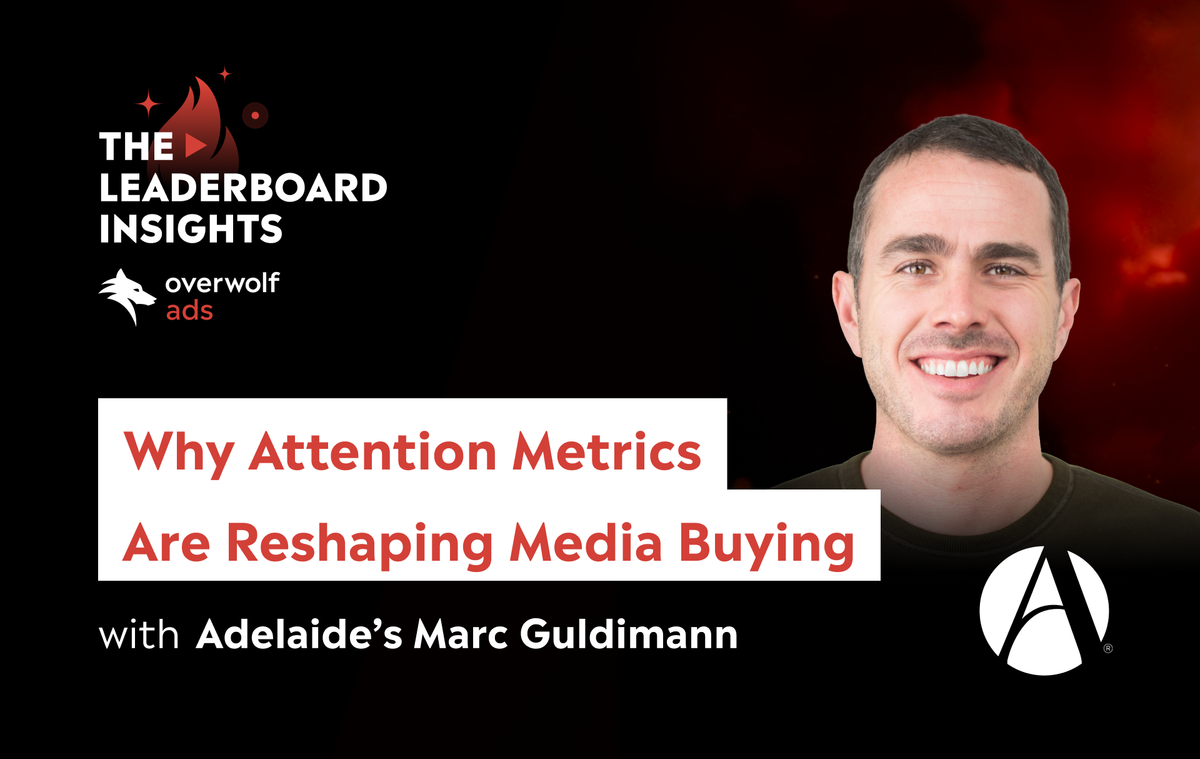
Why Attention Metrics Are Reshaping Media Buying
The media buying landscape is undergoing a significant shift toward attention-based measurement, moving away from traditional verification metrics that often fail to capture true audience engagement. By utilizing the Attention Unit (AU)—an omnichannel metric designed to quantify media quality more accurately—advertisers can better evaluate the effectiveness of their campaigns. This approach prioritizes evidence-based measurement over simple duration-based tracking, which can create misleading incentives by focusing solely on time spent rather than the quality of that attention.
Gaming environments are highlighted as particularly high-performing spaces within this framework. These platforms consistently score higher on the AU metric, suggesting that the immersive nature of gaming provides a unique, high-quality environment for brand interaction. As the conversation around attention metrics gains traction, it is increasingly influencing procurement departments, signaling a broader industry transition toward more sophisticated, value-driven media investment strategies.
This analysis, presented through expert insights from the gaming advertising sector, underscores the necessity of evolving beyond legacy metrics to ensure that media spend is aligned with genuine consumer engagement. By adopting more nuanced measurement tools, brands can better navigate the complexities of modern digital advertising and optimize their presence within high-attention environments like gaming. This shift represents a fundamental change in how media quality is defined, measured, and purchased across the global advertising ecosystem.
- The advertising industry is shifting from traditional verification metrics to the Attention Unit (AU) to better quantify media quality and genuine audience engagement.
- Gaming environments consistently outperform other media channels on the AU metric due to their immersive nature, making them high-value spaces for brand interaction.
- Attention-based measurement prioritizes evidence-based quality over simple duration-based tracking, which often creates misleading incentives by focusing solely on time spent.
- Procurement departments are increasingly adopting attention metrics, signaling a broader industry transition toward value-driven media investment strategies.
- Adopting nuanced measurement tools like the AU is essential for brands to optimize media spend and ensure alignment with actual consumer engagement.
+1
OverwolfJun 2026