Overwolf
Technology53 documents
UGC gaming platform. Publishes insights on creator economy, in-game modding, and user-generated content trends in gaming.
Documents
Article
Why Playtime is Prime-Time for Back-to-School Media Plans this Summer
Effective back-to-school media planning requires engaging consumers well before the traditional August shopping surge. While retail strategies often focus on the late-summer period when purchase intent is high, brand familiarity is established during the preceding months. By reaching students and parents within the gaming environment during June and July, advertisers can secure a position in the consumer’s consideration set before formal research and price comparisons begin.
Data from the Overwolf platform, which serves 113 million monthly users, highlights a distinct behavioral shift as summer transitions into the academic season. Among the 16-24 age demographic, which comprises 26% of the platform's U.S. user base, gaming session lengths decrease by 12% in August as students pivot toward academic preparation. Simultaneously, interest in hardware and laptops spikes by 40%. This correlation serves as a key indicator for brands to align their messaging with the natural transition from leisure to shopping.
The gaming ecosystem offers a unique advantage by reaching both students and the parents who often facilitate high-consideration purchases. Because gaming sessions represent periods of high attention, native ad placements within the game client provide a non-intrusive way to build brand recognition. Establishing this presence early ensures that when the peak shopping window arrives, the brand is already a familiar and trusted option. This strategy moves beyond reactive, point-of-purchase advertising, allowing brands to shape consumer preferences during the critical research phase of the buyer journey.
- Advertisers should initiate back-to-school campaigns in June and July to establish brand familiarity before consumers begin formal research and price comparisons in August.
- Interest in hardware and laptops spikes by 40% in August as students and parents transition from summer leisure to academic preparation.
- Gaming session lengths for the 16-24 age demographic decrease by 12% in August, signaling a shift in user behavior that brands can leverage for targeted messaging.
- The Overwolf platform provides access to 113 million monthly users, with the 16-24 age demographic accounting for 26% of its U.S. user base.
- Native in-game ad placements capture high-attention periods, allowing brands to secure a position in the consumer’s consideration set before the peak retail surge.
+3
OverwolfJun 2026
Article
Why Most Gaming Ads Fail to Engage (And How Yours Can Succeed)
The primary challenge facing enterprise media buyers in the gaming sector is not creative execution, but rather the structural fragmentation of inventory and measurement. Because individual game publishers operate within isolated ecosystems with disparate reporting standards and definitions of viewability, executing cross-title campaigns remains inefficient and difficult to audit. The thesis posits that successful engagement requires shifting from fragmented, title-by-title deals to a unified inventory layer that normalizes data, metrics, and creative standards across multiple AAA titles.
To achieve scale and high video completion rates, advertisers must prioritize contextual targeting over brute-force frequency. By aligning ad delivery with specific in-game moments—such as natural session breaks, loading screens, or non-intrusive, opt-in milestones—brands can protect player sentiment and improve engagement. Disruptive placements that interrupt active gameplay consistently result in higher skip rates and lower performance, regardless of the precision of the audience targeting.
Effective cross-title campaigns rely on a single, unified source of truth that provides clean, audit-ready reporting. By utilizing a centralized inventory layer, buyers can consolidate performance metrics, eliminate audience over-saturation, and ensure that viewability standards remain consistent across the entire campaign. This approach replaces the manual, error-prone process of reconciling conflicting datasets from various publishers, ultimately allowing brands to connect ad exposure to validated dwell time and tangible business outcomes.
- Enterprise gaming campaigns fail due to publisher fragmentation, where inconsistent measurement standards and disparate reporting formats make it impossible to aggregate data across multiple titles.
- To achieve scalable, audit-ready campaigns, advertisers must move away from per-publisher deals and utilize a unified inventory layer that normalizes metrics and reporting standards before data reaches the dashboard.
- Contextual targeting—placing ads during natural session breaks like loading screens or between matches—consistently outperforms brute-force frequency in driving video completion rates.
- Ad performance is significantly hindered by intrusive placements that disrupt active gameplay, regardless of how favorable the CPM or audience targeting precision may be.
- Effective in-game advertising requires a shift to 'moment-contingent' buying, where creative assets are aligned with the player's immediate state, such as respawn intervals or session milestones.
+2
OverwolfJun 2026
Article
MAD//Fest 2026: Giffgaff, Gaming & A Guide to Being Radically Disruptive
The presentation at MAD//Fest 2026, held in London, explores the intersection of product innovation and disruptive media strategy within the gaming industry. Featuring representatives from Overwolf and the mobile network provider giffgaff, the session aims to demonstrate how brands can align their core product offerings with bold, unconventional marketing tactics to capture consumer attention.
Key themes include the integration of challenger brand mentalities into media planning. Giffgaff highlights its approach to market disruption, which includes a focus on refurbished hardware, price-stable broadband, and out-of-home advertising campaigns designed to earn organic engagement rather than relying solely on paid reach. The discussion also addresses the scalability of gaming as an advertising channel, noting that major global brands—such as Netflix, KFC, and Amazon—can effectively reach audiences across diverse titles like Fortnite, Minecraft, and Roblox through unified media buys.
The session underscores the growing economic significance of the gaming ecosystem, referencing Overwolf’s $300 million investment in in-game creators and giffgaff’s support for independent side-hustlers. Overwolf, which claims a reach of over 113 million monthly gamers, positions itself as a critical partner for brands seeking to navigate the gaming landscape. By connecting product-level disruption with high-impact media strategies, the speakers provide a framework for brands to maintain relevance among younger, gaming-centric demographics. The content serves as a strategic guide for advertisers looking to leverage gaming platforms to achieve both brand awareness and authentic community engagement.
- Overwolf reaches over 113 million monthly gamers and has committed a $300 million investment toward supporting in-game creators.
- Major global brands including Netflix, KFC, and Amazon are utilizing unified media buys to reach audiences across diverse gaming titles such as Fortnite, Minecraft, and Roblox.
- Giffgaff is prioritizing market disruption through a focus on refurbished hardware, price-stable broadband, and out-of-home advertising campaigns that prioritize organic engagement over paid reach.
- The gaming ecosystem is increasingly viewed as a scalable advertising channel that allows brands to maintain relevance with younger, gaming-centric demographics.
- Successful brand strategy in the gaming space requires aligning core product-level innovation with high-impact media tactics to foster authentic community engagement.
+1
OverwolfJun 2026
Article
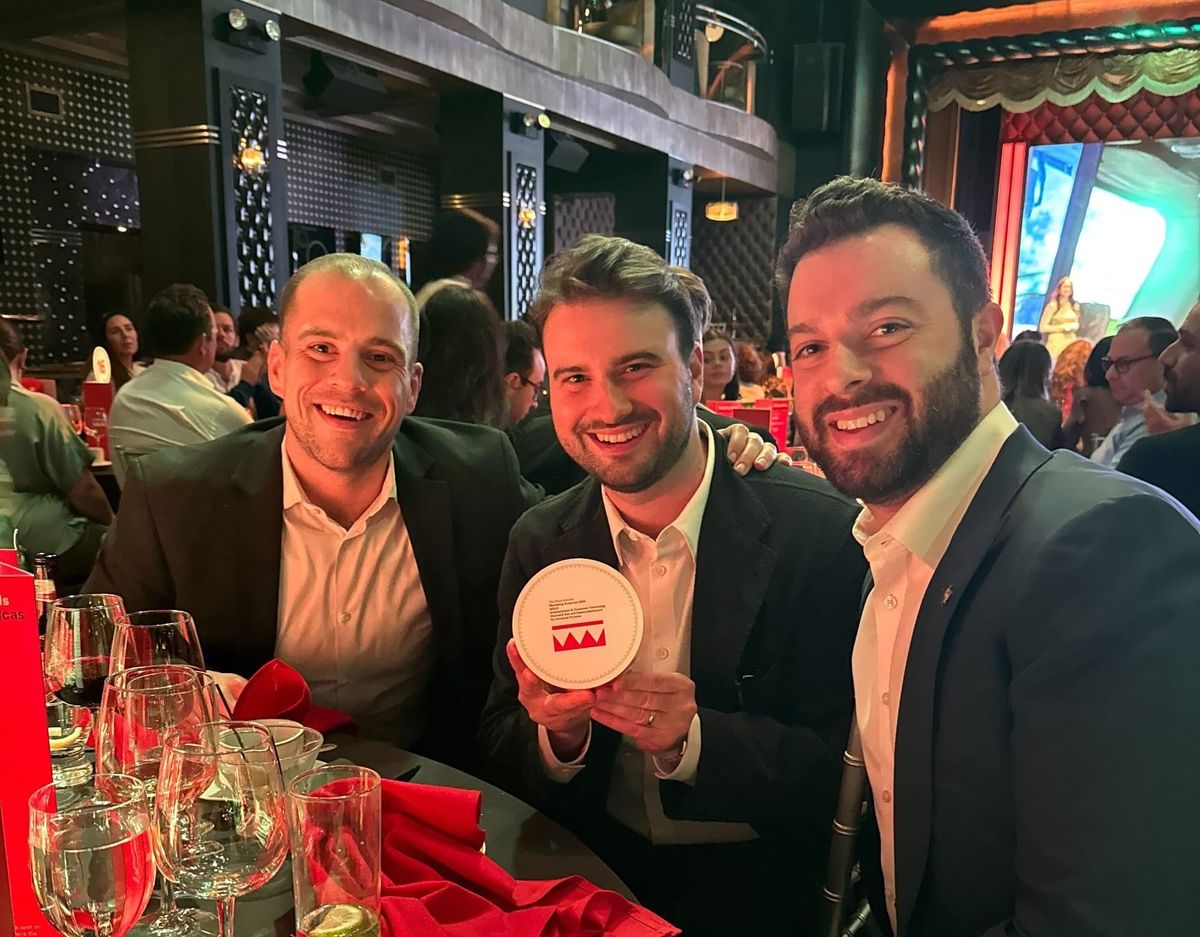
Overwolf Ads Takes Home Two Wins at The Drum Awards Americas 2026
Overwolf Ads secured two awards at The Drum Awards Americas 2026, adding to a recent Silver win in the EMEA division. The Gold award was presented for Entertainment and Consumer Technology, while a Bronze recognized achievement in Gaming, both awarded for the Nobody 2 × Fortnite campaign developed with EssenceMediacom, Sawhorse Productions and Universal Pictures. The campaign leveraged the fact that 1.86 billion PC gamers worldwide include 113 million who use Overwolf, and that action‑shooter players are 1.7 times more likely to visit cinemas each month, with a 34 % higher chance of seeing action films on opening weekend. The brief required making Universal’s Nobody 2 culturally unavoidable for 25‑34‑year‑old gamers. Execution involved creating a bespoke non‑player character (NPC) of Bob Odenkirk’s Hutch Mansell directly inside Fortnite’s Speed Realistics 2v2 map, complete with custom voice lines, wearable cosmetics and weapon skins sourced from the film. In‑lobby movie posters were scattered across the map, turning gameplay into an immersive cinematic experience rather than a traditional ad. Results included over 1 million players engaging with branded cosmetics, an average of 27 minutes of playtime featuring Nobody 2 content, and more than 25 million NPC impressions. The campaign’s integration into Fortnite’s mainstream culture generated mass box‑office awareness among action fans, aligning with the campaign’s objective. Overwolf Ads, a leading gaming advertising platform that reaches 113 million monthly gamers across major titles and premium sites, continues to attract high‑profile brands such as Universal Pictures, P&G, AMD, and Monster Energy.
- Overwolf Ads won Gold and Bronze at The Drum Awards Americas 2026 for the 'Nobody 2 × Fortnite' campaign, which integrated film-specific content directly into a custom Fortnite map.
- The campaign achieved over 1 million player engagements with branded cosmetics and generated more than 25 million NPC impressions.
- Players spent an average of 27 minutes interacting with 'Nobody 2' content, demonstrating the effectiveness of immersive in-game advertising over traditional formats.
- The strategy targeted 25–34-year-old gamers based on data showing action-shooter players are 1.7 times more likely to visit cinemas monthly and 34% more likely to see action films on opening weekend.
- Overwolf Ads leverages a reach of 113 million monthly PC gamers to attract high-profile clients including Universal Pictures, P&G, AMD, and Monster Energy.
+3
OverwolfJun 2026
Article
Overwolf Ads Wins Silver at The Drum Awards Marketing EMEA 2026
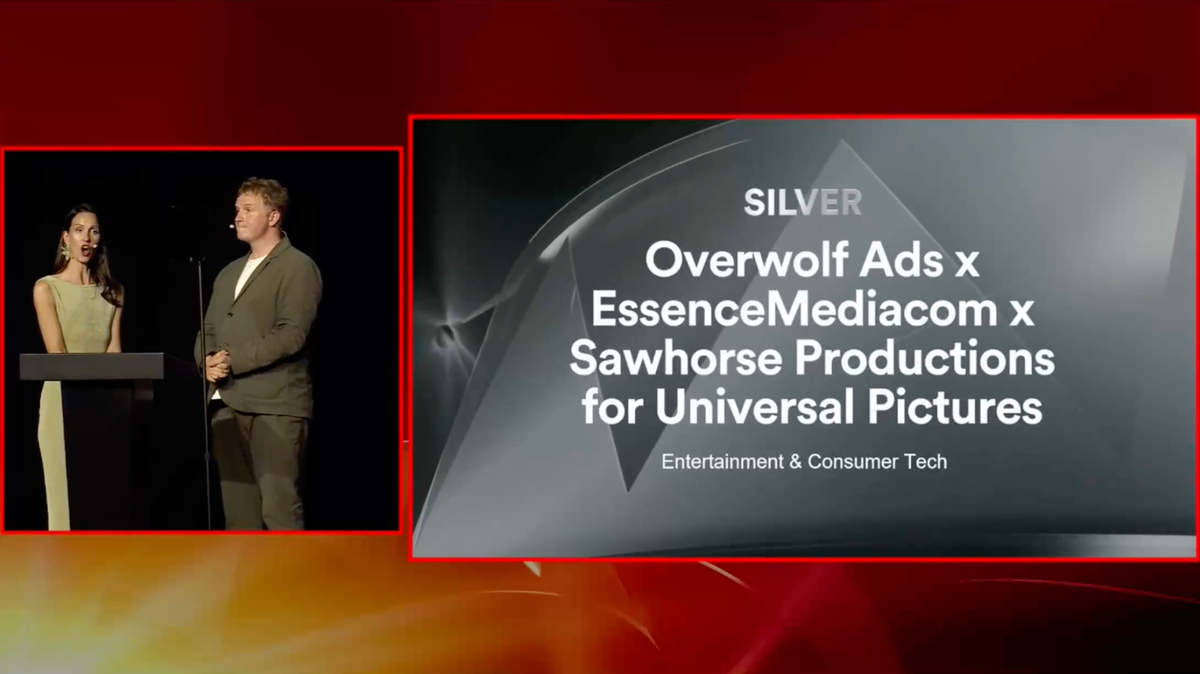
Overwolf Ads secured a Silver award in the Entertainment & Consumer Technology category at The Drum Awards Marketing EMEA 2026, underscoring the effectiveness of in‑game advertising when executed with creativity and authenticity. The award highlights a partnership between Overwolf, Universal Pictures, EssenceMediacom, and Sawhorse Productions that brought the film Nobody 2 into Fortnite’s popular Speed Realistics 2v2 map. By creating a custom non‑player character modeled after Bob Odenkirk’s role, complete with voice lines recorded by the actor and movie‑derived cosmetics and weapon skins, the campaign transformed routine gameplay into an immersive cultural moment rather than a conventional ad. In‑lobby movie posters further integrated the film’s branding into the gaming environment.
Key performance metrics demonstrate significant engagement: over one million players interacted with branded cosmetics, an average playtime of 27 minutes was recorded for the Nobody 2 experience, and more than 25 million NPC impressions were generated. These results illustrate how targeting the 1.86 billion PC gamer population—of which Overwolf serves 113 million—can drive mass box‑office awareness among action‑film enthusiasts, who are statistically 1.7 times more likely to visit cinemas monthly and 34 % more inclined to see action releases on opening weekends.
The campaign’s success reflects Overwolf’s position as a leading gaming advertising platform, recognized by industry bodies such as Comscore and ADWEEK. The Silver award affirms the platform’s capacity to deliver innovative, culturally relevant advertising solutions across major titles and premium gaming websites in 2026.
- Overwolf Ads won a Silver award at The Drum Awards Marketing EMEA 2026 for a campaign integrating the film 'Nobody 2' into a 'Fortnite' map.
- The campaign generated over 25 million NPC impressions and saw more than one million players interact with branded in-game cosmetics.
- Players engaged with the 'Nobody 2' experience for an average of 27 minutes, demonstrating the effectiveness of immersive, non-conventional in-game advertising.
- The project was a collaborative effort between Overwolf, Universal Pictures, EssenceMediacom, and Sawhorse Productions, featuring custom NPCs with original voice lines and movie-themed skins.
- Action-film enthusiasts are 1.7 times more likely to visit cinemas monthly and 34% more inclined to see action releases on opening weekends, making them a high-value target for gaming-based marketing.
+1
OverwolfJun 2026

Article
Jounce Media Officially Recommends Desktop Apps as Premium Ad Environment
Jounce Media’s June 2026 analysis designates desktop applications—such as Spotify, Slack and gaming companion tools—as a distinct premium advertising environment. The study reports that desktop app inventory now generates 11 % of all web bid requests, surpassing any single traditional web publisher and indicating a sizable supply source that is likely to expand as conventional web traffic declines. Among the 241 desktop apps identified, 215 are powered by Overwolf, accounting for 89 % of the category and 68 % of total supply; CurseForge emerges as the largest individual app.
The methodology relies on Jounce’s Seller Profiles, Exchange Profiles and Property Scores to quantify supply volumes and assess quality. The report recommends that buyers target trusted publishers within this space, emphasizing three best‑practice criteria: clear environment identification via dedicated user agents and app‑specific domains; ad refresh rules that align with MRC viewability standards (refresh only when 50 % of pixels are visible); and reliance on MRC‑accredited viewability vendors to flag false positives.
For advertisers, the findings suggest a strategic shift toward desktop app inventory as a scalable premium source, with Overwolf offering deterministic first‑party data and viewability safeguards. For in‑game creators, advertising revenue generated through Overwolf supports a broader ecosystem, aligning with the platform’s goal of disbursing $1 billion to creators by 2030. The analysis underscores a growing, trusted environment that benefits brands, agencies and content developers alike.
- Desktop applications now account for 11% of all web bid requests, positioning them as a major premium advertising environment that exceeds the scale of any individual traditional web publisher.
- Overwolf powers 215 of the 241 identified desktop apps, representing 89% of the category and 68% of the total supply, with CurseForge identified as the largest individual app.
- Advertisers are advised to target desktop app inventory as a scalable, premium alternative to declining conventional web traffic, leveraging deterministic first-party data and built-in viewability safeguards.
- To ensure quality, buyers should verify environment identification through dedicated user agents and app-specific domains while utilizing MRC-accredited vendors to monitor for false positives.
- Ad refresh policies in this environment must align with MRC viewability standards, specifically requiring that ads only refresh when at least 50% of pixels are visible.
+3
OverwolfJun 2026
Article
What Media Channels Reach Gen Z Most Effectively? An Architecture for Attention
Effective engagement with Gen Z requires an architectural approach to media planning that moves beyond single-channel strategies. Rather than treating platforms as interchangeable inventory, brands should sequence media across three distinct functional layers: breadth, discovery, and depth. This framework ensures that marketing efforts align with the specific behavioral context of the audience, maximizing both reach and conversion.
The breadth layer is anchored by YouTube, which serves as a structural foundation due to its massive reach—covering nine-in-ten U.S. teens—and long session durations that facilitate video completion. The discovery layer utilizes short-form video platforms like TikTok and Instagram Reels, which function as primary research surfaces for consumer intent. Finally, the depth layer leverages in-game environments to capture high-attention, active engagement. Unlike passive scrolling, PC gaming sessions often exceed two hours, providing a premium environment for non-disruptive, contextual placements that correlate with higher purchase intent and brand consideration.
Data indicates that contextual in-game advertising, such as rewarded achievements, consistently outperforms passive social environments in attention metrics. By avoiding interruptive formats and serving ads during natural session breaks, brands can maintain positive sentiment while benefiting from the high cognitive focus of players. Successful execution relies on verified, first-party insights and third-party validation to ensure media quality. Ultimately, the most effective media plans treat these channels as a sequenced ecosystem, using breadth to establish awareness, discovery to capture intent, and depth to secure meaningful brand interactions.
- Effective Gen Z media strategies require an 'Attention Architecture' that sequences three distinct layers: breadth (YouTube), discovery (short-form video), and depth (in-game environments).
- YouTube serves as the primary breadth anchor, with 90% of U.S. teens using the platform and 70% of Gen Z adults spending at least one hour per session.
- Short-form video platforms like TikTok and Instagram Reels function as primary discovery and research surfaces, with 63% and 61% of teens using them respectively.
- In-game advertising provides a high-attention depth layer, as PC gaming sessions frequently exceed two hours and offer an active, non-passive state for brand engagement.
- Contextual in-game placements, such as Overwolf Ads, deliver premium video completion rates and attention scores that outperform traditional social media platforms.
+2
OverwolfJun 2026
Article
Overwolf Ads at Cannes Lions 2026
Overwolf Ads has positioned itself as a key player in the gaming advertising landscape by sponsoring Cannes Lions 2026, the premier global creative and advertising festival. The initiative includes four activations that bring together senior leaders from brands, agencies, media, and technology to discuss emerging opportunities in non‑traditional inventory. Events such as the “Yes We Cannes!” welcome party, a relaxed happy hour on the Croisette, and two Unplugged Sessions—“The Attention Shift” and “The New Living Room”—focus on how attention is shifting into gaming environments, creator platforms, community spaces, and the modern home. Speakers from Overwolf, Havas, Livewire, tvScientific, Magnite, and Mondelēz International outline strategies for measuring, investing in, and leveraging premium engagement across interactive gaming, streaming, social interaction, and CTV.
The program targets a global audience of advertisers and media planners, offering insights into how brands can quantify attention value in these evolving spaces. Overwolf’s presence is reinforced by a dedicated team on site, including CMO Shahar Sorek and COO Eyal Betzalel, ready to discuss programmatic gaming, attention measurement, and the Adelaide AU Ecosystem. With a monthly reach of over 113 million users across major titles and premium gaming sites, Overwolf is positioned as the #2 US gaming property by Comscore and has earned accolades from ADWEEK, Digiday, and The Drum. Its partnerships with global brands such as Universal Pictures, P&G, AMD, and Nissan underscore its credibility in delivering high‑impact advertising solutions within the gaming ecosystem.
- Overwolf currently reaches over 113 million monthly users, establishing itself as the second-largest gaming property in the US according to Comscore.
- At Cannes Lions 2026, Overwolf is positioning gaming environments as a primary destination for brand investment by focusing on attention measurement and non-traditional inventory.
- The company is leveraging partnerships with major global brands including Universal Pictures, P&G, AMD, and Nissan to validate its high-impact advertising solutions.
- Overwolf’s strategic focus involves integrating programmatic gaming and the Adelaide AU Ecosystem to help advertisers quantify attention value across interactive and social gaming spaces.
- The company is facilitating industry-wide discourse on the shift of consumer attention toward gaming, creator platforms, and connected TV through collaborations with Havas, Livewire, and Mondelēz International.
+1
OverwolfJun 2026
Article
May Recap: Full-Screen OOPO Rendering, Subnautica 2, and Award-Winning Brand Wins
The May 2026 Overwolf developer update outlines significant technical advancements and strategic growth within the platform’s ecosystem. The primary focus centers on enhancing the Out-of-Process Overlay (OOPO) framework, which now supports full-screen exclusive rendering. This technical milestone allows for overlay functionality in competitive gaming environments without interfering with user mouse and keyboard inputs, while simultaneously delivering optimized rendering performance.
Beyond technical infrastructure, the platform expanded its game support by officially integrating Subnautica 2. Given the title's rapid ascent into the top 10 rankings on both Overwolf and Steam, this addition provides new opportunities for developers to create companion apps, interactive maps, and stat trackers. The platform also reported the addition of 24 new supported games throughout the month, further broadening the potential reach for third-party application developers.
Commercial and brand-related activities remained a key pillar of the month’s progress. Overwolf secured industry recognition, including the Best Gaming Platform award at the Campaign Media Company of the Year Awards and the Best Use of Interactive Technology at the Chief Marketer Ignite Awards. Strategic outreach efforts, including a roadshow involving engagements with major industry stakeholders like PlayStation, EA, and Adidas, aimed to strengthen monetization pipelines for the developer community. These efforts, combined with high-profile brand campaigns such as the Men's Wearhouse integration in Minecraft, are designed to increase premium ad inventory demand and enhance overall monetization potential for creators within the ecosystem.
- Overwolf implemented full-screen exclusive rendering for its Out-of-Process Overlay (OOPO) framework, enabling overlay functionality in competitive games without disrupting user inputs.
- The platform officially added support for Subnautica 2, a top-10 title on both Overwolf and Steam, creating new development opportunities for companion apps and trackers.
- Overwolf expanded its ecosystem by adding 24 new supported games during May 2026, increasing the potential reach for third-party application developers.
- The company secured industry recognition by winning Best Gaming Platform at the Campaign Media Company of the Year Awards and Best Use of Interactive Technology at the Chief Marketer Ignite Awards.
- Strategic outreach roadshows were conducted with major stakeholders including PlayStation, EA, and Adidas to strengthen monetization pipelines for developers.
+2
OverwolfMay 2026
Article
Overwolf Ads Wins Best Use of Interactive Technology at the Chief Marketer Ignite Awards
Overwolf Ads secured the Best Use of Interactive Technology award at the 2026 Chief Marketer Ignite Awards for its “78‑Minute Gamer Break” campaign, a partnership with dentsu X and Tropicana’s Naked Smoothie. The initiative targeted Gen Z PC gamers, leveraging Overwolf’s platform that reaches 113 million monthly users across titles such as Fortnite, VALORANT and Apex Legends. Data analysis identified a natural pause in gameplay at the 78‑minute mark, an untapped brand moment. The campaign deployed contextual in‑game messaging and rewards precisely at that interval, supplemented by video, display and rich media during loading screens and lobby wait times. Results included engagement from over one million players, 48 000 hours of cumulative playtime (equivalent to 5.48 years), and measurable lifts in purchase intent, brand favorability, awareness and recall. The win follows three Drum Awards 2025 victories and a Campaign Tech Awards 2026 shortlist for Best Use of Gaming. Methodology centered on behavioral data from Overwolf’s user base and in‑game performance metrics, with no external survey sample noted. The campaign demonstrates how precise timing and integrated media can convert gaming pauses into high‑impact advertising moments for consumer brands.
- Overwolf Ads won the 2026 Chief Marketer Ignite Award for a campaign that leveraged behavioral data to identify a natural gameplay pause at the 78-minute mark for Gen Z PC gamers.
- The campaign, executed with dentsu X and Tropicana’s Naked Smoothie, reached a portion of Overwolf’s 113 million monthly active user base across titles like Fortnite, VALORANT, and Apex Legends.
- The initiative generated engagement from over one million players, resulting in 48,000 hours of cumulative playtime.
- The strategy utilized contextual in-game messaging at the identified 78-minute interval, supported by video, display, and rich media during loading screens and lobby wait times.
- The campaign achieved measurable improvements in brand awareness, recall, favorability, and purchase intent without relying on external survey samples.
+2
OverwolfMay 2026
Article
Overwolf Ads Shortlisted for 4 Categories at The Drum Awards Marketing Americas 2026
Overwolf Ads has earned shortlist status in four distinct categories—Entertainment & Consumer Technology, Digital Experience, Gaming, and Technology Innovation—at The Drum Awards Marketing Americas 2026. The nominations stem from a pioneering in‑game activation for Universal Pictures’ “Nobody 2,” which introduced the film’s lead character, portrayed by Bob Odenkirk, directly into Fortnite. The campaign leveraged a custom NPC of Hutch Mansell on the popular Speed Realistics 2v2 map, complete with voice lines, cosmetics, and weapon skins sourced from the movie, while in‑lobby posters further immersed players.
The activation targeted 25‑34‑year‑old gamers, a demographic identified through data indicating that action/shooter players are 1.7 times more likely to visit cinemas monthly and exhibit a 34 % higher propensity for action films on opening weekends. Overwolf’s platform, hosting 113 million premium‑title players out of a global PC gaming base of 1.86 billion, provided the ideal audience.
Measured results include over 25 million NPC impressions, more than one million players engaging with branded cosmetics, and an average engagement time of 27 minutes per player. These metrics underscore the campaign’s effectiveness in blending entertainment content with interactive advertising, positioning Overwolf Ads as a leader in immersive marketing solutions. Winners will be announced on June 4th, with the full shortlist available online.
- Overwolf Ads achieved four shortlist nominations at The Drum Awards Marketing Americas 2026 for an in-game promotional campaign for Universal Pictures’ film 'Nobody 2'.
- The campaign integrated a custom NPC of the film’s lead character, voice lines, and branded cosmetics directly into a 'Fortnite' map, generating over 25 million NPC impressions.
- The activation reached over one million players who engaged with branded cosmetics for an average of 27 minutes per player.
- The campaign targeted 25–34-year-old gamers, a demographic identified as 1.7 times more likely to visit cinemas monthly and 34% more likely to watch action films on opening weekends.
- Overwolf’s platform currently hosts 113 million premium-title players out of a total global PC gaming market of 1.86 billion.
+1
OverwolfMay 2026
Article
Overwolf Ads Honored Finalists at ThinkLA Idea Awards
Overwolf Ads announced that its “Nobody 2” campaign, developed with EssenceMediacom and Sawhorse, has been named a finalist in the Best Entertainment Campaign category at the ThinkLA Idea Awards. The campaign leveraged Overwolf’s gaming platform, which reaches 113 million monthly PC gamers worldwide, to embed a fully bespoke NPC of Bob Odenkirk’s character Hutch Mansell into Fortnite’s Speed Realistics 2v2 map. Custom voice lines, film‑derived cosmetics, and in‑lobby posters created an immersive experience that felt like the movie itself rather than a traditional ad placement.
Key performance metrics include over 25 million NPC impressions, more than one million players engaging with branded cosmetics, and an average engagement time of 27 minutes. These results demonstrate the effectiveness of integrating cinematic content directly into a popular gaming environment to reach the 25‑34 year‑old gamer demographic, who are statistically more likely to visit cinemas and watch action films.
The initiative showcases Overwolf’s ability to blend interactive technology with brand storytelling, positioning the platform as a leading partner for advertisers seeking high‑impact, data‑driven campaigns across major titles. Winners of the ThinkLA Idea Awards will be announced at the gala on June 17, with Overwolf’s team anticipating recognition for their innovative approach.
- The Overwolf “Nobody 2” campaign, a finalist for the ThinkLA Idea Awards, achieved over 25 million NPC impressions by embedding a bespoke Bob Odenkirk character into a Fortnite map.
- The campaign recorded an average engagement time of 27 minutes, with more than one million players interacting with branded in-game cosmetics.
- Overwolf’s platform reaches 113 million monthly PC gamers, providing a high-scale environment for integrating cinematic content directly into popular titles.
- The initiative targeted the 25–34-year-old demographic, a segment statistically identified as having a higher propensity for cinema attendance and action film viewership.
- The collaboration between Overwolf, EssenceMediacom, and Sawhorse utilized custom voice lines and in-lobby assets to replace traditional ad placements with immersive, narrative-driven experiences.
+1
OverwolfMay 2026