
Game Developers Conference
Game Developers Conference (GDC, now the GDC Festival of Gaming) is the professional event for the games industry. It publishes recorded talks and interviews, annual industry survey reports such as the State of the Game Industry, and news articles.
Documents
The Nature of Order in Game Narrative
Architectural theory provides a transformative framework for game design, positing that the principles of wholeness and authenticity found in physical construction are essential for creating enduring, living game narratives.
- Applying Christopher Alexander’s architectural pattern languages to game design creates cohesive, living narratives by prioritizing structural wholeness over superficial aesthetics.
- Effective narrative design requires the use of structural patterns such as alternating repetition, positive and negative space, and deep interlock to manage pacing and thematic contrast.
- Designers should incorporate intentional roughness and imperfection to foster a sense of authenticity that is often missing from overly polished, sterile environments.

Board Game Design Day: Cardboard Interfaces: UX for Board Games
Board game design functions as a form of physical user interface engineering, where the primary objective is to facilitate player interaction with abstract systems.
- Board game usability can be measured using Jakob Nielsen’s five attributes: learnability, memorability, efficiency, accuracy, and satisfaction.
- When designing card layouts, prioritize information placement based on the player's context; for example, Seven Wonders places costs in the top-left for hand-held cards, while Dominion places them in the bottom-left because cards are played on the table.
- To maintain player engagement during scoring phases, designers should avoid slow, manual token-based systems and consider integrated score tracks, provided they align with the game's specific rhythm and frequency of scoring.
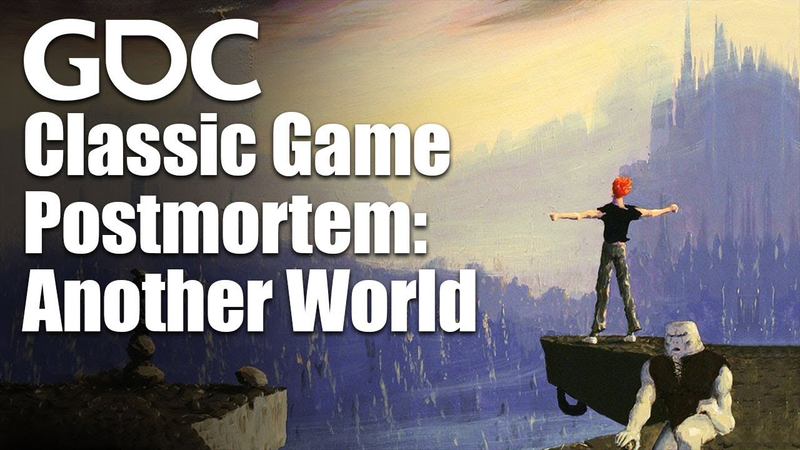
Classic Game Postmortem - Another World
The development of Another World between 1989 and 1991 represents a landmark shift in game design, characterized by a transition from traditional sprite-based graphics to an entirely polygon-based cinematic experience.
- The development of Another World (1989–1991) achieved a cinematic experience by utilizing a custom, proprietary interpreted language that allowed for real-time iteration and a total file size of just 84KB.
- The game transitioned from traditional sprite-based graphics to an entirely polygon-based engine, enabling high-rhythm narrative flow on Amiga hardware despite severe memory and color palette constraints.
- Development relied on an improvisational, chronological approach rather than rigid design documents, allowing the narrative to evolve through experimentation and discovery.
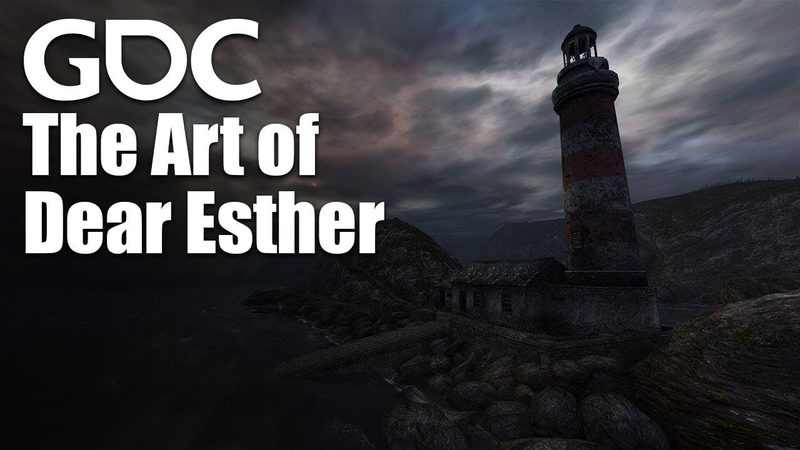
The Art of Dear Esther – Building an Environment to tell a Story
The environmental design of the game Dear Esther serves as a primary vehicle for narrative delivery, moving beyond the traditional role of a static backdrop to become an active participant in storytelling.
- Environmental design serves as the primary narrative vehicle in Dear Esther, functioning as an active participant in storytelling rather than a static backdrop.
- The project, originally developed as a 2008 Source engine mod, intentionally stripped away traditional gameplay mechanics to prioritize an ambiguous, emotionally driven narrative.
- Developers achieved immersion by prioritizing an impressionistic aesthetic—focusing on lighting, atmosphere, and color—over technical fidelity or photorealism.
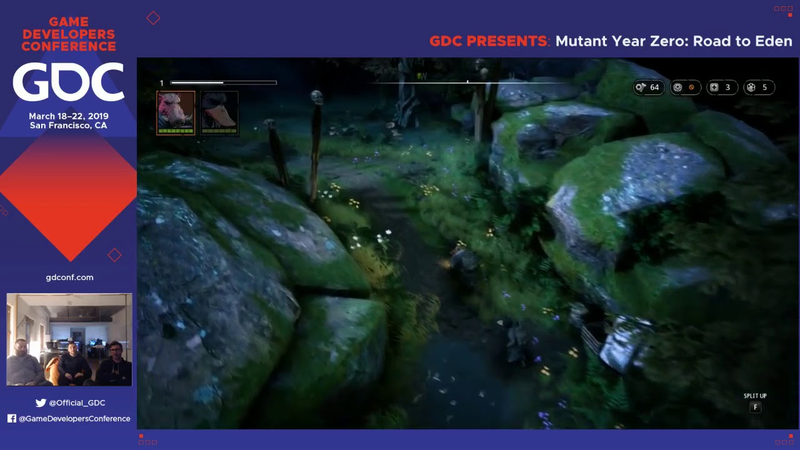
GDC Plays Mutant Year Zero: Road to Eden with The Bearded Ladies
Mutant Year Zero: Road to Eden represents a strategic effort to adapt a classic Swedish tabletop role-playing game into a narrative-driven, turn-based tactical experience.
- The developers of Mutant Year Zero: Road to Eden utilized a modular asset workflow in Unreal Engine 4 that allowed them to bring a new map from prototype to a functional state within approximately one week.
- To manage the development of handcrafted levels with a small team, the studio relied heavily on outsourcing, hiring an outsourcing manager as one of their first key recruits.
- The game design prioritizes rewarding tactical positioning over RNG-heavy combat, specifically by ensuring that flanking maneuvers provide high hit probabilities to avoid the frustration of missing shots in advantageous positions.
Taking Back What's Ours: The AI of Dishonored 2
The artificial intelligence architecture of Dishonored 2 centers on a data-driven framework designed to facilitate complex, emergent gameplay while maintaining high performance on console hardware.
- Arkane Studios implemented a 'shuffle bag' system for NPC barks to prevent repetitive dialogue, where action lists are shuffled during initialization and again upon completion to ensure variety.
- The AI team utilized a 'Dynamic Space Management' (DSM) system for spatial reasoning, using influence map layers to store and propagate data like danger ratings across a grid to guide NPC movement and search behaviors.
- To coordinate group combat, the team employed a 'crew' system where individual NPCs post requests to join a group based on shared objectives, allowing for emergent behavior while maintaining individual decision-making.

Playing with Pride: When Game Culture and LGBTQ Culture Collide
The intersection of LGBTQ+ identity and gaming culture reveals a complex history of alienation transformed into a powerful medium for self-discovery and community building.
- LGBTQ players often use character creators as a safe space to explore gender identity, frequently projecting their own identities onto characters or utilizing non-human avatars to bypass rigid gender constraints.
- The gaming industry has historically been perceived as unwelcoming or hostile by LGBTQ individuals, leading many to abandon titles like World of Warcraft due to bullying or a lack of representation.
- Queer gamers are increasingly organizing into formal communities and physical meetups, such as the former Gamer X convention, to share resources and advocate for more inclusive game content.
Classic Game Postmortem: The Bard's Tale I and II
The development of The Bard’s Tale series emerged from a desire to transcend the technical and immersive constraints of early 1980s dungeon crawlers.
- The Bard's Tale series succeeded by replacing wireframe-based dungeon crawlers with bitmap graphics, integrated music, and autonomous party mechanics to increase player immersion.
- Development prioritized a simplified, cohesive four-class system set in the city of Skara Brae, moving away from the more complex, fragmented systems of predecessors like Wizardry.
- The technical foundation of the series relied on 6502 assembly language expertise combined with the developer's background as a tabletop dungeon master.
Bringing Hell to Life: AI and Full Body Animation in DOOM
Modernizing artificial intelligence animation in DOOM requires a fundamental shift from traditional stick-input systems toward a direct-control architecture that prioritizes high-fidelity, full-body performance.
- The animation system shifts from traditional stick-input models to a direct-control architecture, allowing animators to prioritize high-fidelity, full-body performance over rigid technical constraints.
- Delta correction and inverse kinematics are used to dynamically adjust stylized animations for spatial alignment and precise focus tracking, enabling a smaller library of assets to function across diverse environments.
- The engine maintains visual fluidity through foot-phase synchronization for locomotion cycles and AI-driven hip rotation to prevent interpenetration and visual artifacts.
Rick and Morty: Virtual Rick-ality Postmortem: VR Lessons *Burrrp* Learned
The development of Rick and Morty: Virtual Rick-ality centers on the challenge of translating a high-energy, dimension-hopping animated franchise into a functional and immersive virtual reality experience.
- Successful VR design requires masking technical constraints like geometry clipping and rendering limitations through narrative humor and creative environmental design.
- The development team leveraged the existing framework from Job Simulator, prioritizing physical interaction and zone-based teleportation to maintain player comfort.
- Technical performance was maintained through sophisticated optimizations, including depth masks for seamless portal transitions and dynamic toggling of lighting and mirrors.
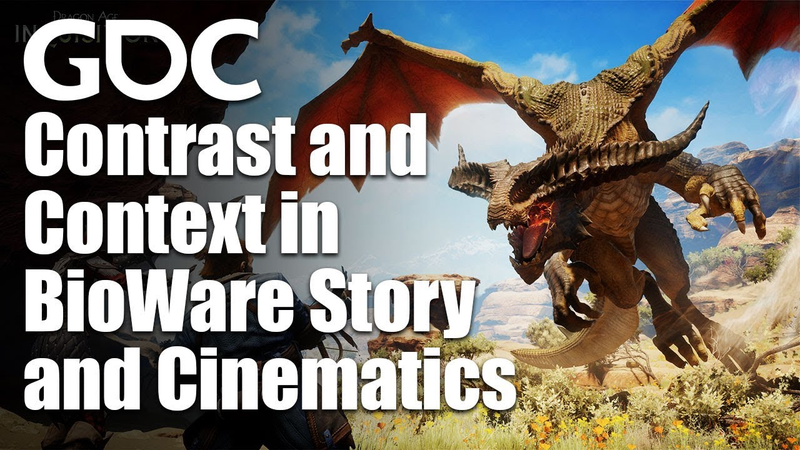
Contrastive Juxtaposition: Contrast and Context in BioWare Story and Cinematics
BioWare establishes narrative depth and emotional resonance by employing contrastive juxtaposition, a design philosophy that places opposing elements in direct proximity to manipulate player perception.
- BioWare utilizes 'narrative polarity'—a two-dimensional coordinate system of opposing themes—to create meaningful player choices and emotional engagement, such as the conflict between chaos and order in Mass Effect 3.
- To ensure narrative consistency across departments, developers should avoid overwhelming teams with massive documentation and instead use simple, contrast-based communication to define core themes early in production.
- Removing 'neutral' dialogue options in Mass Effect 3 forced players to commit to polarized choices, preventing them from sitting on the fence and ensuring that decisions had a more significant impact on the game world.
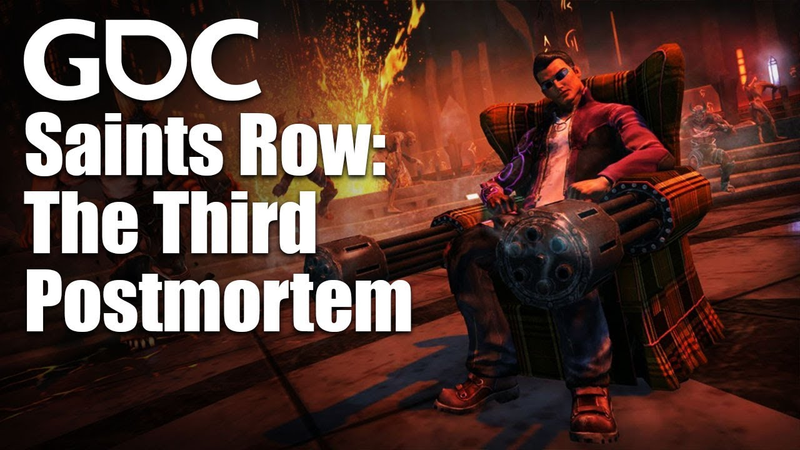
Designing Over the Top - Saints Row: The Third Postmortem
Saints Row: The Third represents a pivotal shift in the franchise’s trajectory, moving away from the inconsistent narrative and gameplay identity of its predecessors toward a unified, self-aware, and intentionally over-the-top experience.
- The development team successfully unified the franchise's identity by pivoting to a self-aware, over-the-top tone after a difficult six-month development reset.
- Rigorous scope management involved 26 scheduled reviews, which resulted in the removal of approximately 4,000 man-days of work to maintain focus on core pillars.
- To align a team where 80 percent of staff were new to the series, the studio prioritized early prototyping, pre-visualization, and cross-disciplinary collaboration over static paper specifications.