
Game Developers Conference
Game Developers Conference (GDC, now the GDC Festival of Gaming) is the professional event for the games industry. It publishes recorded talks and interviews, annual industry survey reports such as the State of the Game Industry, and news articles.
Documents
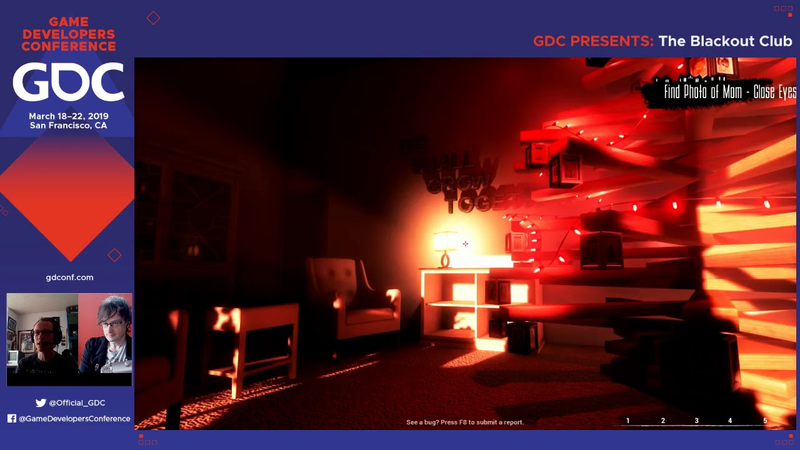
GDC Q&A with Blackout Club developers Jordan Thomas and Michael Kelly
The development of the cooperative horror title The Blackout Club represents a strategic pivot toward sustainable, community-driven game design.
- The developers of 'The Blackout Club' leveraged their experience with immersive sims like 'BioShock' and 'Dishonored' to build a cooperative horror game that emphasizes player vulnerability and parkour-based movement over combat.
- To manage the complexity of a four-player multiplayer game, the team utilized a long-term beta testing strategy that began in the summer of 2018, well ahead of their 2019 release, to gather feedback from their newsletter and Discord community.
- The game employs a procedural mission system designed like a deck of cards, where different objectives are shuffled and dealt to players each night to ensure that no two gameplay sessions are identical.
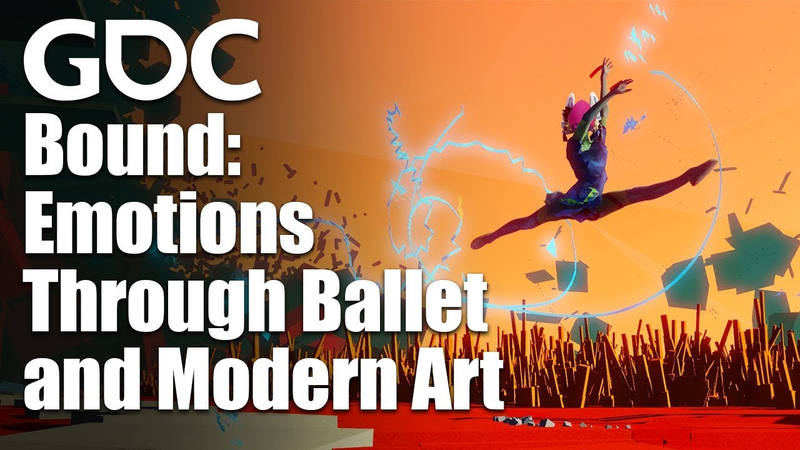
Bound: Emotions Through Ballet and Modern Art
Bound represents an experimental approach to interactive storytelling, blending the technical heritage of the Polish demoscene with the aesthetic principles of 20th-century modern art.
- The development team shifted from a 'demo scene' mentality—where projects were kept secret to maintain a competitive advantage—to a rigorous playtesting model that identified two distinct player groups: those emotionally connected to the narrative and those who were not.
- To achieve fluid, expressive movement, the team abandoned initial plans for a runner-style character in favor of a ballerina, ultimately hiring professional dancer Maria Udod and choreographer Michal Gorol for motion capture.
- The team overcame communication barriers with the choreographer by breaking down complex dance and gymnastic movements into tiny, manageable video clips for study and reference.
Zen and the Art of Game Audio Maintenance
The art of game audio maintenance centers on managing the complex relationship between creative ambition, technological constraints, and the high-pressure environment of game development.
- Audio designers should adopt a cyclical workflow based on project states—pre-wave, wave, and post-wave—to manage the technical and psychological pressures of game development.
- During the pre-wave phase, designers must map the entire signal chain and implement standardized test signals like pink noise to ensure consistent hardware calibration.
- Proactive signal verification allows for the rapid identification of hardware failures, such as blown tweeters, which are often obscured by the complexity of a full game mix.
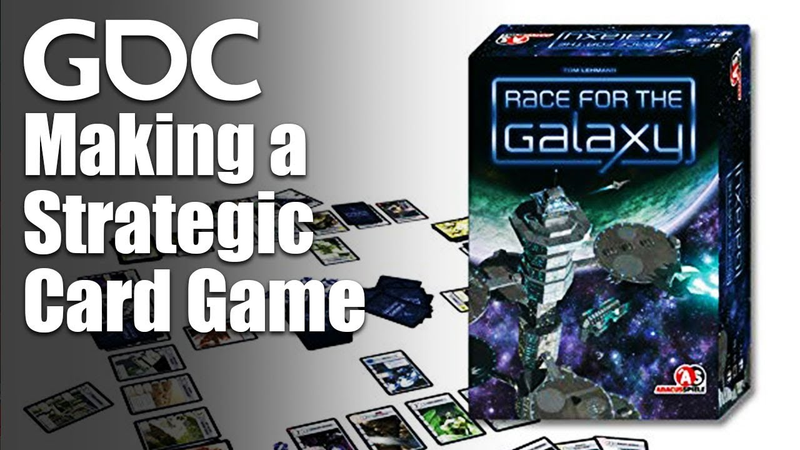
Designing Race for the Galaxy: Making a Strategic Card Game
Race for the Galaxy functions as a strategic card game that prioritizes player agency and economic tension by utilizing a dual-purpose card system.
- The core economic tension is driven by a dual-purpose card system where players must choose between using cards as currency or as permanent empire-building assets.
- Simultaneous action selection eliminates traditional turn-order constraints, allowing for a faster, high-stakes environment focused on tactical bluffing and hidden information.
- Anti-snowballing measures, such as individual bonuses for consume and trade actions, prevent dominant players from monopolizing resources and ensure long-term balance.
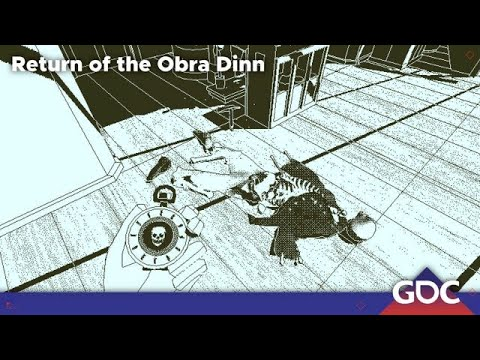
GDC Live Q&A: Lucas Pope and Return of the Obra Dinn
Return of the Obra Dinn represents a deliberate departure from conventional market-driven development, favoring a niche, art-first philosophy that prioritizes mechanical integrity over broad appeal.
- Return of the Obra Dinn was developed over a four-and-a-half-year period as an independent project that prioritized mechanical integrity and a niche, art-first philosophy over broad market appeal.
- The game features a complex logic puzzle requiring the identification of 60 distinct characters, supported by a 1-bit Macintosh-inspired aesthetic.
- The developer utilized custom dithering techniques to manage the high-contrast visual style, using these technical constraints as a catalyst for defining rigid, purposeful gameplay mechanics.

An Apology for Roger Ebert
The pursuit of artistic validation within the video game industry represents a fundamental misunderstanding of both aesthetic philosophy and the nature of interactive media.
- Video games are fundamentally defined by goal-oriented mechanics and the exercise of player will, which creates a cycle of desire and action incompatible with the passive, detached state required for high art.
- The industry’s pursuit of validation through comparisons to film, literature, and music is a philosophical error that ignores the unique ontological category of interactive media.
- Games function primarily as a form of sophisticated product art rather than sublime art, as they prioritize recreation and engagement over the contemplative, transcendent qualities of traditional fine arts.
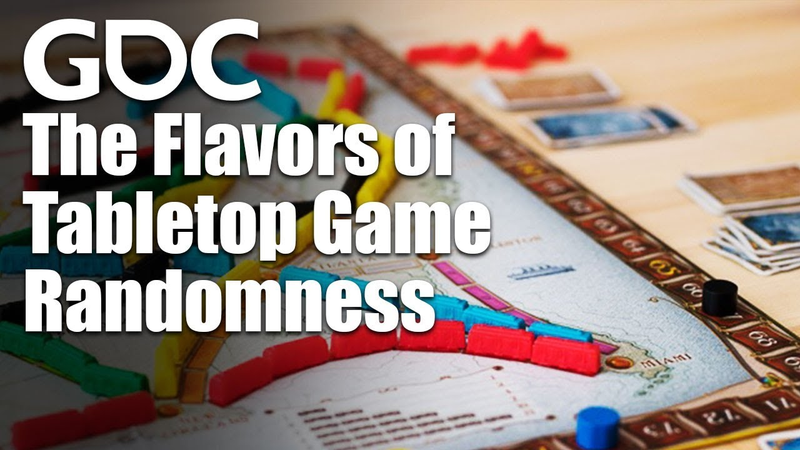
Board Game Design Day: White, Brown, and Pink: The Flavors of Tabletop Game Randomness
Game design relies on the strategic application of randomness to balance player agency with unpredictable outcomes.
- Pink noise is the most effective framework for game design because it balances frequent small adjustments with occasional significant events, mirroring natural systems and human perception.
- Input randomness, which presents a randomized state for players to navigate, is superior to output randomness for supporting deep strategic planning.
- Output randomness determines the result of a player’s decision and is best utilized to introduce tactical variance rather than long-term strategy.
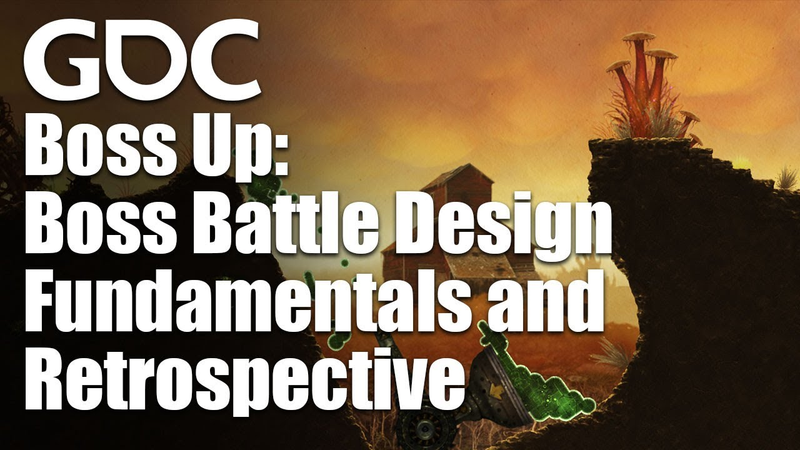
Boss Up: Boss Battle Design Fundamentals and Retrospective
Boss battles function as the definitive microcosm of a game, serving as critical skill gates that synthesize mechanics, narrative, and spectacle into a singular, high-stakes encounter.
- Effective boss design relies on establishing a specific skill, then creating 'negative space'—an environment or attack pattern that forces the player to utilize that exact skill to succeed.
- Boss encounters should provide a 'post-battle' window that allows players to relish their victory, such as the grotesque death animations in God of War 3 or the transition sequences in Mushroom 11.
- Progression tracking can be integrated into the failure state; for example, Cuphead displays a progress bar upon death to show players how close they were to winning, which helps mitigate frustration and potential rage-quitting.
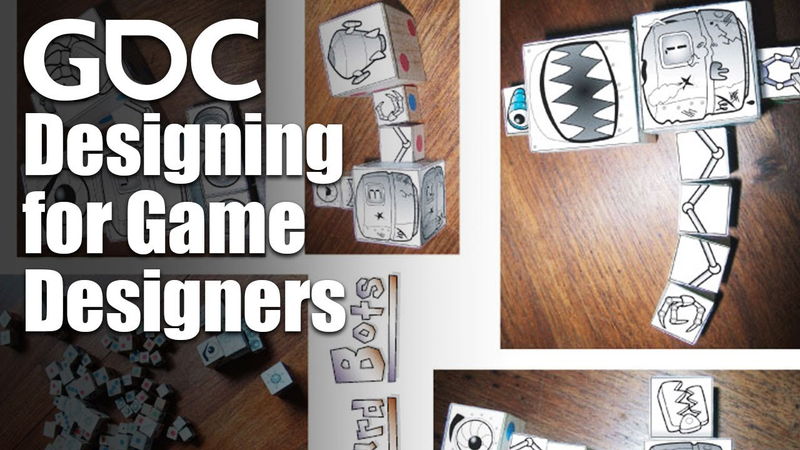
Designing Games for Game Designers
Effective game design requires a rigorous focus on core mechanics, stripping away the complexities of software to reveal the fundamental systems that drive player engagement.
- Game design can be effectively taught through simple, low-tech, analog exercises using dice, cards, and paper that focus on specific mechanics rather than complex software.
- Effective game design exercises should be constrained to prevent overwhelming students with too much creative freedom, allowing them to focus on mastering individual components like goals, obstacles, and rules.
- Game mechanics should be viewed as a series of adjustable slider bars rather than binary states, where the designer's goal is to tune start conditions, goals, and opposition to create a compelling experience.
Improving Critique of Game Projects with Expert and Peer Feedback
Game design education relies on a non-linear, iterative cycle of expansion and contraction, where the primary objective is to cultivate student autonomy and problem-solving skills rather than merely producing polished final products.
- Effective game design education prioritizes the development of student autonomy and problem-solving skills over the creation of polished final products.
- Critique should be structured as a balance between expert guidance and peer-led evaluation to ensure scalability and the development of self-assessment capabilities.
- The YODA model improves feedback quality by requiring participants to focus on experiences, observations, and theories before offering subjective advice.
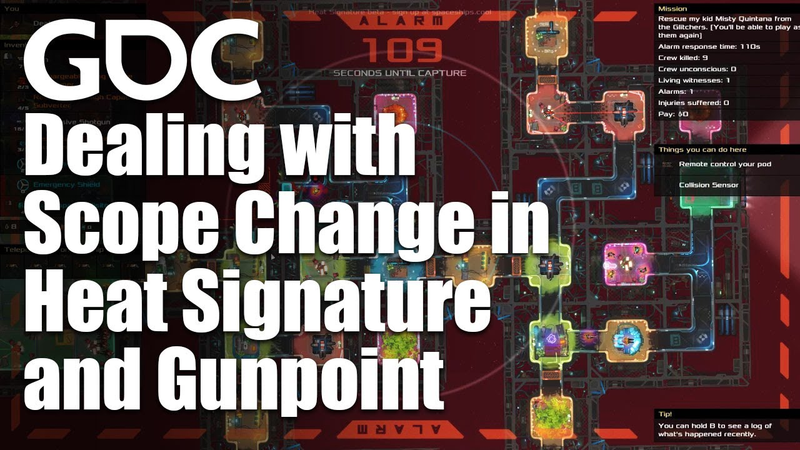
Dealing with Scope Change in Heat Signature and Gunpoint
Development delays in independent game production often stem from a fundamental misunderstanding of scope management, specifically the tendency to underestimate the time required to transform a prototype into a cohesive product.
- Define the minimum viable version of a concept early in development to isolate non-negotiable gameplay elements and prevent unnecessary feature creep.
- Prioritize the core mechanics that define the player experience while strictly ignoring secondary features or external suggestions that fall outside the central vision.
- Use rapid prototyping to validate a game concept before committing to a full production schedule, as this is the most reliable method to avoid perpetual scope expansion.
The Shapes in Your Story: Narrative Mapping Frameworks
Narrative mapping serves as a critical analytical and creative framework for developers of interactive fiction, moving beyond simple site-mapping to create cohesive, player-centric experiences.
- Narrative mapping frameworks prevent common design pitfalls like aimless branching and repetitive loops by prioritizing narrative intent over technical constraints.
- The 'diamond' structure enables varied player paths that converge, allowing for diverse interpretations of events while maintaining a cohesive core story.
- The 'zipper' model manages player agency by distinguishing between minor, non-consequential choices and major, impactful narrative branches.