
Game Developers Conference
Game Developers Conference (GDC, now the GDC Festival of Gaming) is the professional event for the games industry. It publishes recorded talks and interviews, annual industry survey reports such as the State of the Game Industry, and news articles.
Documents
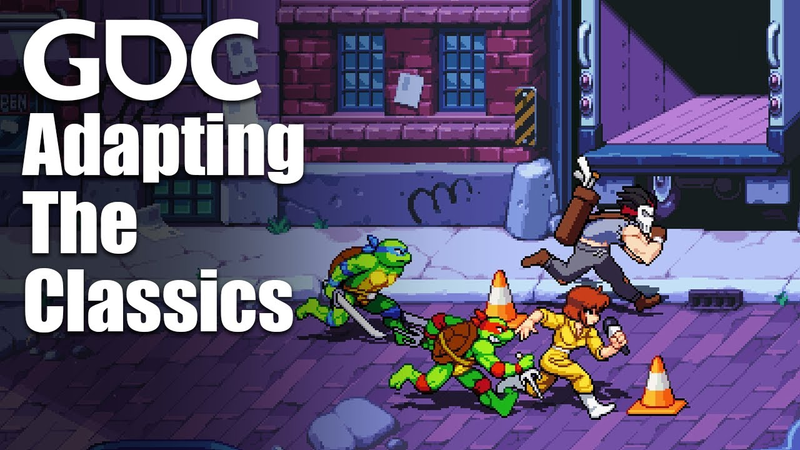
Plays Like You Remember: Adapting Classics for 'Teenage Mutant Ninja Shredder's Revenge'
The development of Teenage Mutant Ninja Turtles: Shredder’s Revenge centers on the philosophy of capturing the essence of classic arcade beat-em-ups rather than strictly replicating their technical limitations.
- To successfully adapt a classic title, developers should aim to make the game play how players remember it rather than how it actually functioned, which involves analyzing the core design strengths while discarding outdated technical limitations like sprite flickering or slowdowns.
- Tribute Games utilized an 'attack token' logic system to manage combat, where enemies must request a token to attack, allowing developers to control enemy aggression and group density for better balance.
- The team established a target pacing of 20 to 30 enemies per minute, a ratio derived from NES-era titles that provided the clearest enemy choreography and most balanced single-player experience.
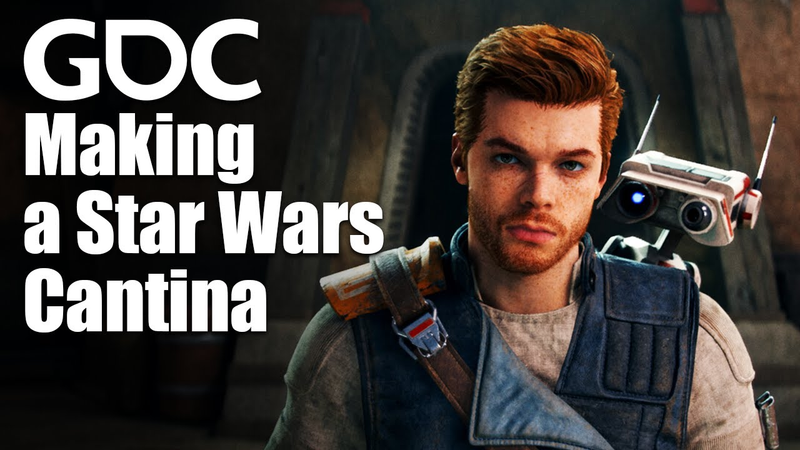
Bringing a Star Wars Cantina to Life in 'Jedi: Survivor'
Pyloon’s Saloon serves as a central, dynamic hub in Star Wars Jedi: Survivor, functioning as a narrative anchor that provides respite from the game’s darker themes.
- The narrative team structured Pyloon's Saloon into five macro states mapped to the main campaign's acts, which were further divided into granular substates to track NPC locations and evolving dialogue.
- Writers utilized a TV-style room approach, conducting brainstorming sessions, table reads, and character voice experiments to ensure consistency across three to six writers.
- The team managed dialogue complexity using a 'Dialogue Matrix' in Google Sheets that calculated character adjacencies and generated templates to ensure every character had at least one unique conversation per substate.

Math in Game Development Summit: A Visual Guide to Quaternions and Dual Quaternions
Quaternions and dual quaternions serve as essential mathematical frameworks for 3D game development, offering superior alternatives to traditional 4x4 matrices for rotation and skeletal animation.
- Dual quaternions unify rotation and translation into a single six-float representation, providing a more efficient and stable alternative to traditional 4x4 matrices for skeletal animation.
- Using dual quaternions for mesh deformation eliminates the 'candy wrapper' effect, a common animation artifact where character joints lose volume during rotation.
- Quaternions enable superior interpolation compared to matrix-based transformations by preserving volume and preventing the squashing artifacts inherent in standard linear blending.
How We Almost Wrecked Our Second Game, 'The Wreck'
The transition from a successful debut title to a sophomore project often triggers a dangerous period of overconfidence, leading studios to expand teams and budgets prematurely.
- The 'second game syndrome' occurs when teams rely on past success to justify over-ambition, leading to a loss of focus and the development of a 'clunky' vertical slice that lacks a cohesive art style or clear gameplay loop.
- Effective feedback must be kind, trust-based, and provided by experienced partners, such as the investment fund Kowloon Nights, who can identify when a project's core identity is failing to translate into a playable experience.
- The 'CRY' methodology (Consider, Refocus, Yield) provides a framework for salvaging a failing project by identifying what works, discarding what doesn't, and pivoting to core strengths rather than forcing experimental mechanics.

Game Narrative Summit: It's Not in the Writer's Manual: A Q&A Session for New Writers
Transitioning into professional game writing requires a fundamental shift from traditional prose to a facilitator-based mindset, where the writer serves as an architect of the player’s experience rather than the sole narrator.
- Game writing requires a shift from traditional prose to a facilitator mindset, where the writer acts as an architect of player experience rather than a sole narrator.
- Narrative must prioritize gameplay mechanics and environmental design as the primary vectors for storytelling, ensuring the script supports rather than dictates player agency.
- Professional writers must master technical narrative management tools such as Twine, Ink, and spreadsheet-based systems to handle complex branching structures.
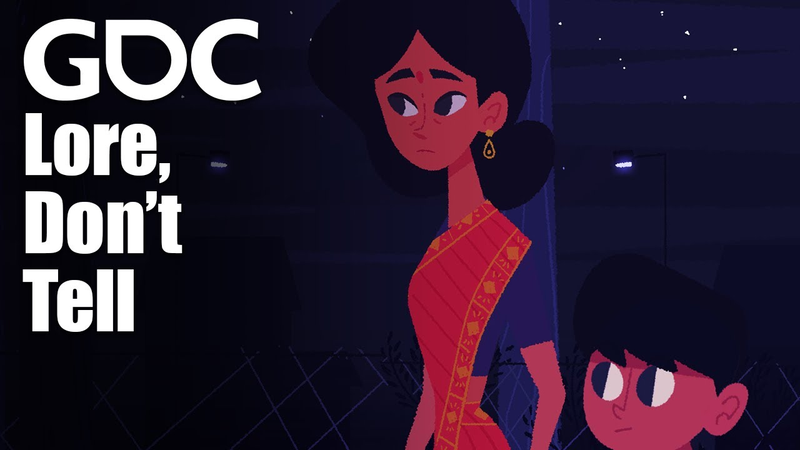
Lore, Don't Tell: A Guide for Telling Culturally Rooted Stories Like 'Venba'
Effective cultural storytelling in video games relies on a "lore, don't tell" philosophy that prioritizes lived-in authenticity over didactic exposition.
- Avoid the 'educational' trap by refusing to explain cultural elements that characters would naturally understand, as forcing characters to explain their own culture creates narrative dissonance and weakens storytelling.
- Lean into the 'Lore, don't tell' approach by presenting cultural details as existing facts rather than exposition, which encourages players to engage with the material organically and conduct their own research.
- Maintain linguistic authenticity by writing dialogue in the native language first and then translating it, rather than writing in English and attempting to simulate a non-native thought process.

Getting Hired with a Personal Touch
Securing a position within the competitive game industry requires a strategic shift from generic mass-application tactics toward highly personalized, research-driven engagement.
- Prioritize professional social media profiles, as hiring managers often view personal accounts to assess character and cultural fit, which can negatively impact an application if the content is unprofessional.
- When submitting work tests or portfolios, provide multiple file formats and backups to ensure the hiring manager can access your work regardless of their device, software, or technical constraints.
- Demonstrate self-awareness and honesty regarding skill gaps by explicitly addressing them in your application, which signals professional maturity and a willingness to learn.
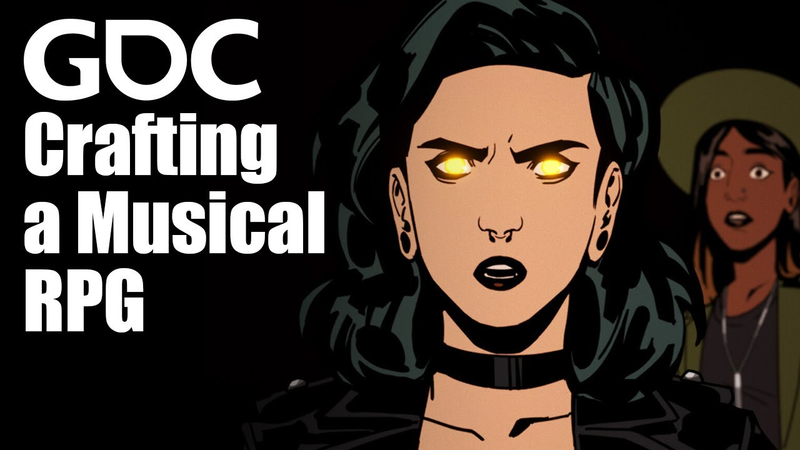
'Stray Gods': The Challenges of Creating an Interactive Musical
Stray Gods represents a pioneering effort in the interactive musical RPG genre, aiming to bridge the gap between traditional narrative-driven roleplaying and dynamic, player-influenced musical performance.
- Creating an interactive musical requires balancing branching narrative choices with traditional song structures, resulting in a production ratio where every five minutes of finished music requires 35 to 40 minutes of recorded material.
- The development of 'Stray Gods' spanned five years and involved nearly 100 recording sessions with actors, totaling six months of studio time to capture the game's five hours of interactive musical numbers.
- To maintain musicality while offering player agency, the developers utilized a 'randomized' choice system for certain segments, concluding that forcing specific narrative paths undermined the structural integrity of the songs.
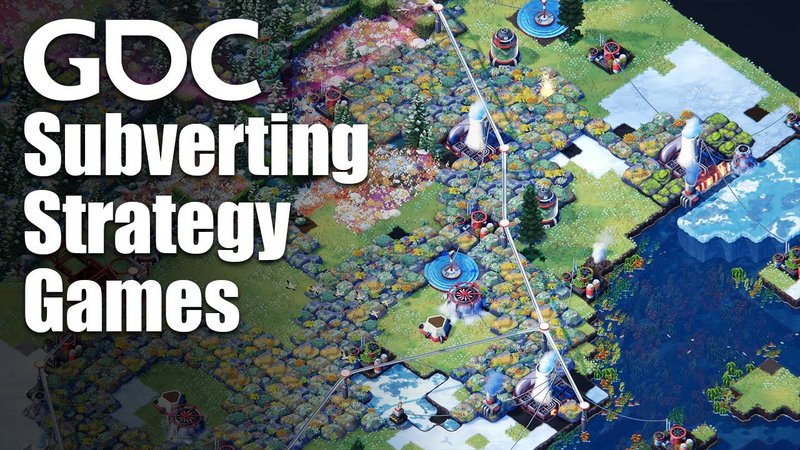
Developing 'Terra Nil': A Strategy Game About Nature, Not Expansion
Terra Nil represents a fundamental shift in strategy game design by replacing traditional mechanics of resource exploitation, colonization, and infinite expansion with a core loop centered on environmental restoration.
- Designers can dictate player priorities by linking core game mechanics to specific goals; in Terra Nil, replacing traditional metrics like gold or population with environmental restoration successfully shifted player focus to ecological balance.
- The game’s core loop is built on the principle of finite resources and equilibrium, where players must manage specific ecosystems—such as wetlands and forests—without the option to infinitely expand territory, reinforcing the theme of nature over industrial growth.
- Terra Nil originated from a 48-hour Ludum Dare game jam prototype, which gained traction despite using placeholder program art because players were emotionally engaged by the act of restoring a wasteland.
It's Better To Be Friends: Marketing "Asks" and the Reality of Game Production
Successful game development requires a fundamental shift in how studios manage the relationship between production and marketing.
- Integrate marketing teams into the development process early to identify and plan for required assets, rather than treating marketing requests as last-minute interruptions.
- Build marketing needs directly into the development schedule, treating assets like trailers, demos, and screenshots as core deliverables that must be planned for alongside game features.
- Aim to spend only 10% of total project time on final asset production by completing the bulk of the planning and preparation work well in advance of marketing deadlines.
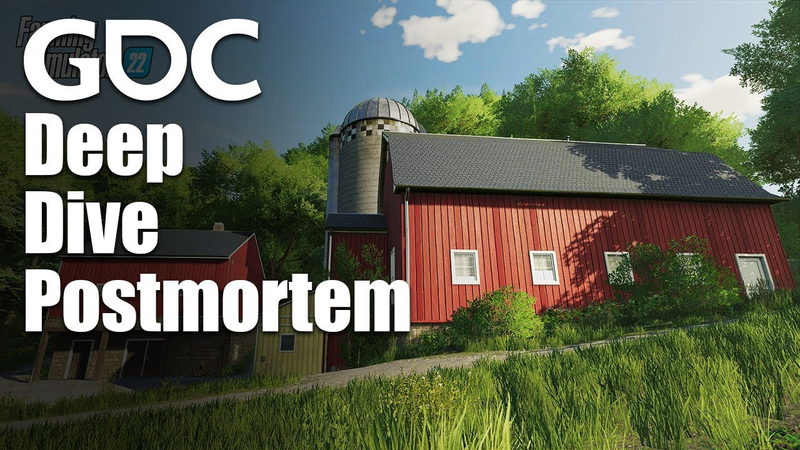
'Farming Simulator' Postmortem
Farming Simulator occupies a unique niche in the gaming industry by bridging the gap between hyper-realistic agricultural simulation and accessible, entertainment-focused gameplay.
- The official 'Mod Hub' launched in 2012 to centralize quality control and distribution, resulting in massive growth: Farming Simulator 15 saw 1 million downloads, while Farming Simulator 19 reached over 1 billion total mod downloads across 6,000 mods.
- To incentivize high-quality user-generated content, GIANTS Software implemented contests with prize pools exceeding 50,000 Euros and offered top modders commercial partnerships to create paid DLC.
- The developers prioritized entertainment over strict realism, adopting open-world mechanics from titles like Grand Theft Auto and Battlefield, such as the ability to exit vehicles and interact with the environment on foot.

2024 Independent Games Festival Awards Ceremony
The 26th Independent Games Festival Awards serves as both a celebration of creative ingenuity and a pointed critique of the contemporary gaming landscape.
- The 26th Independent Games Festival Awards highlighted systemic industry instability, specifically addressing widespread layoffs and unsustainable labor practices that threaten the long-term viability of the workforce.
- Approximately 87 percent of historical games remain inaccessible, underscoring a critical failure in the industry's commitment to digital preservation.
- Venba received the Seumas McNally Grand Prize, while the Nuovo Award was presented to Anthology of the Killer, signaling a strong industry preference for personal storytelling and unconventional gameplay.