
Game Developers Conference
Game Developers Conference (GDC, now the GDC Festival of Gaming) is the professional event for the games industry. It publishes recorded talks and interviews, annual industry survey reports such as the State of the Game Industry, and news articles.
Documents
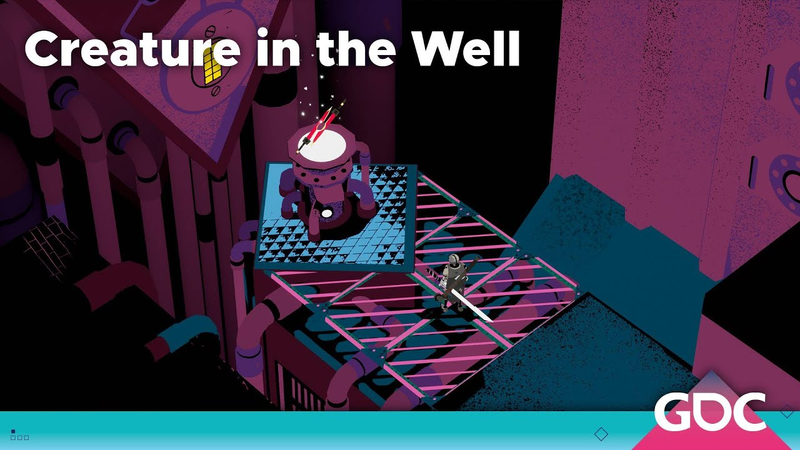
GDC Plays Creature in the Well with Adam Volker
Creature in the Well represents a distinct fusion of genres, blending traditional dungeon crawling with pinball mechanics to create a unique "pinbrawler" experience.
- Flight School Studio created a 'pinbrawler' genre fusion by replacing traditional combat mechanics with pinball-style energy ball launching to power a factory.
- The development team utilized a 70/30 design rule, blending familiar genre tropes with novel mechanics to ensure the game remained intuitive while offering a fresh challenge.
- To maintain mechanical depth and narrative cohesion, the studio rejected procedural generation in favor of a handcrafted, iterative design approach.

09 to '19: A Decade of Approachability in Fighting Games
The decade between 2009 and 2019 marked a transformative era for fighting games, characterized by a concerted industry-wide effort to broaden the genre's appeal through increased accessibility.
- Fighting game developers have spent the decade from 2009 to 2019 attempting to broaden audience appeal by reducing execution barriers, yet these efforts often fail to overcome the inherent intimidation factor of the genre.
- Developers frequently prioritize simplifying controls—such as implementing auto-combos, dedicated special move buttons, and simplified blocking—to help players reach the strategic decision-making phase of gameplay faster.
- Modern fighting games have increasingly incorporated comeback mechanics, such as Marvel vs. Capcom 3's 'X-Factor', Dragon Ball FighterZ's 'Sparking', and Tekken 7's 'Rage Art', to create tension and manage the game's momentum when a player is near defeat.
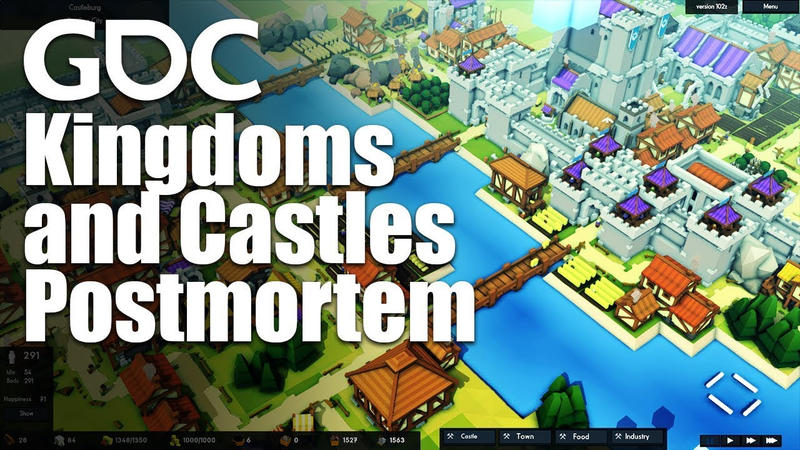
Kingdoms and Castles Postmortem
Kingdoms and Castles achieved commercial success by prioritizing iterative market validation and a disciplined approach to development scope.
- Validate game concepts early by setting measurable engagement goals, such as achieving 25 retweets on Twitter, to determine if a project is worth pursuing before committing significant development time.
- Use crowdfunding and early market testing to determine appropriate project scope, allowing developers to scale development effort based on actual audience interest rather than arbitrary timelines.
- Prioritize 'player fantasy' by ensuring the game's core loop and mechanics are intuitive and rely on existing cultural knowledge, which reduces the need for complex tutorials and extensive UI explanations.
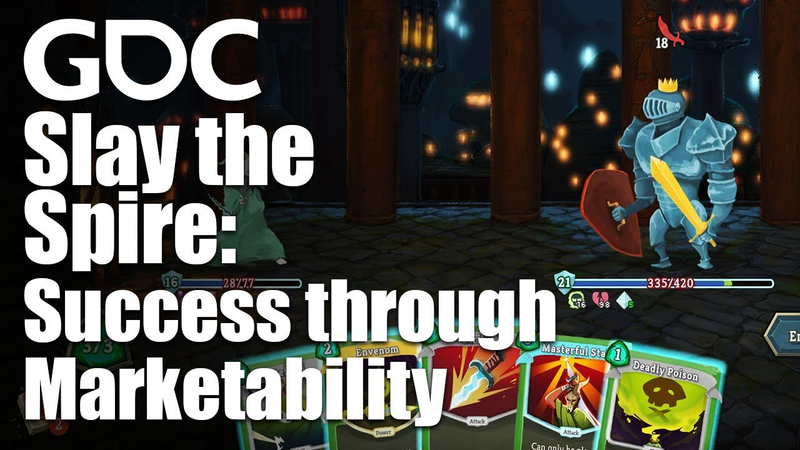
Slay the Spire: Success through Marketability
Slay the Spire demonstrates that long-term commercial success in the independent gaming sector is best achieved through a mechanics-first design philosophy and a commitment to radical transparency.
- Slay the Spire's success was driven primarily by organic player enjoyment and visibility on Twitch, which allowed a game with modest visual appeal to gain massive traction through streamer engagement.
- Steam's 'Top Sellers' list acts as a critical discovery multiplier; once the game broke into this list, sales shifted from a declining trend to a significant, sustained spike.
- Weekly patching during Early Access kept the community engaged and allowed the developers to rapidly fix bugs and iterate on features, which was essential for a small team without a dedicated QA department.
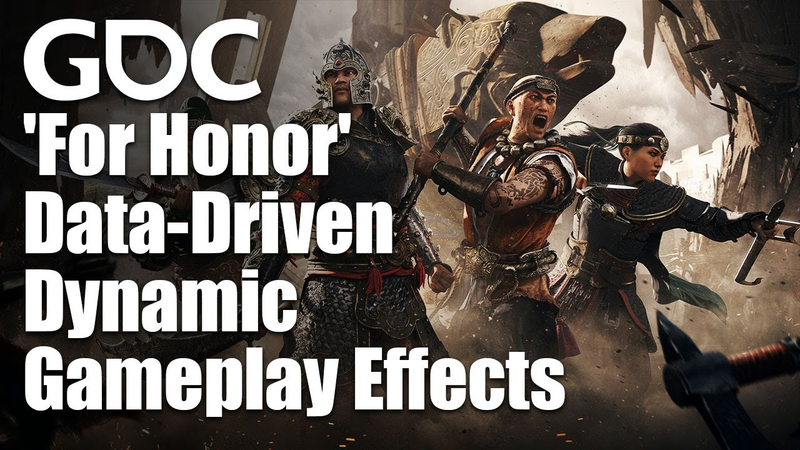
Data-Driven Dynamic Gameplay Effects on For Honor
For Honor employs a modular, data-driven modifier system designed to decouple gameplay logic from core programming, thereby granting designers the autonomy to iterate on mechanics without constant engineering support.
- Ubisoft implemented a data-driven modifier system for For Honor that allows designers to dynamically create gameplay effects—such as stat buffs, AI decision-making, and attack properties—without requiring additional programming code.
- The system utilizes a modular architecture where modifiers can be applied to various entities, including players, NPCs, capture points, and interactive objects, enabling high reusability across different game features.
- To manage performance under a load of approximately 3,000 queries per frame, the team implemented entity-specific caps, limiting soldiers to 6 active modifiers while allowing players a higher threshold.

2019 Animation Tricks of the Trade
Effective animation relies on a disciplined approach to movement that prioritizes purposeful, sincere motion over superficial flair.
- Prioritize purposeful, sincere motion over superficial flair by establishing key poses early and using contrast to avoid monotonous character performances.
- Enhance technical efficiency by utilizing advanced strategies such as constraints, world-control baking, and simulation scripts for secondary motion.
- Integrate core game design principles into animation workflows to better understand how character movement interacts with broader interactive systems.
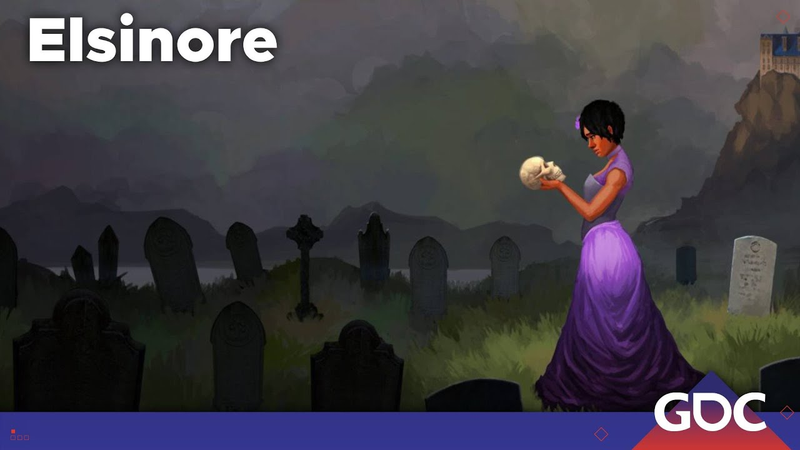
GDC Plays Elsinore with Eric Butler and Connor Fallon
Elsinore reimagines Shakespeare’s Hamlet through a time-loop simulation that centers on Ophelia, granting her the agency to alter the tragic trajectory of the original play.
- Elsinore utilizes a time-loop simulation and a custom scripting language to allow players to alter the canonical events of Shakespeare’s Hamlet from the perspective of Ophelia.
- The game employs a hierarchical event system that balances critical plot points with flavor events to maintain narrative coherence and pacing despite player-driven interventions.
- The development process spanned six years, utilizing a disciplined, part-time schedule of one day per week to allow for iterative refinement of narrative logic and isometric art.

Selling Out: What a Year of F2P Taught an Art-House Indie
The transition from experimental, art-house independent development to the commercial free-to-play sector represents a shift from high-friction, survival-based financial models to a data-driven, iterative environment.
- Transitioning from indie development to commercial free-to-play (F2P) does not fundamentally change the core design process, as solving complex logic puzzles and iterating with engineers remains the primary daily activity.
- Commercial F2P environments require designers to reconcile creative decisions with daily financial metrics and analytics, where every design choice is evaluated for its specific impact on revenue and player retention.
- Working in a commercial studio allows for the incubation of cultural projects, such as the 'Contemporary Magic' tarot card collaboration, which leveraged the studio's scale to drive half a million visitors to the ACLU donation page.

Making of ASTRO BOT Rescue Mission: Reinventing Platformers for VR
Astro Bot Rescue Mission represents a fundamental shift in platformer design, moving away from traditional camera-controlled gameplay toward a philosophy centered on physical player presence within virtual reality.
- The development team utilized a 'gameplay-first' prototyping methodology where programmers built functional mechanics in isolation before involving artists, a process that prevented design complications and kept the project focused.
- To ensure a balanced player experience, the team used a design checklist to track the inclusion of key VR elements—such as physical play, gadget mechanics, and 3D audio—across levels to avoid overstimulation.
- The game features 220 collectible robots, which are integrated into the environment using 3D audio cues to help players locate them, requiring manual volume balancing to account for distance from the player.

The State & Future of AR Games: Rose-Colored Glasses
Augmented reality gaming is evolving from simple, viewfinder-based holographic overlays into a sophisticated, persistent layer of digital information integrated directly into the physical world.
- The industry is shifting from simple holographic overlays to a persistent, synchronized digital layer where multiple users interact with the same virtual objects anchored to specific geographic locations.
- Technical viability relies on the development of centimeter-accurate, machine-readable maps created through crowd-sourced data and deep learning techniques like real-time scene segmentation.
- Advancements in depth estimation and occlusion are critical for enabling digital objects to interact realistically with physical environments.

Math for Game Programmers: Dark Secrets of the RNG
Random number generation in game development requires sophisticated management to align mathematical outcomes with player expectations.
- Human perception of probability often conflicts with true randomness, necessitating the use of bagging and pity timers to mitigate player frustration from bad luck streaks.
- Weighted lookup tables allow developers to dynamically adjust game economies and loot distribution without requiring core system overhauls.
- To prevent repetitive patterns known as deep echoes in procedural generation, developers should avoid passing seeds directly and instead use hashing functions to incorporate unique identifiers.

Behavior is Brittle: Testing Game AI
Testing complex game artificial intelligence requires a fundamental shift in perspective, moving away from rigid verification toward a strategy that embraces the unpredictable nature of emergent gameplay.
- To effectively test game AI, developers must shift their mindset from verifying that code works to actively attempting to break it, as emergent behaviors often lead to unexpected interactions with the game state.
- Embed QA personnel directly into the development team rather than treating them as external testers, allowing for daily collaboration and a shared understanding of expected AI behaviors.
- Implement clear separation of concerns by decoupling sensor systems, data storage (such as blackboards), and decision logic to facilitate modular unit testing and prevent massive, unmanageable integration tests.