
Game Developers Conference
Game Developers Conference (GDC, now the GDC Festival of Gaming) is the professional event for the games industry. It publishes recorded talks and interviews, annual industry survey reports such as the State of the Game Industry, and news articles.
Documents
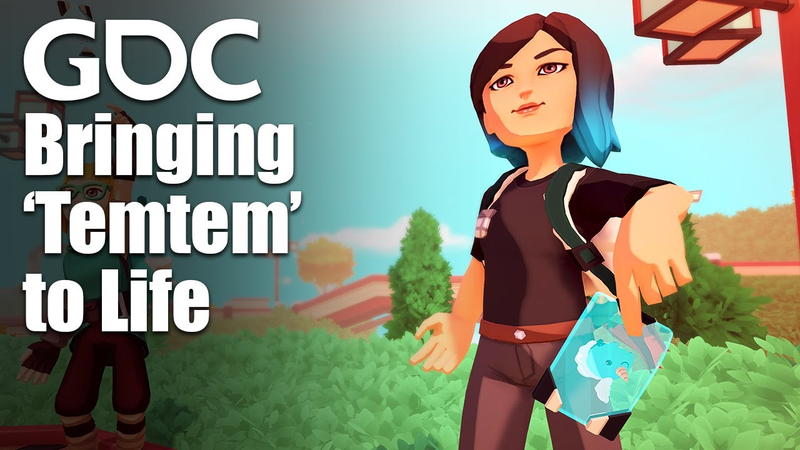
Creating Narrative VFX in 'Temtem'
The development of visual effects for the creature-collection game Temtem centers on a narrative-driven philosophy that treats every combat technique as a miniature cinematic experience.
- The VFX team at Crema treats Temtem techniques as mini-cinematics, with animation lengths strictly tied to gameplay mechanics: zero-hold techniques last 2–3 seconds, while high-hold techniques extend up to 8–9 seconds.
- Narrative impact is achieved by integrating custom battle zone changes, where developers hand-place assets in Unity to create unique environments that reinforce a specific Temtem's signature move.
- Visual storytelling relies on cinematic principles like camera angles—using low angles to convey power and high angles to signify weakness—to guide the player's eye and establish the scale of an attack.

The Best and Most 'Stealable' Mechanics from Tabletop RPGs
Tabletop roleplaying games offer a wealth of innovative design frameworks that can significantly enhance digital game experiences by prioritizing player agency, emergent narrative, and meaningful resource management.
- Tabletop RPG mechanics like 'stress' in Blades in the Dark can be adapted into digital games as a tangible, finite resource that forces players to choose between character health and pushing beyond normal limits.
- Quest logs can be transformed from simple checklists into dynamic 'clocks' that track multiple, interconnected narrative threads, allowing designers to manage complex state-based events without writing exhaustive rule sets.
- Character beliefs and instincts—such as those in Mouse Guard—can be integrated into RPGs to reward players for roleplaying specific traits, creating meaningful character arcs where internal values impact gameplay bonuses.
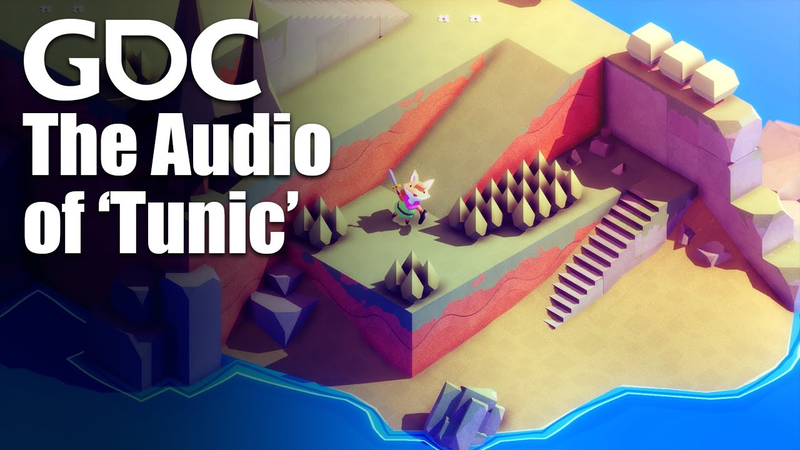
The 'TUNIC' Audio Talk
The audio design for TUNIC centers on creating a cohesive, warm, and responsive soundscape that reinforces the game’s isometric perspective and themes of discovery.
- To manage complex 3D audio requirements like altitude differences and camera panning, the TUNIC team opted for a screen-space audio model where all sounds are played in 2D and driven by parameters like offscreen distance and orthographic size.
- The team utilized FMOD effect chain presets to apply consistent panning and distance curves across multiple sound events, allowing for global adjustments that proliferate across all associated sound instances.
- To prevent audio retriggering issues during state transitions, the team implemented a 'transition hub' that uses conditional logic to route events to a specific endpoint, ensuring the audio sequence completes correctly regardless of parameter changes during playback.
An 'IMMORTALITY' Project: Creating the Ultimate Interactive Movie
The interactive project IMMORTALITY seeks to redefine cinematic storytelling by dismantling the rigid, linear structures of 20th-century broadcast media.
- IMMORTALITY utilizes a 'Hologram method' of scene design, ensuring that every clip simultaneously advances plot, character, and theme to maintain narrative coherence regardless of the order in which content is discovered.
- The project replaces traditional linear storytelling with a non-linear, player-driven interface that allows users to manipulate footage using a tactile, Moviola-inspired editing system.
- The narrative spans three specific eras of filmmaking—the late studio system, 1970s New Hollywood, and the 1990s indie boom—to ground the experience in the historical realities of the film industry.
Sounds as Intended: Quality Assurance in Game Audio
Quality assurance (QA) serves as the final defense in game development, ensuring that a product aligns with the designer's original vision.
- Integrating specialized audio testers early in the development cycle allows teams to identify system failures before release and reduces redundant testing tasks.
- Effective audio QA requires technical proficiency in middleware tools like Wwise and FMOD to provide developers with precise data, such as file paths and actor names.
- Audio QA scope spans the entire development lifecycle, utilizing methodologies like smoke testing, build verification, and targeted ad hoc testing to uncover issues beyond standard gameplay.
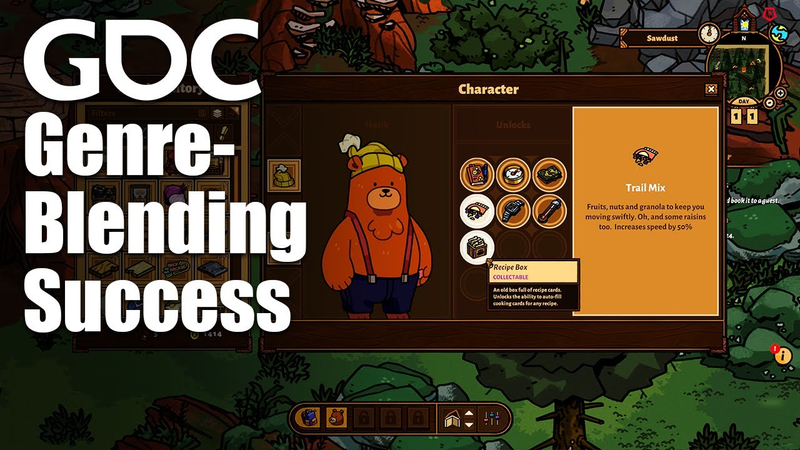
From Pitch to Pancakes: How 'Bear and Breakfast' Blended Genres To Succeed
The development of Bear and Breakfast demonstrates how independent studios can successfully navigate a saturated market by blending management and adventure mechanics.
- Mixing genres requires aggressive scoping; because small teams have limited resources, developers must strip away non-essential features from each genre to create a cohesive, shippable product.
- Defining an 'Adventure' genre is often too broad for development, so the team distilled it into two concrete pillars: a strong, linear narrative and a well-defined cast of characters.
- Genre-blending can be a powerful marketing tool, as it helped the studio secure features from major partners like Nintendo and provided a unique niche that stood out in a saturated market.
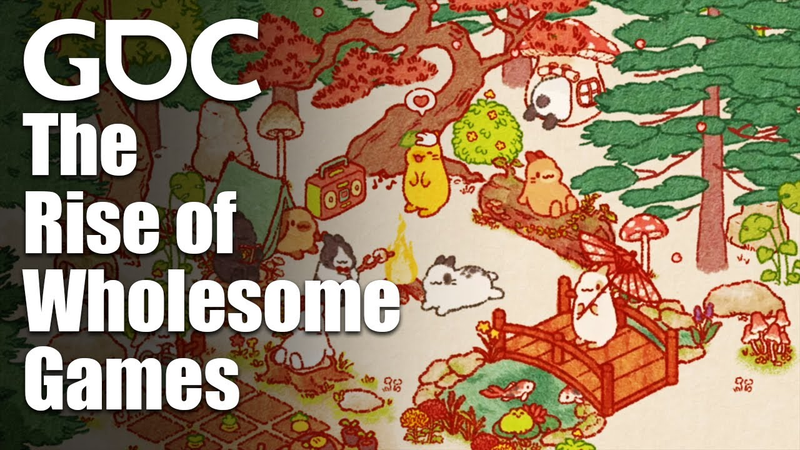
Why Care About Wholesome Games Anyway?
The wholesome or cozy game genre represents a significant shift in interactive entertainment, defined not by rigid mechanical constraints but by a shared ethos of compassion, comfort, and player agency.
- Wholesome games have demonstrated strong commercial viability, with titles like 'Unpacking' reaching 1 million units sold within a year and 'Spiritfarer' hitting 1 million sales in approximately 16 months.
- The 'cozy games' hashtag on TikTok has gained significant traction, amassing over 753.4 million views, while the 'wholesome games' hashtag has reached over 195.1 million views.
- Successful wholesome titles often see rapid adoption; 'Slime Rancher 2' sold over 100,000 copies in its first 24 hours of early access, and 'Coffee Talk' generated $550,000 in gross revenue in less than a month.
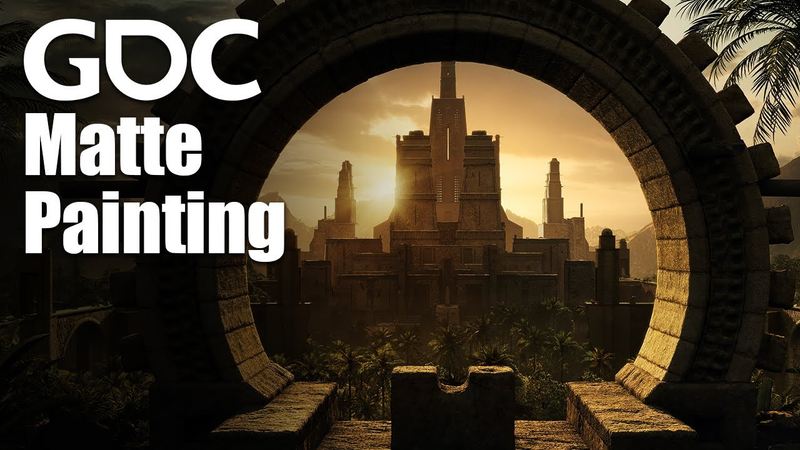
Matte Painting in Games
Matte painting serves as a highly efficient, performant technique for creating expansive, immersive vistas in game development.
- Matte painting creates expansive, immersive vistas using low-poly geometry and projected textures, significantly reducing the time and resource costs associated with full 3D modeling.
- The workflow relies on camera-based UV projection from a 'hero' camera location, allowing artists to iterate rapidly using a 1:1 representation of the game level.
- Performance efficiency is achieved because matte assets are unlit and low-poly, making texture memory the primary constraint on engine resources.
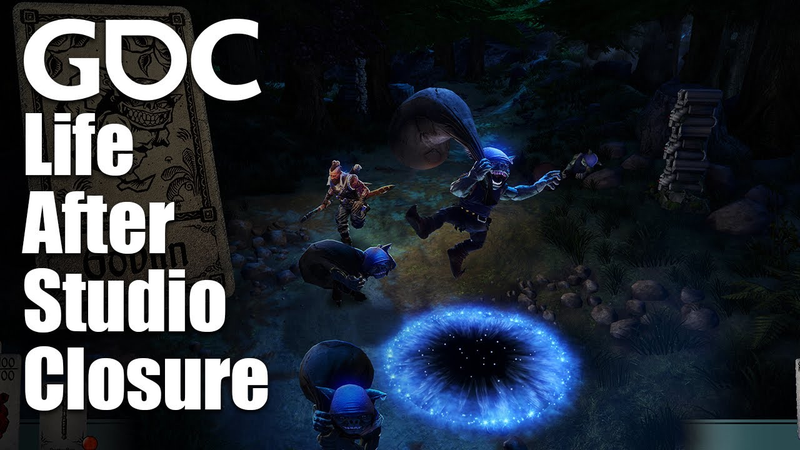
Defiant in Life and Death: What Happens After You Fail?
Defiant Development was established in Australia with the primary objective of fostering a stable, high-quality work environment for local talent.
- Defiant Development, the studio behind the Hand of Fate series, closed operations after an ambitious project exceeded the company's financial and operational capabilities.
- Leadership prioritized staff well-being during the shutdown by providing generous severance packages and transparent communication, viewing the closure as a way to redistribute talent back into the industry.
- Scaling a studio from 15 to 30 employees requires a transition from informal, organic growth to defined horizontal and vertical management structures to ensure effective knowledge sharing.
Building a Well-Rounded Party Fireside Chat: Wizards' Everyday Commitment to Representation in Games
Wizards of the Coast is actively reshaping its corporate strategy to prioritize inclusivity and accessibility as foundational pillars for the long-term health of the Magic: The Gathering and Dungeons & Dragons franchises.
- Wizards of the Coast has transitioned to a model of radical transparency, notably placing core system documents into Creative Commons to lower barriers for independent creators following the Open Game License controversy.
- The company’s focus on authentic cultural representation and inclusive storytelling has contributed to record-breaking financial performance, including a billion-dollar revenue year for the Magic: The Gathering franchise.
- Wizards of the Coast has achieved an even gender split within its global player base, a demographic shift that informs the company's ongoing product development and corporate strategy.

To the Beat Y'all: What Designers Can Learn From Hip Hop
The presentation explores the intersection of hip-hop culture and game design, arguing that the literary and rhetorical techniques inherent in hip-hop songwriting offer valuable frameworks for narrative design.
- Hip hop storytelling techniques, such as verse-chorus-bridge structures, can be applied to game narrative design to create better pacing and thematic reinforcement.
- The 'vignette' structure used in hip hop—which prioritizes immediate character needs and wants—is an effective model for designing compelling side quests and minor character interactions.
- Undertale (2015) serves as a prime example of musical narrative structure, where boss fights function as verses, recurring themes act as choruses, and tonal shifts like the secret lab act as a bridge.
How 'Fortnite' Designers Made Their Own Tools
The development of Fortnite necessitated a fundamental shift in workflow strategy when traditional, spreadsheet-based quest editing systems proved too error-prone and inefficient for the game’s rapid production cycle.
- To resolve a production bottleneck where quest creation took days and was prone to errors, Fortnite's quest team empowered designers to build their own tools using Unreal Engine's Blueprint-driven Editor Utility Widgets.
- By shifting tool development to designers, the team reduced the complexity of the quest editor from six pages of tightly packed properties to a more user-friendly two-page interface.
- The new designer-centric workflow allowed for the creation of quest templates, which enabled fine-grained control and automated the addition of specific event rewards across multiple quest types.