1 free read left. Create a free account for unlimited reading + AI research.
Create free accountWhitepaperACM CHI PLAY
Distilling the key insights…
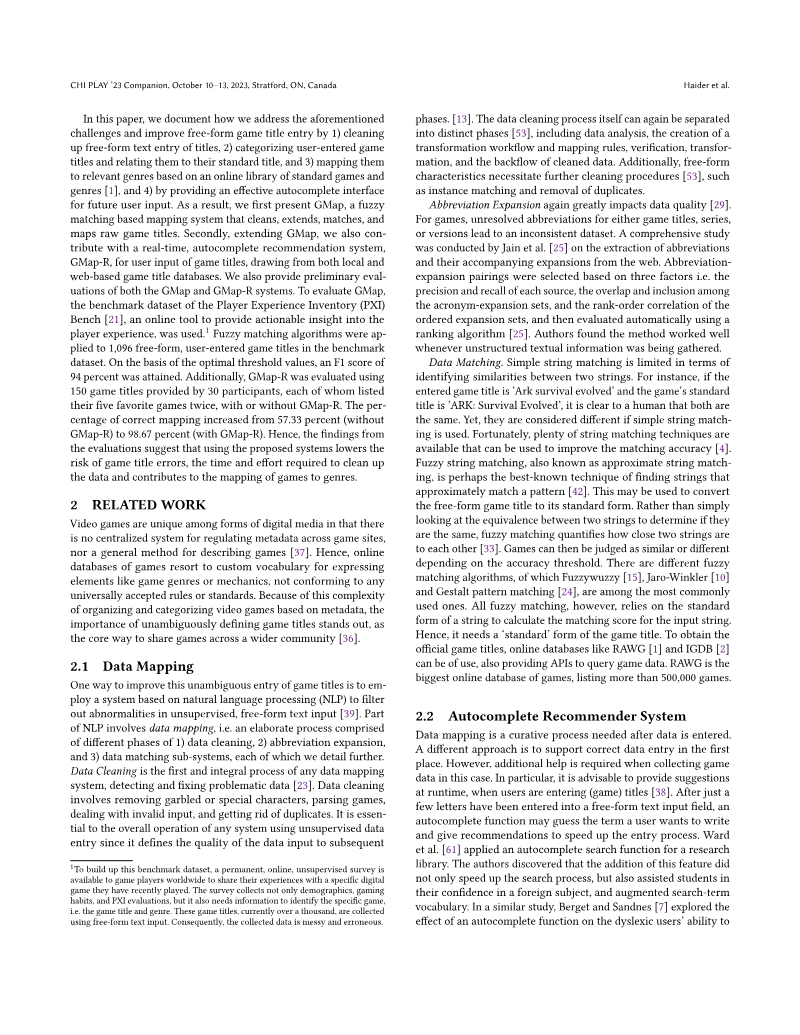
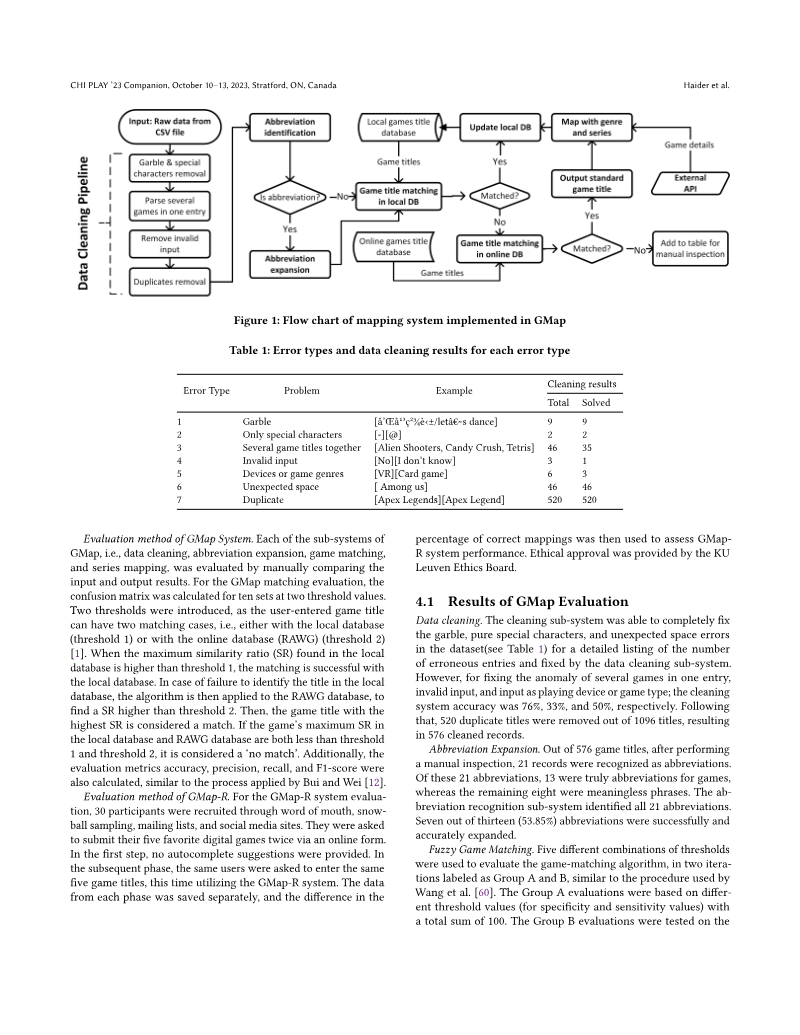
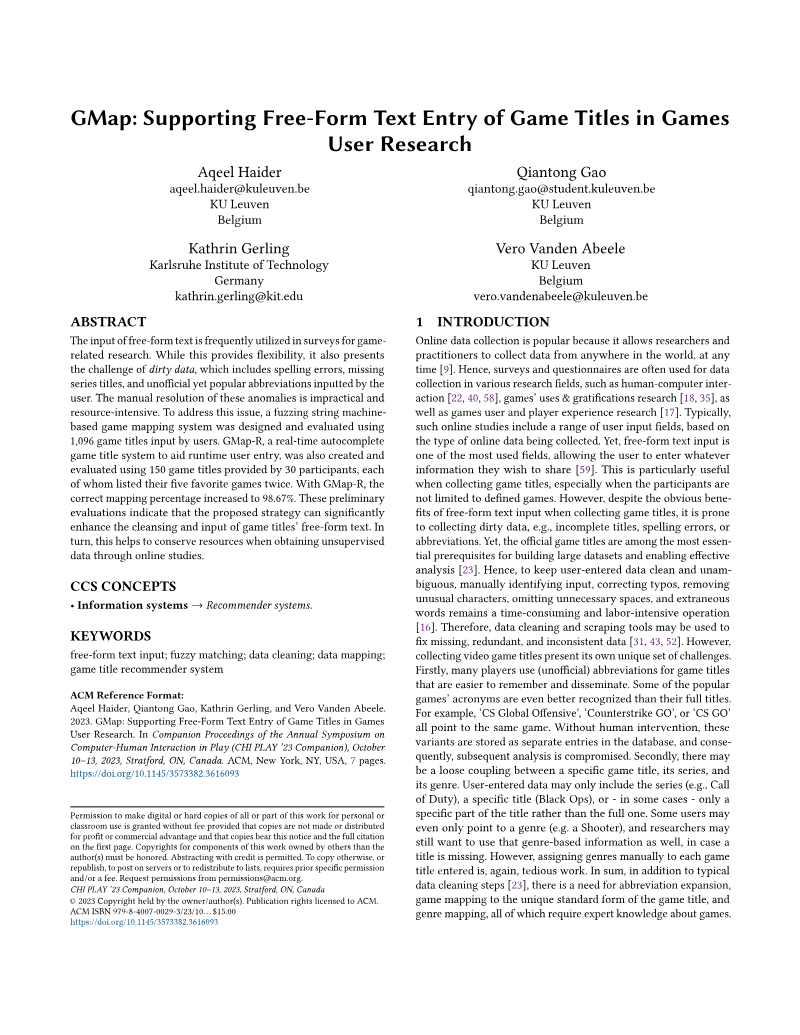
The GMap and GMap-R systems address the persistent challenge of inconsistent, error-prone, and fragmented game title data within user research. By implementing fuzzy string matching and real-time autocomplete interfaces, these tools standardize free-form text entries that typically suffer from spelling mistakes, non-standard abbreviations, and varied formatting. The primary thesis posits that integrating automated data cleaning and predictive entry mechanisms significantly reduces the manual labor required to sanitize datasets while simultaneously increasing the reliability of game title and genre classification.
Empirical evaluations confirm the efficacy of these systems, demonstrating a substantial improvement in data integrity. When utilizing the GMap-R autocomplete interface, the rate of correct title mapping surged from 57.33% to 98.67% compared to traditional free-form entry methods. These findings highlight the critical role of algorithmic intervention in managing "dirty data" within the gaming industry, where the sheer volume of titles and the lack of standardized nomenclature often complicate large-scale user research efforts.
The scope of this research encompasses the technical infrastructure required to map raw user inputs against both local and online databases. While the current implementation successfully mitigates common input errors, the study suggests that the long-term scalability of such systems depends on the continuous expansion of alias databases and the integration of multi-source verification protocols. By bridging the gap between user-generated text and structured database entries, these tools provide a robust framework for enhancing the accuracy of industry-wide research and data analytics.
University College London · 2026
ACM CHI PLAY · 2025
ACM CHI PLAY · 2025
ACM CHI PLAY · 2025
ACM CHI PLAY · 2024
ACM CHI PLAY · 2024
ACM CHI PLAY · 2024
ACM CHI PLAY · 2024
ACM CHI PLAY · 2024
ACM CHI PLAY · 2024
ACM CHI PLAY · 2024
ACM CHI PLAY · 2024
Ludic Language Pedagogy · 2026
Comments