Funding reports and market data
Documents
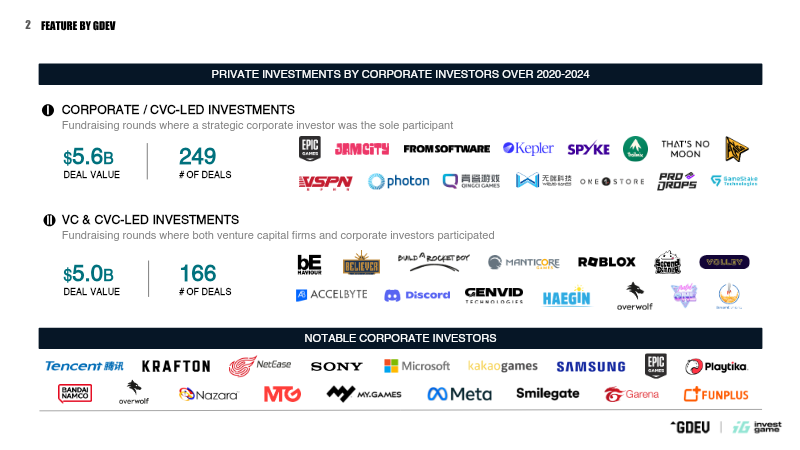
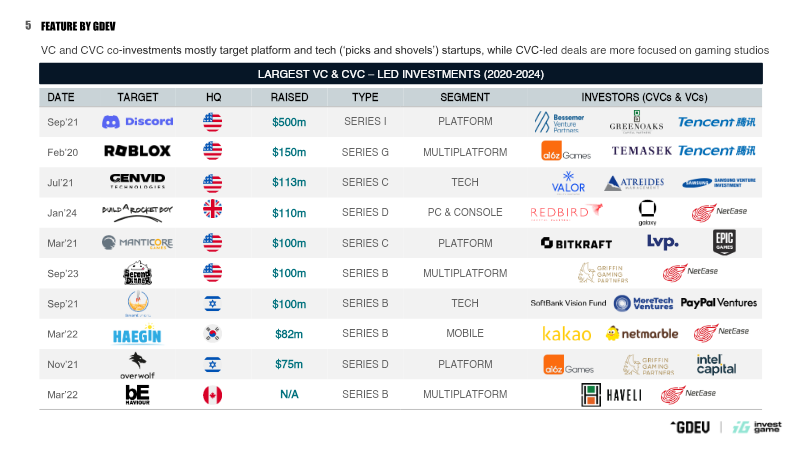

Corporate Overhaul: Why Does CVC Play a Bigger Role Than Ever?
The analysis demonstrates that corporate venture capital (CVC) has become the dominant force in gaming investment from 2020 to 2024, accounting for more than half of all capital raised in the sector.
- Corporate venture capital (CVC) has become the dominant force in gaming investment from 2020 to 2024, accounting for over half of all capital raised with $4.0 billion across 93 CVC-led deals.
- Investment strategies have shifted toward co-investment models between CVCs and traditional VCs, which collectively raised $3.5 billion across 80 deals to spread risk and access high-profile startups.
- Asian firms, specifically from South Korea and Japan, are the most active investors, completing 105 deals worth $1.8 billion and surpassing Western peers in total deal volume.

Speed Panel: Investment Restart – What Will The M&A Landscape Look Like In 2025?
The gaming industry is poised for a significant resurgence in merger and acquisition activity throughout 2025, marking a departure from the speculative, high-growth environment of the pandemic era.
- M&A activity is expected to increase across all deal sizes in 2025 as founder valuation expectations have become more realistic compared to the inflated levels seen during the COVID-19 pandemic.
- Acquirers are prioritizing companies with approximately $10 million in trailing revenue and credible growth forecasts, shifting away from the previous 'growth at all costs' mentality toward a focus on EBITDA and profitability.
- Private equity firms outside the traditional gaming sector are showing significant interest in the industry, with the expectation that once these firms complete their first acquisition, they will likely pursue multiple follow-on deals.
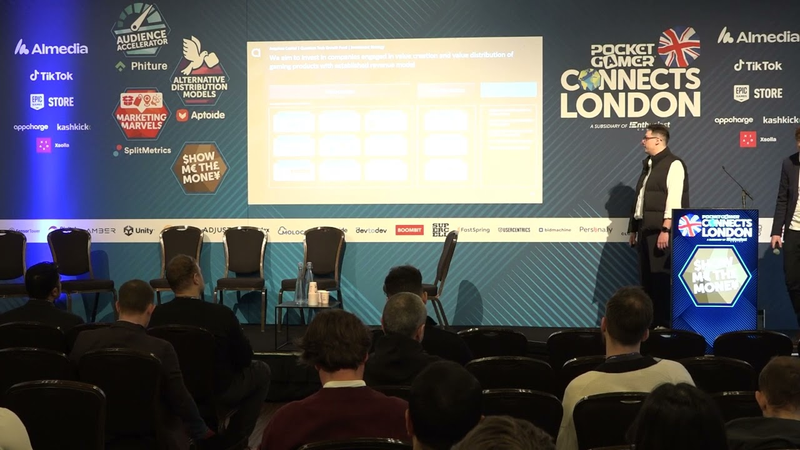
Session: Investor’s Perspective – What Matters While Considering An Investment Within Mobile...
Acquinox Capital, a Luxembourg-based private equity firm, evaluates investment opportunities in the mobile gaming sector through a dual-fund strategy.
- Acquinox Capital employs a dual-fund strategy, utilizing a deal-by-deal co-investment model alongside the Quantum Tech Growth Fund to target vertical integration across the gaming value chain.
- The firm targets a broad investment scope ranging from early-stage growth ventures to mature buyouts, with initial ticket sizes starting at 250,000 Euro.
- Investment evaluation is driven by a six-pillar framework that assesses leadership, business model viability, intellectual property, financial health, historical capital usage, and cap table structure.

The State of Video Game Financing in 2025
The gaming industry is currently navigating a profound market correction, characterized by a 14 percent year-over-year decline in deal volume and a significant contraction in Series A graduation rates to 11.5 percent.
- The gaming industry is experiencing a market correction marked by a 14 percent year-over-year decline in deal volume and a contraction in Series A graduation rates to 11.5 percent.
- Venture capital firms are shifting investment focus away from content creation toward infrastructure, creating a structural funding crisis for mid-to-late-stage studios.
- The industry is transitioning from a high-growth, speculative model to a disciplined environment that prioritizes capital efficiency, fiscal restraint, and proven execution over rapid scaling.
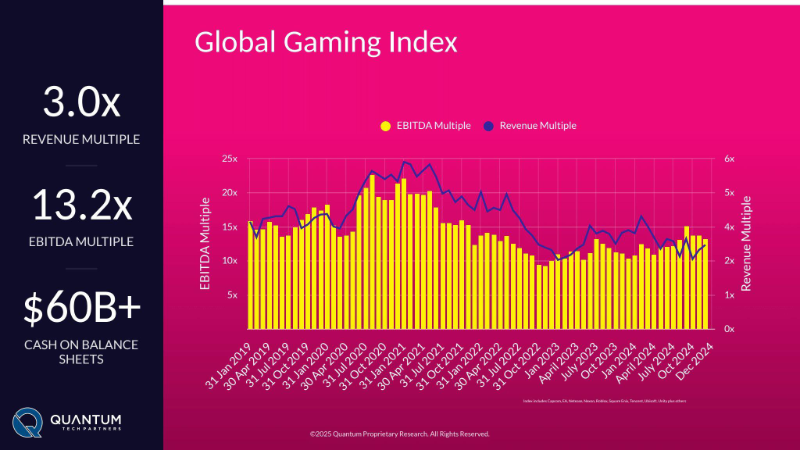
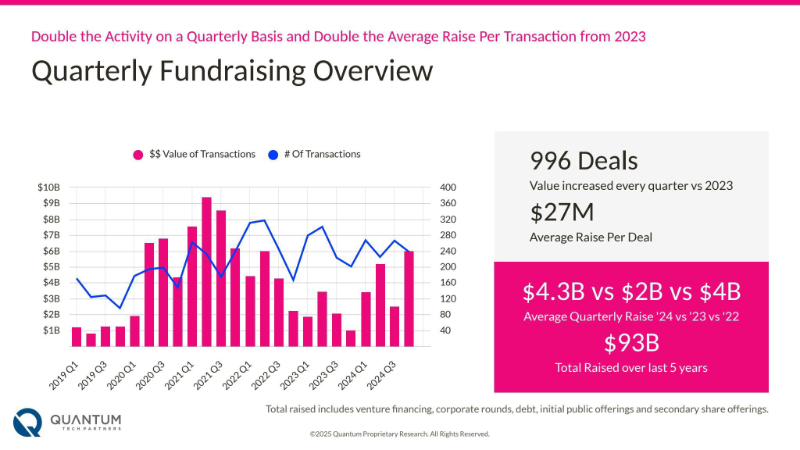

2025 Gaming Industry Report: M&A and Fundraising Update
The gaming industry has entered a period of stabilization, with merger and acquisition activity settling at $11.5 billion.
- Fundraising reached $17.2 billion in 2024, a 102% year-over-year increase that reflects a trend toward larger, more concentrated capital investments.
- Merger and acquisition activity has stabilized at $11.5 billion, marking a return to pre-pandemic valuation norms following post-2022 market corrections.
- Investor capital is increasingly shifting toward artificial intelligence and Web3 technologies, while the eSports sector faces a 66% decline in funding.

The Problem with Traditional VC Funding in Gaming—and Jetapult’s Solution
Traditional venture capital models often prioritize rapid, capital-intensive expansion, which frequently undermines the long-term sustainability of gaming studios.
- A partnership-driven funding model acts as a co-founder to provide a hybrid of equity-based and low-risk scaling capital, allowing studios to maintain creative control while professionalizing operations.
- Studios utilizing this data-driven framework to optimize user retention, engagement, and conversion have reported performance gains exceeding 50 percent.
- The integration of AI-driven development pipelines significantly accelerates production cycles by reducing the time required for complex tasks such as 3D asset creation.

From Failures to Funding: Strategic Moves Founders Should Know with Joe Wadakethalakal, CEO of PvX
Building a high-growth business requires a strategic focus on massive total addressable markets, specifically within the United States, China, or India.
- Founders should prioritize tech-led business models over those dependent on non-recurring revenue or programmatic advertising to ensure long-term scalability.
- Non-dilutive financing strategies allow companies to borrow against predictable user acquisition returns, enabling growth and M&A activity while preserving equity.
- High-growth potential is primarily found by targeting massive total addressable markets within the United States, China, or India.
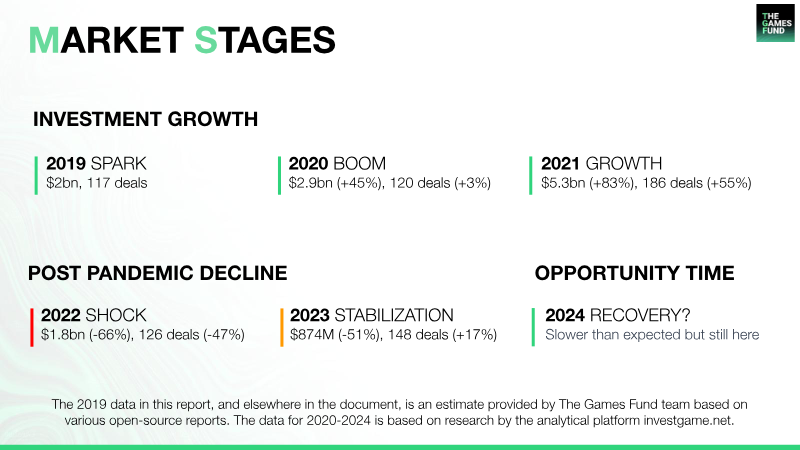
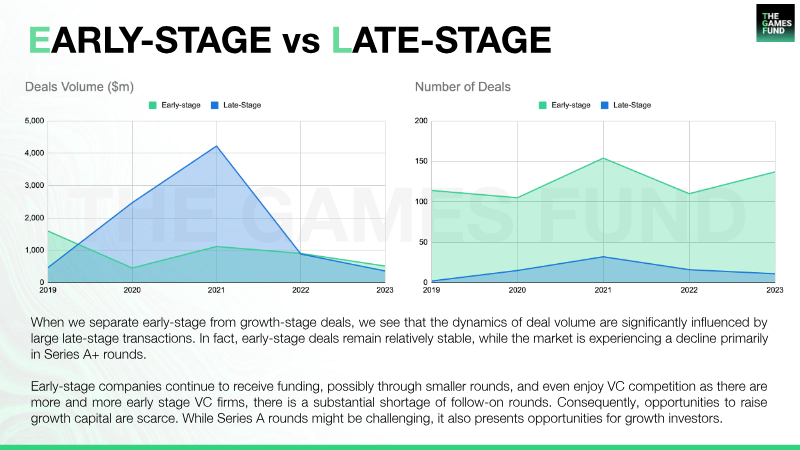

Dynamics of Gaming Deals
The analysis tracks global venture-capital activity in the video-game sector from the first quarter of 2019 through the second quarter of 2024, focusing on deals funded by VCs, strategic investors and publishers.
- Global gaming VC investment peaked at $5.3 billion across 186 deals in 2021 before contracting sharply to $874 million in 2023.
- The decline in total capital was primarily driven by a scarcity of Series A-plus growth-stage funding, even as early-stage financing remained relatively stable.
- A modest market rebound is underway in 2024, supported by the entry of new funds and expectations for higher returns despite ongoing user-acquisition challenges.



La Financiación de un Videojuego: España
The guide aims to equip Spanish video-game developers and publishers with a practical framework for securing external financing, emphasizing investment agreements (AI) as a flexible alternative to traditional bank credit.
- Investment Agreements (AI) function as a hybrid financing model that provides developers with cash infusions linked to development milestones without requiring immediate equity dilution.
- AI structures grant investors political and economic rights—including voting and dividend privileges—comparable to shareholders, while tying repayment directly to a percentage of project revenue.
- Key contractual protections for investors include profitability targets with time-bound thresholds, 'bad leaver' clauses for founders, and the right to capitalize debt into equity if revenue targets are not met.

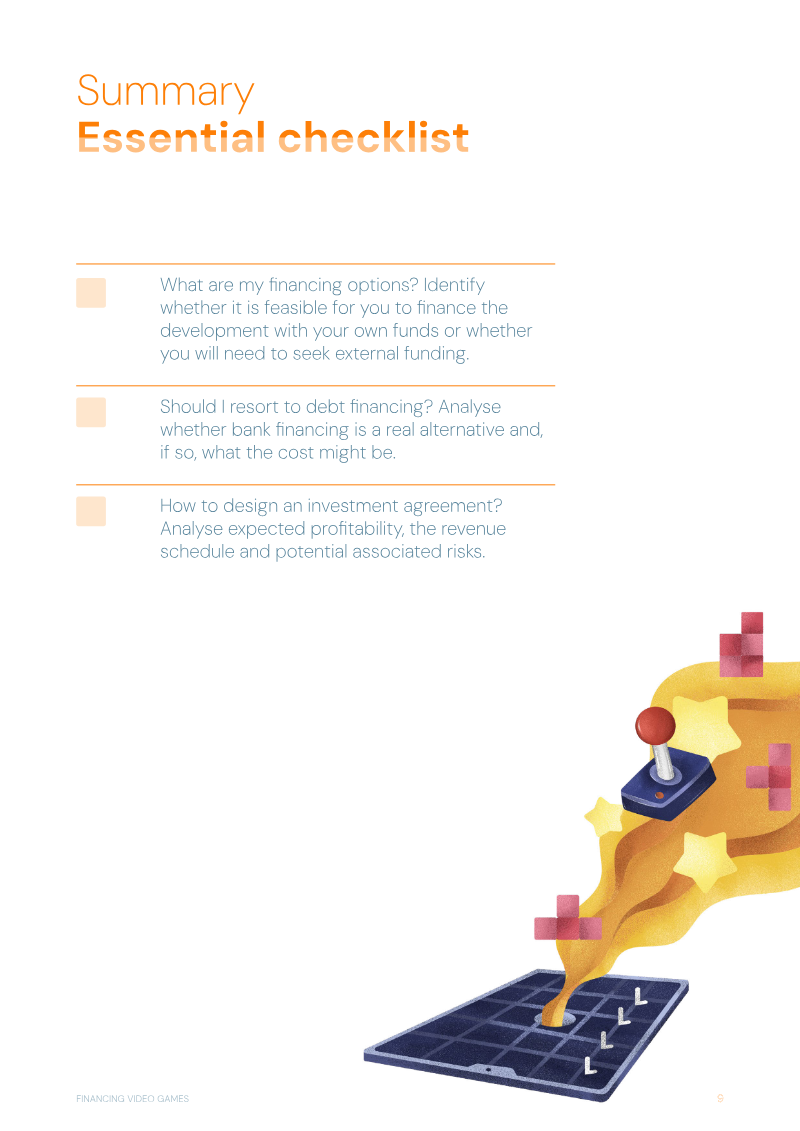
Financing Video Games: Spain
The guide aims to equip Spanish video-game developers and publishers with a practical framework for securing external financing beyond traditional bank credit.
- Investment agreements (IAs) serve as a hybrid financing model for Spanish developers, bridging the gap between equity and debt by granting investors shareholder-like rights without requiring immediate capital increases.
- Unlike traditional bank loans, IAs replace fixed repayment schedules with returns tied directly to project profitability, often including conversion mechanisms that turn credit into equity if revenue targets are missed.
- IAs typically structure capital as lump-sum or milestone-linked payments, with returns defined by a percentage of commercial revenues, such as a €100 investment targeting a €120 return.

Investor Trends Set to Dominate Gaming M&A in 2025 ft. Drake Star’s Michael Metzger
The global gaming mergers and acquisitions market is undergoing a robust recovery, evidenced by a 70% year-over-year increase in deal volume during the third quarter of 2024.
- Gaming M&A activity surged in 2024 with a 70% year-over-year increase in sales, driven by a shift toward profitability-focused deals and strategic consolidation.
- Private equity firms have become major players in the gaming sector, evidenced by the year's two largest acquisitions: CVC’s purchase of Checkex and EQT’s acquisition of Keywords.
- Standard deal structures for private and venture-backed companies currently consist of a cash payment at closing followed by an earnout based on future performance metrics.
The State of Web3 Gaming with Game7
The Web3 gaming sector is undergoing a significant maturation process, transitioning from speculative, infrastructure-heavy development toward a focus on playable, high-quality experiences.
- Web3 gaming is shifting from speculative, infrastructure-heavy models toward high-quality, 'Web2-first' experiences that prioritize entertainment value over blockchain-native mechanics.
- Venture capital funding for the sector increased by 17% in 2024, with investors now favoring smaller, milestone-driven investments over speculative, large-scale rounds.
- The industry is moving away from inflationary 'play-to-earn' structures in favor of 'play-to-airdrop' campaigns, which are currently used as temporary engagement tools.