Showing 30 of 463 results · 0.66s
Feb 2023
Shannon's Newsletter Issue #1: Chinese Spy Balloon, Genshin Impact, World of Warcraft Refunds, the S.E.C.'s $35 Million Fine and More
Shannon Liao
this reporting is international, with a specific focus on the U.S.-China gaming market, corporate labor practices, and emerging technology trends. The methodology relies on a combination
Article1 pages
Jul 2025
Why Habby Dropped Hybrid Casual: Is Wittle Defender Too Deep for Global Scale?
Brutally Honest
sophisticated progression hooks. Geographically, the title demonstrates a strong focus on Asian markets, with Taiwan, China, South Korea, and Hong Kong collectively driving the vast majority of revenue
Article1 pages
Jan 2024
Financial Comparison of Gaming-Related Public Companies and M&A Capacities: 2024 Edition
Lu Weiming
digesting previous acquisitions. Data from 2023 indicates a pivotal shift in market dominance, with China’s publicly traded gaming revenue estimated at $60.59 billion, surpassing the U.S. total
Article1 pages
Sep 2020
How to Get Nearly 250k Steam Wishlists: The Riftbreaker Way
GameDiscoverCo
release of a standalone prologue, combined with a developer sale and localized marketing efforts in China, further accelerated growth, resulting in over 295,000 total downloads
Article1 pages
Jan 2023
How Different Generations Engage with Video Games Today
Newzoo
Duty, Fortnite, and Genshin Impact maintain a massive international presence, yet markets such as China, Japan, and South Korea continue to support region-specific hits like Honor
Report42 pages
Aug 2026
Weekly Gaming Reports Recap: August 17 – August 21, 2026
GameDev Reports
strong growth trajectory toward a $1.77 billion valuation by 2030, and China’s domestic market has demonstrated resilience with a 12.17% year-over-year increase. PC and console
Article1 pages
Jan 2021
Newzoo Trends to Watch 2021
Newzoo
console, and mobile segments across major global regions, including North America, Europe, China, and emerging markets. Key data points include the rise of cloud gaming, which is expected
Report23 pages
Jan 2024
Push to Talk #1: A Strategy Guide for the Games Industry
Push to Talk
North American indie and retro scenes. Key data points include the significant market volatility in China, where Tencent and NetEase lost tens of billions in valuation following proposed
Article
Dec 2023
How Localization Affects Game Discovery
GameDiscoverCo
Asian territories, whereas the English-only Nebulous: Fleet Command saw negligible Asian market penetration, with China accounting for only 2% of sales despite existing regional interest. These findings
Article
May 2026
Video Games Industry Finance Cheat Sheet: Spring 2026
Video Games Industry Memo
margin prestige products, while growth increasingly centers on low‑barrier platforms and China’s expanding market. The analysis concludes that companies must sharpen their value propositions to navigate
Article1 pages
Jan 2021
Q1 2021: Store Intelligence Data Digest
Sensor Tower
fell 22.4% year-over-year due to a high 2020 baseline in China, the overall market remained competitive, with hypercasual publishers like Voodoo and Zynga maintaining high rankings
Report73 pages
Apr 2026
AI Being Re-Evaluated at Xbox
AI and Games
subscription costs to $22.99 and shifting focus toward live-service products and market expansion in China. However, the analysis notes a fundamental tension between these goals
Article1 pages
Aug 2024
Tencent Holdings Limited Interim Report 2024
Tencent
earlier, reflecting higher monetisation of gaming, digital content and cloud services across China and overseas markets. The balance sheet strengthened, with total assets climbing
Financial122 pages
Jan 2021
The State of Mobile Gaming: An Analysis of Mobile Gaming Market Trends and Top Titles in the U.S., Europe, and Asia
Sensor Tower
positions worldwide. In 2020 and early 2021, revenue concentration persisted in mature markets (U.S., Japan, China), yet fast‑growing regions like Europe and Southeast Asia presented expanding opportunities
Report78 pages
Apr 2026
2026 Global Non‑Gaming App Trends Report
Mintegral
video eCPMs (up to 11.8× in Short Drama). The report covers global markets excluding Mainland China from January to December 2025, drawing on anonymized data from Mintegral
Report33 pages
Jan 2025
Financial Results for the First Quarter of the Fiscal Year Ending March 2025
Koei Tecmo
expanding its global publishing infrastructure and targeting growth in North America, Europe, China, and emerging markets like the Middle East. The development strategy emphasizes a multi-platform approach
Financial47 pages
Jul 2026
Gen Z Esports Fans in 2026
Niko Partners, ESL FACEIT Group
gamers—born between 1996 and 2013—across eight key markets: the USA, China, Indonesia, Korea, Thailand, Germany, Malaysia, and the UK. The study highlights a global
Article1 pages
Apr 2015
NetEase Annual Report: 2014
NetEase
insight into the firm’s financial health. Management commentary addresses strategic initiatives, market dynamics in China and international operations, and risk factors affecting future performance. The filing includes
Financial1 pages
Mar 2021
Popremierowy Raport Sprzedażowy Dotyczący Gry Mr.Prepper - Korekta
PlayWay
emerged as the primary market, accounting for 23% of total sales volume. Germany followed as the second-largest market at 15%, while China, the Russian Federation
Legal2 pages
Financial Results for the Fourth Quarter of FY2011
GREE
Japan and a growing presence in the United States, Europe, China, and other Asian markets. The acquisition of OpenFeint added 50 million users and broadened GREE’s reach
Financial25 pages
Feb 2020
Temtem & Battle Pass: A Study in Tightrope Walking
GameDiscoverCo
Western studio acquisitions. The methodology relies on industry data from Steam Scout, market observations from China-based consultants, and survey results regarding Steam wishlist trends. Ultimately, the analysis
Article
Summary of main questions and answers at the FY2019 First Quarter GREE results briefing held on October 26, 2018
GREE
performers and operational stability for less successful ones. China is identified as a priority market, with preparations underway to initiate operations and marketing. The company also highlights
Report2 pages
Jan 2022
Hyper-Casual Games Benchmark Report
Tenjin
install during the period. Geographically, the analysis highlights top markets by ad spend. For Android, China, South Korea, and Australia remain leaders; France and the Netherlands appear
Report18 pages
Mar 2024
How Balatro Hit 1 Million Sales in Less Than a Month
GameDiscoverCo
approximately 80% of this total, with the United States and China representing the largest markets at 33% and 26% respectively. The success is attributed to three primary pillars
Article
Apr 2022
Plus: April's Big New Winners & Losers on Steam
GameDiscoverCo
often meet expectations, the modern PC market is increasingly defined by non-conventional niches and "grey-market" regional successes, particularly from China. Data indicates that the median ratio
Article
Jan 2021
An Analysis of the Card Battler Sub‑Genre 2021
Sensor Tower
geographic landscape of the sub-genre is diversifying. Although Asian markets like Japan and China historically dominated the space, the United States emerged as a critical growth region
Report26 pages
Apr 2022
In-depth: How Dread Hunger Hit 1 Million Sales
GameDiscoverCo
driven by an organic, unanticipated explosion of interest from the Chinese market. The success in China is attributed to a deep-seated cultural familiarity with social deduction games
Article
Jun 2022
How One of Sokpop's Almost 100 Steam Games Became a Big Hit
GameDiscoverCo
reviewed games. Data indicates that Stacklands found significant international traction, with China representing the largest market at 32% of sales, followed by the United States
Article
Aug 2017
Summary of Financial Results for First Half of Fiscal Year Ending December 31, 2017
KLab
data analysis and consulting capabilities within the competitive mobile gaming markets of Japan and China. Methodologically, the report utilizes Japanese GAAP and introduces a range-based forecasting model
Financial13 pages
Aug 2025
How RimWorld's Latest DLC Was Its Biggest So Far
GameDiscoverCo
player base is globally distributed, with the United States and China serving as primary markets. Furthermore, the game’s sustained performance—characterized by high average playtimes
Article1 pages
Shannon's Newsletter Issue #1: Chinese Spy Balloon, Genshin Impact, World of Warcraft Refunds, the S.E.C.'s $35 Million Fine and More
Feb 20231 pages2k words
Summary
This inaugural newsletter serves as a platform for independent, investigative journalism focused on the intersection of the video game industry, technology, and global politics. The primary thesis emphasizes the necessity of providing nuanced, follow-up reporting on complex industry developments that are often overlooked or left unresolved by mainstream media outlets. By leveraging professional experience in tech and business journalism, the content aims to bridge the gap between high-level industry news and the specific, often intricate, realities of game development and corporate governance.
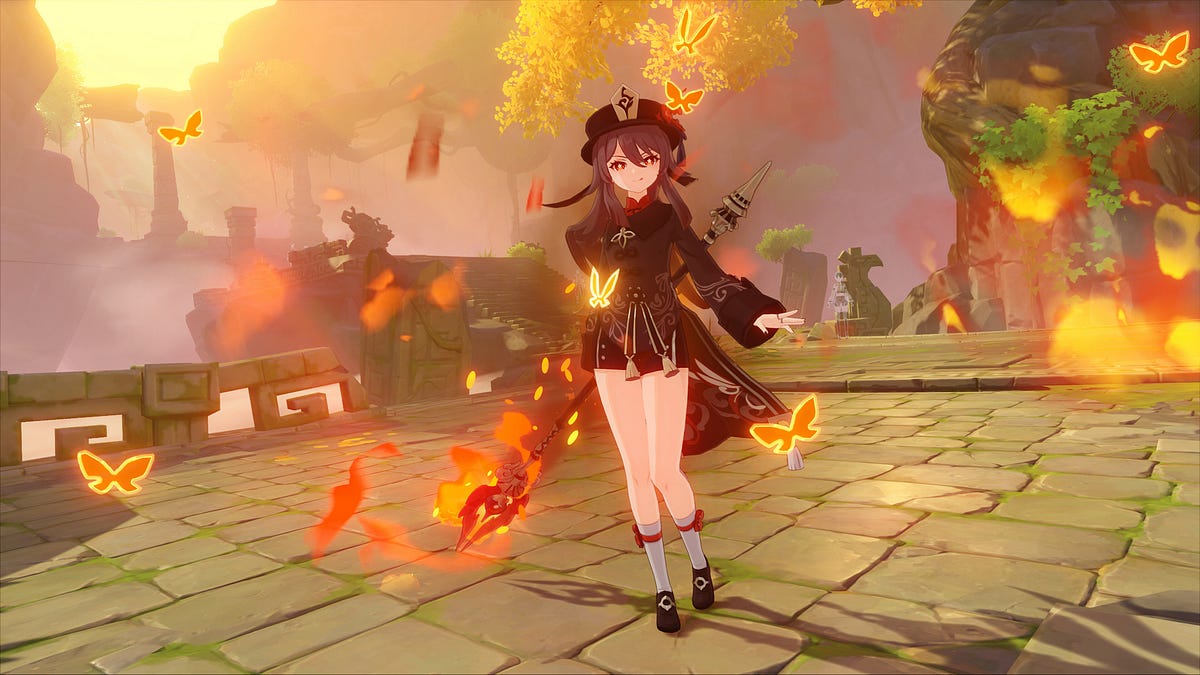
Key findings highlight significant geopolitical and corporate tensions within the gaming sector as of early 2023. Notably, over one million Chinese gamers initiated refund requests for titles such as World of Warcraft and Overwatch following the collapse of a licensing agreement between Blizzard and NetEase. Furthermore, the U.S. Securities and Exchange Commission imposed a $35 million fine on Activision Blizzard for failing to maintain adequate controls regarding workplace misconduct complaints and for violating whistleblower protection rules between 2018 and 2021. The analysis also touches upon the cultural impact of titles like Genshin Impact, noting its sophisticated storytelling alongside its inconsistent representation of diverse cultures.
The scope of this reporting is international, with a specific focus on the U.S.-China gaming market, corporate labor practices, and emerging technology trends. The methodology relies on a combination of primary source interviews, translation of foreign-language corporate statements, and synthesis of existing industry reports. By prioritizing depth over breadth, the newsletter establishes a framework for ongoing coverage of labor movements, regulatory actions, and the evolving business strategies of major game publishers.
Insights
- Activision Blizzard was fined $35 million by the U.S. Securities and Exchange Commission for failing to maintain adequate workplace misconduct controls and violating whistleblower protections between 2018 and 2021.
- Over one million Chinese gamers requested refunds for Blizzard titles including World of Warcraft and Overwatch following the termination of the licensing partnership between Blizzard and NetEase.
- The collapse of the Blizzard-NetEase licensing agreement highlights significant geopolitical and corporate instability within the U.S.-China gaming market.
- Regulatory scrutiny of major game publishers is intensifying, specifically regarding corporate governance, labor practices, and the handling of internal misconduct complaints.
- Genshin Impact has achieved significant cultural impact through sophisticated storytelling, though it faces criticism for inconsistent representation of diverse cultures.